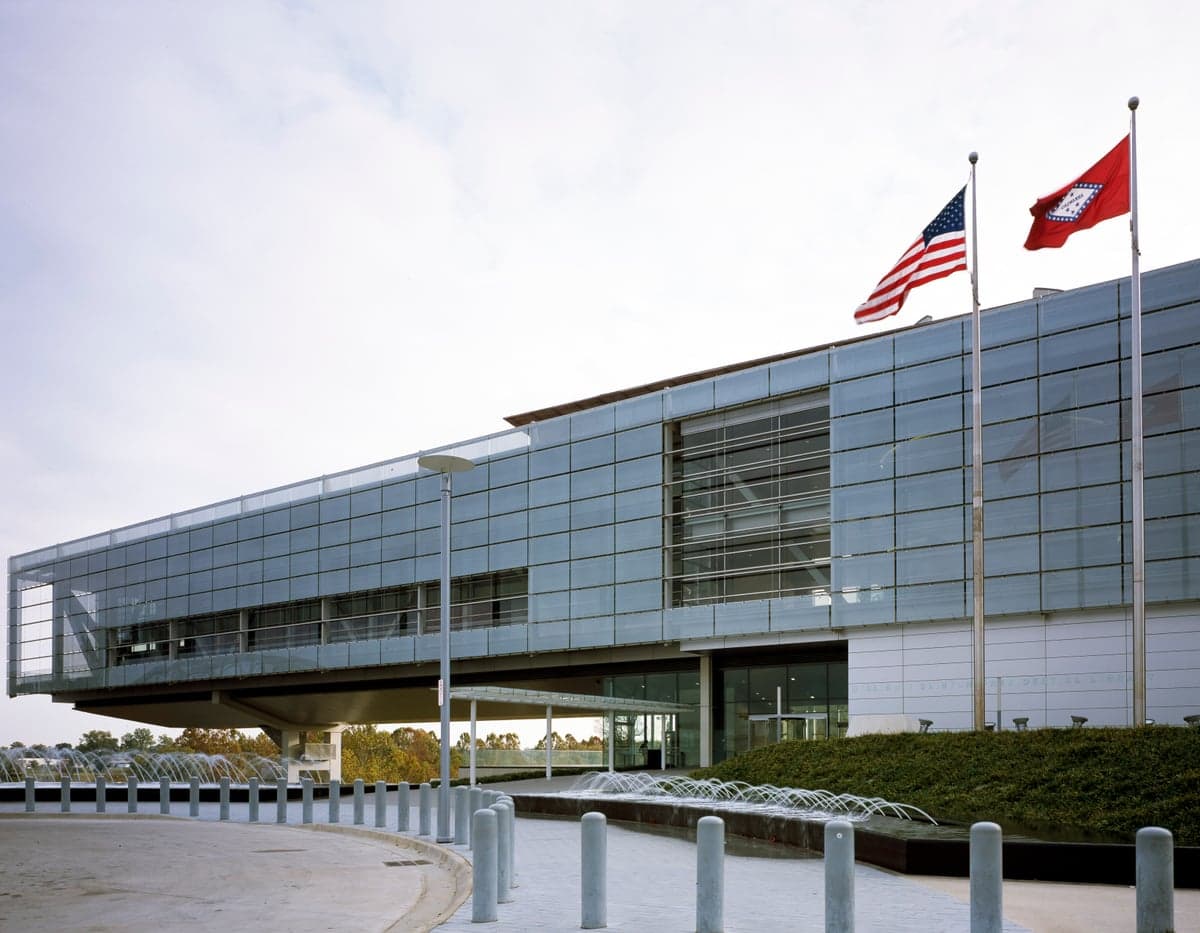
Photo: Wikipedia
Political ClimatePolitical Climate in Little Rock, AR
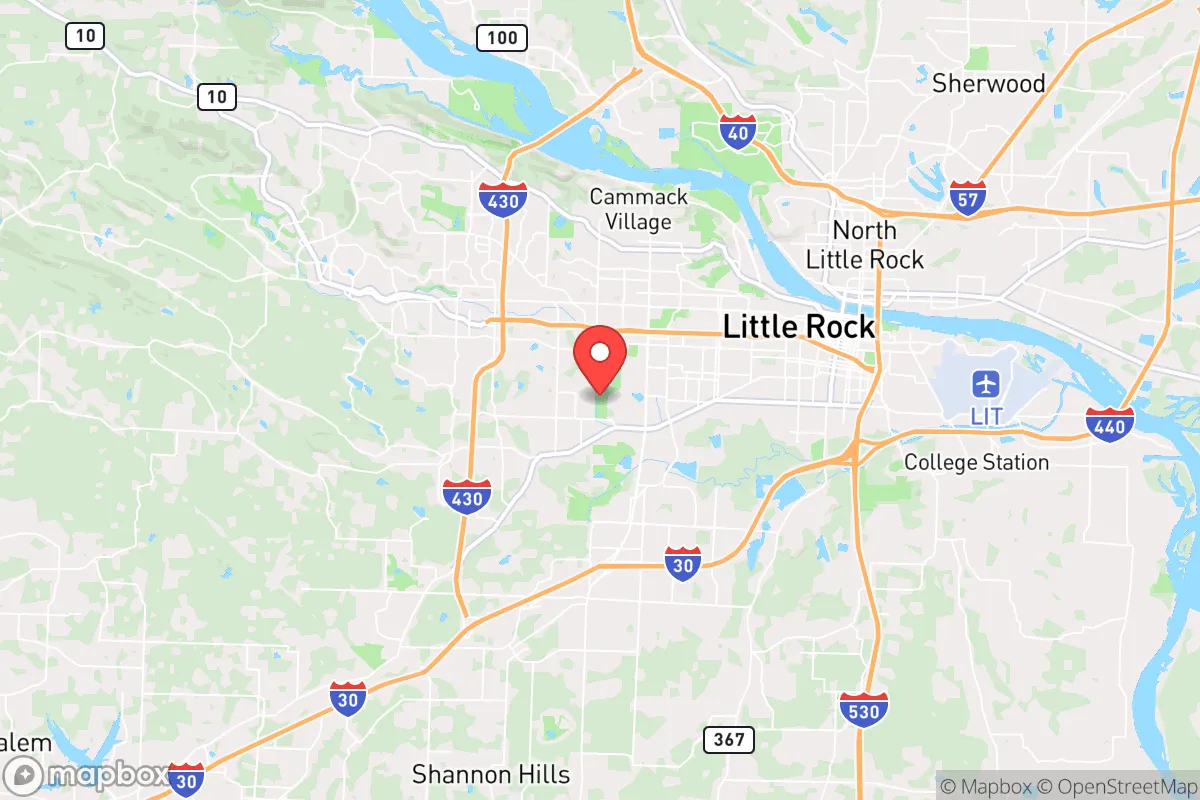
District shown is the primary district for this city’s centroid. Cities may span multiple districts.
Local Political AnalysisPolitical Analysis of Little Rock, AR
Little Rock has long been a blue dot in a red state, and that political reality has only deepened in recent years. While the surrounding counties—places like Saline County to the south and Faulkner County to the north—vote reliably conservative, Pulaski County as a whole has shifted leftward, with the city proper now holding a Cook PVI of R+8. That number might sound moderate, but it masks a growing divide: the city itself votes solidly Democratic in most races, while the metro’s suburbs and exurbs are where the real conservative strength lies. If you’ve been here a while, you’ve watched this split widen, and it’s not hard to see where things are headed.
How it compares
Drive 20 minutes west to Benton or Bryant, and you’re in a completely different political universe. Those towns vote Republican by margins of 20 to 30 points in most elections, and their local governments reflect that—lower taxes, fewer regulations, and a general hands-off approach to business and personal life. Head east to Jacksonville or Sherwood, and you’ll find a more mixed but still center-right electorate. Little Rock itself, though, has become a place where progressive policies on housing, policing, and public spending are increasingly championed by city leaders. The contrast is stark: you can live in the same metro area and feel like you’re in two different countries depending on which side of the river you’re on.
What this means for residents
For those who value personal freedoms and limited government, the trend in Little Rock is concerning. The city council has pushed measures that expand government’s role in everyday life—from zoning changes that prioritize dense development over property rights to police oversight boards that add layers of bureaucracy without clear results. Property taxes in Pulaski County have crept upward, and there’s a growing appetite for new spending programs that many residents see as overreach. If you’re a small business owner or a homeowner who just wants to be left alone, you’ll find the city’s political climate increasingly at odds with your values. The long-term trajectory points toward more regulation, higher costs, and a government that’s more interested in social engineering than in protecting your right to live your life as you see fit.
Culturally, Little Rock still has its charms—the River Market, the Clinton Presidential Center, and a decent food scene—but the political drift is hard to ignore. School choice remains a hot-button issue, with the state legislature often clashing with local school boards over charter schools and voucher programs. If you’re a conservative, you’ll find more alignment with the state government in Little Rock than with the city government itself. The bottom line: Little Rock is a place where you can still find good people and good neighbors, but the political winds are blowing in a direction that should give anyone who values liberty pause. Keep an eye on the next few election cycles—if the city council flips further left, the exodus to the suburbs will only accelerate.

State Political ClimatePolitical Climate in Arkansas
State Political AnalysisPolitical Environment in the State
Arkansas has been a reliably red state for decades, but the political climate here is more layered than a simple party label suggests. The state leans solidly Republican, with every statewide office held by the GOP and a 2024 presidential margin of roughly +30 for Donald Trump. However, the 10-20 year arc shows a state that was once a Democratic stronghold in local races, then flipped hard red in the 2010s, and is now experiencing a subtle but real tension between its deeply conservative rural base and the growing influence of more moderate, often out-of-state transplants in the northwest corner.
Urban vs. rural divide
The political map of Arkansas is a tale of two regions. The rural Delta counties along the Mississippi River—places like Lee, Phillips, and St. Francis—still vote heavily Democratic, a legacy of old-school Southern populism and a predominantly Black population. But these areas are shrinking in population and political clout. The engine of the state's Republican dominance is Northwest Arkansas, anchored by Fayetteville, Springdale, Rogers, and Bentonville. This is Walmart country, and the corporate culture here is pro-business and socially conservative, though the Fayetteville area itself has a noticeable libertarian-leaning, younger vibe that sometimes bucks the party line. Central Arkansas, around Little Rock, is a battleground: Pulaski County votes blue in presidential years, but the surrounding suburbs like Conway, Benton, and Bryant are deep red. The rural south and east are reliably Republican now, but with a populist, anti-establishment edge that can be skeptical of the Chamber of Commerce Republicans in the northwest.
Policy environment
Arkansas’s policy environment is aggressively conservative, but with a few wrinkles. The state has a flat income tax that was recently cut from 4.9% to 4.4%, with a goal of reaching 3.9% by 2027. There is no state property tax, but local property taxes fund schools and are moderate. Sales tax is high, around 6.5% state rate plus local add-ons, often hitting 9% or more in cities. The regulatory posture is light-touch, especially for business, and the state is a right-to-work state. On education, the LEARNS Act of 2023 was a landmark: it created universal school choice through Education Freedom Accounts, banned critical race theory and "indoctrination" in classrooms, and eliminated teacher tenure. Healthcare is a mixed bag: Arkansas expanded Medicaid under the private option, but the state has also passed some of the strictest abortion laws in the nation, banning the procedure at conception with no exceptions for rape or incest. Election laws are secure: voter ID is required, and the state has a clean voter roll maintenance program. There is no widespread mail-in voting unless you have an excuse.
Trajectory & freedom
On the freedom front, Arkansas is moving in a decidedly more liberty-oriented direction, but it’s not a straight line. The LEARNS Act is a huge win for parental rights and educational freedom. On gun rights, the state passed constitutional carry in 2021, allowing permitless carry of a concealed handgun for anyone 18 or older who can legally possess a firearm. There is no red flag law, and the state preempts local gun ordinances. On medical autonomy, the state has a broad medical marijuana program, but it’s tightly regulated and not a free market. Property rights are strong, with no statewide zoning in most rural areas, though cities like Fayetteville have tried to impose more restrictive land-use rules. The biggest concern for liberty-minded folks is the state’s heavy reliance on sales tax, which is regressive, and the fact that the state government has been willing to use its power to override local control—for example, banning local plastic bag bans and preventing cities from raising their minimum wage. That’s a double-edged sword: it protects businesses from a patchwork of local laws, but it also limits local self-governance.
Civil unrest & political movements
Arkansas is not a hotbed of civil unrest. The most visible political movements are on the right: the Arkansas Family Council is a powerful social conservative group that drives legislation on abortion and religious freedom. On the left, the Indivisible chapter in Little Rock and the Arkansas Public Policy Panel are active but have limited influence. There have been no major riots or sustained protests in recent years. Immigration politics are a flashpoint: the state passed a law in 2025 requiring local law enforcement to cooperate with ICE and banning sanctuary city policies. There is no serious secession or nullification rhetoric here—Arkansas is too integrated into the national economy. Election integrity controversies are minimal; the state’s voting system is considered secure by both parties. The one visible flashpoint a new resident might notice is the tension between the growing Hispanic population in Springdale and the state’s hardline immigration stance. It’s a quiet but real cultural friction.
Projection
Over the next 5-10 years, Arkansas will likely become more conservative, not less. The in-migration from California and Illinois is real, but these new residents are mostly moving to Bentonville and Rogers for jobs at Walmart, Tyson, or JB Hunt, and they tend to be moderate Republicans or libertarians, not progressives. The rural areas will continue to shrink and age, but the political power will shift even more to the northwest, which is reliably red. The Democratic base in the Delta will continue to erode. The biggest wildcard is the school choice movement: if the LEARNS Act succeeds in improving educational outcomes, it will cement the state’s conservative trajectory. If it falters, there could be a backlash. Expect further income tax cuts, more deregulation, and continued battles over abortion and transgender rights. The state is not going to flip blue anytime soon, but the internal debate will be between establishment conservatives and populist, anti-establishment conservatives.
For a new resident, the bottom line is this: Arkansas is a safe, affordable, and increasingly free state for those who value limited government, parental rights, and a traditional culture. You won’t find the chaos of a coastal city here. The trade-off is that you’ll have less cultural diversity and fewer big-city amenities. If you’re moving here for the politics, you’ll feel at home in Bentonville or Conway. If you want a more libertarian, live-and-let-live vibe, Fayetteville is your spot. Just know that the state government is willing to step in when local governments get too progressive, so don’t expect to find a blue bubble anywhere outside of a few precincts in Little Rock. It’s a red state, and it’s getting redder.
* Values derived from national, state, county, city and local statistics and may differ in a specific area. Last updated: 2026-04-23T04:09:49.000Z
Narrative content on this page is AI-generated and may contain mistakes. Verify any details that matter before acting on them.
ReloMaps may earn a commission from affiliate links at no extra cost to you.

