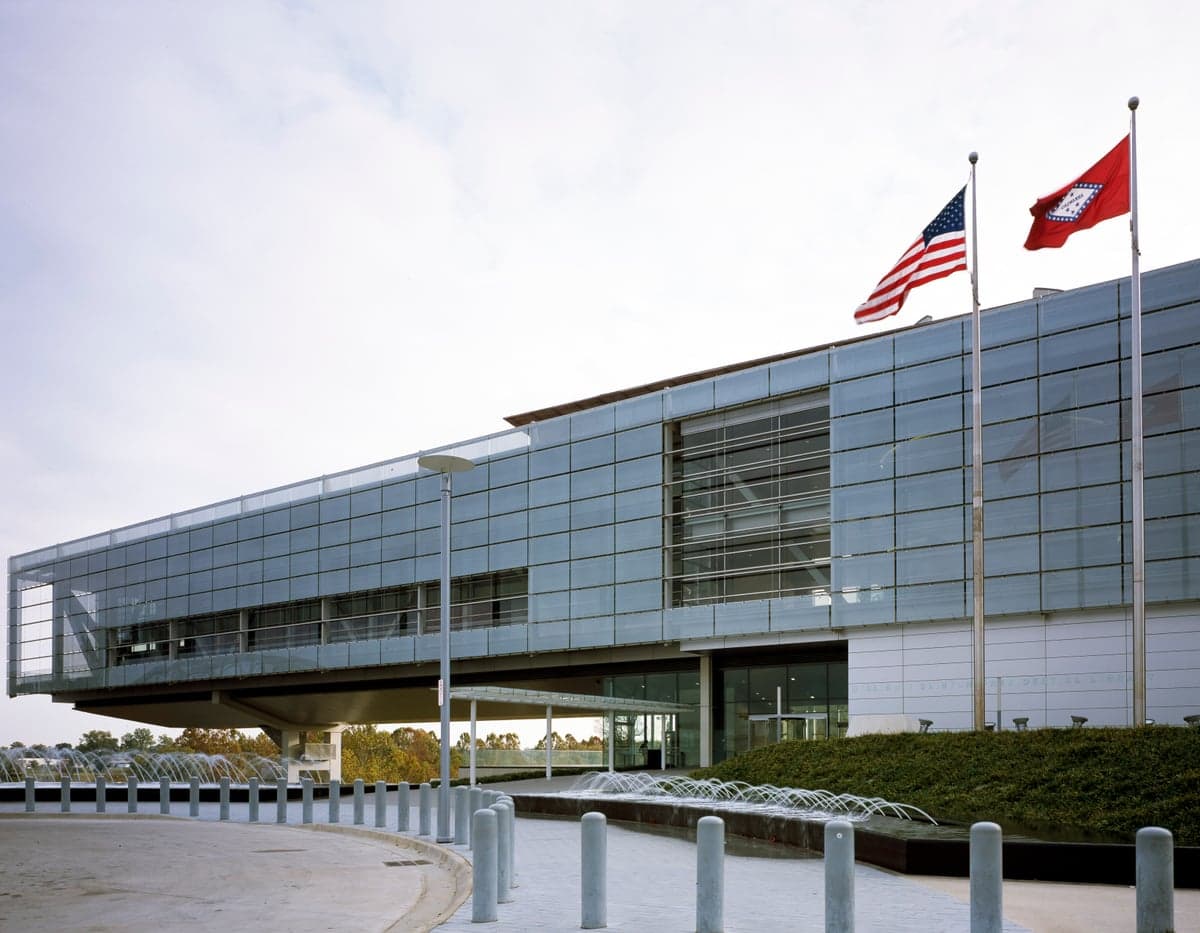
Photo: Wikipedia
Personal Sovereignty in Little Rock, AR
Viable for self-reliance. Generally workable, though some barriers may limit total independence.
What does Personal Sovereignty tell us?
Personal Sovereignty measures your capacity for self-reliance and independence with minimal government friction. Higher scores mean fewer barriers between you and the way you want to live... but it assumes you have the space you need and good neighbors.
What does this tell us?
Personal Sovereignty measures your capacity for self-reliance and independence with minimal government friction. Higher scores mean fewer barriers between you and the way you want to live... but it assumes you have the space you need and good neighbors.
State Policy
Energy independence: Importer (35% of energy produced in-state)
Personal Liberty
Homesteading

Personal Liberty Analysis
For the individual or family who prioritizes personal sovereignty above all else, Little Rock, Arkansas, presents a study in contrasts that demands careful scrutiny. While the state of Arkansas has long cultivated a reputation for hands-off governance and a culture of self-reliance, the capital city operates under a municipal framework that can, at times, feel at odds with that frontier spirit. The core tension here is between a generally permissive state legal environment and the inevitable bureaucratic creep of a city of over 200,000 people. For a survivalist or prepper mindset, the question isn't whether Arkansas is a good state for liberty—it is—but whether Little Rock itself allows you to exercise that liberty without constant friction from local ordinances and a shifting political landscape.
Tax burden and regulatory posture: How Little Rock compares to the state
Arkansas's tax structure is a mixed bag for the sovereignty-minded. The state's individual income tax has been aggressively cut, now topping out at 4.4% as of 2026, a significant reduction from previous years and a clear signal of a pro-taxpayer trend in the state legislature. There is no state property tax on vehicles or business inventory, which is a direct win for personal asset protection. However, the devil is in the local details. Pulaski County, which encompasses Little Rock, levies a combined sales tax rate of 9.125% (state + county + city), which is among the highest in the state. This means every purchase of gear, supplies, or building materials is noticeably more expensive here than in the surrounding rural counties. On the regulatory front, Arkansas is a right-to-work state with minimal occupational licensing burdens compared to the coasts, but Little Rock's city government has shown a tendency toward zoning and business permitting processes that can feel invasive. The city's planning department has a reputation for slow-walking permits for things like accessory dwelling units or home-based businesses, which directly impacts a prepper's ability to legally expand their property's self-sufficiency without jumping through hoops.
Self-defense and gun law specifics: What the Second Sanctuary looks like on the ground
Arkansas is a constitutional carry state, meaning no permit is required to carry a concealed firearm for anyone legally allowed to possess one. This is non-negotiable bedrock for personal sovereignty. Little Rock, however, has been the site of ongoing political friction over this right. The city council has repeatedly attempted to pass local ordinances restricting firearms in city parks and municipal buildings, only to be met with legal challenges from state-level preemption laws. As of 2026, state preemption remains strong, and Little Rock cannot legally ban carry in most public spaces that the state allows. For the prepper, this means you can legally carry on your person virtually anywhere in the city, but you must remain vigilant about the political temperature—the city government is not friendly to gun rights and will test the limits of state law. Stand-your-ground laws are fully in effect, and there is no duty to retreat in any place you are lawfully present. Castle doctrine protections extend to your vehicle and place of business. The practical reality is that while the law is on your side, the local political climate means you are likely to be viewed with suspicion by certain segments of the population and law enforcement if you are visibly armed. It is a place where your rights are secure on paper but require a certain level of situational awareness to exercise without social friction.
Self-reliance and homesteading viability: Lot sizes, zoning, and off-grid feasibility
This is where Little Rock presents its most significant challenge to the serious prepper. The city's zoning code is largely oriented toward suburban and urban density, with minimum lot sizes in most residential zones hovering around 6,000 to 8,000 square feet. This is not enough land for meaningful food production, water catchment, or livestock. Raising chickens is permitted in many areas, but with strict limits on the number of birds and no roosters allowed. Goats, bees, and larger livestock are effectively banned within city limits. Off-grid living is a non-starter: the city requires connection to municipal water and sewer in most developed areas, and solar panels are subject to homeowner association (HOA) covenants and city permitting that can be burdensome. For the individual or family serious about self-reliance, the smart play is to live just outside the city limits in unincorporated Pulaski County or one of the smaller surrounding towns like Roland, Alexander, or Wrightsville. There, you can find 1-5 acre parcels with no HOA, well water, and septic systems, allowing for a much higher degree of autonomy. The city itself is a hub for supplies, medical care, and community networking, but it is not a place to build your retreat.
Personal liberties: Parental rights, medical autonomy, speech, and property
Arkansas has been a national battleground for parental rights, and the state legislature has passed some of the strongest laws in the country affirming a parent's right to direct their child's upbringing, education, and medical care. Parental consent is required for virtually any medical procedure on a minor, and the state has actively pushed back against federal overreach in education and health mandates. This is a major draw for conservative families. Medical autonomy for adults is more nuanced. The state has not expanded Medicaid in a way that creates a massive government healthcare dependency, but it also lacks the robust alternative medicine and medical freedom infrastructure found in states like Idaho or Montana. Vaccine mandates were effectively banned at the state level during the COVID era, and that legal framework remains in place. Free speech is protected, but Little Rock's city government has a history of attempting to regulate public assembly and protest in ways that have been struck down by courts. Property rights are generally strong, with no state-level property tax on homesteads for disabled veterans or surviving spouses, and a homestead exemption that shields a portion of your home's value from creditors. However, the city's aggressive code enforcement and nuisance property ordinances can be used as a weapon against those who choose to live unconventionally or maintain a property that doesn't conform to suburban aesthetics.
In the final analysis, Little Rock offers a strategic paradox for the sovereignty-minded individual. The state of Arkansas provides a legal foundation that is among the most protective of personal liberty in the nation—constitutional carry, strong parental rights, low income tax, and a legislature that actively resists federal overreach. But the city itself is a blue dot in a red state, with a municipal government that is often at odds with those values. For the prepper or survivalist, the optimal approach is to use Little Rock as a regional hub for employment, medical care, and supply acquisition while establishing your actual homestead in the surrounding county. If you are forced to live within city limits, you will find your ability to live autonomously constrained by zoning, taxes, and a political culture that does not share your priorities. Compared to cities like Portland or Denver, Little Rock is a fortress of liberty. Compared to rural Arkansas or the Texas Hill Country, it is a place where you must constantly defend your ground.

* Values derived from national, state, county, city and local statistics and may differ in a specific area. Last updated: 2026-04-23T04:09:49.000Z
Narrative content on this page is AI-generated and may contain mistakes. Verify any details that matter before acting on them.
ReloMaps may earn a commission from affiliate links at no extra cost to you.

