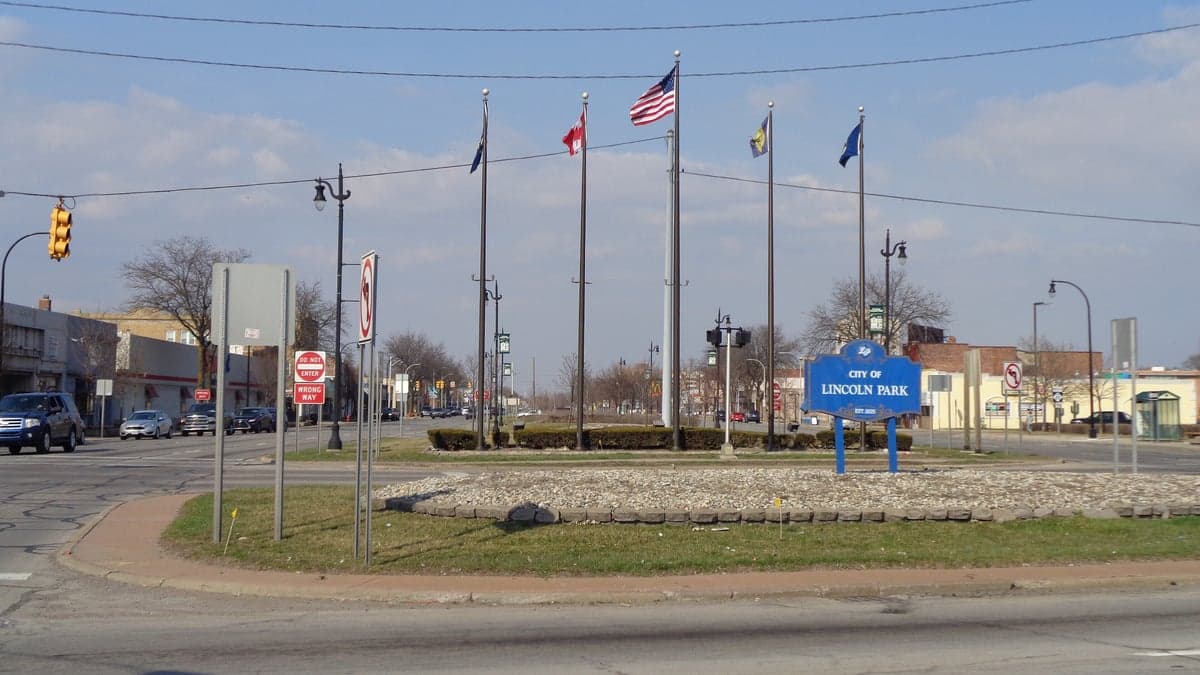
Photo: Wikipedia
Strategic Assessment of Lincoln Park, MI
Multiple tactical vulnerabilities. Population density, target proximity, or disaster risk are likely compounding. A retreat property and exit planning is required.
What does the Strategic Assessment tell us?
Our Strategic Assessment grades tactical survivability of an area. Major population centers, military targets, fallout zones, natural disasters, and border exposure all drive risk — lower exposure means a more defensible position in a crisis.
This is heavily inspired by Joel Skousen's Strategic Relocation book. Highly recommended you checkout the book ($)What does this tell us?
Our Strategic Assessment grades tactical survivability of an area. Major population centers, military targets, fallout zones, natural disasters, and border exposure all drive risk — lower exposure means a more defensible position in a crisis.
This is heavily inspired by Joel Skousen's Strategic Relocation book. Highly recommended you checkout the book ($)Strategic Pillars

Key Distances
Regional Safe Places
Below is our recommended "safe zones" in Michigan and the surrounding area based on our strategic heuristics. For most people, it's unrealistic to live in a “safe zone” full-time due to work, family or other personal reasons. They tend to be more rural. However, many of these areas are perfect for second homes and retreat properties that double as a vacation home or even a short-term rental.


Important Note: For informational purposes only. This does not mean nothing bad ever happens in the green zones. Please use common sense. This is based on public data and modeled with AI. We tried to take a conservative approach but mistakes happen. We update this regularly as new information becomes available.
Solar Generator Recommendations
Backup power matters more here than in safer locations. We've picked three solar generators across budgets and capacity tiers — start with the budget unit if you only need a few essentials, or step up if you want to run a fridge and HVAC for days at a time.

Jackery Portable Power Station Explorer 300
Budget OptionPower on the Go: Weighing only 11 lbs, it's convenient to set up and store with book-sized foldable solar panels

BLUETTI Portable Power Station AC180
Designed for both indoor and outdoor scenarios, AC180 is highly capable as it has a robost capacity and continuous output power.

EF ECOFLOW DELTA Pro Ultra Power Station
Upgraded PickEcoFlow DELTA Pro Ultra is a whole-home energy system designed to grow with your family. Integrated with the Smart Home Panel 2, it scales to meet your evolving energy needs — keeping your home powered, intelligent, and secure through every stage of life.
We earn a commission, at no additional cost to you.
Strategic Assessment Analysis
Lincoln Park, Michigan, presents a complex strategic picture for the conservative prepper or survivalist. While its location in the industrial heartland offers certain logistical advantages, its proximity to Detroit and the dense urban corridor of the Great Lakes region introduces significant vulnerabilities that cannot be ignored. For a single individual or family seeking a resilient relocation point, the calculus here is less about natural isolation and more about navigating the risks and opportunities of a post-industrial landscape that is both a potential tinderbox and a potential staging ground.
Geographic position and natural advantages for a strategic relocation
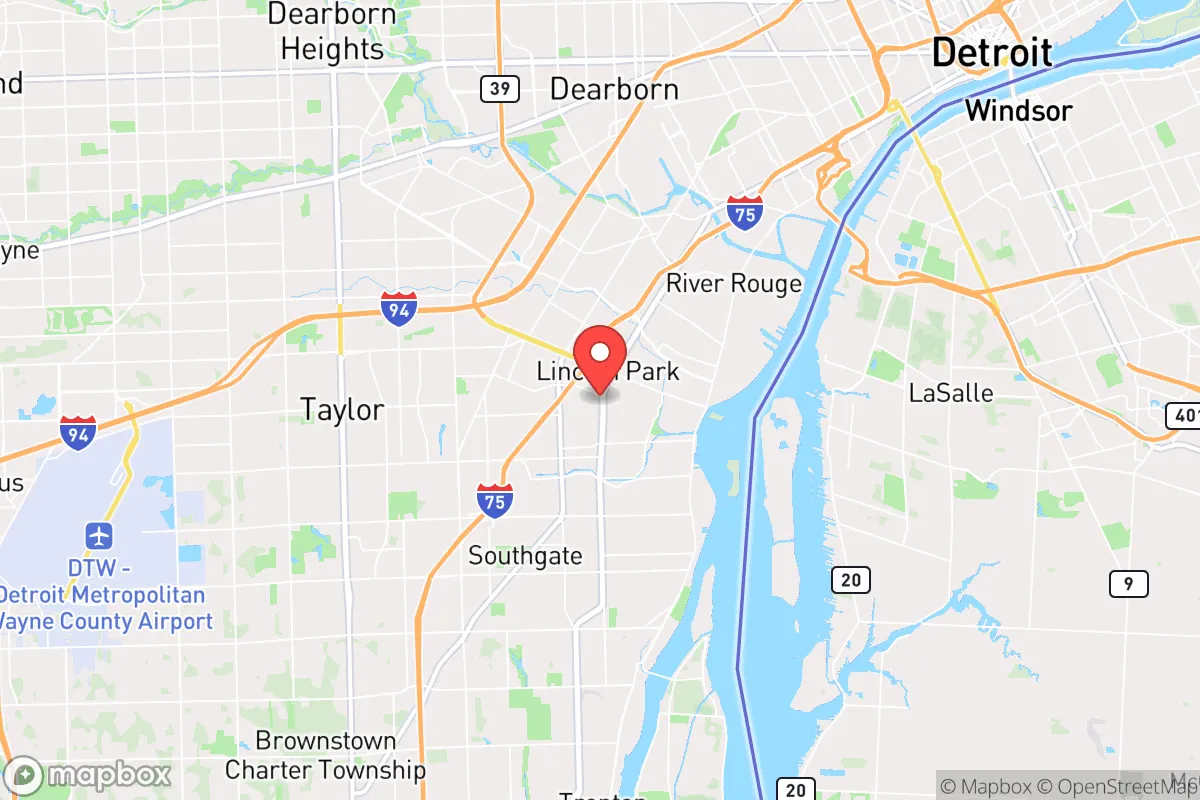
Lincoln Park sits in Wayne County, roughly 10 miles southwest of downtown Detroit, placing it squarely within the sprawling southeastern Michigan metroplex. Its natural advantages are minimal from a pure survivalist standpoint. The terrain is flat, heavily developed, and lacks the defensible geography—hills, forests, or natural barriers—that preppers often prioritize. The Detroit River and Lake Erie are within a 15-20 minute drive, offering a potential water source, but these are also major industrial and shipping corridors, making them likely targets or chokepoints in a crisis. The area's primary natural advantage is its access to the Great Lakes freshwater system, which is a massive strategic asset for long-term water security if you can secure a means of extraction and purification. However, the immediate surroundings are dominated by aging infrastructure, industrial sites, and dense suburban sprawl, offering little in the way of natural cover or retreat.
Risks, exposures, and proximity to fallout-relevant landmarks
The most glaring risk for a relocator is Lincoln Park's proximity to Detroit, a city that has experienced severe economic decline, population loss, and periodic civil unrest. In a scenario of widespread civic breakdown—whether from economic collapse, political instability, or a mass casualty event—Detroit's large, underserved population could become a source of desperate movement into surrounding suburbs like Lincoln Park. The city is also within a 30-mile radius of several high-value targets: the Ambassador Bridge and Detroit-Windsor Tunnel (critical border crossings), the Ford River Rouge Complex (a major industrial plant), and the Detroit Metropolitan Airport. Any of these could be focal points for disruption, whether from terrorism, infrastructure failure, or military action. Additionally, the area is downwind of several coal-fired power plants and chemical facilities along the Detroit River, which could pose secondary contamination risks in a disaster. For the prepper, the density of people and critical infrastructure here is a liability, not an asset.
Practical resilience for a relocator: food, water, energy, and defensibility
On the practical side, Lincoln Park offers a mixed bag. The housing stock is dominated by older single-family homes and small apartment buildings, many built in the mid-20th century. These structures often have basements, which are useful for storm shelters or storage, but they may lack modern security features. Defensibility is poor: the street grid is open, with few natural chokepoints, and the proximity to major roads like I-75 and Southfield Freeway means rapid movement of people—both friendly and hostile—is possible. For food, the area has a number of grocery chains, but reliance on just-in-time delivery systems means shelves could empty quickly in a crisis. Local agriculture is limited; the nearest significant farmland is in Monroe County, about 20 miles south. Water is a potential strength: the Great Lakes are a massive, renewable source, but accessing it requires a vehicle and a plan for purification. Municipal water comes from the Detroit Water and Sewerage Department, a system that is aging and has faced financial troubles. In a prolonged grid-down scenario, this supply could fail. Energy is another weak point. The grid is old and vulnerable to weather events and cyberattacks. Natural gas is common for heating, but that infrastructure is also centralized. Solar potential is moderate, but many homes have roof orientations that are not ideal. For a relocator, the key takeaway is that Lincoln Park is not a self-sufficient location. It requires a high degree of active preparation—stockpiling, hardening a home, and having a bug-out plan to more rural areas in northern Michigan or Ohio.
The overall strategic picture for a conservative prepper
Lincoln Park is a location that demands a clear-eyed assessment. It is not a retreat; it is a forward operating base with significant exposure. For a single individual or family who must remain in the region for work or family obligations, it can be made workable with serious preparation: a well-stocked pantry, a reliable water filtration system, a backup power source (generator or solar with battery), and a secure room or basement. The community itself is working-class and has a history of union and industrial labor, which can foster a certain resilience and mutual aid, but it is also politically mixed and lacks the cohesive, like-minded networks that conservative preppers often seek. The proximity to Detroit and critical infrastructure means that in a major event, this area could become a high-risk zone for looting, civil unrest, or secondary effects from attacks on nearby targets. For those who prioritize isolation, defensible terrain, and a like-minded community, Lincoln Park is a poor choice. For those who need to be in the region and are willing to invest heavily in hardening a home and building a network of trusted contacts, it is a manageable but high-risk option. The strategic verdict: proceed with caution, and always have a route north.

* Values derived from national, state, county, city and local statistics and may differ in a specific area. Last updated: 2026-04-30T02:05:39.000Z
Narrative content on this page is AI-generated and may contain mistakes. Verify any details that matter before acting on them.
ReloMaps may earn a commission from affiliate links at no extra cost to you.

