Photo: Wikipedia
Demographics of Lewistown, MT
Affluence Level in Lewistown, MT
A below-average socioeconomic profile. Incomes, home values, and educational attainment trail the U.S., with higher poverty and unemployment.
People of Lewistown, MT
The people of Lewistown, Montana, today number 6,028 and form one of the most ethnically homogeneous small cities in the state, with 91.1% of residents identifying as white and a foreign-born population of just 0.6%. The city’s character remains deeply rooted in its agricultural and ranching heritage, with a distinctive identity shaped by generations of Northern European settlers and a notably low college attainment rate of 16.9%. Lewistown is a place where family names trace back to the original homesteaders, and the population density is sparse, reflecting a community that values self-reliance and continuity over rapid change.
How the city was settled and grew
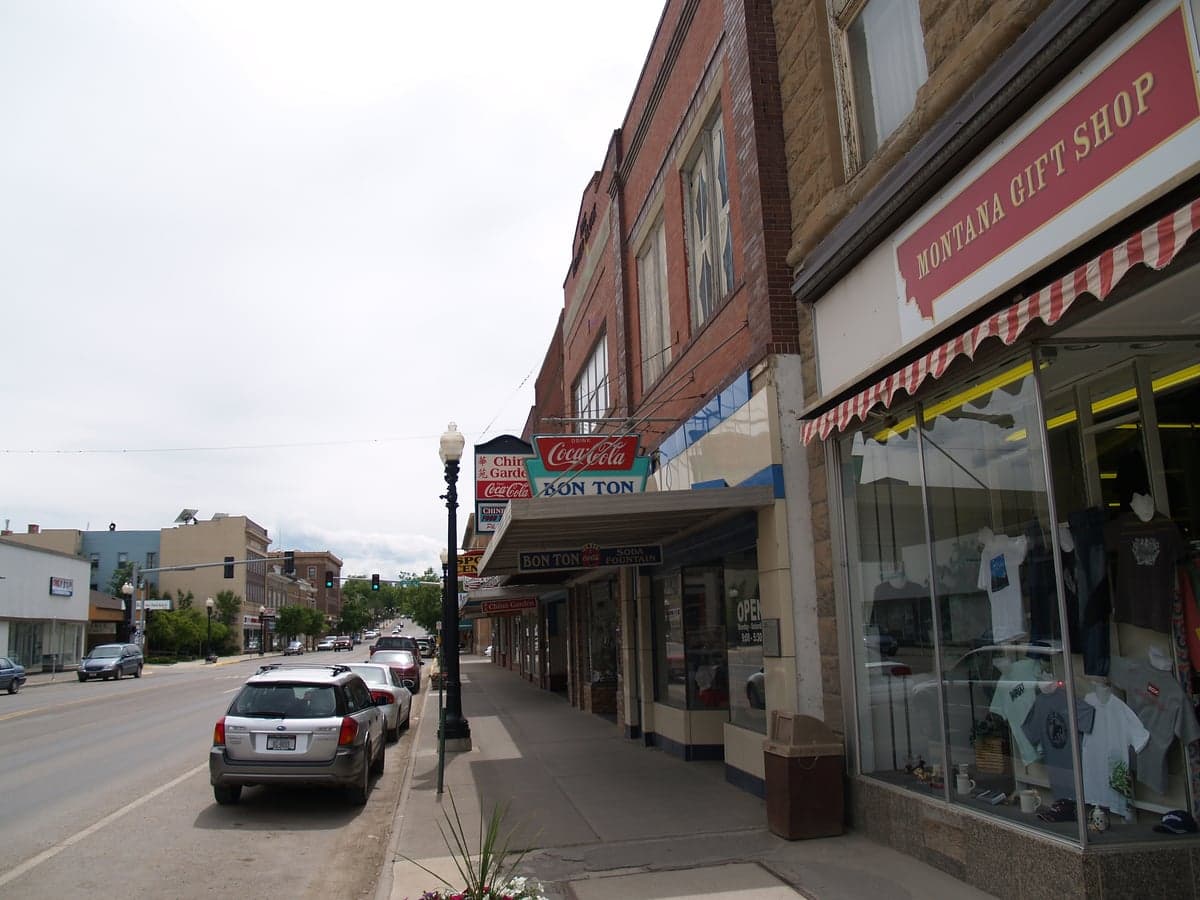
Lewistown’s founding population arrived in the 1880s, drawn by the promise of free land under the Homestead Act and the establishment of Fort Maginnis in 1880. The original settlers were predominantly of Northern European stock—Germans, Scandinavians, and Irish—who took up dryland farming and ranching in the surrounding Judith Basin. The city’s first concentrated neighborhood, Old Town around Main Street and Broadway, was built by these homesteaders and the merchants who served them. A second wave arrived with the extension of the Milwaukee Road railroad in 1908, bringing a smaller influx of Eastern European laborers, particularly from Poland and Russia, who settled in the South Side district near the rail yards. By the 1920s, Lewistown had become a regional trade hub for central Montana, and the North Central neighborhood grew as a middle-class area for professionals and business owners. The city’s population peaked at around 7,000 in the 1930s, then stabilized as agricultural mechanization reduced the need for farm labor.
Modern era (post-1965)
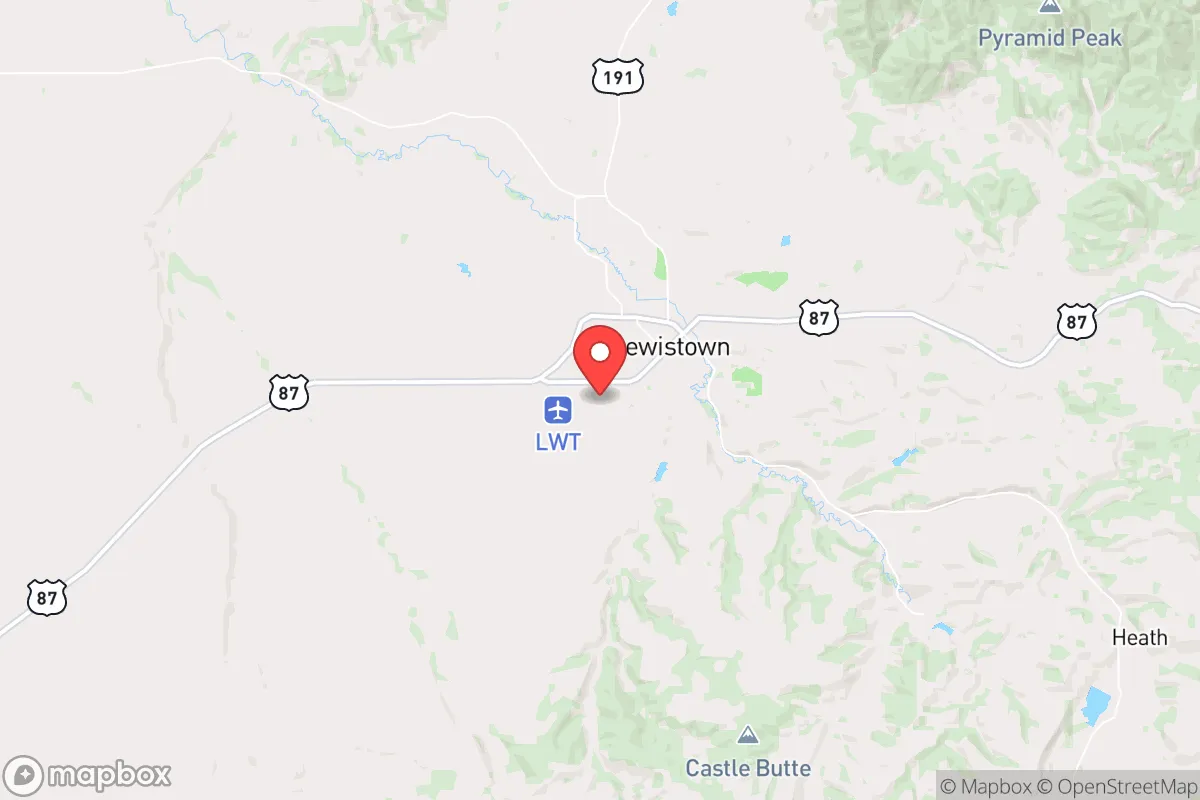
After the 1965 Hart-Cellar Act, Lewistown saw virtually no immigration-driven diversification. The foreign-born share remained below 1%, and the city’s demographic profile changed primarily through domestic out-migration of younger residents seeking urban jobs. The Hispanic population, now at 3.7%, grew modestly from seasonal agricultural workers, many of whom settled in the West End area near the fairgrounds and along Highway 87. The Black population (1.1%) and Indian subcontinent population (0.8%) are tiny and largely tied to professional roles at the Central Montana Medical Center or the local prison facility, with no distinct ethnic neighborhoods forming. The Airport Road corridor saw some suburban-style development in the 1990s and 2000s, attracting retirees and remote workers, but this growth was overwhelmingly white and native-born. East/Southeast Asian communities are effectively absent at 0.0%, and the city’s racial composition has remained nearly static since 1970.
The future
Lewistown’s population is heading toward gradual homogenization rather than diversification. The city’s low college attainment rate (16.9%) and limited economic base in agriculture, healthcare, and government services mean that younger, college-educated residents continue to leave for larger Montana cities like Bozeman or Missoula. The Hispanic share may rise slowly as agricultural labor needs persist, but the foreign-born population is unlikely to grow significantly due to the lack of industrial or tech-sector employment. The Hilltop neighborhood, historically a mix of working-class homes, is seeing some reinvestment from out-of-state retirees drawn by low property taxes and a conservative social climate. Over the next 10–20 years, Lewistown will likely remain a predominantly white, aging community, with any growth concentrated in the East Side near the hospital and along the Highway 191 corridor. The city is not tribalizing into distinct enclaves; rather, it is slowly shrinking and consolidating around its core agricultural identity.
For someone moving in now, Lewistown offers a stable, culturally uniform environment where community ties are strong and newcomers are expected to integrate into existing social structures. The city is becoming a quieter, older version of itself—a place for those seeking low crime, open space, and a predictable pace of life, rather than demographic dynamism or rapid economic change.

* Values derived from national, state, county, city and local statistics and may differ in a specific area. Last updated: 2026-10-10T16:28:00.000Z
Narrative content on this page is AI-generated and may contain mistakes. Verify any details that matter before acting on them.
ReloMaps may earn a commission from affiliate links at no extra cost to you.

