
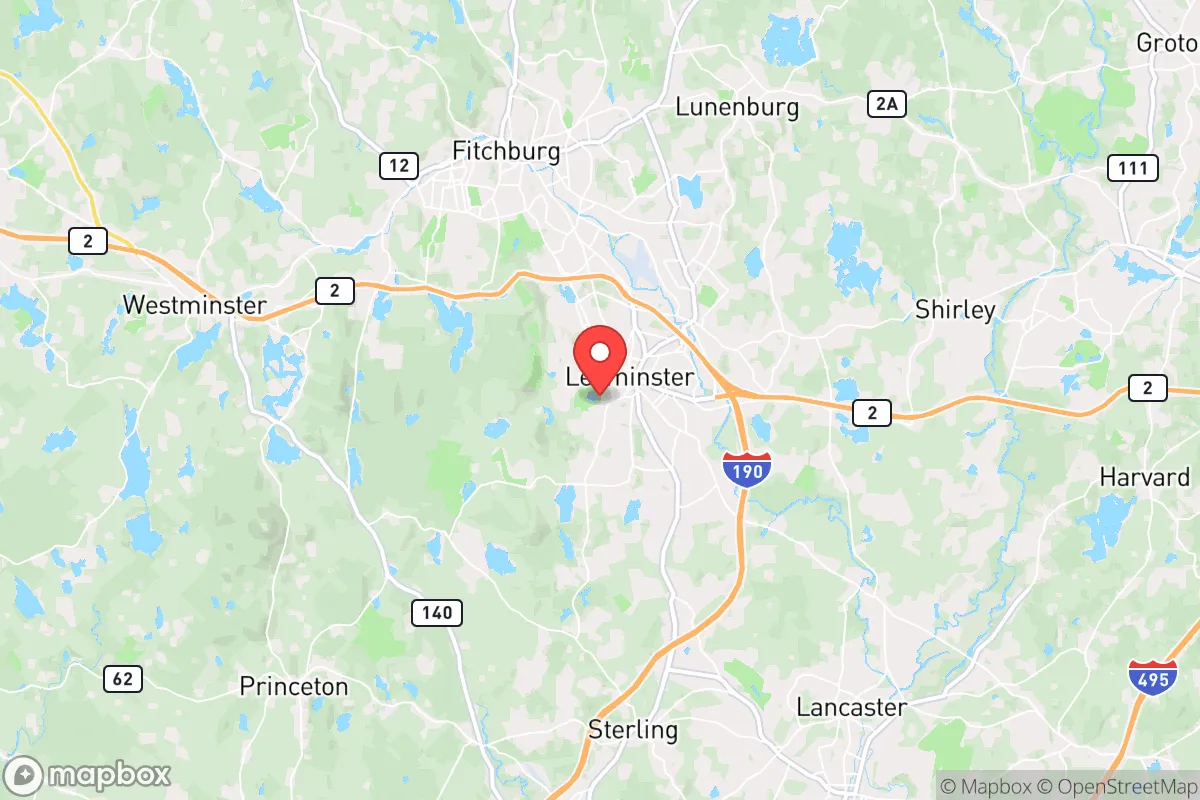
Photo: Wikipedia
Personal Sovereignty in Leominster, MA
Viable for self-reliance. Generally workable, though some barriers may limit total independence.
What does Personal Sovereignty tell us?
Personal Sovereignty measures your capacity for self-reliance and independence with minimal government friction. Higher scores mean fewer barriers between you and the way you want to live... but it assumes you have the space you need and good neighbors.
What does this tell us?
Personal Sovereignty measures your capacity for self-reliance and independence with minimal government friction. Higher scores mean fewer barriers between you and the way you want to live... but it assumes you have the space you need and good neighbors.
State Policy
Energy independence: Importer (5% of energy produced in-state)
Personal Liberty
Homesteading

Personal Liberty Analysis
Leominster, Massachusetts, presents a complex environment for personal sovereignty, where the Commonwealth's expansive regulatory framework and high tax burden significantly constrain individual autonomy. While the city offers a lower cost of living than nearby Boston and some rural access, residents face substantial government oversight in nearly every aspect of life, from property use to self-defense. For those prioritizing maximum personal freedom and minimal state interference, Leominster requires careful navigation of state-level mandates that often override local preferences. The overall sovereignty environment here is moderate at best, with the state's progressive policies creating a ceiling on what individuals can control without government permission.
Tax burden and regulatory posture in Leominster
Massachusetts imposes one of the heaviest tax burdens in the nation, and Leominster residents feel this acutely. The state's income tax rate is a flat 5.0% on all earned income, with no deductions for federal taxes paid, and a separate 12% capital gains tax on short-term investments. Property taxes in Leominster are moderate for the state—around $15.50 per $1,000 of assessed value—but the city's average single-family home value of approximately $420,000 means annual bills near $6,500. The state's sales tax is 6.25%, applied to most goods, and there is no local option to reduce it. Regulatory posture is aggressive: Massachusetts has some of the strictest environmental, building, and business licensing codes in New England. Starting a home-based business requires multiple permits, and zoning laws limit many entrepreneurial activities. For a prepper or survivalist, the cumulative effect is a significant drain on resources that could otherwise go toward self-reliance investments like land, supplies, or alternative energy systems.
Self-defense and gun law specifics in Leominster
Massachusetts gun laws are among the most restrictive in the country, and Leominster residents must comply with state mandates that heavily limit self-defense options. The state requires a License to Carry (LTC) for any handgun possession, which involves a background check, fingerprinting, a firearms safety course, and a fee. Local police chiefs have discretion to deny or restrict licenses, and Leominster's chief historically issues licenses with "restrictions" that limit carry to specific purposes like hunting or target shooting—not general self-defense. The state bans "assault weapons" by name, including many common semi-automatic rifles, and caps magazine capacity at 10 rounds. There is no constitutional carry; open carry is effectively prohibited. For home defense, a shotgun or a restricted handgun is the primary legal option. The state also has a "red flag" law allowing temporary firearm seizure without a criminal conviction. For those prioritizing the right to keep and bear arms as a fundamental sovereignty issue, Leominster is a challenging location that requires significant legal compliance and offers limited recourse against state-level restrictions.
Self-reliance and homesteading viability in Leominster
Leominster's zoning and lot sizes offer some potential for self-reliance, but state and local regulations create substantial hurdles. The city has a mix of residential zones, with typical lot sizes ranging from 0.25 to 1 acre in suburban areas, and some larger parcels (2-5 acres) in the northern and western parts near the Fitchburg line. Raising chickens is permitted on lots over 0.5 acres with a permit, but goats, pigs, or larger livestock are generally prohibited in residential zones. Beekeeping is allowed with registration. Off-grid living is effectively illegal: the state requires connection to municipal water and sewer in most developed areas, and building codes mandate grid-tied electrical systems for new construction. Rainwater collection is legal but must comply with state health regulations. Solar panels are permitted but require permits and interconnection agreements. For a serious homesteader, Leominster's best option is to find a property in the more rural "North Leominster" area, where lot sizes are larger and zoning is slightly more permissive. However, the state's building codes, environmental regulations, and property tax structure make true self-sufficiency—like living without a mortgage or utility bills—extremely difficult to achieve.
Personal liberties in Leominster: parental rights, medical autonomy, speech, and property
Massachusetts law significantly limits several key personal liberties that conservatives and preppers value. Parental rights are constrained by state mandates: the state requires all children to attend school (public, private, or homeschool) with strict curriculum and assessment requirements, and parents cannot opt out of sex education or LGBTQ-inclusive curricula without a formal exemption process. Medical autonomy is heavily restricted: the state mandates health insurance coverage, requires COVID-19 and other vaccines for school attendance (with limited religious exemptions), and has a strict prescription drug monitoring program. Medical freedom is further limited by the state's ban on ivermectin and hydroxychloroquine for off-label COVID use, and by laws that restrict access to alternative treatments. Free speech is generally protected, but the state has broad "hate speech" laws and social media regulations that can chill political expression. Property rights are constrained by the state's strong eminent domain powers, wetland protection laws, and historic preservation rules that can limit what owners can do with their land. For a survivalist, the cumulative effect is a legal environment where the state has a say in nearly every personal decision, from what you can teach your children to what medical treatments you can access.
Overall, Leominster offers a moderate level of personal sovereignty compared to other Massachusetts cities, but it remains a challenging environment for those seeking maximum autonomy. The city's lower cost of living and some rural pockets provide a slight edge over Boston or Cambridge, but the state's heavy tax burden, restrictive gun laws, and regulatory overreach create a ceiling on freedom that is hard to escape. For a prepper or conservative individual, Leominster is a compromise location—better than deep-blue urban centers but far from the liberty found in states like New Hampshire or Texas. If you value self-reliance, minimal government interference, and the right to defend yourself and your family, you will need to carefully weigh the trade-offs and consider whether the state's progressive policies are worth the cost of living in this region.

* Values derived from national, state, county, city and local statistics and may differ in a specific area. Last updated: 2026-05-01T02:53:02.000Z
Narrative content on this page is AI-generated and may contain mistakes. Verify any details that matter before acting on them.
ReloMaps may earn a commission from affiliate links at no extra cost to you.

