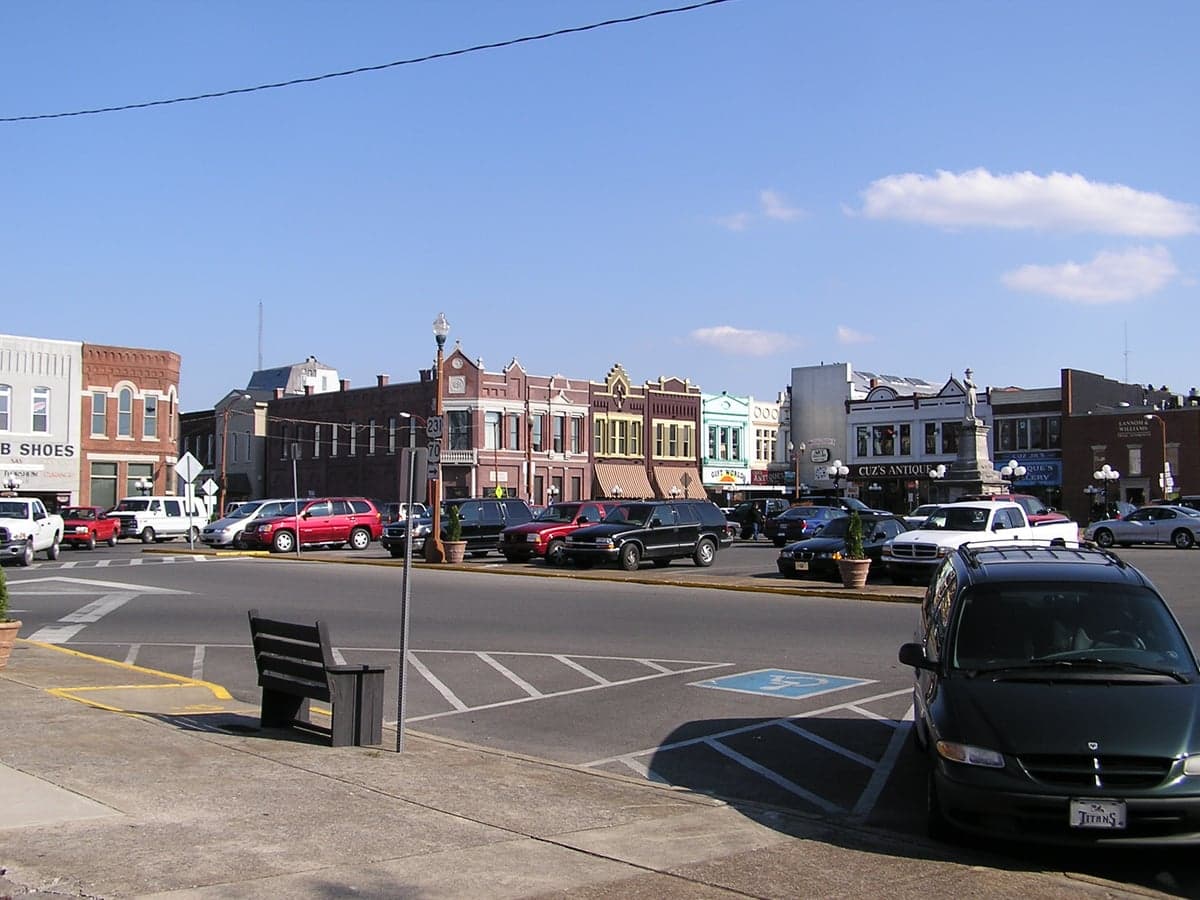
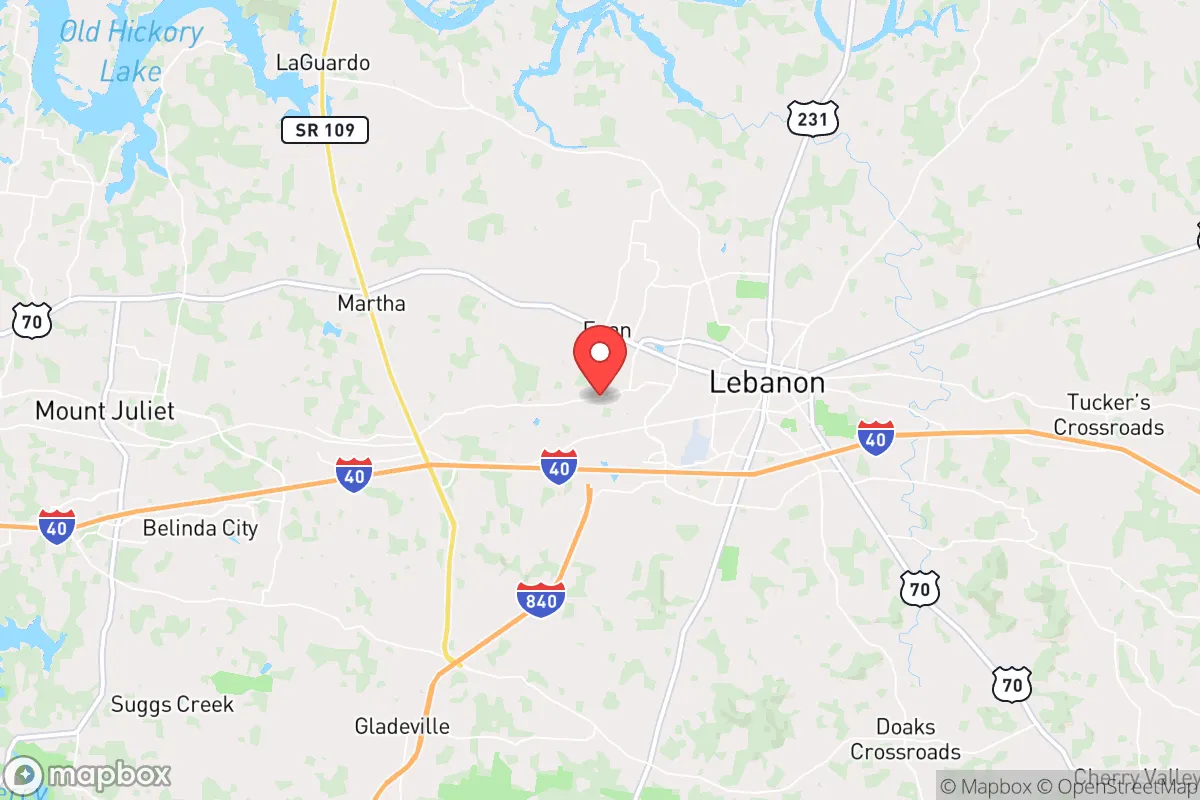
Photo: Wikipedia
Personal Sovereignty in Lebanon, TN
Moderate friction. Expect trade-offs in some aspect of personal liberty and independence.
What does Personal Sovereignty tell us?
Personal Sovereignty measures your capacity for self-reliance and independence with minimal government friction. Higher scores mean fewer barriers between you and the way you want to live... but it assumes you have the space you need and good neighbors.
What does this tell us?
Personal Sovereignty measures your capacity for self-reliance and independence with minimal government friction. Higher scores mean fewer barriers between you and the way you want to live... but it assumes you have the space you need and good neighbors.
State Policy
Energy independence: Importer (25% of energy produced in-state)
Personal Liberty
Homesteading

Personal Liberty Analysis
Lebanon, Tennessee, offers a notably high degree of personal sovereignty, particularly for those who prioritize minimal government interference in daily life, self-defense, and family autonomy. Situated in a state that consistently ranks among the most conservative in the nation, Lebanon provides a legal and cultural environment where individual liberty is the default, not the exception. For single individuals and parents alike, the city’s posture is one of trust in the citizen, not the state, making it a strong candidate for relocation from jurisdictions with more restrictive governance. The key question is whether this autonomy is durable and deep enough for those with a survivalist or prepper mindset, and the answer largely depends on how you define your personal red lines.
Tax burden and regulatory posture: How much of your income and freedom is left alone?
Tennessee’s tax structure is a major pillar of personal sovereignty in Lebanon. The state has no personal income tax on wages, which means every dollar you earn stays in your pocket or your preps. Property taxes in Wilson County are moderate, with an effective rate around 0.68% of assessed value, significantly lower than the national average. This keeps the cost of owning land and a home manageable, freeing up capital for self-reliance investments like solar panels, water storage, or a workshop. The regulatory environment is equally favorable: there is no state-level business tax on most small operations, and occupational licensing requirements are minimal compared to coastal states. For a prepper or homesteader, this means fewer bureaucratic hurdles when starting a side business, selling eggs, or running a small repair shop from your property. The state’s right-to-work laws further reduce government entanglement in employment, ensuring you aren’t forced into union membership or dues as a condition of work. Overall, Lebanon’s tax and regulatory posture is designed to leave you alone, which is the foundation of any high-sovereignty location.
Self-defense and gun law specifics: Can you truly protect your home and family?
Lebanon sits in a state with some of the strongest self-defense laws in the country, and the city itself respects those rights. Tennessee is a permitless carry state for handguns, meaning any law-abiding adult 21 or older can carry a concealed firearm without a government-issued license. For those under 21, a permit is still required, but the process is straightforward and shall-issue. The state’s Castle Doctrine is unambiguous: there is no duty to retreat in your home, vehicle, or place of business, and you are legally presumed to have a reasonable fear of death or great bodily harm if an intruder unlawfully enters. This extends to your property, not just your dwelling. Stand Your Ground laws apply statewide, so you are not required to retreat in any place you have a legal right to be. Magazine capacity bans, firearm registration, and waiting periods do not exist in Tennessee. For a parent, this means you can legally keep a firearm in your vehicle while picking up kids from school (with some restrictions on school property itself), and you can train your children in safe handling without government interference. The local sheriff’s office in Wilson County is generally pro-Second Amendment, and there are no local ordinances that preempt state law. If self-defense is a non-negotiable aspect of personal sovereignty, Lebanon delivers.
Self-reliance and homesteading viability: Lot sizes, zoning, and off-grid feasibility
For those looking to reduce dependence on fragile supply chains, Lebanon offers realistic opportunities for self-reliance, though with some caveats. Within the city limits, residential lots are typically a quarter-acre to half-acre, which limits large-scale gardening or livestock. However, Wilson County’s zoning outside the city is far more permissive. Unincorporated areas allow for hobby farms, chickens, goats, and even larger livestock on parcels as small as one to two acres, depending on the specific zoning district. The county does not have a blanket ban on rainwater collection, and many rural properties already rely on well water and septic systems, which means you are not tied to municipal utilities. Off-grid solar is legal, though you will need to coordinate with the local electric cooperative if you want to stay grid-tied for backup. There are no state-level restrictions on composting toilets or greywater systems for non-potable use, but you should check with the county health department for septic permits. The biggest hurdle for hardcore preppers is that Lebanon is growing fast, and suburban-style HOA covenants are common in new developments. If you want true autonomy, look for properties outside city limits, preferably with no HOA, and verify zoning allows for the level of self-sufficiency you intend. The land is affordable relative to the rest of the country, with raw acreage often available under $10,000 per acre, making it feasible to buy a few acres and build a compound.
Personal liberties: Parental rights, medical autonomy, speech, and property
Lebanon’s cultural and legal climate strongly favors parental rights and medical autonomy. Tennessee has passed laws affirming parents’ authority to direct their children’s upbringing, including education and healthcare decisions. School choice is robust, with charter schools, private options, and a growing homeschool community that is well-supported by local co-ops and networks. The state does not mandate vaccines for school attendance if parents claim a religious or philosophical exemption, and there is no state-level vaccine passport system. Medical freedom is further protected by laws that prohibit discrimination against those who decline certain treatments or vaccines, and the state has resisted federal overreach on public health mandates. Free speech is broadly protected, with no hate speech laws that criminalize political or religious expression. Property rights are strong: Tennessee is a “right to farm” state, which limits nuisance lawsuits against agricultural operations, and there is no state-level red flag law that allows confiscation of firearms without due process. The one area where government overreach is visible is in the realm of land use—eminent domain is legal for public projects, but it is rarely abused in Wilson County. Overall, the legal framework in Lebanon is designed to keep the state out of your family, your body, and your property, which aligns with a conservative, survivalist worldview.
Compared to other relocation destinations in the Southeast, Lebanon strikes a strong balance between personal sovereignty and practical access to resources. It lacks the extreme isolation of rural Montana or Idaho, but it also avoids the regulatory creep of states like Colorado or Virginia. For a single individual or parent who values self-defense, low taxes, and the freedom to live as they see fit, Lebanon offers a high degree of autonomy without requiring a complete off-grid existence. The main risk is growth—as Nashville’s sprawl continues, local politics could shift, and zoning could tighten. For now, Lebanon remains a solid bet for those who want to be left alone to protect their family, keep their earnings, and prepare for whatever comes next.

* Values derived from national, state, county, city and local statistics and may differ in a specific area. Last updated: 2026-05-01T17:04:23.000Z
Narrative content on this page is AI-generated and may contain mistakes. Verify any details that matter before acting on them.
ReloMaps may earn a commission from affiliate links at no extra cost to you.

