 Popular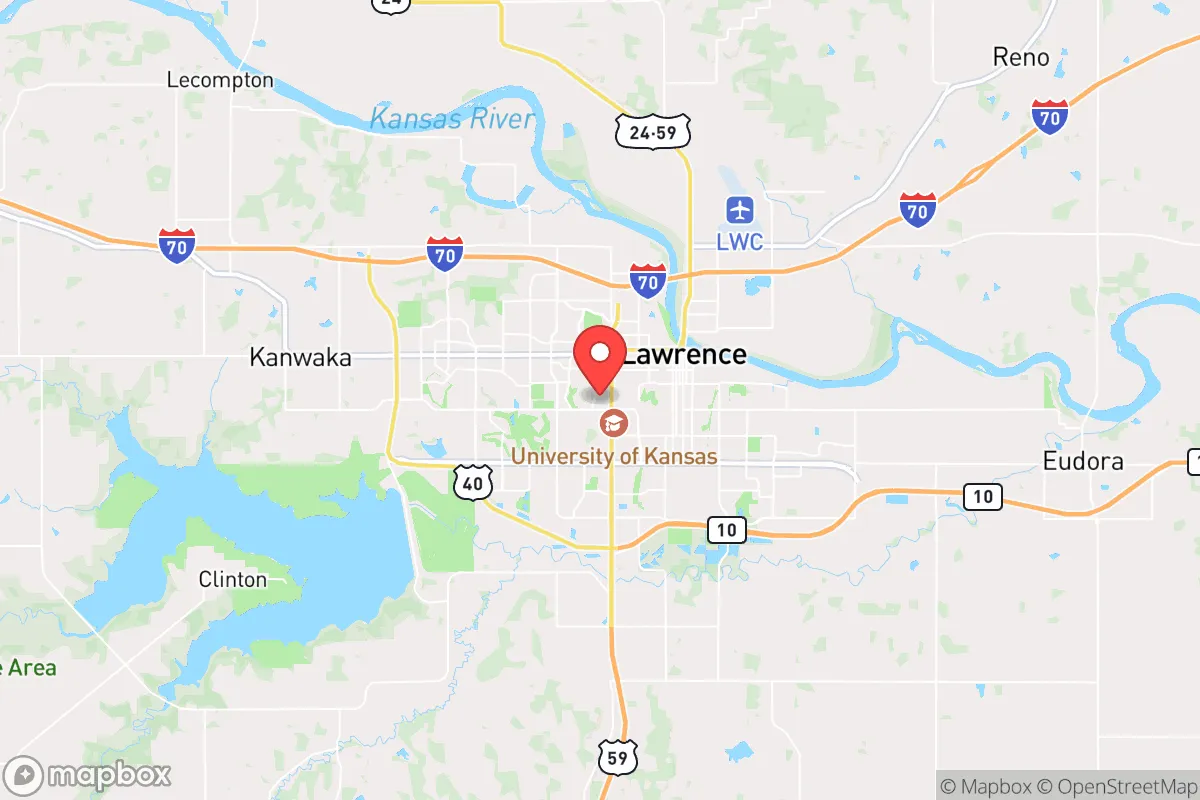
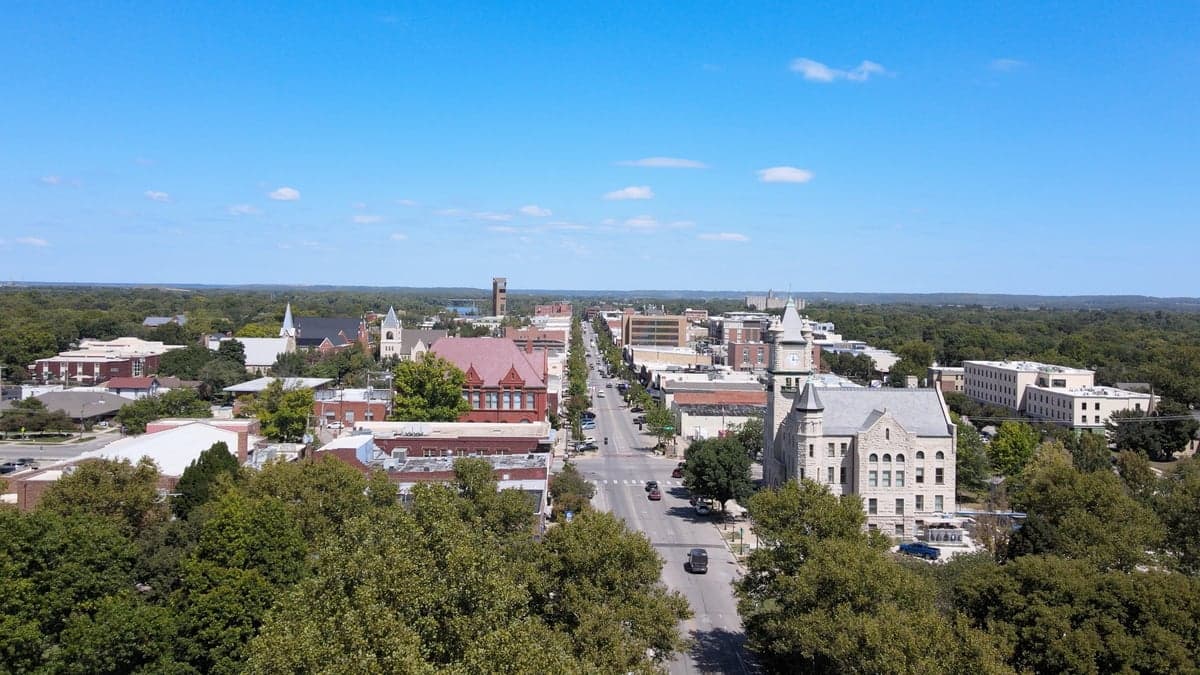
Photo: Wikipedia
Quality of Life in Lawrence, KS
Above-average quality of iife. The area offers a reasonable cost of living, decent mobility, and a mix of neighborhood amenities.
What does Quality of Life tell us?
Quality of Life blends cost of living, nearby amenities, socioeconomic signals, and neighborhood character. City-level scores represent the whole municipality; individual neighborhoods can differ.
What does this tell us?
Quality of Life blends cost of living, nearby amenities, socioeconomic signals, and neighborhood character. City-level scores represent the whole municipality; individual neighborhoods can differ.
Cost of Living
7% below national average
The Real Cost of Living in Lawrence, KS for 2026
| Tier | Individual | Family (4) |
|---|---|---|
| Survival | $17k | $32k |
| Comfortable | $52k | $77k |
| Luxury | $114k+ | $176k+ |
| Elite (Top 5%) | $144k+ | $223k+ |
82%
The Area Signal
A metric tracking the socioeconomic signals of the area.
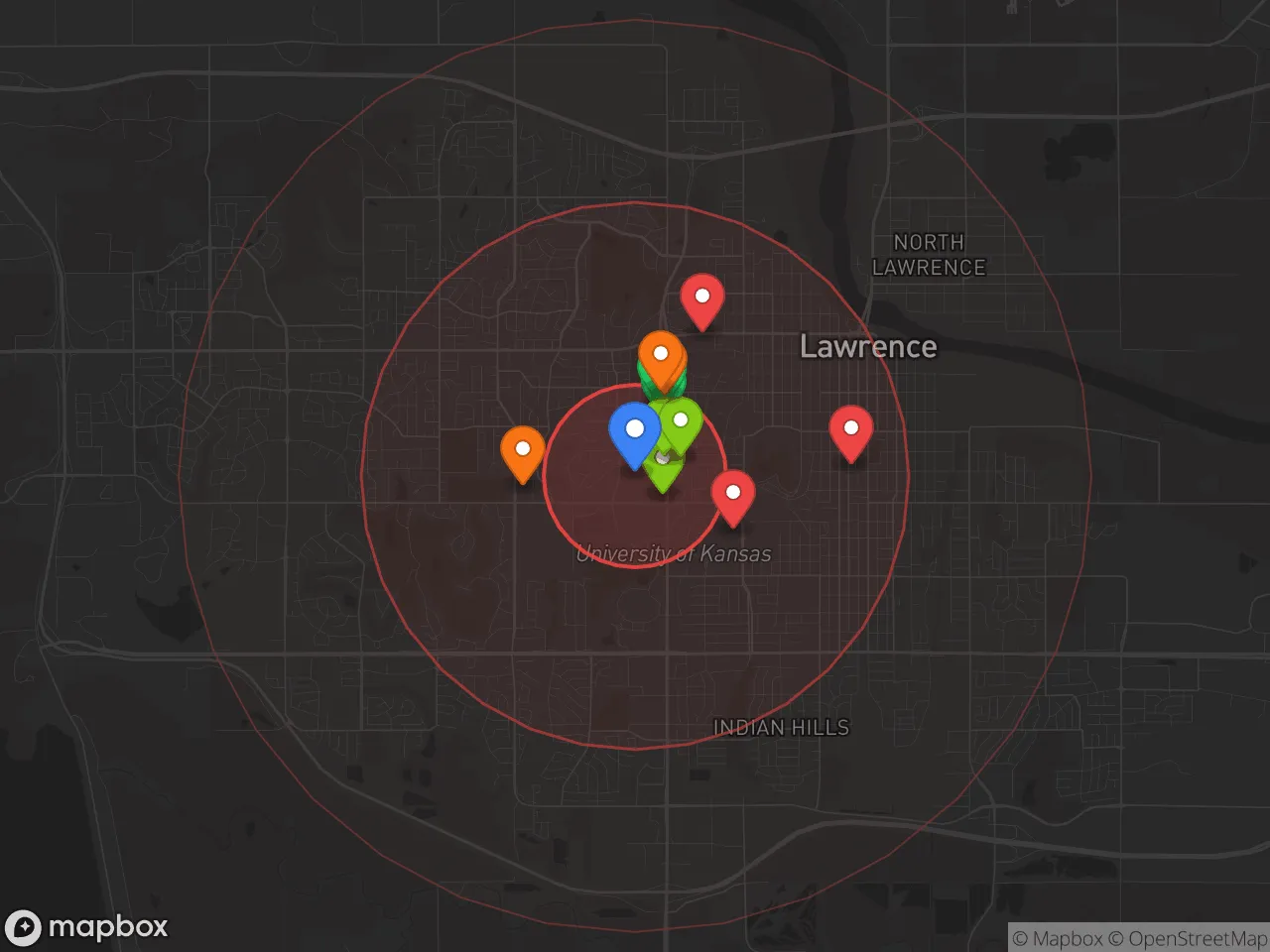
Hobbies
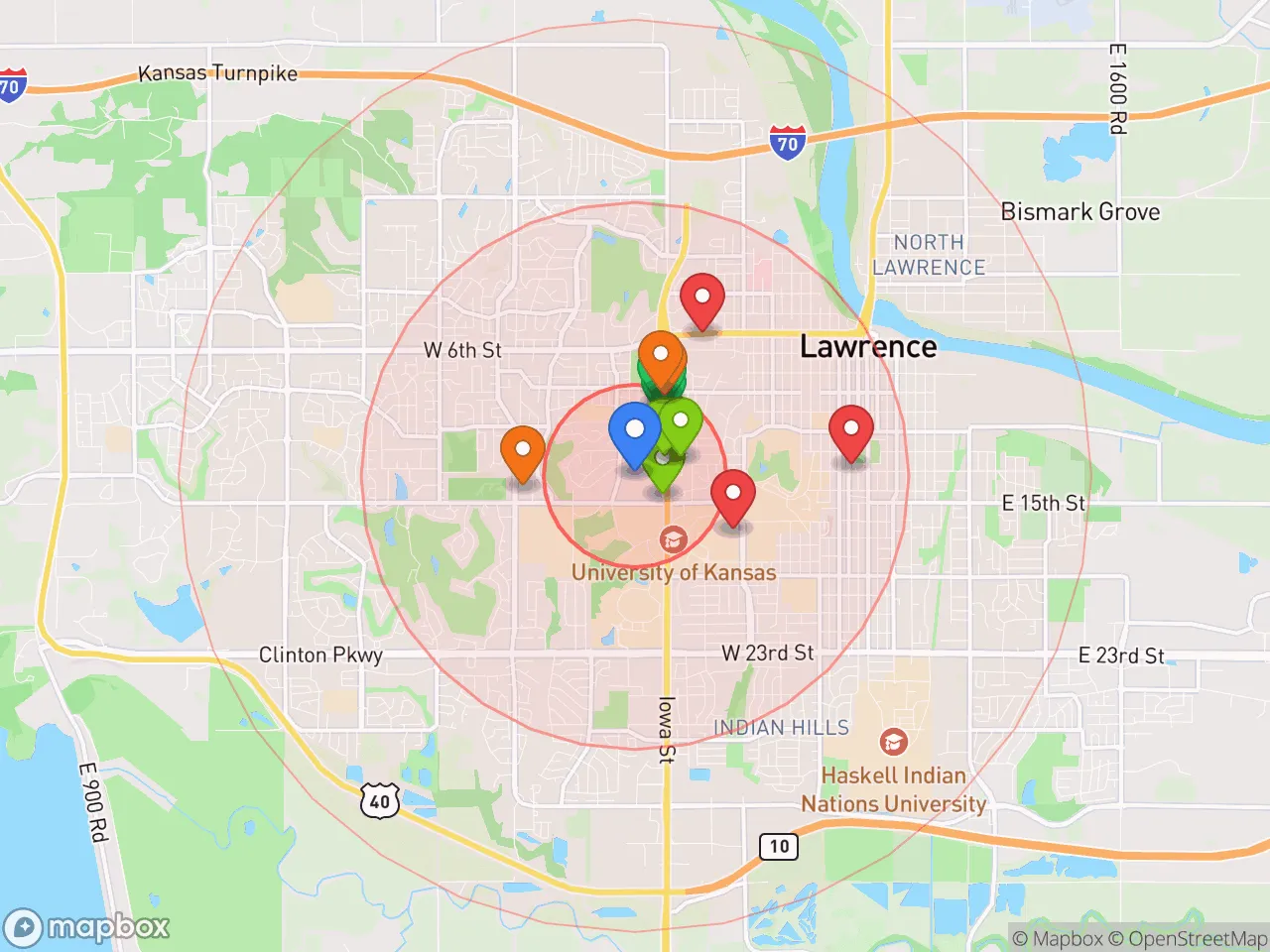
Explore the areaGroceries
7 within 10 miles
Gas
20 within 10 miles
Hospital
1 within 20 miles
Airport
MCI — Kansas City International
Post Office
USPS — Lawrence, KS
Critical Amenities
Quality-of-Life Analysis
Lawrence, Kansas, offers a quality of life defined by a unique blend of college-town energy and Midwestern affordability, attracting a population that is both highly educated and economically diverse. With a cost of living index of 93 (7% below the U.S. average), the city provides a financial buffer rarely found in similarly vibrant university communities. The 30,000-student University of Kansas anchors a culture of academic ambition and progressive values, while a significant share of residents work in education, healthcare, and professional services, creating a community that values intellectual engagement and outdoor recreation along the Kansas River.
Cost of living, housing affordability, and how Lawrence compares to Kansas City
Lawrence’s housing market remains one of its strongest draws, with a median home value of $269,500—roughly $100,000 less than the median in nearby Johnson County suburbs of Kansas City. This price point puts homeownership within reach for many young professionals and faculty who would be priced out of comparable college towns like Boulder or Ann Arbor. Renters also benefit: the median rent of $1,054 is well below the national average and significantly cheaper than the $1,400+ typical in Overland Park or Leawood. The average commute of just under 20 minutes is a standout advantage—far shorter than the 30-minute regional average—meaning residents spend less time in traffic and more time at local coffee shops, trails, or campus events. While property taxes in Douglas County are slightly higher than in some rural Kansas counties, the overall cost of living index of 93 means a household earning the national median income can afford a comfortable lifestyle here, including dining out and attending cultural events.
Amenities, schools, and what daily life feels like in Lawrence
Daily life in Lawrence revolves around a walkable downtown core, the University of Kansas campus, and a robust network of parks and trails. The city’s public schools, part of Lawrence USD 497, consistently rank among the top in Kansas, with Lawrence High School and Free State High School both earning A ratings from Niche for academics and college readiness. The presence of the university means residents have access to the Lied Center for performing arts, the Spencer Museum of Art, and Division I athletics—amenities typically found in much larger cities. For families, the city offers over 50 parks, the Prairie Park Nature Center, and the Clinton Lake State Recreation Area for boating and hiking. The restaurant scene is notably strong for a city of 95,000, with a concentration of farm-to-table eateries and craft breweries along Massachusetts Street. The trade-off is a quieter nightlife compared to Kansas City, and retail options are more limited, with most big-box shopping located on the city’s south side. However, the short commute means errands and school drop-offs rarely feel rushed, and the community’s emphasis on local events—like the Lawrence Busker Festival and the weekly farmers’ market—fosters a tight-knit feel.
Lawrence is best suited for people who value intellectual community, outdoor access, and a slower pace than a major metro, but still want solid career opportunities in education, healthcare, or remote work. Families will appreciate the strong schools and low crime rates relative to similarly sized cities, while young professionals and graduate students benefit from the affordable rent and proximity to Kansas City’s job market (just 40 minutes east). Retirees and empty-nesters are increasingly drawn to the walkable downtown and the university’s lifelong learning programs. The city’s progressive politics and strong sense of local identity may feel insular to some, but for those seeking a place where cost, culture, and community align, Lawrence delivers a quality of life that punches well above its price point.

Crime in Lawrence, KS
Crime rates similar to the national median for U.S. locations.
Violent CrimeViolent Crime Analysis
Property CrimeProperty Crime Analysis
Crime Analysis
Lawrence, Kansas, reports a violent crime rate of 389.4 incidents per 100,000 residents and a property crime rate of 1,587.4 per 100,000, placing it above both state and national averages for communities of its size. While the city benefits from the stabilizing presence of the University of Kansas, its overall safety picture is complicated by a local criminal justice system influenced by progressive policies that prioritize offender rehabilitation over public protection. Prospective residents should weigh these crime statistics against the reality that liberal prosecutorial and judicial approaches in Douglas County may contribute to higher recidivism and a greater number of active offenders on the streets.
Crime in context
Lawrence’s violent crime rate of 389.4 per 100,000 is roughly 10% higher than the national average and significantly exceeds the Kansas state average of approximately 350 per 100,000. Property crime in Lawrence, at 1,587.4 per 100,000, is also elevated—about 15% above the national benchmark. These figures place Lawrence in a higher-risk tier compared to similarly sized college towns in the Midwest, such as Manhattan, KS, or Columbia, MO. The elevated rates are not an anomaly; they reflect a broader trend in Douglas County, where progressive district attorneys have implemented policies like presumptive diversion for nonviolent offenders and reduced cash bail, which critics argue keep more repeat offenders in the community rather than in custody.
What residents experience
For daily life in Lawrence, the most tangible impact is property crime. Vehicle break-ins, bicycle thefts, and package thefts are common, particularly near downtown and the KU campus. Residents often report that police response to property crimes is slow, as resources are stretched thin. Violent crime, while less frequent, is concentrated in specific areas—especially the Oread neighborhood and parts of East Lawrence—and includes aggravated assaults and robberies. The progressive justice philosophy in Douglas County means that offenders convicted of these crimes often receive shorter sentences or alternative sentencing, leading to a revolving door effect. This directly undermines victim confidence and public safety, as individuals with multiple arrests for theft or assault remain in the community without meaningful deterrents.
Neighborhood-level variation
Safety in Lawrence varies sharply by neighborhood. The western parts of the city, including the Wakarusa Valley and Alvamar areas, report significantly lower crime rates, with violent incidents being rare. In contrast, the downtown core and areas near 23rd Street and Iowa Street see the highest concentration of property crimes and drug-related offenses. The Pinckney and East Lawrence neighborhoods also experience elevated rates of burglary and vandalism. For those considering a move, renting or buying west of Iowa Street generally offers a safer environment, while properties closer to the university or downtown require more vigilance. The city’s overall safety profile is a direct reflection of its justice system’s priorities—leniency for offenders that, while well-intentioned, has tangible consequences for law-abiding residents.
* Values derived from national, state, county, city and local statistics and may differ in a specific area. Last updated: 2026-04-30T04:46:20.000Z
Narrative content on this page is AI-generated and may contain mistakes. Verify any details that matter before acting on them.
ReloMaps may earn a commission from affiliate links at no extra cost to you.

