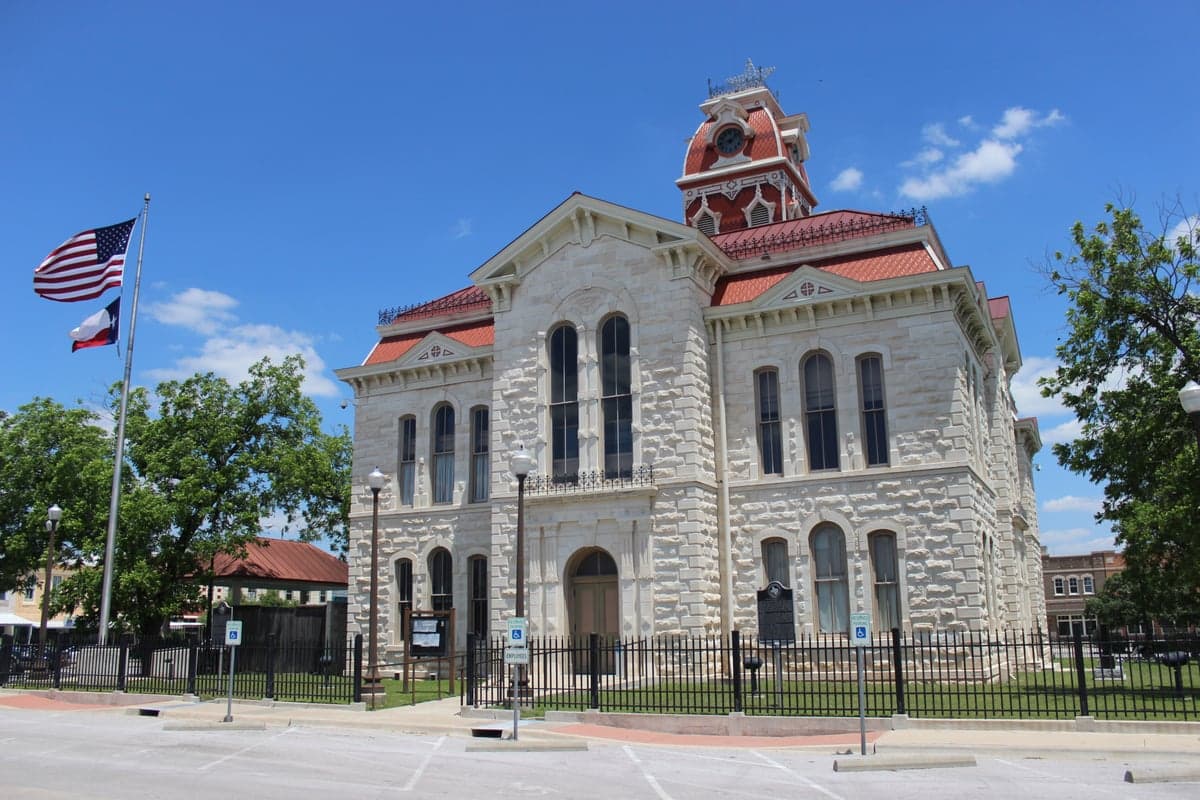
Photo: Wikipedia
Political ClimatePolitical Climate in Lampasas, TX
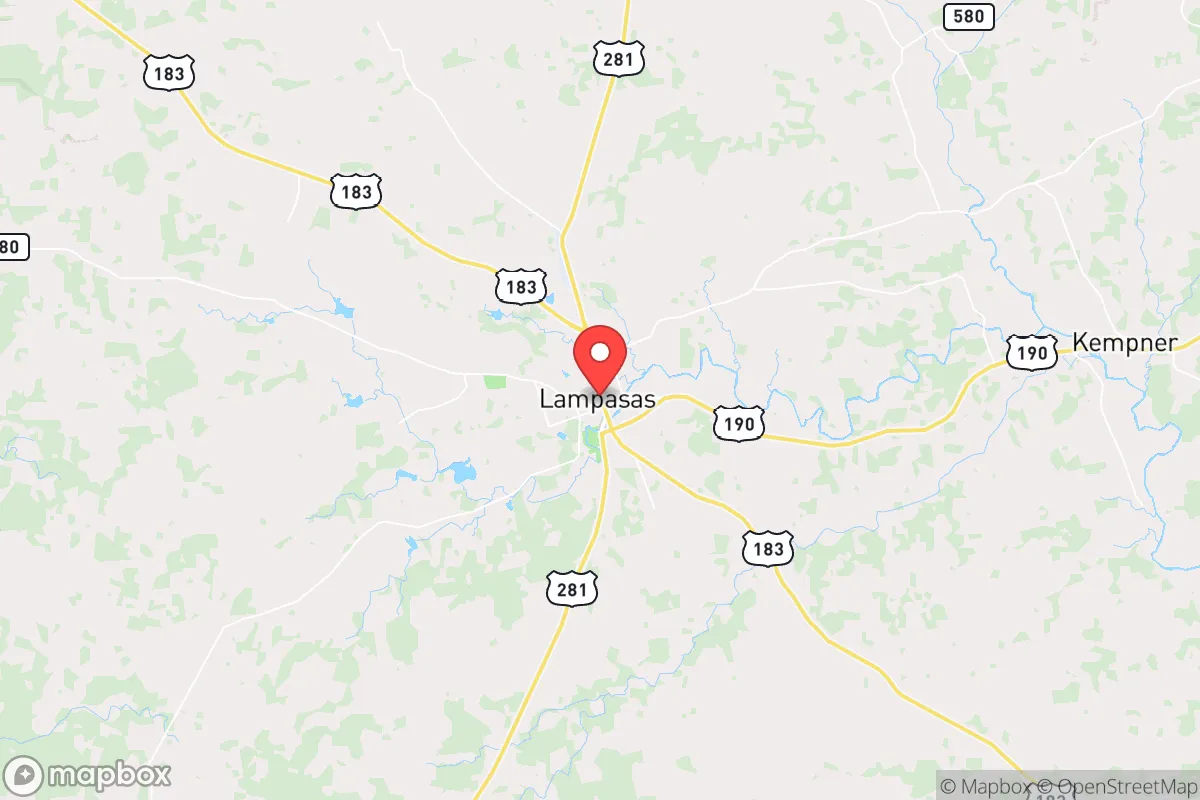
District shown is the primary district for this city’s centroid. Cities may span multiple districts.
Local Political AnalysisPolitical Analysis of Lampasas, TX
Lampasas, Texas, is about as solidly conservative as it gets, with a Cook PVI of R+22 that puts it deep in the red. That’s a far cry from the state’s overall R+4 rating, and it’s not by accident—this area has held the line on traditional values for generations, and the trajectory is holding steady. While the rest of Texas has seen some purple creep in places like Austin or Dallas, Lampasas remains a place where folks still believe in limited government, personal responsibility, and keeping the feds out of your business.
How it compares
To put it bluntly, Lampasas is a conservative stronghold in a state that’s still mostly red but showing cracks. The statewide R+4 means Texas as a whole is competitive enough that progressive money and policies have made inroads—think of the blue shift in Harris County or the woke agenda creeping into school boards in suburbs like Round Rock. Lampasas, by contrast, is R+22, meaning it votes Republican by a margin that’s over five times stronger than the state average. Neighboring towns like Copperas Cove or Killeen lean more moderate, thanks to a transient military population, but drive ten miles out of Lampasas and you’re back in deep-red ranch country. The contrast is stark: while Austin pushes bike lanes and carbon taxes, Lampasas is still debating how to keep property taxes low and the Second Amendment untouched.
What this means for residents
For someone living here, the political climate means fewer headaches from government overreach. You’re not dealing with mask mandates that last two years or zoning laws that tell you what color to paint your fence. The local commission and school board are stacked with folks who believe in fiscal restraint and parental rights—no critical race theory nonsense in the classrooms, no DEI quotas in city hiring. That said, the pressure is mounting. As Texas grows, progressive activists are eyeing rural counties like Lampasas for “outreach,” and state-level policies from Austin—like the push for electric vehicle mandates or water restrictions—could trickle down. The long-term concern is that if the state keeps shifting left, Lampasas might have to fight harder to preserve its way of life. But for now, it’s a refuge where you can still live free from the nanny state.
Culturally, Lampasas stands apart from the rest of Texas in a few key ways. You won’t find the hipster coffee shops or vegan co-ops that dot Austin’s outskirts; instead, it’s church potlucks, hunting leases, and a strong sense of neighborly self-reliance. Policy-wise, the county has resisted annexation by larger cities and kept its local ordinances minimal—no noise complaints about your truck, no permits for a backyard shed. The biggest distinction is the attitude: here, freedom isn’t a slogan, it’s how you live. If the rest of Texas keeps drifting toward California-lite, Lampasas will likely double down on its conservative roots, maybe even becoming a model for rural resistance. It’s not flashy, but it’s real—and that’s exactly how the folks here like it.

State Political ClimatePolitical Climate in Texas
State Political AnalysisPolitical Environment in the State
Texas remains a solidly Republican state with a Cook PVI of R+4, but the political landscape has shifted dramatically over the past two decades. The dominant coalition is a mix of rural conservatives, suburban moderates, and a growing libertarian-leaning population drawn by low taxes and limited regulation. However, the state’s trajectory is increasingly contested: the GOP’s grip on statewide offices is secure, but the margin of victory has narrowed from double digits in the 2000s to single digits in recent presidential cycles, driven by explosive growth in Democratic-leaning metros like Austin, Dallas, and Houston.
Urban vs. rural divide
The political map of Texas is a study in contrasts. The state’s major metropolitan areas—Houston, Dallas-Fort Worth, San Antonio, and Austin—are the engines of Democratic growth. Harris County (Houston) and Dallas County have flipped from red to blue over the past decade, while Travis County (Austin) is now a deep blue stronghold. In contrast, the vast rural and exurban regions—Lubbock, Midland-Odessa, Tyler, and the Rio Grande Valley—remain reliably Republican. The suburbs are the real battleground: Collin County (north of Dallas) and Fort Bend County (southwest of Houston) have shifted from solid red to purple, with local races often decided by a few thousand votes. The 2020 election saw Bexar County (San Antonio) and Tarrant County (Fort Worth) flip to Biden, signaling that the urban-rural divide is widening, not narrowing.
Policy environment
Texas’s policy environment is defined by its no state income tax, low property taxes (though rising), and a regulatory posture that favors business over government intervention. The state has a constitutional cap on spending growth tied to population and inflation, which keeps budgets lean. Education policy is a flashpoint: the state funds schools primarily through local property taxes, leading to wide disparities between wealthy suburbs and rural districts. The Texas Education Agency (TEA) has pushed for school choice and charter expansion, but rural Republicans often resist, fearing loss of local control. Healthcare remains a sore spot—Texas has the highest uninsured rate in the nation, and the state has refused Medicaid expansion under the Affordable Care Act, a stance that aligns with its small-government ethos but leaves many working poor without coverage. Election laws have tightened: Senate Bill 1 (2021) restricted mail-in voting, added ID requirements, and banned drive-through voting, a move supporters say protects integrity and critics call suppression. The state also has a constitutional carry law (2021) allowing permitless handgun carry, reflecting a strong gun rights culture.
Trajectory & freedom
On balance, Texas is becoming more free in some areas and less free in others. The Heartbeat Act (SB 8, 2021) banned abortions after six weeks and empowered private citizens to sue violators, a dramatic expansion of state-level life protection. The Parental Bill of Rights (HB 900, 2023) requires school libraries to restrict “sexually explicit” materials and gives parents more control over curriculum, a win for parental rights advocates. Gun rights expanded with constitutional carry, and the state has resisted federal vaccine mandates and COVID-19 restrictions. However, government overreach is creeping in: property taxes have risen faster than inflation, and the state’s business tax (franchise tax) remains a burden on small firms. The Texas Privacy Act (2023) restricts government surveillance of digital data, but the state also uses facial recognition at the border and has expanded state police powers under Operation Lone Star. The trend is toward more personal liberty in cultural and Second Amendment matters, but less fiscal freedom as government spending grows.
Civil unrest & political movements
Texas has seen its share of political flashpoints. The 2020 George Floyd protests in Austin, Dallas, and Houston turned violent, with property damage and clashes with police. The “Defund the Police” movement gained traction in Austin, but the city council later reversed course after a spike in violent crime. On the right, the “Take Back Texas” movement has mobilized rural counties to push back against state mandates on land use and environmental regulations. Immigration remains the hottest button: Operation Lone Star, launched by Governor Greg Abbott in 2021, deployed state troopers and National Guard to the border, bused migrants to sanctuary cities like New York and Chicago, and led to legal battles over state vs. federal authority. El Paso and the Rio Grande Valley have been epicenters of the border crisis, with local officials often at odds with state policy. Secession rhetoric is mostly fringe, but the Texas Nationalist Movement has gained some online traction, though it has no real political power. Election integrity remains a live issue: the 2020 and 2022 cycles saw lawsuits over ballot drop boxes and voter roll purges, with both sides accusing the other of bad faith.
Projection
Over the next 5-10 years, Texas will likely remain Republican at the state level, but the margin will continue to narrow. In-migration from blue states—especially California, New York, and Illinois—is bringing more moderate and left-leaning voters to the suburbs of Austin, Dallas, and Houston. The 2024 election saw Trump win Texas by about 5 points, down from 9 in 2020, and the trend is accelerating. The Rio Grande Valley, once reliably Democratic, is shifting right as Hispanic voters move toward the GOP on cultural and economic issues. The state’s fast-growing Asian and Hispanic populations are not monolithic; many are socially conservative and entrepreneurial, which could keep Texas red for another decade. However, if the GOP fails to address rising property taxes, school funding inequities, and infrastructure strain from growth, it risks losing the suburbs. A new resident moving in now should expect a state that is politically competitive but still conservative, with a government that is generally hands-off on personal freedoms but increasingly assertive on border security and cultural issues.
Bottom line for a new resident: Texas offers a high degree of personal liberty—no income tax, strong gun rights, and a culture of self-reliance—but it’s not a libertarian paradise. Property taxes are high and rising, school quality varies wildly by zip code, and the political climate is becoming more polarized. If you value limited government and cultural conservatism, you’ll find a welcoming home in the suburbs of Fort Worth, San Antonio, or the Hill Country. If you’re looking for a blue enclave, Austin and Houston’s inner loop are your options, but expect higher costs and more regulation. The state is changing fast, but its core identity—big, bold, and fiercely independent—remains intact.
* Values derived from national, state, county, city and local statistics and may differ in a specific area. Last updated: 2026-05-14T18:26:10.000Z
Narrative content on this page is AI-generated and may contain mistakes. Verify any details that matter before acting on them.
ReloMaps may earn a commission from affiliate links at no extra cost to you.

