 Popular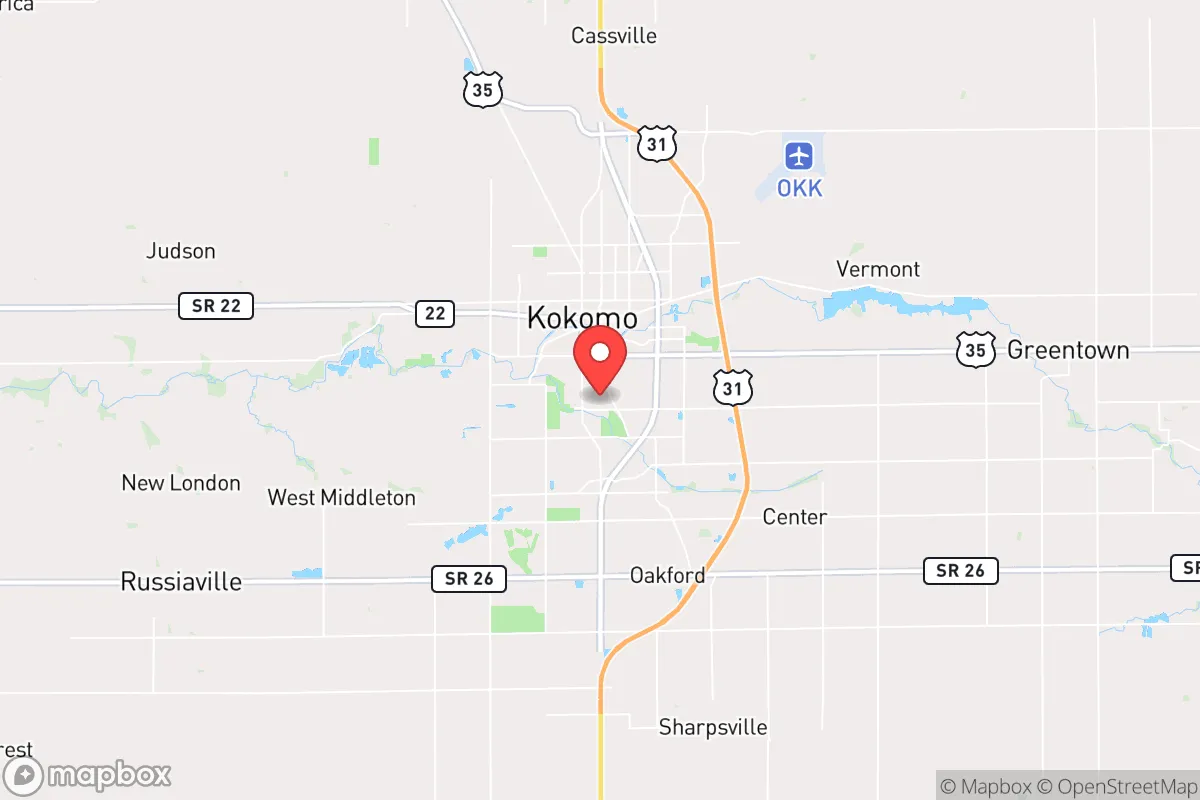
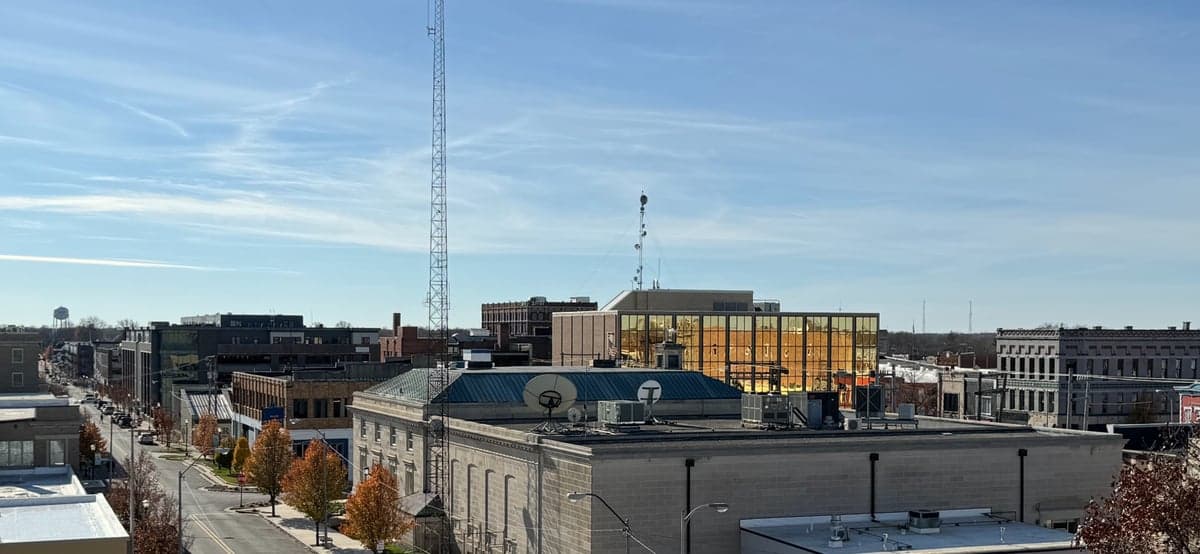
Photo: Wikipedia
Strategic Assessment of Kokomo, IN
Meaningful friction. Expect exposure to either population pressure, blast zones, or natural disaster risk. Consider buying a retreat property.
What does the Strategic Assessment tell us?
Our Strategic Assessment grades tactical survivability of an area. Major population centers, military targets, fallout zones, natural disasters, and border exposure all drive risk — lower exposure means a more defensible position in a crisis.
This is heavily inspired by Joel Skousen's Strategic Relocation book. Highly recommended you checkout the book ($)What does this tell us?
Our Strategic Assessment grades tactical survivability of an area. Major population centers, military targets, fallout zones, natural disasters, and border exposure all drive risk — lower exposure means a more defensible position in a crisis.
This is heavily inspired by Joel Skousen's Strategic Relocation book. Highly recommended you checkout the book ($)Strategic Pillars

Key Distances
Regional Safe Places
Below is our recommended "safe zones" in Indiana and the surrounding area based on our strategic heuristics. For most people, it's unrealistic to live in a “safe zone” full-time due to work, family or other personal reasons. They tend to be more rural. However, many of these areas are perfect for second homes and retreat properties that double as a vacation home or even a short-term rental.

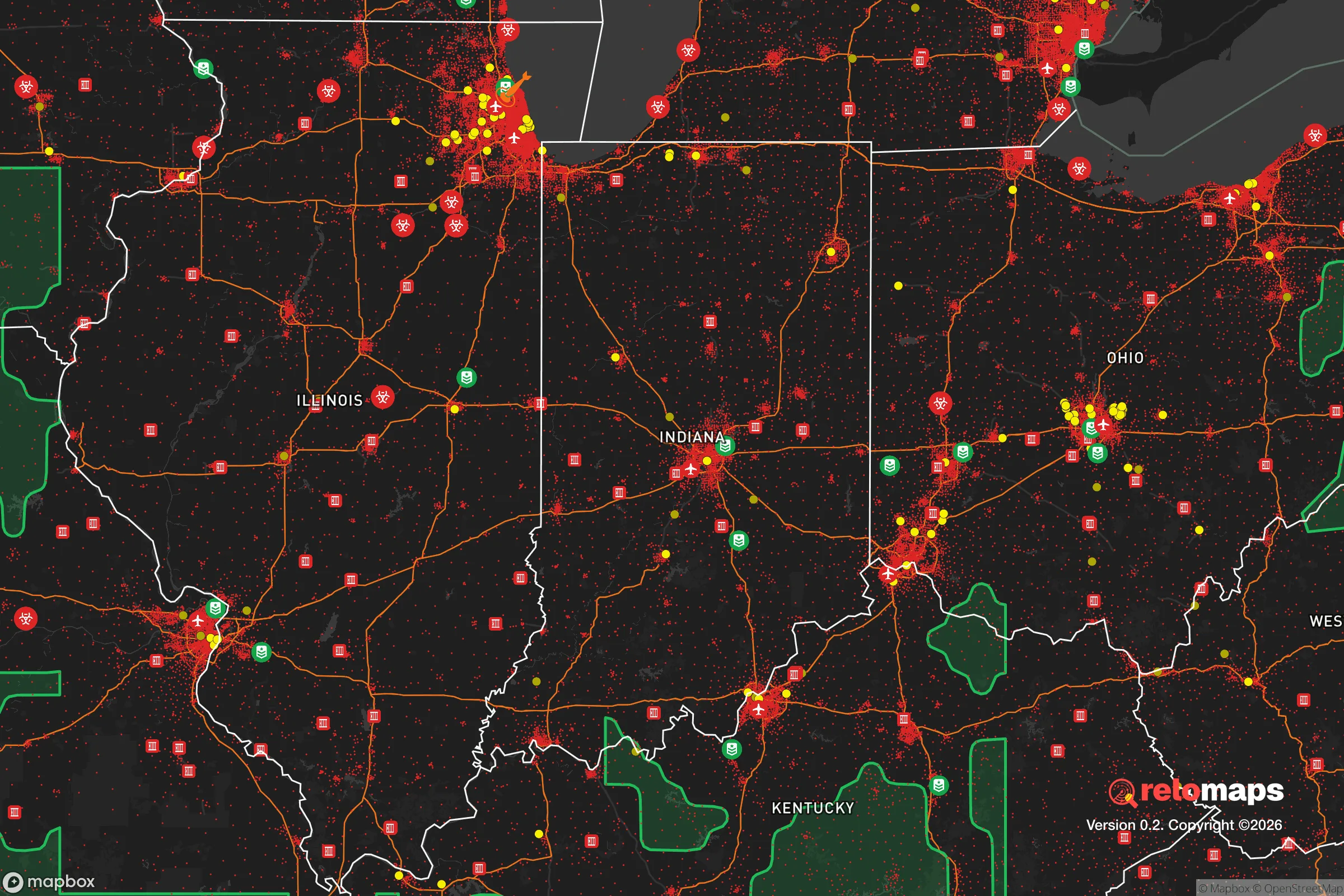


Important Note: For informational purposes only. This does not mean nothing bad ever happens in the green zones. Please use common sense. This is based on public data and modeled with AI. We tried to take a conservative approach but mistakes happen. We update this regularly as new information becomes available.
Solar Generator Recommendations
Backup power matters more here than in safer locations. We've picked three solar generators across budgets and capacity tiers — start with the budget unit if you only need a few essentials, or step up if you want to run a fridge and HVAC for days at a time.

Jackery Portable Power Station Explorer 300
Budget OptionPower on the Go: Weighing only 11 lbs, it's convenient to set up and store with book-sized foldable solar panels

BLUETTI Portable Power Station AC180
Designed for both indoor and outdoor scenarios, AC180 is highly capable as it has a robost capacity and continuous output power.

EF ECOFLOW DELTA Pro Ultra Power Station
Upgraded PickEcoFlow DELTA Pro Ultra is a whole-home energy system designed to grow with your family. Integrated with the Smart Home Panel 2, it scales to meet your evolving energy needs — keeping your home powered, intelligent, and secure through every stage of life.
We earn a commission, at no additional cost to you.
Strategic Assessment Analysis
Kokomo, Indiana, sits in a sweet spot that strategic relocators rarely find: close enough to major industrial and logistical arteries to matter, but far enough from the primary blast zones and population centers that most preppers instinctively avoid. This city of roughly 59,000 in north-central Indiana has weathered deindustrialization, the opioid crisis, and the 2020 supply-chain shocks with a stubborn, blue-collar resilience that suggests the community knows how to hunker down. For a conservative-leaning individual or family thinking about where to plant roots when the world gets shaky, Kokomo offers a mix of geographic insulation, industrial self-sufficiency, and low-key defensibility that deserves a hard look.
Geographic position and natural advantages for long-term security
Kokomo’s location is its first and strongest card. It sits about 50 miles north of Indianapolis and 90 miles south of the Michigan line, placing it well outside the immediate blast radius of any major metropolitan target. The city is not on any major interstate—U.S. 31 runs east-west a few miles north, and U.S. 35 cuts through town—which means it’s not a natural chokepoint for refugee flows or military movement during a crisis. The surrounding terrain is flat, glaciated farmland, which is a double-edged sword: you have no mountains for cover, but you also have no natural bottlenecks that funnel threats your way. The Wildcat Creek and the Kokomo Reservoir provide surface water sources that are not heavily contested, and the area’s aquifer is decent for shallow wells if you know where to dig. The climate is typical Midwest—cold winters, hot summers—but the growing season is long enough for serious gardening, and the soil in Howard County is some of the richest in the state. For a family looking to produce their own food, this is a legitimate advantage over, say, the arid West or the hurricane-prone Gulf Coast.
Risks, exposures, and proximity to fallout-relevant landmarks
No place is a fortress, and Kokomo has real vulnerabilities. The most obvious is its industrial past: the city was a major hub for Chrysler (now Stellantis) and Delphi Electronics, and while those plants have downsized, the remaining manufacturing infrastructure—including a large steel foundry and several chemical processing facilities—could become secondary targets or accident sites during a conflict. The Kokomo Municipal Airport is small, but it’s within 30 miles of Grissom Air Reserve Base (a former SAC base with active reserve units), which is a potential target for a first-strike scenario. Fallout patterns from a strike on Grissom or even on Indianapolis would likely push east-northeast with prevailing winds, meaning Kokomo could see contamination if the wind shifts wrong. The city also sits near the intersection of several major natural gas pipelines (the Panhandle Eastern and Trunkline systems), which are vulnerable to sabotage or cascading failures. On the social side, Kokomo has a poverty rate around 18% and a significant drug problem—meth and fentanyl have hit hard here—which means that during a prolonged crisis, local law enforcement and community cohesion could be strained. The Howard County Sheriff’s Office is professional but understaffed, and the city police force has about 100 officers for a population that swells with commuters during the day.
Practical resilience for a relocator: food, water, energy, and defensibility
For someone serious about self-sufficiency, Kokomo checks several boxes. Food production is viable: the surrounding farmland grows corn, soybeans, and wheat, and there are several small-scale livestock operations within a 20-minute drive. The Kokomo Farmers Market runs May through October, and local co-ops like the Howard County Farm Bureau can connect you with seed suppliers and equipment. Water is the bigger concern—the municipal supply comes from the Kokomo Reservoir and the Wildcat Creek, both of which are vulnerable to contamination or sabotage. A well-drilled property outside city limits is a must; the water table here is around 30-50 feet deep in most places, and a hand pump or solar-powered well can be installed for under $2,000. Energy is a mixed bag: Duke Energy provides grid power, but the area has seen rolling blackouts during extreme cold snaps (the 2022 Christmas freeze knocked out power for days in some rural areas). Solar is viable—the region gets about 4.5 peak sun hours per day—but battery storage is essential. Natural gas is widely available in town, but rural properties rely on propane or heating oil, which could become scarce. Defensibility is where Kokomo struggles. The city is flat and spread out, with few natural chokepoints. The best bet for a relocator is to buy land on the outskirts—north toward Galveston or east toward Greentown—where you have a clear line of sight and limited access points. The local gun culture is strong; there are multiple gun shops and ranges within 30 minutes, and Howard County is a “shall issue” county for concealed carry, with no extra hoops. The sheriff’s office runs a neighborhood watch program, and several local churches have organized emergency response teams. For a family, the school system (Kokomo School Corporation and several private options) is average, but the community is tight-knit enough that you’ll know your neighbors—and that matters more than test scores when the grid goes down.
The overall strategic picture for Kokomo is one of cautious optimism for the prepared relocator. It’s not a bug-out paradise—you won’t find mountains, forests, or isolation here. What you will find is a working-class town that has already survived the gutting of its main industry, a population that knows how to fix things with their hands, and a location that is just far enough from the big targets to give you a fighting chance. The risks are real: industrial accidents, pipeline vulnerabilities, and a drug-weakened social fabric. But the advantages—fertile soil, decent water access, a strong gun culture, and a community that doesn’t panic easily—make it a solid choice for a conservative family that wants to be prepared without living off-grid in a yurt. If you’re looking for a place to ride out the next decade of uncertainty, Kokomo deserves a spot on your short list. Just bring your own well pump and a good set of neighbors.

* Values derived from national, state, county, city and local statistics and may differ in a specific area. Last updated: 2026-04-22T09:59:26.000Z
Narrative content on this page is AI-generated and may contain mistakes. Verify any details that matter before acting on them.
ReloMaps may earn a commission from affiliate links at no extra cost to you.

