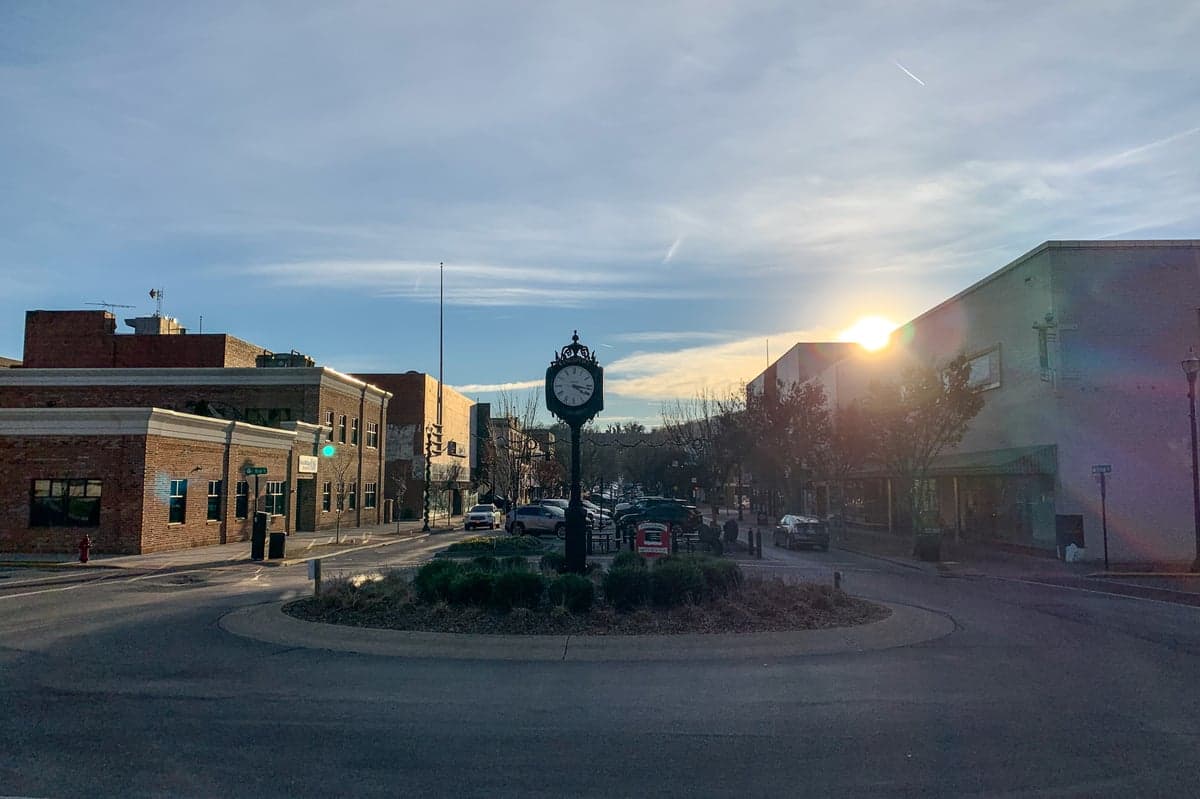
Photo: Wikipedia
Political ClimatePolitical Climate in Kingsport, TN
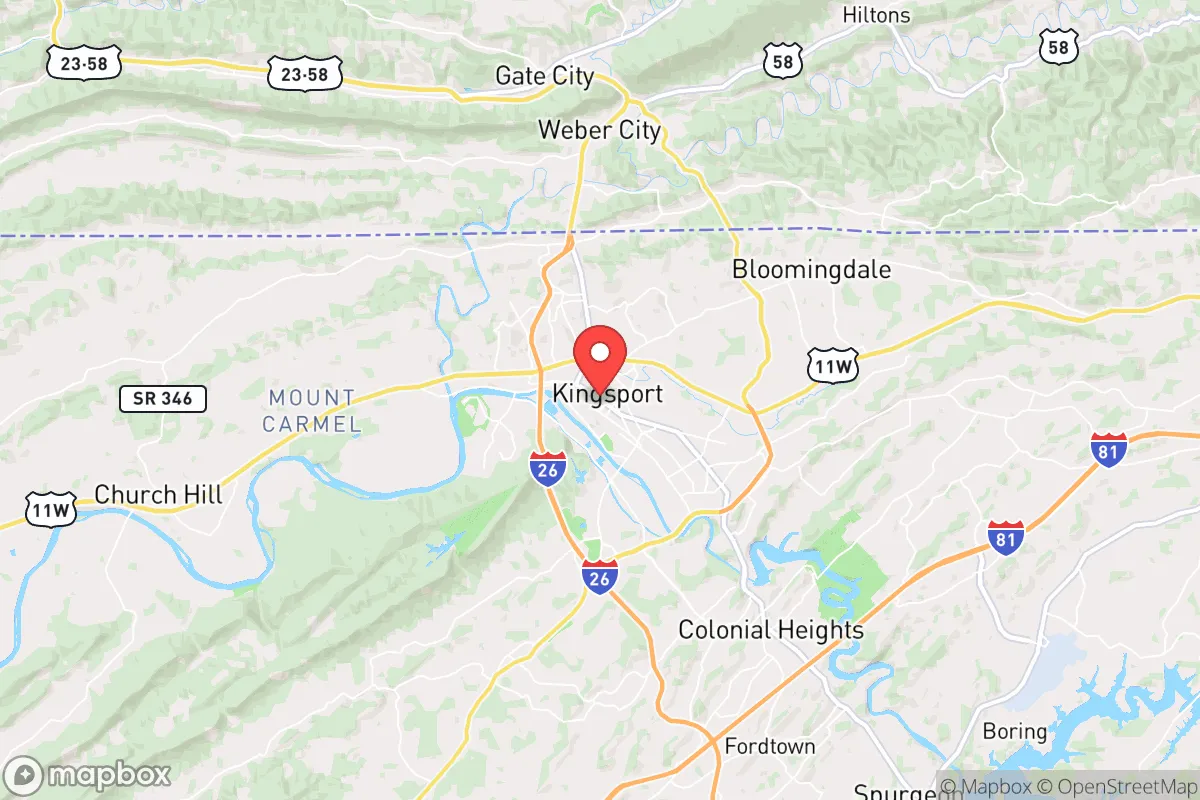
District shown is the primary district for this city’s centroid. Cities may span multiple districts.
Local Political AnalysisPolitical Analysis of Kingsport, TN
Kingsport, Tennessee, is about as solidly conservative as it gets, and that’s not changing anytime soon. The Cook Partisan Voting Index (PVI) of R+29 tells you everything you need to know—this area votes Republican by a massive margin, and it has for generations. If you look at the 2024 presidential results, Sullivan County went heavily for the GOP, and Kingsport itself is the heart of that red wave. The political trajectory here is stable, not shifting leftward like some of the bigger cities in the state. You’ll find none of the progressive drift you see in Nashville or Knoxville; Kingsport’s values are rooted in tradition, personal responsibility, and a deep skepticism of government overreach.
How it compares
Drive thirty minutes south to Johnson City, and you’ll notice a slightly different vibe—it’s still conservative overall, but with a younger, more transient population from East Tennessee State University, you get a bit more purple in local elections. Bristol, just north, is similar to Kingsport but with a stronger libertarian streak, especially around gun rights and property taxes. The real contrast is with places like Asheville, North Carolina, about an hour east, where progressive policies on zoning, taxes, and public spending have driven up costs and created a lot of red tape. Kingsport residents look at that and see a cautionary tale about what happens when government starts meddling in people’s lives. The surrounding rural counties—Hawkins, Scott, and Washington—are even more conservative, so Kingsport actually feels like a moderate hub by comparison, but don’t mistake that for any kind of leftward lean.
What this means for residents
For folks living here, the political climate means you’re generally left alone to live your life. Property taxes are low, zoning is minimal, and there’s no city income tax—that’s a big deal compared to states like California or New York. The local government tends to stay out of business affairs, which is why you see a healthy mix of small manufacturers, logistics companies, and healthcare employers without a ton of bureaucratic hurdles. Gun rights are strongly protected, and you won’t find the kind of restrictive ordinances you see in progressive cities. The downside? If you’re hoping for big public transit expansions or aggressive climate initiatives, you’ll be disappointed—but most residents see that as a feature, not a bug. The school board and city council elections are dominated by conservatives, so any push for progressive curriculum or diversity mandates gets shot down fast. That said, there’s a growing concern among long-time residents about federal overreach, especially on environmental regulations that could impact local industries like Eastman Chemical. People here watch national politics closely, and any hint of federal mandates on energy or land use is met with serious pushback.
Culturally, Kingsport is a place where church attendance is high, family values are front and center, and the phrase “government knows best” gets laughed out of the room. You’ll see a lot of “Don’t Tread on Me” flags mixed in with the American flags, and the local news stations cover Second Amendment rallies and school board meetings with equal seriousness. The biggest policy distinction is the area’s strong opposition to any form of mask or vaccine mandates—during the pandemic, Kingsport was a hotspot for resistance, and that sentiment hasn’t faded. Looking ahead, the main threat locals see is not from within but from state or federal pressure to adopt progressive policies on housing, energy, or education. As long as Kingsport stays in Republican hands—and with an R+29 PVI, that’s a safe bet—the culture here will remain one of personal freedom, low taxes, and a healthy distrust of big government. If you’re looking for a place where your rights aren’t up for debate, this is it.

State Political ClimatePolitical Climate in Tennessee
State Political AnalysisPolitical Environment in the State
Tennessee has been a reliably red state for decades, but the nature of that conservatism has deepened and shifted notably since the mid-2010s. The state’s overall partisan lean is solidly Republican, with Donald Trump winning by 30 points in 2020 and 2024, and the GOP holding supermajorities in both chambers of the legislature. Over the last 10-20 years, the dominant coalition has moved from a more moderate, business-friendly conservatism toward a populist, culturally conservative posture, driven largely by rural and exurban voters. The key shift: what was once a “purple-ish” state in the 1990s and early 2000s (Al Gore territory) is now one of the most reliably conservative states in the country, with in-migration from blue states only reinforcing that trend.
Urban vs. rural divide
The political map of Tennessee is a textbook study in the urban-rural split. The three major metros—Nashville, Memphis, and Chattanooga—are the state’s blue islands, with Davidson County (Nashville) voting +26 for Biden in 2020 and Shelby County (Memphis) going +35. But these cities are surrounded by deep-red suburbs and rural counties that overwhelm their votes statewide. Williamson County, just south of Nashville, is one of the most conservative affluent suburbs in the nation, voting +28 for Trump. Knoxville and Knox County are more mixed—the city itself leans slightly blue, but the county is solidly red. The real engine of Tennessee’s conservatism is the vast rural expanse: counties like Pickett, Van Buren, and Moore routinely vote 80%+ Republican. The divide is stark and growing: as Nashville and Memphis attract more progressive transplants, the rural areas have only hardened their opposition to what they see as coastal values.
Policy environment
Tennessee’s policy environment is aggressively conservative on nearly every front. There is no state income tax—a major draw for relocators—and the sales tax is high (7% state rate, plus local add-ons) to compensate. The regulatory posture is light-touch: no state-level occupational licensing for many trades, and a right-to-work law that keeps unions weak. On education, the state has a robust school choice program: the Education Savings Account (ESA) pilot, expanded in 2024, allows families in certain counties to use public funds for private or homeschool expenses. Parental rights in education are strong, with a 2022 law requiring schools to notify parents of any changes to a student’s health or emotional well-being. Healthcare is a mixed bag: Tennessee did not expand Medicaid under Obamacare, and the state has some of the highest private insurance premiums in the country. Election laws are strict: voter ID is required, early voting is available but limited, and the state purges inactive voters regularly. There is no ballot harvesting, and absentee voting requires an excuse. Overall, the policy environment is designed to maximize personal freedom in economic and educational spheres, while maintaining a traditional social order.
Trajectory & freedom
Tennessee is moving in a direction that most conservatives would call more free, but with some caveats. The biggest expansion of liberty came in 2021 with permitless carry of handguns—any law-abiding adult can now carry a concealed firearm without a permit. That same year, the state passed a near-total abortion ban (trigger law) that took effect after Dobbs, with no exceptions for rape or incest. On parental rights, the 2022 “Don’t Say Gay” style law (HB 800) bans classroom instruction on sexual orientation or gender identity in K-3, and a 2023 law (SB 1) bans gender-affirming care for minors. These are seen by conservatives as protecting children from government overreach. On the economic freedom front, the state has no property tax on business inventory and no franchise tax on most small businesses. However, there are concerning trends: the state’s sales tax is regressive and high, and property taxes in fast-growing areas like Franklin and Murfreesboro have risen sharply as home values double. The biggest freedom concern for some is the state’s aggressive use of eminent domain for private development, particularly in Nashville. Overall, Tennessee is expanding personal liberty in cultural and Second Amendment areas, but the tax burden on consumption is a hidden cost.
Civil unrest & political movements
Tennessee has seen its share of political flashpoints, but they are more localized than in many states. The most visible was the 2023 Nashville Covenant School shooting, which sparked a massive protest at the state capitol demanding gun control—a rare show of left-wing activism in a red state. The protest led to the expulsion of two Democratic state representatives (Justin Jones and Justin Pearson) for violating decorum, which then became a national story. On the right, the “Tennessee Three” saga galvanized conservative voters, who saw it as a necessary stand against lawlessness. Immigration politics are a growing issue: the state passed a 2024 law (SB 258) requiring local law enforcement to cooperate with ICE, and there are no sanctuary cities. Nashville has seen some pro-immigrant activism, but it’s muted. Election integrity controversies have been minimal—Tennessee’s voting system is widely considered secure, and there were no major fraud allegations in 2020 or 2024. The most visible political movement is the rise of the “MAGA” grassroots, which has pushed the state GOP further right, particularly on school curriculum and transgender issues. A new resident would notice a general calm—no major riots, no secession talk—but a palpable cultural tension between the blue cities and the red countryside.
Projection
Over the next 5-10 years, Tennessee will likely become more conservative, not less, despite in-migration from blue states. The reason: the people moving in are disproportionately conservative-leaning families and remote workers from California, Illinois, and New York who are fleeing high taxes and progressive policies. They are settling in Williamson County, Rutherford County, and the Chattanooga suburbs, reinforcing the red vote. The urban cores of Nashville and Memphis will continue to drift left, but their political power is capped by the state’s gerrymandered legislative districts and the rural-heavy state senate. Expect further expansions of school choice, a possible flat income tax (though unlikely given the current no-income-tax stance), and continued restrictions on transgender rights and abortion. The biggest wild card is the state’s growing Hispanic population, which is still largely conservative-leaning on social issues but could shift if national Democrats court them. A new resident moving in now should expect a state that is stable, culturally traditional, and increasingly resistant to federal overreach—but with a cost: rising property taxes in desirable areas and a healthcare system that remains expensive for those without employer coverage.
Bottom line for a new resident: If you’re looking for a state where your tax dollars won’t fund progressive social experiments, where your kids can go to school without woke curriculum, and where you can carry a gun without a permission slip, Tennessee is a strong bet. Just be prepared for the sales tax hit, the summer humidity, and the fact that the politics of Nashville and Memphis are a world apart from the rest of the state. It’s a place where your personal freedom is broadly respected—as long as you don’t expect the government to solve your problems for you.
* Values derived from national, state, county, city and local statistics and may differ in a specific area. Last updated: 2026-04-20T18:54:44.000Z
Narrative content on this page is AI-generated and may contain mistakes. Verify any details that matter before acting on them.
ReloMaps may earn a commission from affiliate links at no extra cost to you.

