Photo: Wikipedia
Personal Sovereignty in Keystone, FL
Viable for self-reliance. Generally workable, though some barriers may limit total independence.
What does Personal Sovereignty tell us?
Personal Sovereignty measures your capacity for self-reliance and independence with minimal government friction. Higher scores mean fewer barriers between you and the way you want to live... but it assumes you have the space you need and good neighbors.
What does this tell us?
Personal Sovereignty measures your capacity for self-reliance and independence with minimal government friction. Higher scores mean fewer barriers between you and the way you want to live... but it assumes you have the space you need and good neighbors.
State Policy
Energy independence: Importer (12% of energy produced in-state)
Personal Liberty
Homesteading

Personal Liberty Analysis
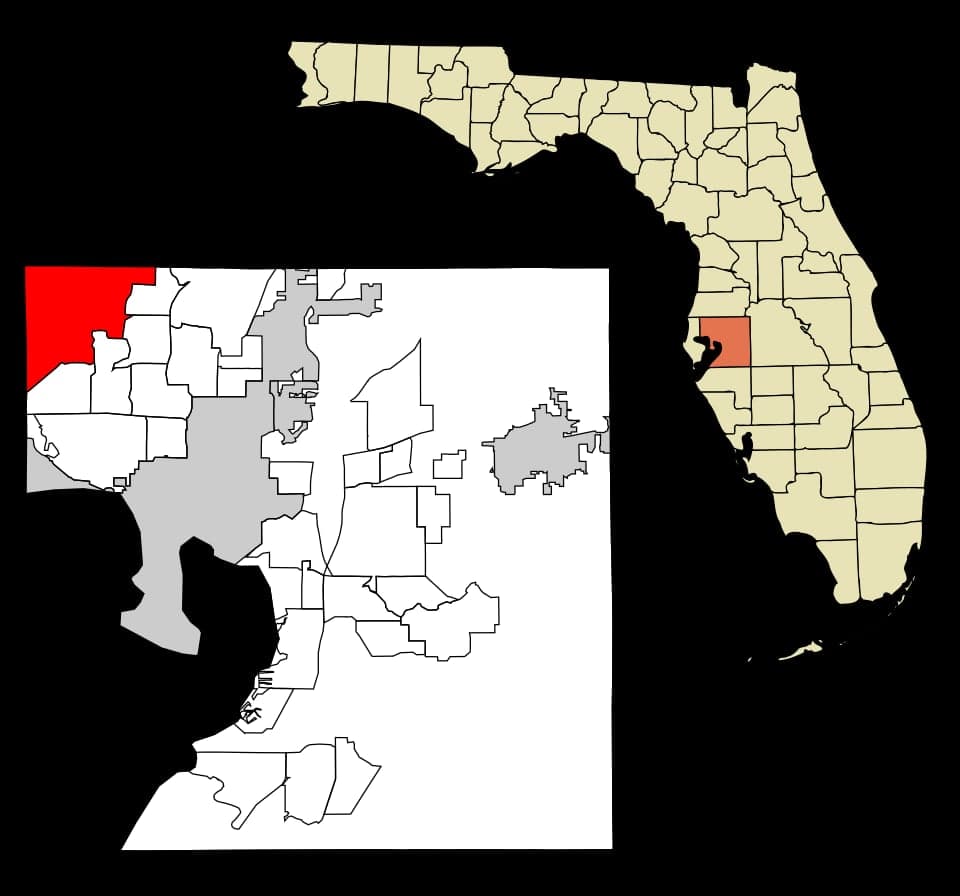
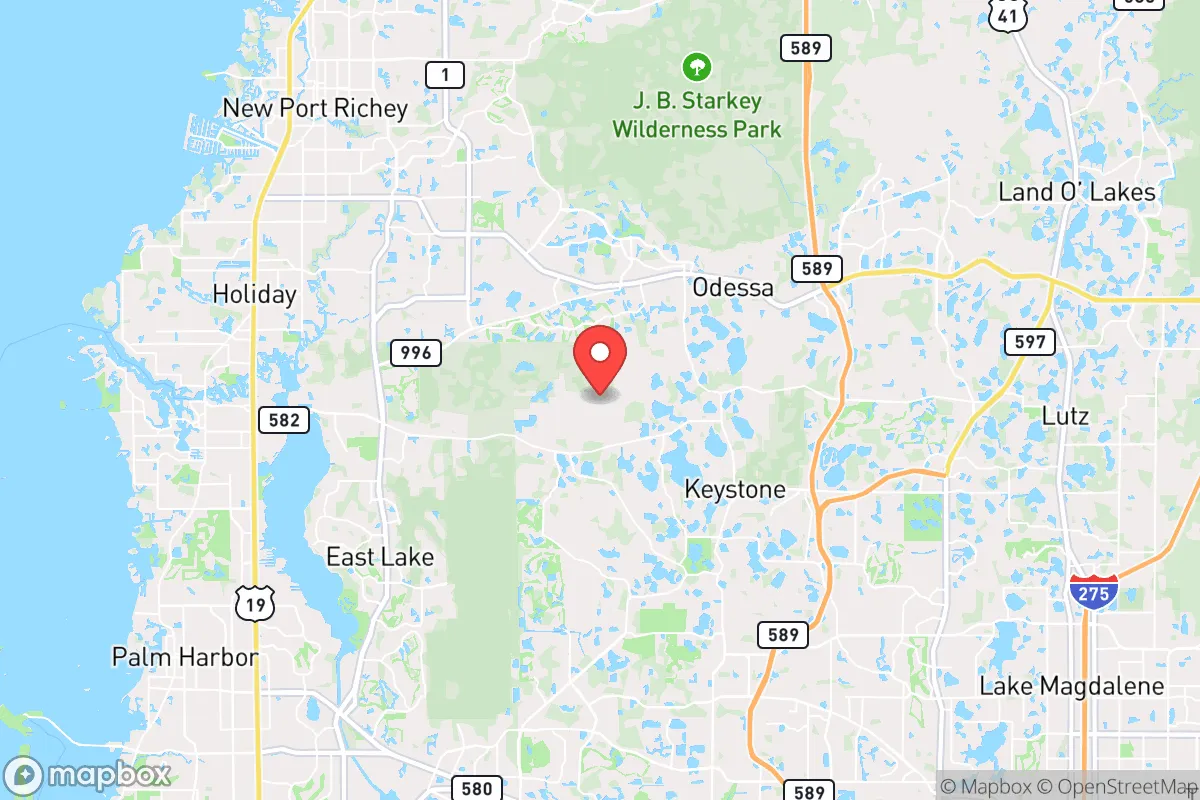
Keystone, Florida, offers a notably high degree of personal sovereignty, anchored by Florida’s strong preemption laws and a state-level political culture that prioritizes individual autonomy over local regulatory control. As an unincorporated community in Pasco County, residents experience a lighter regulatory touch than many incorporated cities, with no municipal zoning board or local police force dictating daily life. This environment appeals to those who value self-reliance, with the state’s lack of personal income tax and broad self-defense statutes forming the bedrock of a freedom-oriented lifestyle. For single individuals and families seeking to minimize government intrusion while maximizing personal choice, Keystone represents a strategic choice within the Tampa Bay region.
Tax burden and regulatory posture in Pasco County
Florida’s absence of a state personal income tax is the single most impactful factor for Keystone residents, immediately increasing disposable income compared to states with income taxes. The state’s sales tax rate is 6%, with Pasco County adding a 1% discretionary surcharge, bringing the total to 7% — competitive with national averages. Property taxes are governed by the state’s Save Our Homes amendment, which caps annual assessed value increases at 3% for homesteaded properties, providing long-term predictability for homeowners. Pasco County’s regulatory posture is generally light-touch, especially in unincorporated areas like Keystone. There is no county-level rent control, no local minimum wage above the state’s $13.00 per hour (as of 2026), and no municipal business licensing beyond state requirements. The county’s comprehensive plan allows for agricultural and rural residential uses without excessive permitting, and the Florida Building Code is applied uniformly, but with fewer local amendments than in more urbanized counties like Pinellas or Miami-Dade. For a family or individual, the practical effect is lower overhead and fewer bureaucratic hurdles when starting a business, building a home, or simply living day-to-day.
Self-defense and gun law specifics in Florida
Florida is a constitutional carry state as of July 1, 2023, meaning no permit is required to carry a concealed firearm for anyone legally allowed to possess one. Open carry is generally prohibited except in specific circumstances like hunting, fishing, or camping, but the practical effect for most residents is that concealed carry without a permit is fully legal. The state’s Stand Your Ground law, codified in Florida Statute 776.013, removes any duty to retreat before using deadly force if a person is in a place where they have a right to be and reasonably believes force is necessary to prevent death or great bodily harm. This law applies in Keystone as it does statewide, and Pasco County is known for a sheriff’s office that is supportive of Second Amendment rights. There are no county-level gun registration or magazine capacity restrictions beyond state law. The three-day waiting period for handgun purchases remains in effect, but long guns are not subject to this delay. For a family, the legal environment is straightforward: self-defense is a recognized right, and the legal framework is designed to protect individuals who act in defense of themselves or others. The absence of a permit requirement for concealed carry reduces administrative friction and cost, making firearm ownership more accessible.
Self-reliance and homesteading viability in Keystone
Keystone’s rural character, with many properties on one- to five-acre lots, makes it one of the more viable areas in the Tampa Bay region for homesteading and self-reliance. Pasco County’s zoning code for the Agricultural (AR) and Rural Residential (RR) districts allows for keeping livestock, including chickens, goats, and horses, with minimal permitting. The county does not prohibit rainwater collection, and many residents use wells and septic systems, reducing dependence on municipal utilities. Off-grid feasibility is moderate: solar panel installation is permitted without special county approval, and net metering is available through Duke Energy, the primary utility. However, Florida’s building code requires homes to be connected to an approved power source, so a fully off-grid electrical system may require a variance. The county’s Right to Farm ordinance protects agricultural operations from nuisance lawsuits, which is critical for anyone raising animals or growing crops for personal use. For a family, the ability to produce a portion of their own food, collect rainwater, and generate solar power is legally straightforward, though the upfront costs and permitting for a fully independent system require planning. The lack of a homeowners’ association (HOA) in most unincorporated areas of Keystone further reduces restrictions on property use, allowing for workshops, greenhouses, and storage structures without architectural review.
Personal liberties in Keystone: parental rights, medical autonomy, speech, and property
Florida’s legal framework strongly supports parental rights in education and healthcare. The Parental Rights in Education Act (HB 1557) and related laws give parents broad authority over their children’s medical decisions and curriculum access. In Pasco County, school board policies align with state law, and there is no local mandate for mask or vaccine requirements in schools. Medical autonomy for adults is protected by Florida’s medical marijuana program, which allows for the use of low-THC cannabis and medical cannabis with a physician certification, though recreational use remains illegal. The state’s COVID-19 response laws prohibit vaccine mandates by private employers and government entities, reinforcing individual choice in medical decisions. Free speech is protected under the First Amendment, and Florida’s anti-SLAPP statute provides some protection against lawsuits intended to silence criticism. Property rights are robust: Florida’s Private Property Rights Protection Act requires government agencies to consider the economic impact of regulations and provides a mechanism for compensation if a regulation reduces property value. In Keystone, the absence of a municipal government means fewer local ordinances that could infringe on property use. For a family, this translates to the ability to homeschool without excessive state oversight, choose medical treatments without government interference, and speak freely on local issues without fear of retribution. The trade-off is that residents must rely on the Pasco County Sheriff’s Office for law enforcement and the county commission for land-use decisions, which can be less responsive than a small town council but also less intrusive.
Overall, Keystone offers a level of personal sovereignty that is high by Florida standards and very high relative to the national average. The combination of no income tax, constitutional carry, strong parental rights, and a permissive regulatory environment for homesteading creates a lifestyle where individual choice is the default. Compared to areas like Portland, Oregon, or New York’s Hudson Valley, where local ordinances and state regulations are more restrictive, Keystone provides a freedom-oriented alternative. For a single individual or family prioritizing autonomy, the area’s unincorporated status and Pasco County’s governance model deliver a practical, low-friction environment for self-reliant living. The key consideration is that this freedom comes with the responsibility of self-sufficiency — fewer government services mean residents must be prepared to handle their own water, waste, and emergency preparedness. For those who value that trade-off, Keystone is a compelling choice.

* Values derived from national, state, county, city and local statistics and may differ in a specific area. Last updated: 2026-11-21T13:20:47.000Z
Narrative content on this page is AI-generated and may contain mistakes. Verify any details that matter before acting on them.
ReloMaps may earn a commission from affiliate links at no extra cost to you.

