Photo: Wikipedia
Strategic Assessment of Key Biscayne, FL
High tactical risk. This location is likely close to major population centers, strategic targets, or sits in a high-disaster corridor. A retreat property and careful exit planning is required.
What does the Strategic Assessment tell us?
Our Strategic Assessment grades tactical survivability of an area. Major population centers, military targets, fallout zones, natural disasters, and border exposure all drive risk — lower exposure means a more defensible position in a crisis.
This is heavily inspired by Joel Skousen's Strategic Relocation book. Highly recommended you checkout the book ($)What does this tell us?
Our Strategic Assessment grades tactical survivability of an area. Major population centers, military targets, fallout zones, natural disasters, and border exposure all drive risk — lower exposure means a more defensible position in a crisis.
This is heavily inspired by Joel Skousen's Strategic Relocation book. Highly recommended you checkout the book ($)Strategic Pillars

Key Distances
Regional Safe Places
Below is our recommended "safe zones" in Florida and the surrounding area based on our strategic heuristics. For most people, it's unrealistic to live in a “safe zone” full-time due to work, family or other personal reasons. They tend to be more rural. However, many of these areas are perfect for second homes and retreat properties that double as a vacation home or even a short-term rental.

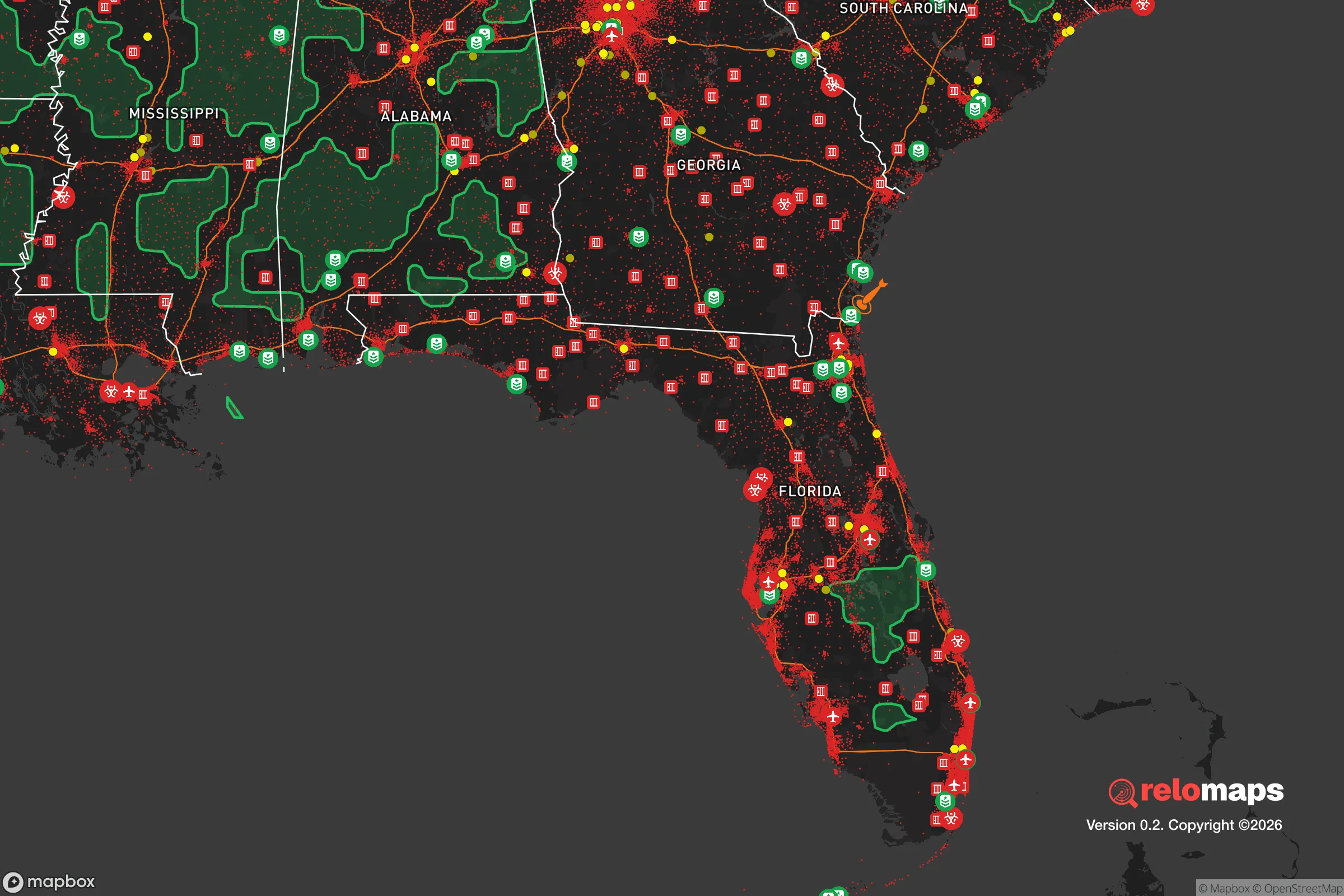


Important Note: For informational purposes only. This does not mean nothing bad ever happens in the green zones. Please use common sense. This is based on public data and modeled with AI. We tried to take a conservative approach but mistakes happen. We update this regularly as new information becomes available.
Solar Generator Recommendations
Backup power matters more here than in safer locations. We've picked three solar generators across budgets and capacity tiers — start with the budget unit if you only need a few essentials, or step up if you want to run a fridge and HVAC for days at a time.

Jackery Portable Power Station Explorer 300
Budget OptionPower on the Go: Weighing only 11 lbs, it's convenient to set up and store with book-sized foldable solar panels

BLUETTI Portable Power Station AC180
Designed for both indoor and outdoor scenarios, AC180 is highly capable as it has a robost capacity and continuous output power.

EF ECOFLOW DELTA Pro Ultra Power Station
Upgraded PickEcoFlow DELTA Pro Ultra is a whole-home energy system designed to grow with your family. Integrated with the Smart Home Panel 2, it scales to meet your evolving energy needs — keeping your home powered, intelligent, and secure through every stage of life.
We earn a commission, at no additional cost to you.
Strategic Assessment Analysis
Key Biscayne, Florida, presents a paradox for the strategic relocator: it offers exceptional natural resilience against certain threats while creating extreme exposure to others. This barrier island, connected to mainland Miami by a single causeway, provides a defensible position with abundant water access, but its proximity to a major metropolitan area and its vulnerability to hurricane storm surge make it a high-risk, high-reward proposition for those prioritizing preparedness. For the conservative-leaning individual or family seeking a retreat from societal instability, Key Biscayne’s advantages are tightly coupled with its liabilities, demanding a clear-eyed assessment of trade-offs.
Geographic position and natural defensive advantages
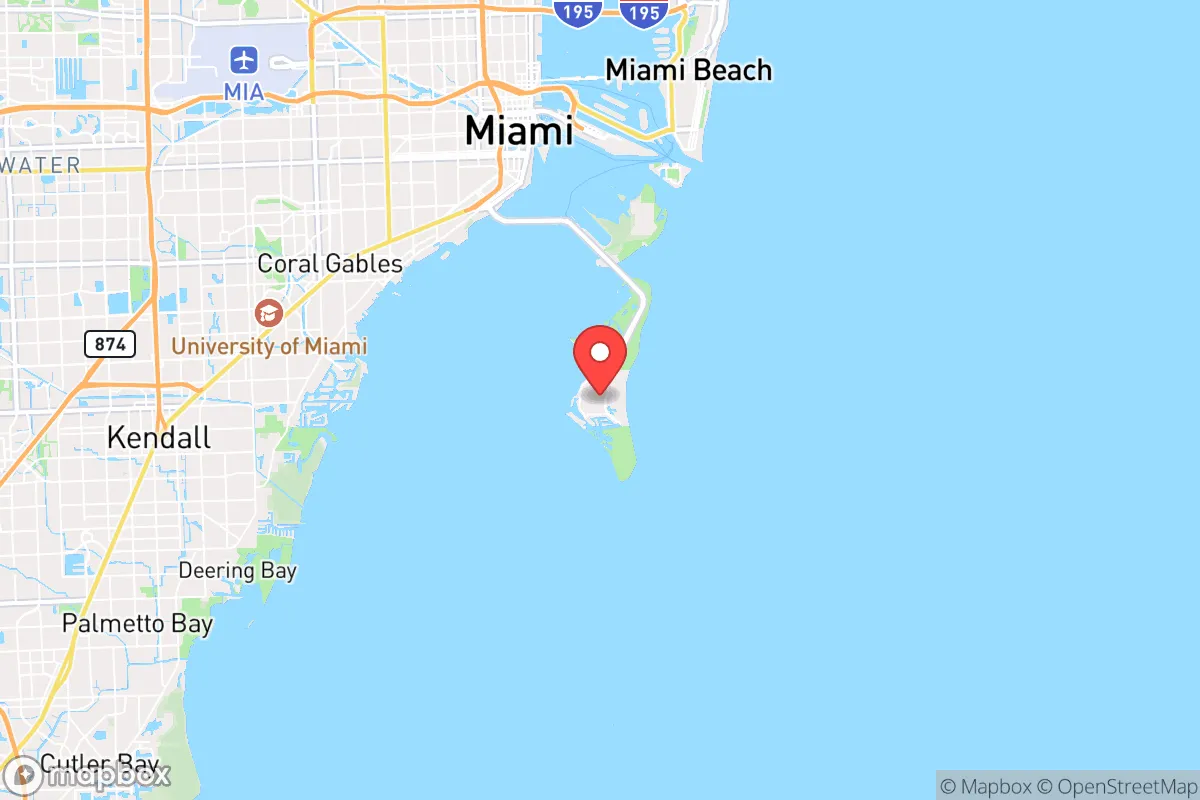
Key Biscayne’s primary strategic asset is its insular geography. The island is accessible only via the Rickenbacker Causeway, a single road that can be monitored and, in a worst-case scenario, controlled. This chokepoint offers a degree of defensibility that few suburban or urban locations can match. For a prepper, the ability to restrict access to a community is a significant advantage during civil unrest or mass casualty events. The island’s position also provides direct access to Biscayne Bay and the Atlantic Ocean, offering potential escape routes by boat—a critical factor if the causeway becomes compromised. The surrounding waters also serve as a natural buffer against ground-based threats, from rioters to organized looters, who would find it difficult to approach undetected. Furthermore, the island’s elevation, while modest, is slightly higher than much of mainland Miami-Dade, reducing—but not eliminating—the risk of catastrophic flooding from a minor storm surge. The local government maintains a well-regarded police force, and the community’s affluence historically translates to better-maintained infrastructure and emergency services, which can be a force multiplier during a crisis.
Risks, exposures, and proximity to fallout-relevant landmarks
The same geography that provides defensibility also creates profound vulnerabilities. Key Biscayne’s single-point-of-failure causeway is its Achilles’ heel. A major hurricane, a terrorist attack on the bridge, or even a prolonged power outage could trap residents on the island or prevent resupply. The island sits directly in the path of Atlantic hurricane tracks, and a Category 3 or higher storm would likely inundate large portions of the island with storm surge, rendering it uninhabitable for weeks or months. Beyond natural disasters, the island’s proximity to Miami—a dense, high-crime urban center with a history of civil unrest—is a major liability. During a societal breakdown, Miami’s population of over 6 million in the metro area would likely experience severe resource scarcity, and Key Biscayne, as a wealthy enclave, would become a target. The island is also within a few miles of the Port of Miami, a major international shipping hub that could be a target for terrorism or naval blockade, and the nearby Miami International Airport, which could become a focal point for evacuation chaos or disease spread. For the survivalist, being within the blast radius of a major city’s collapse is a significant negative, as the island offers no meaningful buffer against the fallout of urban unrest, disease outbreaks, or supply chain disruptions originating from the mainland.
Practical resilience for a relocator: food, water, energy, and defensibility
On a day-to-day basis, Key Biscayne’s practical resilience is mixed. Food security is poor: the island has no significant agricultural land, and its grocery stores rely entirely on mainland supply chains. A prolonged disruption would force residents to rely on stored provisions or fishing in the bay—a skill not common among the typical affluent population. Water security is a critical concern: the island’s drinking water comes from the mainland via the causeway pipeline, which is vulnerable to rupture from storm surge or earthquake. A backup well or rainwater catchment system would be essential for any serious prepper, but most homes lack this infrastructure. Energy resilience is moderate: Florida Power & Light has hardened the grid somewhat, but the island is still susceptible to prolonged outages after hurricanes. Solar panels with battery storage are a viable option, though HOA restrictions in some neighborhoods may limit installation. Defensibility is the island’s strongest suit: the single causeway, combined with a motivated local police force and a community that can afford private security, creates a layered defense. However, this advantage is contingent on the causeway remaining intact and the police force not being overwhelmed. For a family, the island offers excellent schools, low crime rates (in normal times), and a tight-knit community—all valuable for maintaining normalcy during a slow-burn crisis. But for a single individual or family planning for a rapid-onset disaster, the island’s isolation becomes a trap.
The overall strategic picture for Key Biscayne is one of a beautiful, affluent sanctuary that is simultaneously a fragile bubble. It works well as a retreat for those who can afford to maintain a secondary property elsewhere—a “bug-in” location for moderate disruptions, with a “bug-out” plan for major events. For the conservative prepper, the island’s strengths (defensibility, community cohesion, water access) are real but are outweighed by its weaknesses (single-point-of-failure causeway, hurricane exposure, proximity to Miami’s collapse risks). If your strategy relies on self-sufficiency and distance from population centers, Key Biscayne is a poor fit. If your strategy is layered—with a well-stocked home, a boat for evacuation, and a secondary location inland—it can serve as a high-quality primary residence during stable times. But do not mistake its luxury for resilience. In a true societal breakdown, the island’s beauty will become its curse, as it offers no escape from the sea, the storm, or the desperate masses on the mainland.

* Values derived from national, state, county, city and local statistics and may differ in a specific area. Last updated: 2026-04-27T14:35:59.000Z
Narrative content on this page is AI-generated and may contain mistakes. Verify any details that matter before acting on them.
ReloMaps may earn a commission from affiliate links at no extra cost to you.

