Photo: Wikipedia
Demographics of Ketchum, ID
Affluence Level in Ketchum, ID
An upper-middle-class area. Household wealth, education levels, and homeownership run ahead of national benchmarks.
People of Ketchum, ID
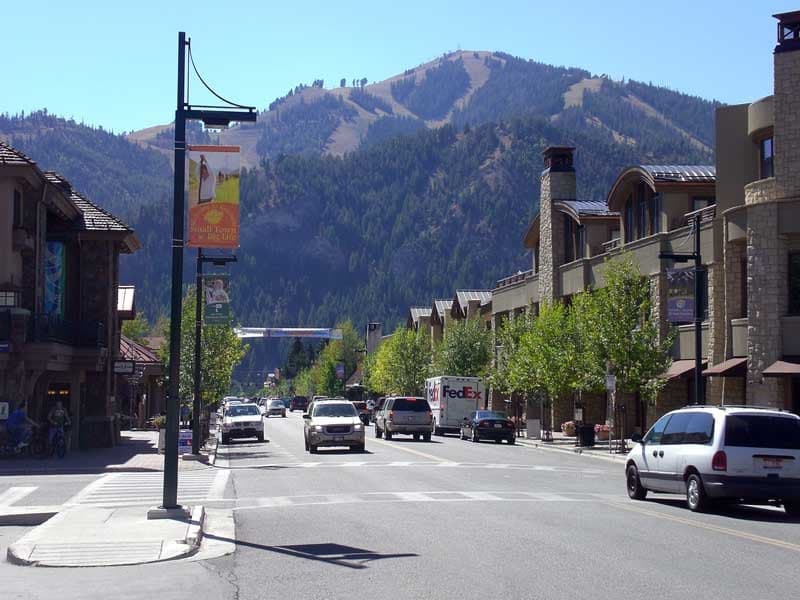
Today, Ketchum, Idaho, is a small, high-income mountain town of 3,551 residents, defined by its overwhelmingly white (89.4%) and college-educated (54.2%) population. The city’s character is shaped by a blend of old ranching families, second-home owners, and a service workforce that supports its luxury resort economy. With a foreign-born share of just 4.2% and a Hispanic population of 7.3%, Ketchum remains far less diverse than the national average, reflecting its history as a destination for domestic, rather than international, migration. The city’s identity is distinctly Western, outdoors-oriented, and affluent, with a noticeable cultural divide between year-round locals and seasonal residents.
How the city was settled and grew
Ketchum’s human history begins not with agriculture but with mining. The town was founded in the 1880s as a supply hub for the rich silver and lead mines in the surrounding Sawtooth Mountains. The original population was overwhelmingly native-born white Americans—miners, merchants, and ranchers—drawn by the promise of mineral wealth. The historic Warm Springs neighborhood, located just west of downtown, was the first residential area, housing miners in modest cabins and boarding houses. By the early 1900s, as mining declined, Ketchum nearly became a ghost town. The population bottomed out at around 200 residents in the 1920s, kept alive by a few sheep ranching families who settled in the Elkhorn area, then open grazing land. The arrival of the Union Pacific Railroad in the 1930s briefly revived the town as a freight stop, but it was not until the post-World War II era that Ketchum’s population began to grow again—this time, driven by a new industry: skiing.
Modern era (post-1965)
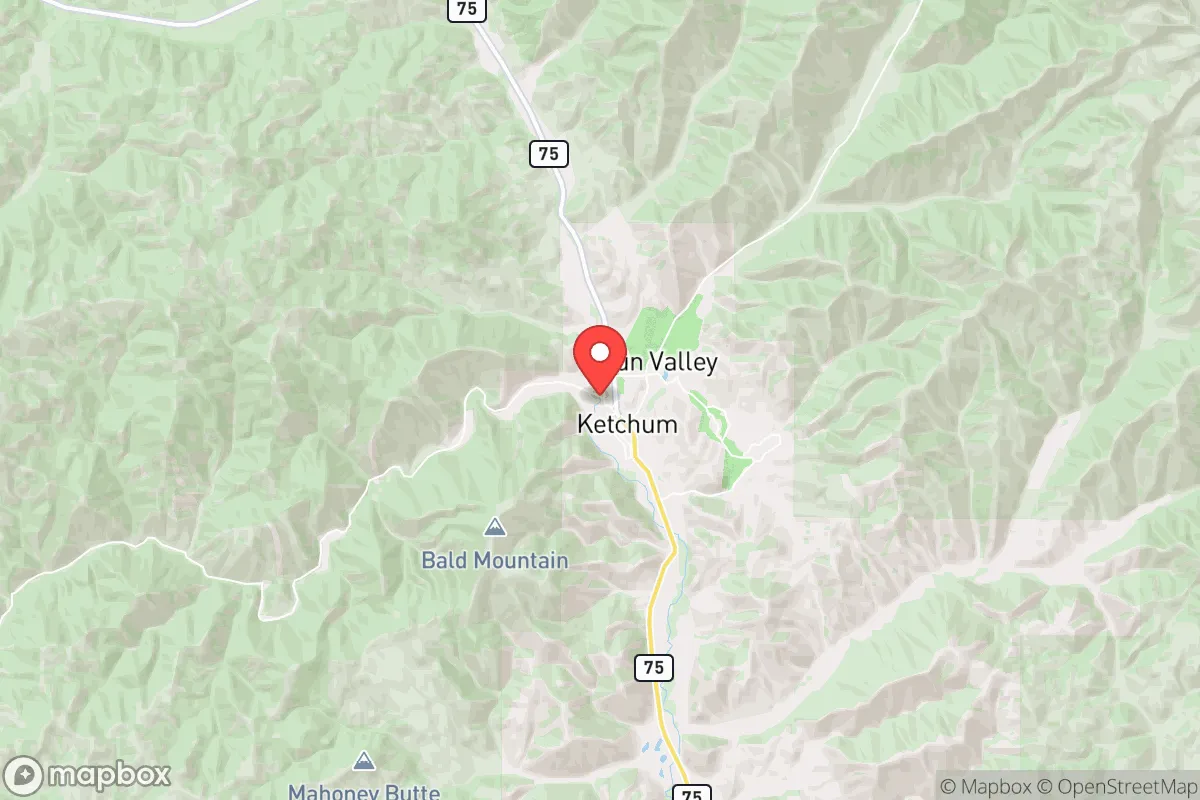
The 1965 opening of the Sun Valley Resort’s Bald Mountain (Baldy) chairlifts transformed Ketchum from a sleepy ranching outpost into a destination for wealthy skiers and outdoor enthusiasts. This wave of in-migration was almost entirely domestic, drawing affluent professionals from California, the Pacific Northwest, and the East Coast. The River Run neighborhood, at the base of Baldy, was developed in the 1970s and 1980s with condominiums and townhomes catering to second-home owners and ski-in/ski-out vacationers. Meanwhile, the West Ketchum area, along Warm Springs Road, became the primary residential zone for the service workforce—restaurant staff, ski instructors, and construction workers—many of whom are Hispanic. The Hispanic population, now 7.3%, grew steadily from the 1990s onward as the resort economy demanded more labor in hospitality and maintenance. These families concentrated in the Woodside neighborhood, a modest subdivision of single-family homes and duplexes south of downtown. The Asian population (0.6%) is very small and consists mostly of East/Southeast Asian professionals working in the resort’s management or culinary sectors, with no distinct ethnic enclave. The Indian-subcontinent population is effectively zero. The Black population is also zero, reflecting the persistent lack of racial diversity in this remote mountain community.
The future
Ketchum’s population is aging and slowly shrinking, down from a peak of about 3,800 in 2010. The city faces a severe housing affordability crisis, with median home prices exceeding $1.2 million, which is pushing out younger families and service workers. The Hispanic population is likely to remain stable or grow slightly as the resort economy continues to demand low-wage labor, but these workers are increasingly commuting from more affordable towns like Hailey and Bellevue, 12 miles south. The white, college-educated share will probably remain dominant, as second-home buyers and remote workers—many from California—continue to purchase properties in the Elkhorn gated community and the Gimlet area, a newer subdivision of luxury homes on the city’s southern edge. Diversity is unlikely to increase significantly; the city’s high cost of living and lack of major employers outside tourism and real estate make it unattractive to most immigrant groups. The cultural identity will likely become more polarized between the ultra-wealthy seasonal population and a shrinking, priced-out year-round workforce.
For someone moving to Ketchum now, the city is best understood as a wealthy, white, and increasingly exclusive resort enclave. The community offers world-class outdoor recreation and a tight-knit local culture, but newcomers should be prepared for high housing costs, limited ethnic diversity, and a growing divide between those who can afford to live here full-time and those who cannot. The future points toward a smaller, older, and wealthier population, with the service workforce pushed to outlying towns.

* Values derived from national, state, county, city and local statistics and may differ in a specific area. Last updated: 2026-11-16T17:45:59.000Z
Narrative content on this page is AI-generated and may contain mistakes. Verify any details that matter before acting on them.
ReloMaps may earn a commission from affiliate links at no extra cost to you.

