Photo: Wikipedia
Political ClimatePolitical Climate in Daviess County
Showing district-level results — no local-only data available.
Local Political AnalysisPolitical Analysis of Daviess County
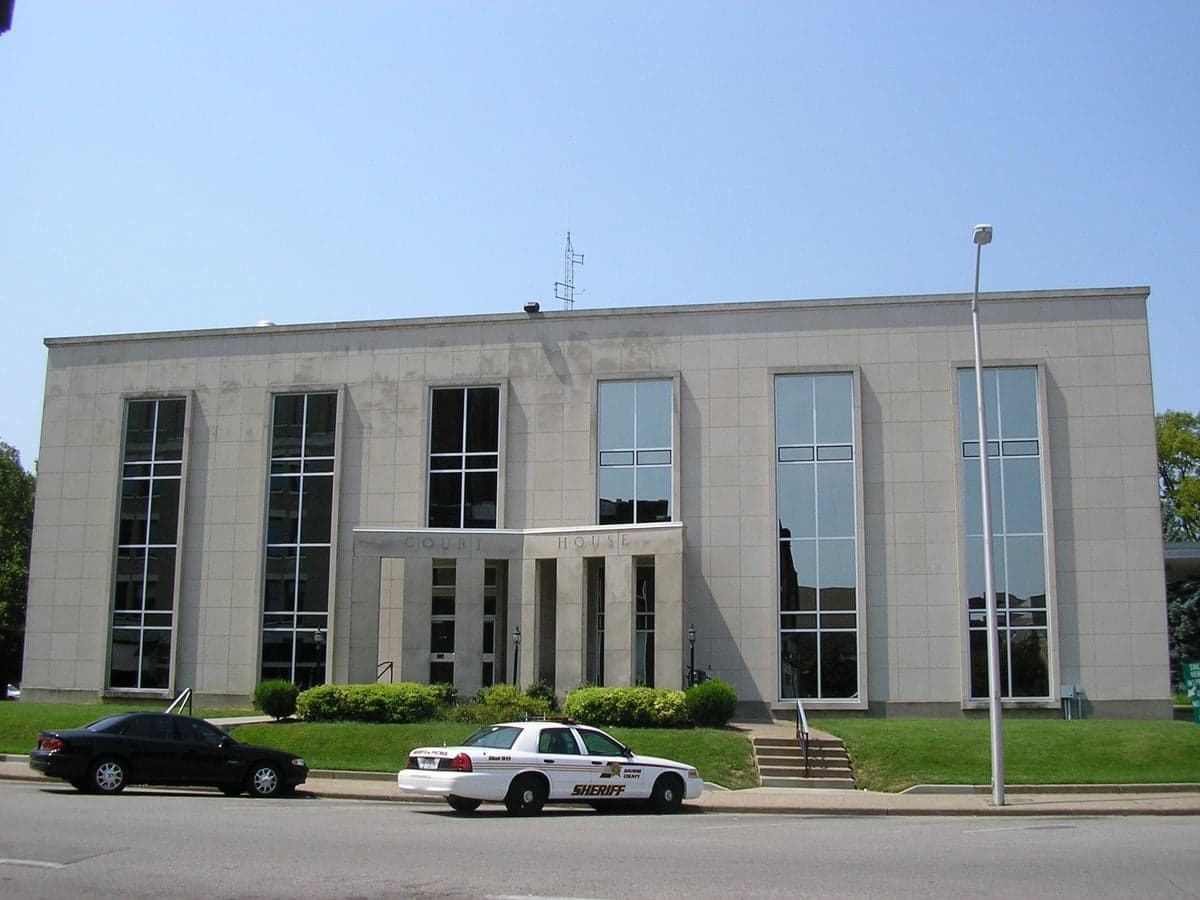
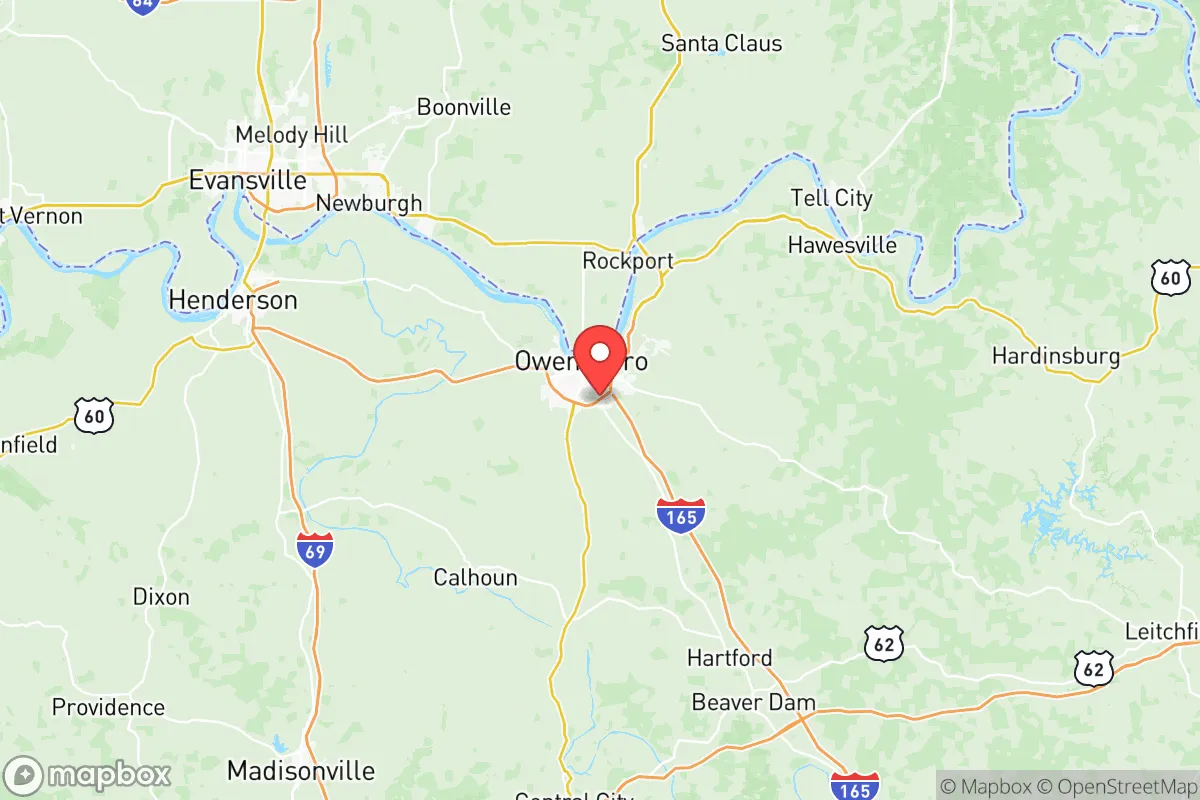
Daviess County, anchored by Owensboro, is reliably Republican with a Cook PVI of R+20, making it five points more conservative than Kentucky as a whole (R+15). That gap has widened in recent cycles — the county voted for Trump by 62% in 2020, while the state landed at 62% as well, but the county's underlying registration and down-ballot patterns are consistently redder. The shift has been gradual but real: as rural precincts outside Owensboro have moved right, the city itself has become a slightly more competitive island, though not enough to flip the county.
How it compares
Kentucky's R+15 rating already places it among the most Republican states in the country, so Daviess County's R+20 puts it in the top tier of conservative counties west of Louisville. The difference is most visible in state legislative races: Owensboro-based districts often elect Republicans by 55-60% margins, while similar districts in more moderate parts of the state (like Fayette or Jefferson counties) lean Democratic. Within the county, the political geography breaks down clearly. Owensboro's urban core and the area around Kentucky Wesleyan College and Brescia University tend to vote more Democratic, often splitting 50-50 or leaning slightly blue in local races. Outer precincts in Utica, Philpot, and Sorgho are heavily Republican, routinely delivering 70-75% of the vote for GOP candidates. The swing precincts — places like the southeastern edge of Owensboro near the airport — are where races are decided, and they've been trending right since 2016.
What this means for residents
For conservative residents, Daviess County's lean means local policy aligns closely with their values: the fiscal court and school board are reliably Republican, property taxes remain low compared to urban Kentucky, and Second Amendment protections are taken as a given. For liberal residents, the reality is more about finding community than winning elections. Owensboro has a visible Democratic presence — the local party is active, and progressive candidates can win city council seats in the right wards — but countywide offices are out of reach. Socially, the area is more moderate than its voting record suggests: Owensboro's riverfront development, arts scene, and growing food culture attract a younger, more diverse crowd that doesn't always match the county's red registration numbers. The practical effect is that most residents, regardless of party, find the area livable because the political divide doesn't dominate daily life the way it does in more polarized metros.
One cultural distinction worth noting: Daviess County's conservatism is rooted in a mix of rural agricultural values and a strong Catholic heritage (Owensboro is the seat of the Diocese of Owensboro), which gives local Republicanism a slightly different flavor than the evangelical-dominated politics of eastern Kentucky. That means issues like abortion and religious liberty are still front and center, but there's also a pragmatic streak on economic development and infrastructure spending. The county has supported bond issues for schools and roads that might fail in more libertarian-leaning parts of the state. Looking ahead, the trajectory is likely to hold steady — Owensboro's growth as a regional healthcare and education hub may bring in more moderate voters over time, but the surrounding rural areas will keep the county solidly red for the foreseeable future.

State Political ClimatePolitical Climate in Kentucky
State Political AnalysisPolitical Environment in the State
Kentucky is a deeply red state with a Cook Partisan Voting Index of R+15, meaning it votes about 15 points more Republican than the national average in presidential elections. The state has shifted sharply rightward over the past two decades: in 2000, George W. Bush won it by about 15 points, but by 2024, Donald Trump carried it by roughly 30 points. The dominant coalition is a mix of rural and small-town conservatives, evangelical Christians, and working-class voters who have moved away from the Democratic Party as it has become more culturally liberal. Democrats still hold some local offices in Louisville and Lexington, but statewide races are now reliably Republican, with the GOP controlling the governorship, both chambers of the legislature, and all but one of the state’s congressional seats.
Urban vs. rural divide
The political map of Kentucky is starkly divided between its two major cities and the rest of the state. Louisville (Jefferson County) and Lexington (Fayette County) are the only reliably blue areas, with Louisville voting about 60% Democratic in recent presidential elections and Lexington around 55-58%. These cities are home to the state’s largest universities, healthcare systems, and cultural institutions, which attract a more diverse and liberal population. Outside these two metros, the state is overwhelmingly Republican. For example, Pike County in the eastern coal fields voted over 80% for Trump in 2024, while rural counties like Graves and Barren in the west and south regularly deliver 70-75% Republican margins. A few suburban counties have shown slight shifts: Boone County in the northern Cincinnati suburbs has trended more Republican over the past decade, while Oldham County east of Louisville remains a GOP stronghold but with a growing number of moderate voters. The urban-rural split means that a resident’s political experience depends heavily on whether they live in a city center or a small town.
Policy environment
Kentucky’s policy environment is conservative across the board. The state has a flat income tax rate of 4.5% as of 2026, down from 6% in 2018, with a planned phase-down to zero over the next decade. Property taxes are low, with average effective rates around 0.8% of home value. The state is a right-to-work state, meaning workers cannot be required to join a union as a condition of employment. Education policy has shifted toward school choice: in 2022, the legislature passed a charter school law, though no charter schools have yet opened due to legal challenges, and in 2024 it expanded the state’s education savings account program for private school tuition. Healthcare policy is mixed: Kentucky expanded Medicaid under the Affordable Care Act in 2014, covering over 400,000 low-income adults, but the state has also imposed work requirements for some recipients, which have been tied up in court. Election laws have tightened: voter ID is required, early voting is limited to three days before Election Day, and absentee voting requires an excuse. The state has no sanctuary city policies and has passed laws prohibiting local governments from adopting such measures.
Recent policy direction
Recent legislation in Kentucky has moved the state decisively toward a more conservative posture on a wide range of issues. On gun rights, the state enacted constitutional carry in 2019, allowing permitless concealed carry, and in 2023 passed a law prohibiting local governments from enacting gun-free zones. On parental and education rights, the 2022 “Parents’ Bill of Rights” (SB 150) requires schools to notify parents about curriculum changes and prohibits instruction on sexual orientation or gender identity in elementary grades. On speech and privacy, the state has not passed a broad social media content law, but it has restricted transgender minors’ access to gender-affirming care (SB 150, 2023) and banned transgender girls from participating in female school sports (HB 3, 2022). On medical and bodily autonomy, abortion is effectively banned with no exceptions for rape or incest, only to save the mother’s life, following the trigger law that took effect after Dobbs in 2022. Property rights are generally strong, with no statewide rent control and limited eminent domain use. On voting and ballot access, the state has not adopted same-day registration or automatic voter registration, and voter ID laws remain strict. The overall direction is toward expanding individual liberties in areas like guns and taxes while restricting them in areas like reproductive rights and transgender care.
Civil unrest & political movements
Kentucky has seen relatively low levels of civil unrest compared to some other states, but there have been notable flashpoints. The 2020 protests in Louisville following the death of Breonna Taylor drew national attention, with weeks of demonstrations, some turning violent, and the eventual passage of “Breonna’s Law” banning no-knock warrants. Outside of that, political activism is mostly organized through established channels: the Kentucky Right to Life and the Family Foundation are powerful conservative groups, while the Kentucky Democratic Party and groups like the ACLU of Kentucky lead liberal efforts. Immigration politics are not a major flashpoint, as the state has a small foreign-born population (about 4%), but there have been local controversies over refugee resettlement in Louisville. There is no serious secession or nullification movement, though some rural counties have passed symbolic resolutions opposing federal gun control. Election integrity controversies have been minimal; the state’s 2020 election results were certified without major dispute, and the legislature has focused on tightening laws rather than overturning results. A new resident would notice that political signs and bumper stickers are common in rural areas, but open conflict is rare outside of social media.
Projection
Over the next 5-10 years, Kentucky is likely to remain solidly Republican, but demographic shifts could moderate the trend. In-migration is modest, with most newcomers coming from other Midwestern and Southern states, and they tend to be conservative-leaning. The Louisville and Lexington metros are growing slowly, attracting younger and more diverse populations, but the rural areas are aging and losing population. The state’s tax cuts are likely to continue, with the income tax possibly reaching zero by 2030, which could attract more business investment but also strain state services. The political trajectory suggests that the GOP will maintain supermajorities in the legislature, and the governorship will remain Republican after Andy Beshear’s term ends in 2027. However, the urban-rural divide may widen, with cities becoming more liberal and rural areas more conservative, leading to occasional clashes over local control issues like housing policy and public health. A person moving in now should expect a state that is politically stable but with ongoing debates over education funding, healthcare access, and the pace of tax cuts.
For a new resident, the bottom line is that Kentucky offers a low-tax, culturally conservative environment with strong gun rights and limited government interference in most areas of life. Liberal residents will find a welcoming community in Louisville or Lexington but will face a state government that is actively restricting abortion access, transgender rights, and some forms of local autonomy. Conservative residents will feel at home in most of the state, with policies that align closely with their values, but should be aware that the urban centers are politically distinct and may not reflect the broader state culture. The state is affordable, with a low cost of living and a growing economy in logistics, manufacturing, and healthcare, but public services like education and infrastructure are underfunded. Overall, Kentucky is a good fit for those who prioritize low taxes and traditional values, while those seeking a more progressive environment will need to stick to the cities and accept a constant political tension with the state government.
* Values derived from national, state, county, city and local statistics and may differ in a specific area. Last updated: 2026-08-09T13:37:07.000Z
Narrative content on this page is AI-generated and may contain mistakes. Verify any details that matter before acting on them.
ReloMaps may earn a commission from affiliate links at no extra cost to you.

