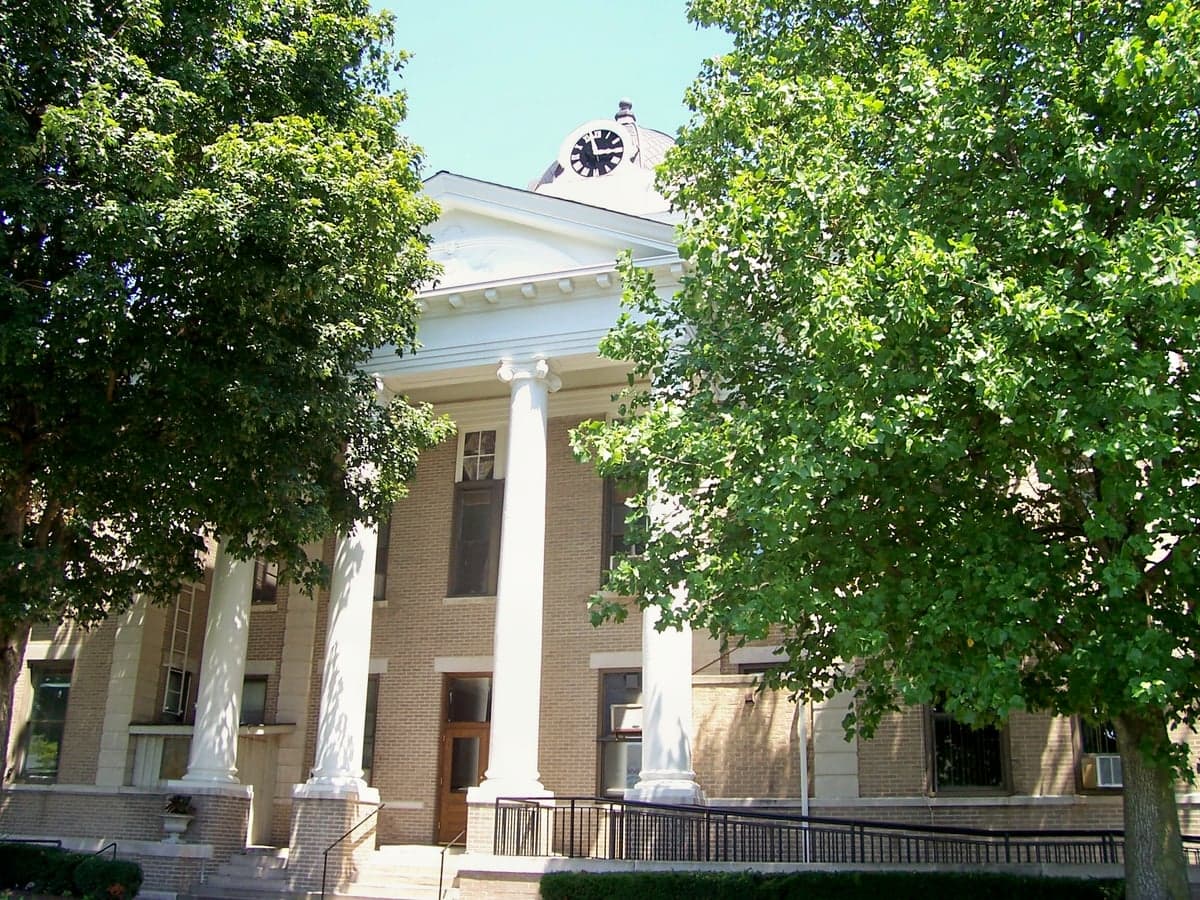
Photo: Wikipedia
Demographics of Calloway County
Affluence Level in Calloway County
A middle-class area roughly in line with national averages across income, home values, education, and employment.
People of Calloway County
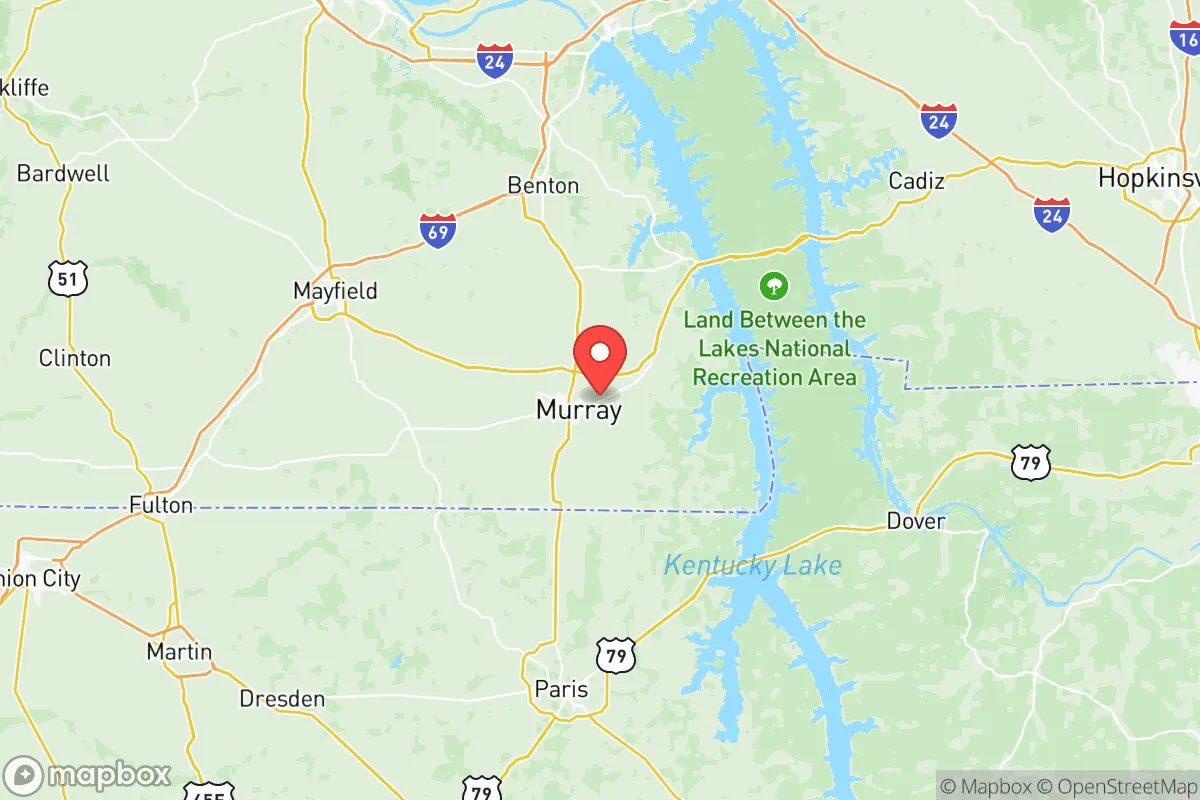
Calloway County, Kentucky, is home to 37,882 residents who maintain a distinctly rural and small-town character, anchored by Murray State University and the county seat of Murray. The population is 87.7% White, with a foreign-born share of just 1.8%, making it one of Kentucky’s less diverse counties. Its identity is shaped by a blend of agricultural roots, a strong educational institution, and the recreational draw of Kentucky Lake and Lake Barkley, giving the area a stable, family-oriented feel with a modest but growing Hispanic and Asian presence.
Settlement & growth (pre-1960)
Before European settlement, the region that is now Calloway County was part of the traditional hunting grounds of the Chickasaw and Cherokee nations. The area was sparsely populated by these groups, who used the land seasonally for hunting rather than permanent settlement. The first European Americans to arrive were primarily of Scots-Irish and English descent, migrating from Virginia and North Carolina through the Cumberland Gap in the late 18th and early 19th centuries. They were drawn by the promise of fertile, inexpensive land under the Kentucky land grant system, which awarded tracts to veterans of the Revolutionary War and later to settlers willing to improve the land.
The county was officially formed in 1822 from Hickman County, named after Colonel James Calloway, a Kentucky militia officer. The earliest settlements clustered around the courthouse square in Murray, which became the county seat in 1846. Small farming communities like Almo, Dexter, and New Concord grew as subsistence agriculture—primarily corn, tobacco, and livestock—dominated the economy. The arrival of the railroad in the late 19th century connected Murray to regional markets, spurring modest growth and the establishment of a small commercial district. By 1900, the population was almost entirely native-born White, with a small number of Black families, many of whom were descended from enslaved people brought to the area before the Civil War. The Black population peaked around 1910 at roughly 8% of the county total, then declined steadily through the Great Migration as families left for industrial jobs in the North.
The founding of Murray State University (then Murray State Teachers College) in 1922 was the single most transformative event for the county’s population. It drew faculty, staff, and students from across the region, creating a small but steady influx of educated professionals. The post-World War II era saw the construction of Kentucky Dam and the creation of Kentucky Lake in the 1940s, which turned the county’s western edge into a recreation and tourism destination. Communities like Hardin and Hazel grew modestly as lake-related businesses and retirement homes appeared. By 1960, the population stood at roughly 23,000, still overwhelmingly White and native-born, with agriculture and education as the twin pillars of the local economy.
Modern era (post-1965)
The 1965 Hart-Cellar Act had a minimal direct impact on Calloway County, as the area did not attract the large immigrant flows seen in urban centers. The foreign-born population remains very low at 1.8%, and most of that growth has occurred since 2000. The most notable change has been a gradual increase in Hispanic residents, now at 3.5% of the population. These families are primarily of Mexican origin and have settled in Murray and the surrounding rural areas, working in agriculture (tobacco, hay, and livestock), construction, and service industries. A small but visible Hispanic community has formed around a few local churches and a Mexican grocery store on South 12th Street in Murray.
East and Southeast Asian residents, now 1.3% of the population, are almost entirely connected to Murray State University. Vietnamese, Chinese, and Korean families have settled in Murray, often as faculty, graduate students, or small business owners near campus. The Indian subcontinent population is even smaller at 0.3%, also university-linked. The Black population has remained stable at 3.6%, concentrated in Murray and the historic community of Almo, where a small rural Black church still serves a handful of families.
Domestic migration has been the larger driver of change. Since the 1990s, Calloway County has attracted retirees and second-home buyers drawn to the Kentucky Lake and Lake Barkley recreation corridor. Communities like Aurora and Benton (the latter technically in Marshall County but part of the same economic zone) have seen new subdivisions and lakefront homes. Suburbanization has been modest but noticeable: Murray has expanded with new housing developments on the north and east sides, while the rural areas around Dexter and New Concord have seen scattered residential growth. The county’s population has grown from 30,000 in 1990 to 37,882 today, a steady but unspectacular increase driven almost entirely by domestic in-migration.
The future
Calloway County is likely to remain a predominantly White, rural county with a stable population. The Hispanic share is expected to grow slowly, perhaps reaching 5-6% by 2040, as agricultural and service-sector jobs continue to attract families. The East/Southeast Asian and Indian populations will remain small and tied to Murray State, fluctuating with enrollment trends. The Black population is projected to hold steady or decline slightly, as younger Black residents continue to leave for larger cities with more economic opportunities.
The most significant demographic trend is the aging of the population. The county’s median age is 36.5, slightly above the national average, and the lake-area retirement communities are drawing older residents from the Midwest and the South. This will likely increase demand for healthcare services and senior housing, particularly in Murray and the lakefront areas around Hardin. The county’s cultural identity will remain rooted in its rural, conservative character, with Murray State providing a small liberalizing influence. For someone moving in now, Calloway County offers a quiet, affordable, and safe environment with strong community ties, but limited diversity and few urban amenities.
Calloway County is becoming a stable, slowly diversifying rural community where the university and the lakes anchor the economy and culture. New residents will find a place that values tradition, family, and outdoor recreation, with a pace of change slow enough to preserve its character but steady enough to offer modest opportunities for newcomers.

* Values derived from national, state, county, city and local statistics and may differ in a specific area. Last updated: 2026-08-24T13:15:29.000Z
Narrative content on this page is AI-generated and may contain mistakes. Verify any details that matter before acting on them.
ReloMaps may earn a commission from affiliate links at no extra cost to you.

