Political ClimatePolitical Climate in Kemmerer, WY
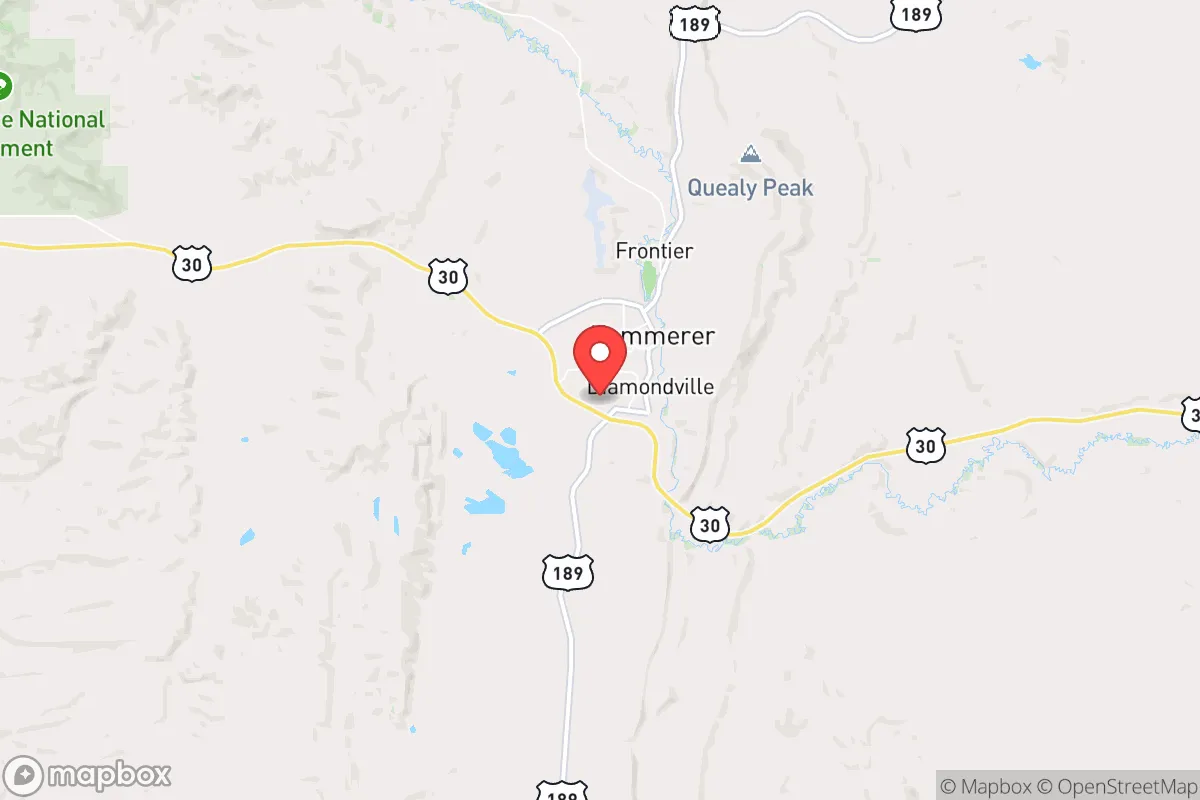
District shown is the primary district for this city’s centroid. Cities may span multiple districts.
Inherited from parent state — no local data available.
Local Political AnalysisPolitical Analysis of Kemmerer, WY
Kemmerer, Wyoming, is about as rock-ribbed conservative as it gets, and that’s not changing anytime soon. The Cook PVI of R+23 tells you the headline, but the real story is in the ground game: this is a place where the Republican primary is the only election that matters, and where folks still believe the county courthouse should be the highest authority in their lives. You don’t see much hand-wringing over national politics here; people are more concerned with keeping the BLM and the Forest Service from locking up the land, and making sure the state legislature doesn’t get any bright ideas about raising property taxes or messing with the Second Amendment.
How it compares
Drive an hour south to Evanston, and you’ll start to feel the influence of the Wasatch Front creeping in—more transplants from Utah, a slightly younger demographic, and a local government that’s a little more willing to take federal grants with strings attached. Head north to Jackson Hole, and you’re in a different universe entirely: a wealthy, progressive enclave where the local politics are dominated by environmental activism and land-use restrictions that would make a Kemmerer rancher spit. The contrast is stark. Kemmerer’s neighbors in the surrounding Lincoln County are cut from the same cloth—small towns like Cokeville and Afton are just as wary of outside interference—but the closer you get to the interstate corridor, the more you see the subtle shift. It’s not that Evanston or Rock Springs are liberal; they’re just less reliably conservative, and that’s a red flag for anyone who values local control over personal freedoms. The real worry is that as the energy industry evolves, the state might start courting tech or renewable projects that bring in a workforce with different values, and that’s how you get zoning boards and school curriculum fights that never used to exist here.
What this means for residents
For the people who live here, the political climate means you can still live your life without a lot of government nosing around. You don’t need a permit to build a shed on your own land, the county sheriff isn’t enforcing federal gun laws he disagrees with, and the school board isn’t pushing critical race theory or gender ideology on your kids. That’s the trade-off for living in a place where the nearest Target is two hours away: you get to keep your freedoms. But it’s not a guarantee. The same state legislature that’s been good on property rights and energy development has also shown a willingness to preempt local ordinances, which cuts both ways. If you’re worried about government overreach, you keep an eye on Cheyenne, because that’s where the real threats to local autonomy come from—not from your neighbors on the county commission. The long-term concern is that as the coal industry continues to contract, the tax base shrinks, and the state gets desperate for revenue. That desperation is what leads to sales tax hikes, vehicle registration fees, and other nickel-and-dime stuff that eats away at your paycheck.
Culturally, Kemmerer is still a place where the high school football game is the social event of the week, and where the local diner serves as the unofficial town hall. There’s no real appetite for the kind of performative activism you see in bigger cities; people here judge you by your word and your work, not by your bumper stickers. The biggest policy distinction is the attitude toward public lands: while the feds own most of the land around here, the local sentiment is that they should manage it for multiple use—grazing, hunting, energy development—not lock it up as a museum for out-of-state tourists. If you’re looking for a place where you can still raise your family without the government breathing down your neck, this is it. Just don’t expect it to stay that way forever if the state keeps chasing the same economic development trends that have hollowed out communities in Colorado and Montana.

State Political ClimatePolitical Climate in Wyoming
State Political AnalysisPolitical Environment in the State
Wyoming is one of the most reliably Republican states in the nation, with a partisan lean that has only deepened over the past two decades. The state voted for Donald Trump by a margin of nearly 43 points in 2020, and the GOP holds every statewide elected office, supermajorities in both legislative chambers, and all three U.S. House seats. This isn’t a recent shift—Wyoming has voted Republican in every presidential election since 1968—but the intensity of that conservatism has grown, driven by an exodus of moderate Democrats and an influx of freedom-minded transplants fleeing blue states. The dominant coalition is a blend of ranching families, energy-sector workers, and Second Amendment absolutists, with a growing contingent of remote workers and retirees who chose Wyoming specifically for its low taxes and light regulatory touch.
Urban vs. rural divide
The political map of Wyoming is not a story of urban vs. rural in the typical sense—there are no major cities by national standards. Instead, the divide runs between the small population centers and the vast, sparsely populated ranchlands. Cheyenne, the capital and largest city (pop. ~65,000), is the most moderate area in the state, with Laramie County occasionally electing a few Democrats to local office. Casper, the second-largest city, leans reliably red but has a noticeable libertarian streak, especially among oil and gas workers. Jackson Hole in Teton County is the glaring exception—it’s the only reliably blue county in the state, driven by wealthy second-home owners, ski resort employees, and a tourism economy that attracts a progressive workforce. Teton County voted for Joe Biden by 38 points in 2020, a stark contrast to the rest of the state. Meanwhile, counties like Sublette, Carbon, and Niobrara routinely deliver 80-85% of their votes to Republican candidates. The rural-urban dynamic here is less about partisan conflict and more about a cultural tension between the “live and let live” ethos of the open range and the growing influence of Jackson’s progressive money.
Policy environment
Wyoming’s policy environment is a dream for conservatives who value fiscal restraint and personal autonomy. There is no state income tax, no corporate income tax, and property taxes are among the lowest in the nation—a deliberate strategy to attract retirees and remote workers. The state’s regulatory posture is aggressively pro-energy, with streamlined permitting for oil, gas, and coal extraction, and a near-total ban on local zoning that could restrict mineral development. Education policy is a mixed bag: Wyoming spends more per pupil than most states (thanks to mineral revenue), but the curriculum remains locally controlled, with no state-level mandates for critical race theory or gender ideology. In 2023, the legislature passed a Parents’ Bill of Rights (SF 133), requiring schools to notify parents of any curriculum changes involving sexuality or gender identity. Election laws are among the most secure in the nation—voter ID is required, same-day registration is not allowed, and the state uses paper ballots exclusively. There is no mail-in voting unless you have a valid excuse. Healthcare is a weak spot: the state refused to expand Medicaid under the ACA, and rural hospital closures are a persistent concern, but the legislature has been reluctant to adopt any federal-style mandates.
Trajectory & freedom
Wyoming is arguably becoming more free, not less, over the past five years. The 2021 “Second Amendment Preservation Act” (SF 102) declared any federal gun control measure that infringes on the right to keep and bear arms as null and void in Wyoming—a direct challenge to federal overreach. In 2022, the state passed a near-total abortion ban (HB 92) with exceptions only for rape, incest, and life of the mother, reflecting a strong pro-life consensus. Medical freedom saw a boost with the 2023 “Medical Freedom Act” (HB 100), which prohibits employers and government entities from requiring COVID-19 vaccines or masks as a condition of employment or service. Property rights were strengthened by the 2020 “Private Property Protection Act,” which requires the state to compensate landowners for any regulatory taking that reduces property value by more than 50%. The only area where freedom has arguably contracted is in the realm of land use—the state has aggressively fought federal control of public lands, but local zoning in Teton County has become more restrictive, limiting new housing construction and driving up costs. Overall, the trajectory is toward greater individual liberty, with the legislature consistently pushing back against federal mandates and cultural trends from the coasts.
Civil unrest & political movements
Wyoming has seen remarkably little civil unrest compared to other states. The most visible political movements are on the right: the Wyoming Freedom Caucus, a hardline conservative faction within the state legislature, has grown in influence since 2020, pushing for school choice, tax cuts, and nullification of federal gun laws. There have been no major left-wing protests or riots in recent memory—the state’s small population and cultural homogeneity make large-scale demonstrations rare. Immigration politics are a non-issue here; Wyoming has one of the smallest foreign-born populations in the country, and there are no sanctuary cities. The most heated political flashpoint in recent years was the debate over “critical race theory” in schools, which led to a 2021 resolution (HJ 4) condemning the teaching of divisive concepts. Election integrity controversies have been minimal—Wyoming’s paper ballot system and strict voter ID laws have kept fraud allegations at bay. The only notable civil disobedience came from the “Bundy standoff” in 2014, when rancher Cliven Bundy’s supporters clashed with federal agents over grazing rights—a moment that still resonates with the state’s anti-federal land control sentiment. A new resident would notice a general distrust of federal authority, but little in the way of street-level political conflict.
Projection
Over the next 5-10 years, Wyoming is likely to become even more conservative, but with a growing libertarian edge. In-migration from states like California, Colorado, and Washington is accelerating—the state’s population grew by 2.3% between 2020 and 2023, driven largely by remote workers seeking low taxes and wide-open spaces. These newcomers tend to be fiscally conservative and socially moderate, which could create tension with the existing ranching and energy base. The biggest demographic shift is the aging of the population—Wyoming has the second-oldest median age in the nation (after Maine), and younger families are increasingly drawn to Gillette and Rock Springs for energy jobs, or to Laramie for the university. The energy transition away from coal will hit Campbell County hard, potentially shifting the political center of gravity toward tourism and tech in Teton County. However, the state’s constitutional protections for gun rights, low taxes, and parental rights are unlikely to change—the legislature is firmly in the hands of the Freedom Caucus, and any move toward progressive policy would face a veto-proof majority. The wildcard is federal land policy: if the Biden administration or a future Democratic president pushes for tighter restrictions on public lands, Wyoming’s anti-federal sentiment could explode into a full-blown secessionist movement, as seen in the 2023 “State Sovereignty Act” (HB 200) that asserted the state’s right to ignore federal land-use directives.
For a new resident, the bottom line is this: Wyoming offers a rare combination of low taxes, strong gun rights, and minimal government intrusion into daily life. You will not find the political drama of a swing state—the culture is stable, predictable, and overwhelmingly conservative. The trade-offs are real: limited healthcare access, harsh winters, and a social scene that revolves around hunting, fishing, and church. If you value personal freedom above all else and can handle the isolation, Wyoming is as close to a libertarian paradise as you’ll find in the Lower 48. Just don’t expect to change the politics—the state is happy with where it is, and it’s not looking for advice from newcomers.
* Values derived from national, state, county, city and local statistics and may differ in a specific area. Last updated: 2026-04-21T11:35:45.000Z
Narrative content on this page is AI-generated and may contain mistakes. Verify any details that matter before acting on them.
ReloMaps may earn a commission from affiliate links at no extra cost to you.

