Photo: Wikipedia
Political ClimatePolitical Climate in Lyon County
Showing district-level results — no local-only data available.
Local Political AnalysisPolitical Analysis of Lyon County
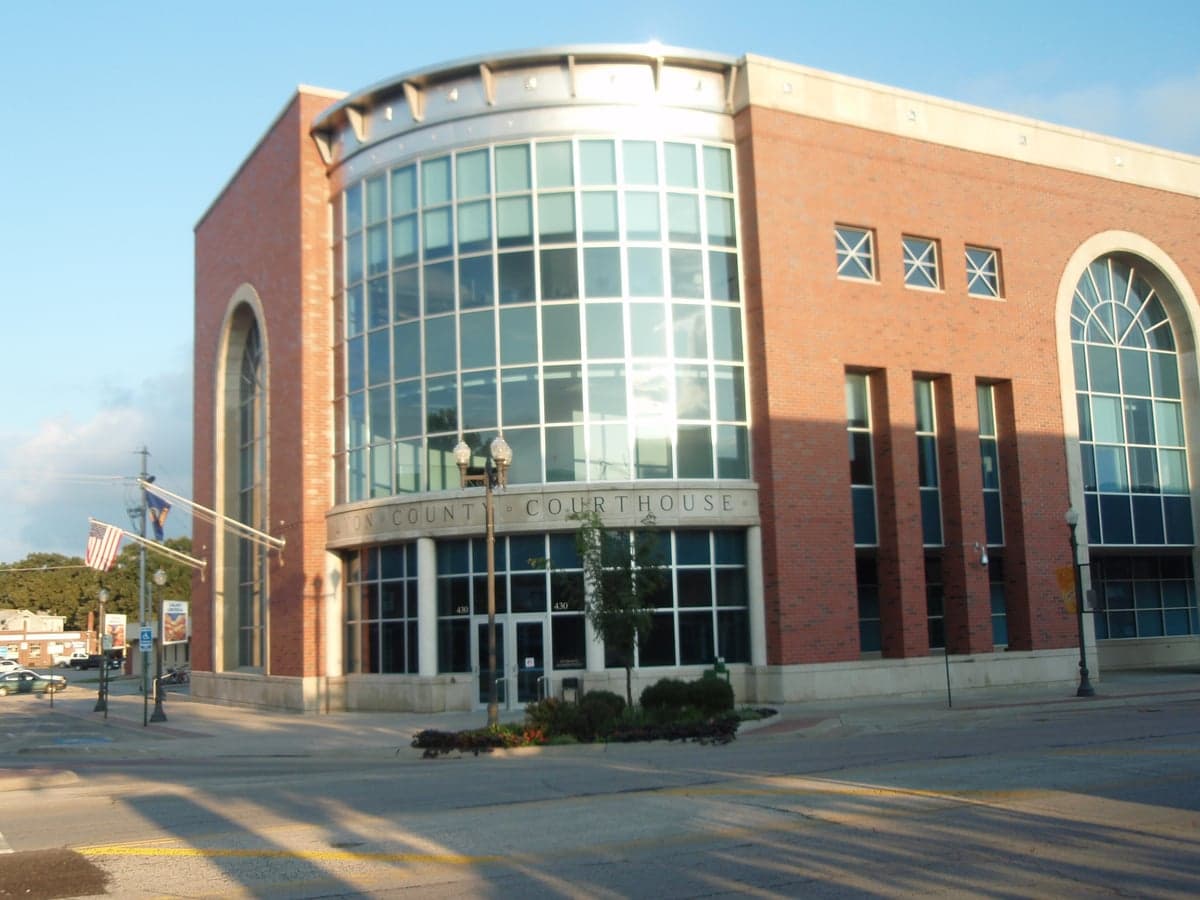
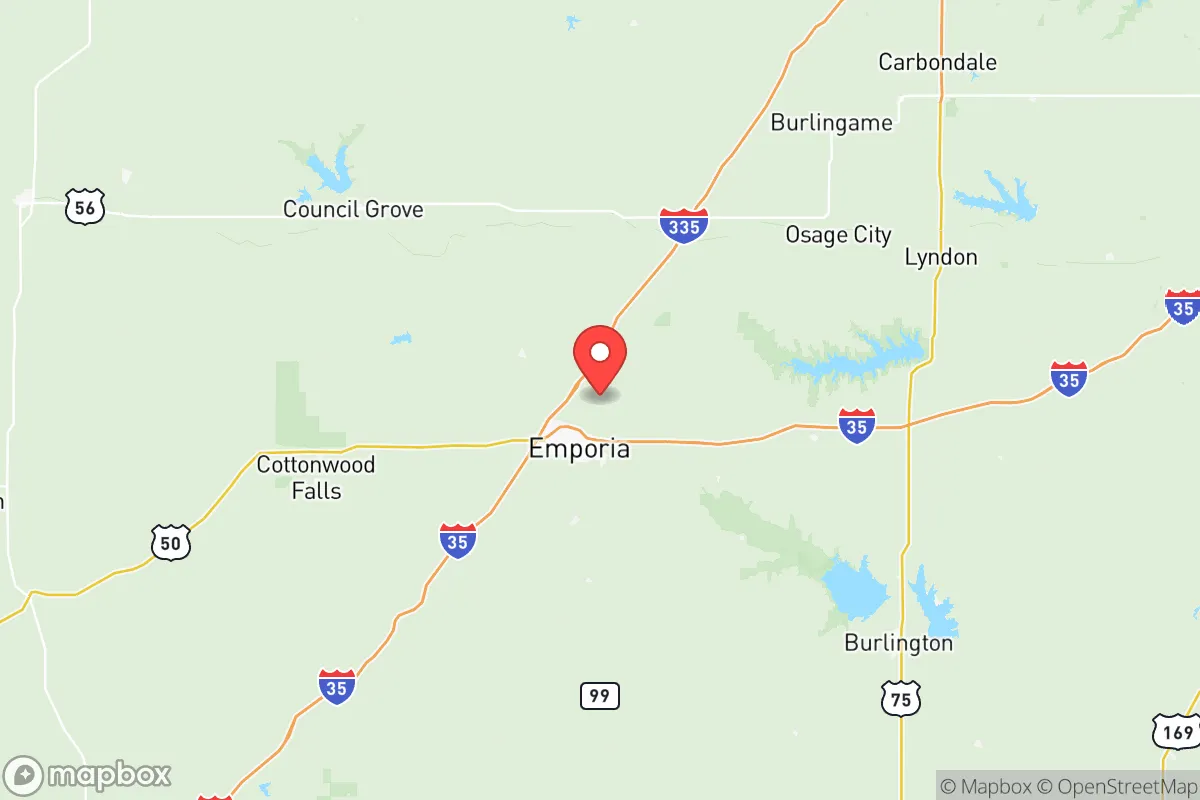
Lyon County, Kansas, has long been a solidly conservative area, and the numbers back that up with a Cook PVI of R+10, making it a touch redder than the state overall, which sits at R+9. But if you’ve lived here as long as I have, you know the political story isn’t just about a single number—it’s about the real differences between our towns and how the winds are shifting, not always for the better. You’ll find the deepest red in places like Emporia’s rural outskirts and the small towns of Hartford and Olpe, where folks still fly the Gadsden flag and talk about county commission meetings like they’re the Super Bowl. Meanwhile, Emporia’s core near the college and downtown has started to lean a little blue, especially in the last couple cycles, and that’s where you see the first signs of progressive creep that ought to worry anyone who values personal freedom.
How it compares
Compared to Kansas as a whole, Lyon County is a bit more reliably Republican, but the gap is narrowing. The state’s R+9 PVI means it’s already a conservative stronghold, but Lyon County’s R+10 used to feel like a bigger buffer. Back in the 2000s, you could count on the county to vote red by double digits without breaking a sweat. Now, the margin in Emporia’s precincts 1 and 2 has shrunk to single digits, and that’s a warning sign. The state has seen a slow drift toward purple in places like Johnson County, but here in Lyon, the worry is that the same progressive playbook—pushing government into your healthcare choices, your kids’ education, and your business—is starting to take root in Emporia’s city council. The rural towns still hold the line, but if you look at the trend lines, the county’s conservative edge is being chipped away by an influx of folks who don’t share our values.
What this means for residents
For those of us who’ve been here a while, the political climate means we have to stay vigilant. The county commission and school board races are where the real battles are fought, and the 2024 election saw a surge in progressive-backed candidates in Emporia’s Ward 3, which is a direct threat to the local control we’ve always prized. If you’re a conservative, you’re still in the majority, but you can’t take it for granted. The rural areas—Americus, Neosho Rapids, and Reading—are still rock-solid red, and that’s where you’ll find the backbone of the county’s resistance to overreach. But if you live in Emporia proper, especially near the university, you’re seeing more talk about zoning restrictions, mask mandates, and other government oversteps that would have been laughed out of town twenty years ago.
Cultural and policy distinctions
The biggest cultural distinction in Lyon County is the tension between the old-school, self-reliant ethos of the farming communities and the newer, more bureaucratic mindset creeping into Emporia. You won’t find a county-wide mask mandate or a vaccine passport here, but the city council has flirted with both, and that’s a red flag. The Second Amendment is still sacred in places like Olpe and Hartford, where the sheriff’s office has publicly stated they won’t enforce any unconstitutional gun laws. Property taxes are a constant fight, with rural residents pushing back against county spending that benefits Emporia at their expense. If the trend continues, I’d expect to see more ballot initiatives aimed at limiting local government’s power—because that’s the Lyon County way: we don’t like being told what to do, and we’ll vote to keep it that way.

State Political ClimatePolitical Climate in Kansas
State Political AnalysisPolitical Environment in the State
Kansas is a solidly Republican state with a Cook PVI of R+9, but don’t let that number fool you into thinking it’s a monolith. The state has been on a slow, grinding shift rightward over the past 20 years, driven largely by the exodus of moderate Republicans and the rise of a more conservative, liberty-minded coalition. However, the real story is the growing tension between the deep-red rural and suburban areas and the increasingly progressive islands of Johnson County and Lawrence. If you’re looking for a place where conservative values still hold the levers of power but the culture war is very much alive, Kansas is a fascinating case study.
Urban vs. rural divide
The political map of Kansas is a tale of two worlds. The vast rural expanse—places like Dodge City, Garden City, and Hays—votes reliably Republican, often by margins of 70% or more. These are the counties that drive the state’s overall red lean, powered by agriculture, oil and gas, and a strong gun culture. But the real action is in the suburbs. Johnson County, the wealthy, sprawling suburb of Kansas City, was once a Republican stronghold but has been trending purple for a decade. In 2020, Joe Biden won the county’s most populous precincts, and the GOP has only held on by razor-thin margins in state legislative races there. Meanwhile, Lawrence, home to the University of Kansas, is a deep-blue island that reliably votes Democratic by 30-point margins. The urban core of Wichita is a mixed bag—its outer suburbs like Andover and Goddard are solidly red, while the city center leans left. The divide isn’t just about party; it’s about worldview. Rural Kansans see the state as a bastion of self-reliance, while the Johnson County suburbs are increasingly influenced by out-of-state transplants and corporate transplants who bring coastal sensibilities.
Policy environment
Kansas has a policy environment that is broadly friendly to conservative priorities, but with some notable wrinkles. The state’s tax structure is a mixed bag: there is no state income tax on Social Security benefits, and the flat income tax rate was cut to 5.5% in 2024, with a path to 5.2% by 2026. However, property taxes are a persistent pain point, especially in Johnson County where school levies are high. The regulatory posture is generally light—no state-level OSHA, no prevailing wage laws, and a right-to-work law that keeps unions weak. On education, Kansas has a robust school choice program, including tax-credit scholarships and open enrollment, but the state’s funding formula has been a legal battleground for years, with the Kansas Supreme Court often forcing the legislature to spend more. Healthcare policy is a bright spot for conservatives: Kansas did not expand Medicaid, and the state has some of the most restrictive abortion laws in the country, including a 2022 amendment to the state constitution that explicitly says there is no right to abortion. Election laws are solid—voter ID is required, and the state has a clean voter roll maintenance program. The biggest red flag for liberty-minded folks is the state’s heavy reliance on federal funds and the creeping influence of federal mandates, especially in education and healthcare.
Trajectory & freedom
Kansas is becoming more free in several key areas, but the trajectory is not without its battles. The most significant expansion of personal liberty in recent years was the Second Amendment Protection Act (SB 52), passed in 2021, which prohibits state and local enforcement of federal gun laws that infringe on the right to keep and bear arms. This was a direct response to federal overreach and has made Kansas a sanctuary state for gun owners. On parental rights, the state passed the Parental Bill of Rights (HB 2236) in 2023, which requires schools to notify parents of any medical or mental health services offered to their children and prohibits instruction on sexual orientation and gender identity in grades K-3. Medical autonomy took a hit with the near-total abortion ban, but that was a democratic choice. Property rights are generally strong, with no state-level rent control and a relatively low eminent domain risk. The biggest threat to freedom is the state’s tax burden—while income taxes are falling, property taxes are rising, and the state’s sales tax on groceries was only partially repealed in 2024. The trend is positive, but the fight is ongoing, especially against local school boards that try to impose mask mandates or CRT-inspired curricula.
Civil unrest & political movements
Kansas has not seen the kind of violent civil unrest seen in Portland or Seattle, but there have been flashpoints. The most visible was the 2022 abortion amendment fight, which saw massive turnout and a surprising defeat for the pro-life side—the amendment failed by 18 points, driven largely by Johnson County and Lawrence voters. This was a wake-up call for conservatives that the suburbs are not reliably red on social issues. On the right, the Kansas Republican Assembly and the Kansas State Rifle Association are active, pushing for constitutional carry (which passed in 2015) and fighting against any federal gun control. Immigration politics are a hot-button issue in western Kansas, where towns like Liberal and Garden City have large immigrant populations working in meatpacking plants. There have been local flare-ups over sanctuary city policies, but no major city has declared itself a sanctuary. Election integrity controversies have been minimal—Kansas has a secure system, though the 2020 election saw some fringe calls for audits. The most noticeable flashpoint for a new resident would be the culture war in school board meetings, especially in Johnson County, where fights over library books and transgender policies are common. The state is not on the verge of unrest, but the political temperature is rising.
Projection
Over the next 5-10 years, Kansas is likely to become more conservative in the rural areas but more competitive in the suburbs. The demographic trend is clear: Johnson County is growing, and it is becoming more diverse and more Democratic. If this trend continues, the state could become a toss-up in presidential elections within a decade, though the rural vote will keep it red for now. The in-migration pattern is a double-edged sword—people moving from California and Colorado are bringing both conservative and progressive values, depending on where they settle. The state’s economy is diversifying, with a growing aerospace and tech sector in Wichita and a booming logistics industry in Kansas City, which will attract more moderate voters. The biggest wildcard is the state’s education system—if the Kansas Supreme Court continues to force tax increases for schools, it could drive a property tax revolt that reshapes the political landscape. For a new resident, expect the culture war to intensify, especially around school choice and parental rights. The state will remain a solidly red place for state-level politics, but the margins will shrink, and the fights will get louder.
For a conservative moving to Kansas, the bottom line is this: you will find a state that broadly aligns with your values on taxes, guns, and education, but you will need to be engaged in local politics, especially in the suburbs, to keep it that way. The rural areas are safe, but the cities and suburbs are battlegrounds. If you want a place where your vote counts and your voice matters, Kansas is still a good bet—but don’t take it for granted. The fight for freedom here is real, and it’s happening in your neighborhood school board and county commission meetings. Get involved, or watch the state drift.
* Values derived from national, state, county, city and local statistics and may differ in a specific area. Last updated: 2026-05-23T10:40:30.000Z
Narrative content on this page is AI-generated and may contain mistakes. Verify any details that matter before acting on them.
ReloMaps may earn a commission from affiliate links at no extra cost to you.

