
Photo: Wikipedia
Personal Sovereignty in Johnson County
Viable for self-reliance. Generally workable, though some barriers may limit total independence.
What does Personal Sovereignty tell us?
Personal Sovereignty measures your capacity for self-reliance and independence with minimal government friction. Higher scores mean fewer barriers between you and the way you want to live... but it assumes you have the space you need and good neighbors.
What does this tell us?
Personal Sovereignty measures your capacity for self-reliance and independence with minimal government friction. Higher scores mean fewer barriers between you and the way you want to live... but it assumes you have the space you need and good neighbors.
State Policy
Energy independence: Self-sufficient (80% of energy produced in-state)
Personal Liberty
Homesteading

Personal Liberty Analysis
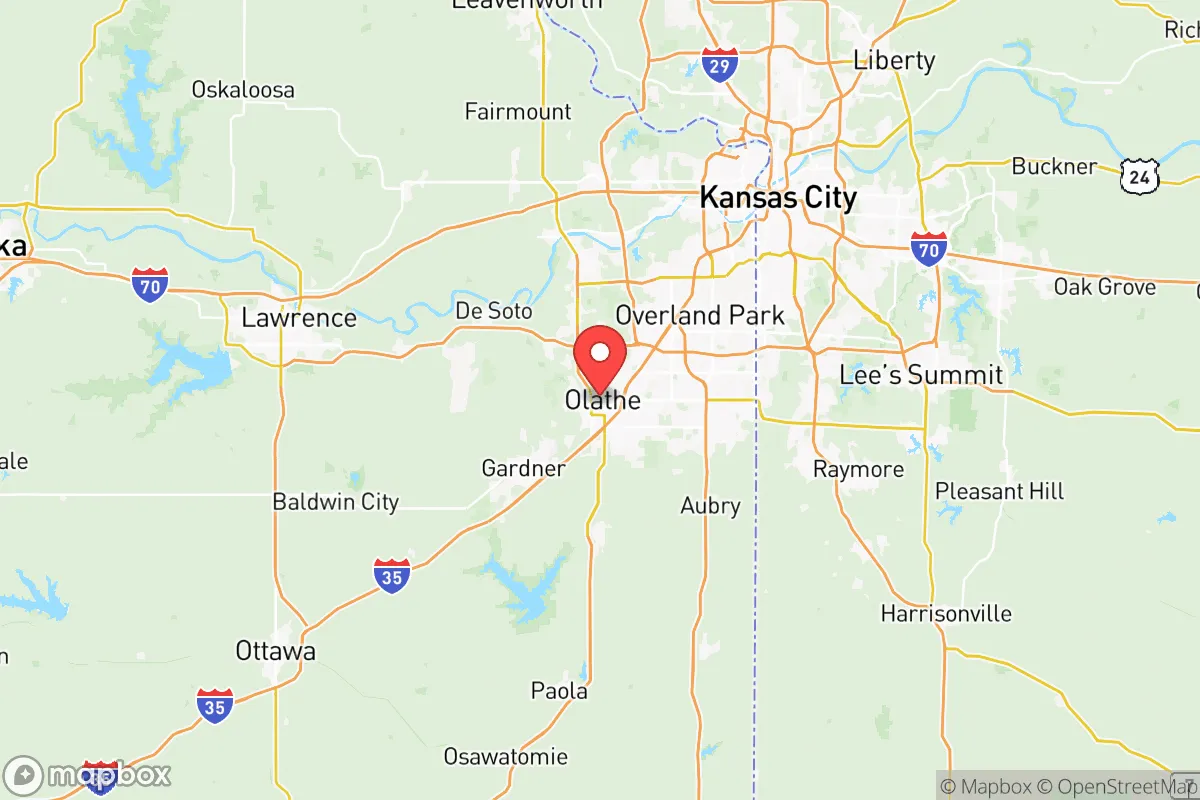
Johnson County, Kansas offers a notably high degree of personal sovereignty compared to many suburban rings around major U.S. cities, particularly those on the coasts, but it operates within a state framework that balances individual liberty with a robust local government structure. For the strategic relocator—whether a single professional or a parent—the county provides a legal environment where self-defense rights are strong, tax burdens are manageable, and parental authority is generally respected, though it is not a libertarian free-for-all. The key is understanding where Johnson County’s autonomy ends and where state preemption or local ordinances begin, especially as you move from the dense urban core of Overland Park to the more rural edges near Spring Hill or Edgerton.
Tax burden and regulatory posture: how Johnson County compares to surrounding areas
Kansas maintains a relatively low regulatory footprint compared to states like California or New York, and Johnson County benefits from this state-level posture. The state income tax is a flat 5.7% as of 2026, with no local income tax, and property taxes in Johnson County average around 1.2% of assessed value—higher than rural Kansas but lower than comparable suburbs in Illinois or Colorado. Sales tax in the county ranges from 8.1% in Overland Park to 8.6% in Olathe, reflecting local option levies. Critically, Kansas has right-to-work laws, meaning no forced union membership, and the state’s occupational licensing requirements are among the least burdensome in the Midwest. For a prepper or self-reliant individual, this means starting a home-based business, a firearms training school, or a small farm supply operation faces fewer bureaucratic hurdles than in neighboring Missouri’s more restrictive cities. However, Johnson County’s planning departments in cities like Leawood and Mission Hills enforce strict zoning codes that can limit home-based commercial activity, so those seeking maximum regulatory freedom should look to unincorporated areas or smaller towns like Gardner or Edgerton, where county-level oversight is lighter.
Self-defense and gun law specifics: what the Second Sanctuary status means for residents
Kansas is a constitutional carry state, meaning no permit is required to carry a concealed firearm for anyone legally allowed to possess one, and Johnson County has declared itself a Second Amendment Sanctuary. This is not symbolic: local law enforcement in cities like Olathe and Lenexa have publicly stated they will not enforce federal firearm restrictions they deem unconstitutional, such as potential future bans on certain rifle configurations or magazine capacities. Stand-your-ground laws are fully in effect, with no duty to retreat in any place where a person has a legal right to be. For parents, this means the legal framework supports defensive use of force in the home or vehicle without fear of prosecution, provided the threat is reasonable. The county has a high density of gun shops, ranges, and training facilities—notably in Shawnee and Overland Park—and the state preempts local governments from enacting their own firearm ordinances, so you won’t face the patchwork of city-level bans seen in places like Denver or Seattle. One practical consideration: while open carry is legal, many private businesses in Johnson County post signs prohibiting firearms, so situational awareness is still required. For the survivalist mindset, the legal environment here is among the most favorable in the nation for maintaining a fully stocked armory and training regimen without government interference.
Self-reliance and homesteading viability: lot sizes, zoning, and off-grid feasibility across the county
Johnson County’s homesteading potential varies dramatically by location, and this is where the strategic relocator must be precise. In the northern and central cities—Overland Park, Lenexa, Shawnee—typical residential lots are 0.25 to 0.5 acres, with homeowners’ associations (HOAs) often restricting chickens, livestock, and even vegetable gardens in front yards. These areas are not conducive to self-sufficiency. However, as you move south and west, the picture changes. Spring Hill and Edgerton still have rural zoning districts where lots of 1 to 5 acres are common, and chickens, goats, and even a single horse are permitted without special permits. Gardner allows accessory dwelling units (ADUs) on larger lots, which can serve as guest quarters or workshop space. Off-grid feasibility is limited by county building codes that require connection to municipal water and sewer in platted subdivisions, but in unincorporated areas—particularly near the Miami County line—wells and septic systems are standard, and solar panels with battery storage are unrestricted. The county does not have a ban on rainwater collection, though it is not explicitly encouraged. For a serious prepper looking to establish a resilient homestead, the best strategy is to target properties in the southern tier of the county, ideally on parcels of 2+ acres with no HOA, and to verify zoning with the Johnson County Planning Department before purchase. The city of De Soto, on the western edge, offers a mix of rural and suburban zoning that can accommodate a more self-reliant lifestyle without being completely isolated.
Personal liberties: parental rights, medical autonomy, speech, and property protections
Kansas law provides strong protections for parental rights, including a statutory presumption that parents act in their children’s best interest, and Johnson County school districts—such as Blue Valley and Olathe—have generally resisted controversial curriculum mandates seen in other states. Medical autonomy is a mixed bag: Kansas does not have a state-level vaccine mandate for adults, and COVID-era emergency orders were struck down by the state legislature, but Johnson County’s health department retains authority to issue local health orders during declared emergencies, which could theoretically restrict access to certain treatments or require isolation. For the liberty-minded individual, this means staying engaged with county commission meetings and supporting candidates who prioritize individual consent. Free speech is robustly protected under the Kansas Constitution, which has its own free speech clause interpreted more broadly than the First Amendment in some cases, and the county has no history of suppressing political speech or literature distribution. Property rights are strong: Kansas is a “Dillon’s Rule” state, meaning local governments only have powers explicitly granted by the state, but Johnson County has not aggressively used eminent domain for private development. The biggest threat to property sovereignty here is HOA covenants, which can restrict everything from flag displays to vehicle storage; buyers should carefully review HOA documents before purchasing in any planned community.
Overall, Johnson County offers a solid foundation for personal sovereignty relative to most suburban areas in blue states, but it is not a haven for those seeking maximum autonomy. The tax burden is moderate, gun laws are excellent, and parental rights are respected, but the county’s dense suburban core imposes zoning and HOA restrictions that can frustrate self-reliance goals. For the strategic relocator, the best approach is to target the southern and western edges—Spring Hill, Edgerton, De Soto—where regulatory oversight is lighter and larger lots are available. Compared to areas like Austin’s suburbs or Denver’s exurbs, Johnson County is a clear winner for the prepper or conservative family seeking a balance of economic opportunity, legal protections, and community stability. It is not a rural retreat, but it is a defensible position in a volatile world.

* Values derived from national, state, county, city and local statistics and may differ in a specific area. Last updated: 2026-05-12T01:03:12.000Z
Narrative content on this page is AI-generated and may contain mistakes. Verify any details that matter before acting on them.
ReloMaps may earn a commission from affiliate links at no extra cost to you.

