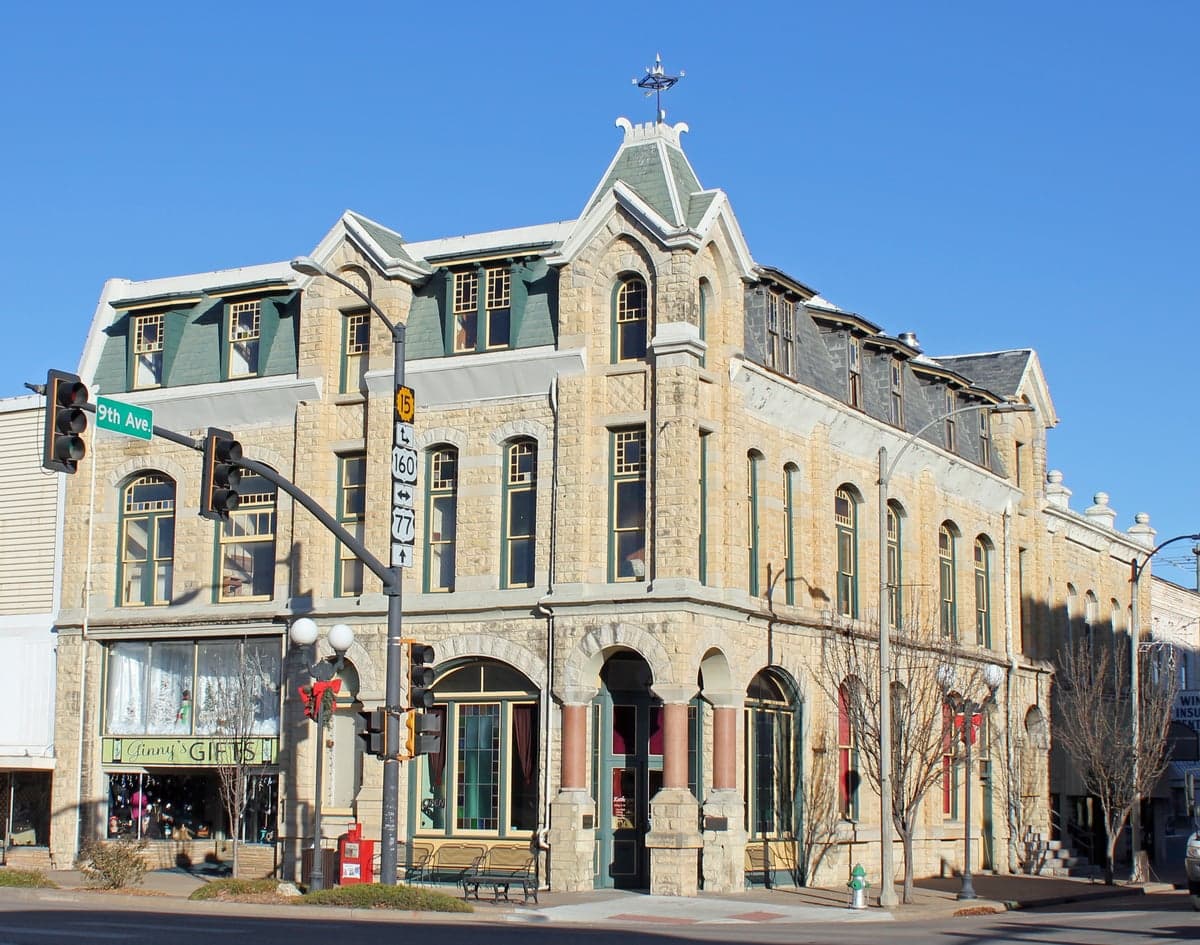
Photo: Wikipedia
Strategic Assessment of Cowley County
Workable tactical position. Some exposure to population density or targets, but generally defensible in a crisis.
What does the Strategic Assessment tell us?
Our Strategic Assessment grades tactical survivability of an area. Major population centers, military targets, fallout zones, natural disasters, and border exposure all drive risk — lower exposure means a more defensible position in a crisis.
This is heavily inspired by Joel Skousen's Strategic Relocation book. Highly recommended you checkout the book ($)What does this tell us?
Our Strategic Assessment grades tactical survivability of an area. Major population centers, military targets, fallout zones, natural disasters, and border exposure all drive risk — lower exposure means a more defensible position in a crisis.
This is heavily inspired by Joel Skousen's Strategic Relocation book. Highly recommended you checkout the book ($)Strategic Pillars

Key Distances
Strategic Assessment Analysis
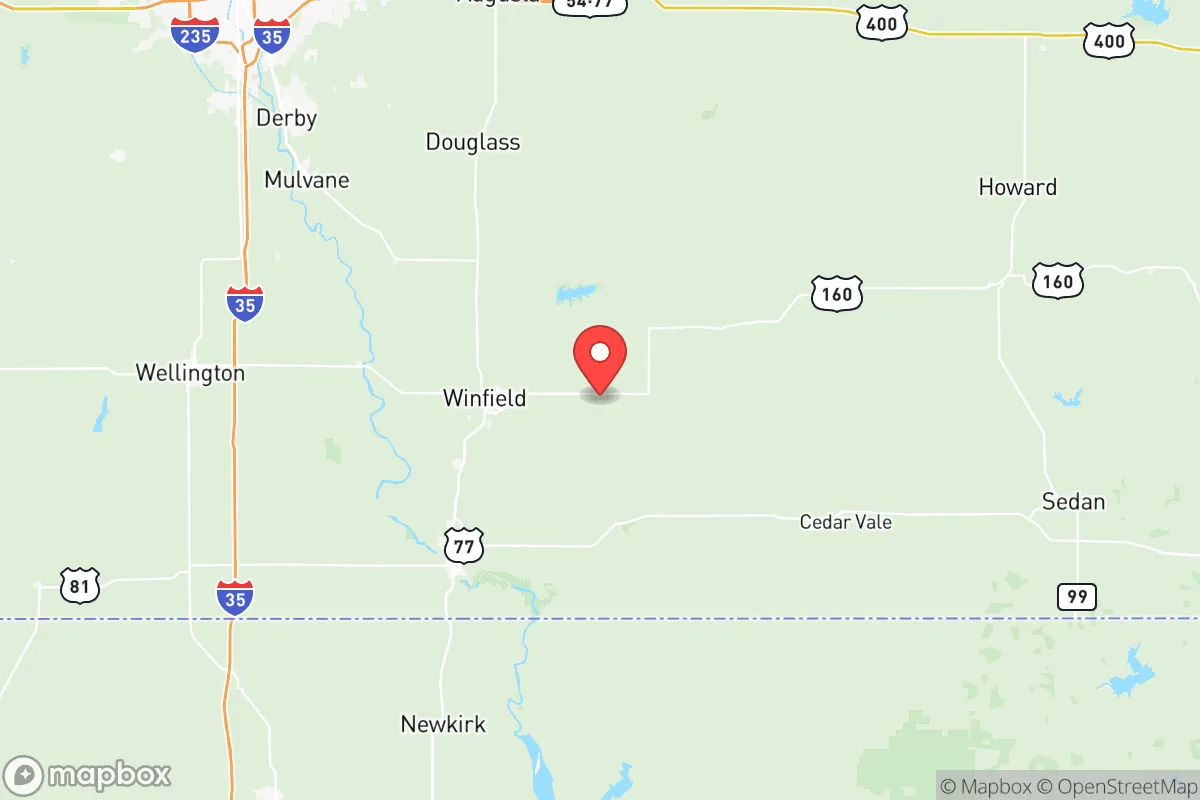
Cowley County, Kansas, offers a strategic relocation option for those prioritizing resilience and self-sufficiency, combining a low population density with a central location that avoids the direct fallout zones of major metropolitan areas. Its position roughly 50 miles southeast of Wichita and 100 miles north of Oklahoma City places it outside the immediate blast and secondary effects of those cities, while still providing access to their resources when needed. The county’s agricultural base, modest industrial footprint, and conservative political culture align well with a prepper or survivalist mindset focused on long-term stability and community cohesion.
Geographic position and natural advantages for long-term stability
Cowley County sits in the Flint Hills region, a landscape of rolling prairies and limestone bedrock that offers natural defensibility and water filtration. The Arkansas River runs through the county’s western edge, and the Walnut River cuts through the center, providing reliable surface water sources. The county seat, Winfield, and the largest city, Arkansas City, are both situated along these rivers, giving residents access to water without the vulnerability of being on a major floodplain. The terrain is open enough for agriculture but offers enough rolling hills and wooded creek bottoms to provide cover and concealment for dispersed homesteads. The area’s climate is temperate, with four distinct seasons, reducing the risk of extreme weather events compared to coastal or tornado-prone regions further east. The county’s location also places it within a day’s drive of multiple regional supply hubs, including Wichita’s McConnell Air Force Base and the Kansas City metro, but far enough to avoid the immediate chaos of a major urban collapse.
Risks, exposures, and proximity to fallout-relevant landmarks
While Cowley County avoids the worst of urban fallout, it is not without strategic vulnerabilities. The county is home to the Arkansas City refinery, a small but operational crude oil processing facility that could become a target during civil unrest or a grid-down scenario. Additionally, the Winfield Correctional Facility, a medium-security state prison, houses roughly 1,000 inmates; in a collapse scenario, this facility could become a source of escaped convicts or a target for resource raids. The county’s proximity to Interstate 35, which runs just east of Arkansas City, is a double-edged sword: it provides evacuation routes and supply access but also serves as a potential chokepoint for refugees fleeing Wichita or Oklahoma City. The Kansas Army Ammunition Plant in Parsons, about 30 miles northeast, is a minor risk—its storage of conventional munitions could attract attention, but it is not a nuclear or chemical facility. The nearest major military installation is McConnell Air Force Base in Wichita, which houses tanker aircraft and could become a staging area for federal forces during unrest. For those concerned with nuclear fallout, the nearest significant targets are the Wichita refineries and the Kansas City National Security Campus (nuclear weapons components), both over 100 miles away, placing Cowley County outside the lethal fallout zone for most plausible scenarios.
Practical resilience for a relocator: food, water, energy, and defensibility
For a relocator focused on practical self-sufficiency, Cowley County offers strong fundamentals. The county is part of Kansas’s agricultural heartland, with abundant farmland for crops and pasture for livestock. Local farmers’ markets in Winfield and Arkansas City provide fresh produce during growing seasons, and the region’s grain elevators and feedlots mean bulk food storage is feasible. Water access is reliable: the Walnut River and Arkansas River are supplemented by numerous small lakes and ponds, including Winfield City Lake and Arkansas City’s Lake Afton, which offer fishing and emergency water sources. Groundwater is generally accessible via shallow wells in the river valleys, though the Flint Hills limestone can make drilling expensive in upland areas. Energy resilience is moderate: the county is served by Westar Energy (now Evergy), but rural areas are prone to outages during ice storms or high winds. Solar panels are a viable investment, given the region’s average 200+ sunny days per year, and wood heating is practical due to abundant timber in creek bottoms. Defensibility is a mixed bag: the open prairie offers long sightlines but limited cover, while the wooded creek valleys provide natural chokepoints and concealment for a prepared homestead. The county’s population density of roughly 30 people per square mile means neighbors are few but often known, fostering a culture of mutual aid among like-minded residents. The local sheriff’s offices in Winfield and Arkansas City are well-regarded, but in a prolonged crisis, self-reliance will be the norm.
Overall, Cowley County presents a balanced strategic picture for the conservative prepper: it avoids the high-risk zones of major cities and military targets while offering solid natural resources and a community that values independence. The presence of the refinery and prison are manageable risks for those who plan ahead, and the county’s agricultural base provides a buffer against supply chain disruptions. For a single individual or family looking to relocate with a focus on long-term resilience, Cowley County deserves serious consideration—it’s not a fortress, but it’s a place where preparation and community can make the difference between surviving and thriving in uncertain times.

* Values derived from national, state, county, city and local statistics and may differ in a specific area. Last updated: 2026-05-12T02:01:15.000Z
Narrative content on this page is AI-generated and may contain mistakes. Verify any details that matter before acting on them.
ReloMaps may earn a commission from affiliate links at no extra cost to you.

