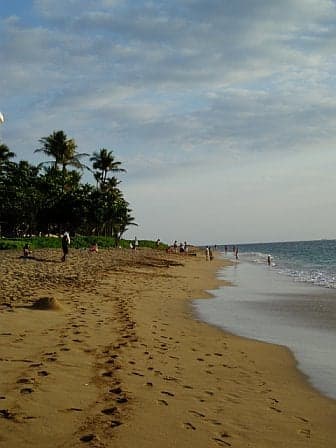
Photo: Wikipedia
Political ClimatePolitical Climate in Kaanapali, HI
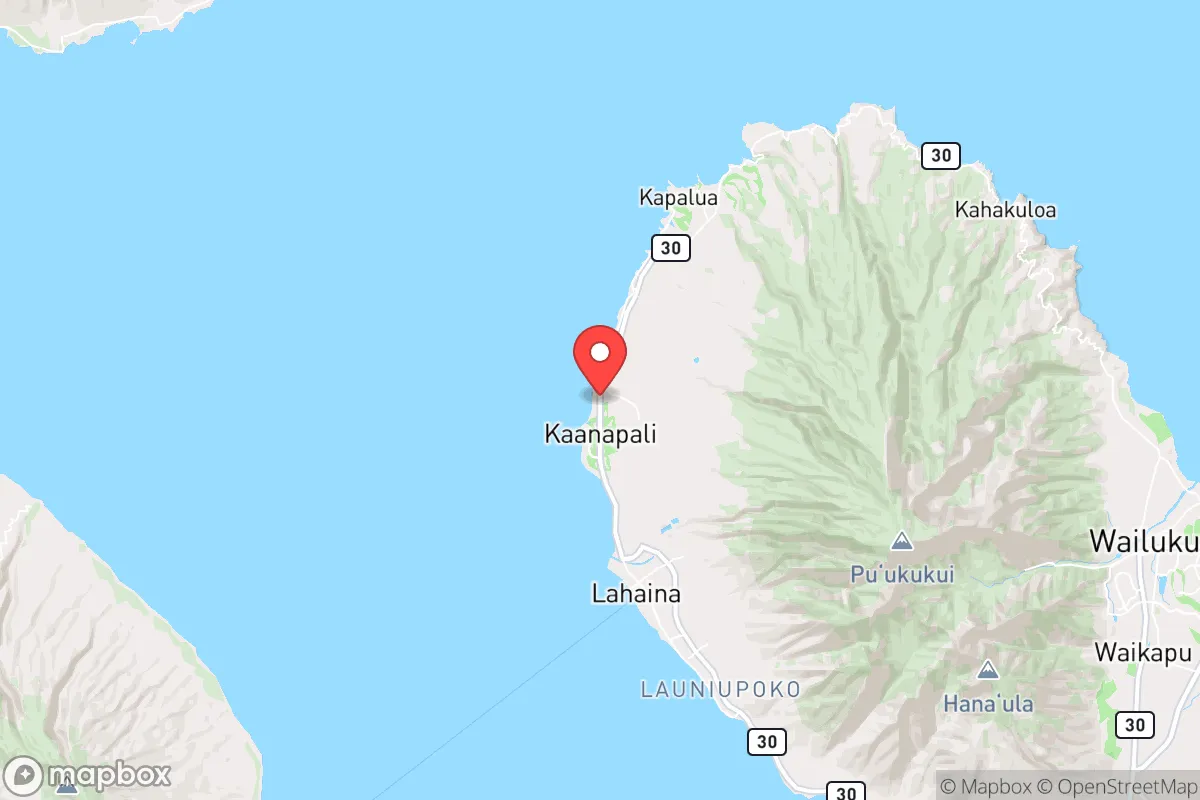
District shown is the primary district for this city’s centroid. Cities may span multiple districts.
Local Political AnalysisPolitical Analysis of Kaanapali, HI
Kaanapali leans heavily Democratic, with a Cook PVI of D+12 that places it firmly in blue territory, but this wasn’t always the case. Back in the 80s and 90s, this stretch of Maui’s west coast was more of a mixed bag—folks here valued their privacy, their property rights, and the freedom to live without a lot of government meddling. Over the last two decades, though, the political winds have shifted, driven by an influx of mainland transplants and a growing tourism economy that’s brought progressive policies along with it. Today, you’ll find a local government that’s increasingly comfortable with regulations on short-term rentals, environmental mandates, and tax hikes that squeeze homeowners and small businesses alike.
How it compares
Compared to the rest of Maui County, Kaanapali is actually a bit of an outlier in its liberal lean. Head up the coast to Napili or Kapalua, and you’ll find a more conservative streak—those areas have a higher concentration of longtime residents and retirees who vote Republican and push back on new development restrictions. Down in Lahaina, just a few miles south, the politics are similar to Kaanapali’s, but with a stronger activist bent, especially after the 2023 wildfires sparked debates over land use and rebuilding rules. On the other side of the island, Kihei and Wailea lean even further left, with a younger, more transient population that’s all in on green energy mandates and social programs. So while Kaanapali isn’t the most progressive spot on Maui, it’s definitely not the conservative haven it once was—and that shift is accelerating.
What this means for residents
For those of us who’ve been here a while, the biggest concern is how much control the county and state are taking over daily life. Property taxes have crept up as the government funds new social services and climate initiatives, and there’s a constant push to restrict vacation rentals—which hits homeowners who rely on that income to afford their mortgages. You’ll also see more red tape around building permits, water usage, and even what you can plant in your yard, all in the name of sustainability. The local school board and county council are dominated by Democrats who prioritize equity programs and environmental regulations over fiscal restraint or individual property rights. If you value personal freedom—like the ability to rent out your home or develop your land without jumping through hoops—this trend is something to watch closely.
Culturally, Kaanapali has always been a resort community, so there’s a tension between the tourist-driven economy and the push for progressive policies that can stifle it. The county’s recent moves to ban single-use plastics and impose stricter noise ordinances are small examples, but they signal a broader appetite for government intervention. Long-term, if the political climate keeps shifting left, you might see more regulations on everything from beach access to business hours, which could change the laid-back, freewheeling vibe that made this place special. For now, it’s still a beautiful spot to live, but keep an eye on those local elections—they’re where the real battles over your rights are being fought.

State Political ClimatePolitical Climate in Hawaii
State Political AnalysisPolitical Environment in the State
Hawaii has been a one-party Democratic stronghold for decades, with Democrats controlling the governorship and supermajorities in both legislative chambers since the early 1960s. The state’s overall partisan lean is roughly D+20 in presidential elections, but that masks a growing conservative undercurrent, particularly on the neighbor islands and in rural Oahu. Over the last 10-20 years, the state has drifted further left on social and environmental policy, but a counter-movement of fiscal conservatives and gun-rights advocates has emerged, especially in areas like Hilo, Kailua-Kona, and Kauai’s north shore. The 2024 election saw Honolulu’s urban core vote heavily Democratic, while Maui County and Hawaii County (the Big Island) showed surprising Republican gains in local races, hinting at a slow realignment driven by cost-of-living frustrations and government overreach.
Urban vs. rural divide
The political map of Hawaii is starkly divided between the dense, liberal-leaning urban corridor of Honolulu and the more conservative, rural neighbor islands. Honolulu’s metro area, home to nearly 70% of the state’s population, drives the Democratic supermajority, with precincts in Waikiki, Manoa, and Kailua consistently voting 70-80% Democratic. In contrast, the Big Island’s Puna district and Hamakua coast lean Republican in local races, fueled by agricultural landowners, ranchers, and libertarian-leaning homesteaders. Maui’s Upcountry region (Kula, Makawao) and Kauai’s Hanalei area show a mix of conservative and independent voters, often splitting tickets between Democratic state legislators and Republican county council members. The rural-urban split is most visible in housing policy: Honolulu’s pro-density, pro-rent-control measures clash with neighbor island resistance to state-imposed land-use restrictions.
Policy environment
Hawaii’s policy environment is among the most interventionist in the nation. The state has the highest combined state and local tax burden in the U.S., with a general excise tax (GET) of 4.5% that applies to nearly all goods and services, plus county surcharges pushing it to 4.75% in Honolulu and 5% on Maui. Property taxes are relatively low for owner-occupied homes but high for investment properties. The regulatory posture is heavy: Hawaii’s land-use commission controls zoning statewide, making it notoriously difficult to build new housing or expand businesses. Education policy is centralized under the state Department of Education, with no local school boards—a system that frustrates parents seeking charter schools or curriculum flexibility. Healthcare is dominated by the state’s Prepaid Health Care Act, which mandates employer-provided insurance, and the state-run Hawaii Health Connector. Election laws are moderately restrictive: no-excuse absentee voting is allowed, but same-day registration is not available, and voter ID laws are minimal. The state’s gun laws are among the strictest in the nation, with a permit-to-purchase requirement, a ban on assault weapons, and a 14-day waiting period—all of which have been upheld by the 9th Circuit.
Trajectory & freedom
Over the past five years, Hawaii has moved decidedly toward less personal freedom, particularly in the realms of gun rights, parental rights, and property rights. In 2022, the legislature passed Act 207, which expanded the state’s red flag law, allowing family members or law enforcement to petition for temporary firearm seizure without a criminal conviction. In 2023, Act 50 banned the sale of semiautomatic firearms to anyone under 21, a move that drew lawsuits from gun-rights groups. On parental rights, the state’s Department of Education adopted a policy in 2023 allowing students to use preferred names and pronouns without parental notification, sparking backlash from conservative parents. Medical autonomy took a hit with the 2024 passage of Act 100, which mandated COVID-19 vaccine reporting for healthcare workers, though the mandate was later softened. Property rights are constrained by the state’s county-level zoning boards, which have rejected dozens of housing projects in Kapolei and Kihei over environmental concerns, effectively limiting supply and driving up home prices. The trajectory is clear: more regulation, higher taxes, and less individual discretion, especially for gun owners and parents.
Civil unrest & political movements
Hawaii has a history of civil unrest tied to land rights and indigenous sovereignty, but recent flashpoints are more ideological. The Mauna Kea telescope protests (2019-2020) drew thousands of Native Hawaiian activists and left-leaning environmentalists, but also attracted conservative libertarians who opposed government land seizures. In 2023, the Honolulu City Council faced protests over a proposed homeless encampment sweep in Kakaako, with activists clashing with police. On the right, the Hawaii Firearms Coalition has organized rallies at the state capitol against red flag laws, drawing hundreds. Immigration politics are muted—Hawaii has no sanctuary city policy, but Honolulu’s police department has a policy of not inquiring about immigration status. Secession rhetoric is rare but exists among fringe Native Hawaiian sovereignty groups, who argue the 1893 overthrow was illegal. Election integrity controversies are minimal, though the 2020 election saw a small protest outside the state capitol over mail-in voting procedures. A new resident would notice the strong presence of protest culture in Honolulu’s Chinatown and University of Hawaii campus, but less so in rural areas like Waimea or Lahaina.
Projection
Over the next 5-10 years, Hawaii is likely to become more polarized rather than shifting decisively in one direction. Demographic trends show an aging population (median age 40) and a slow outflow of native-born residents to the mainland, replaced by remote workers and retirees from California and the Pacific Northwest—groups that tend to vote Democratic. However, the cost of living crisis is fueling a populist backlash against government overreach, particularly on the Big Island and Maui, where housing costs have risen 40% since 2020. The 2026 gubernatorial race could see a Republican or independent candidate gain traction if they focus on cutting the GET and loosening land-use rules. The state’s gun laws are likely to face more legal challenges after the Supreme Court’s Bruen decision, but the 9th Circuit may uphold them. A new resident moving in now should expect a state that remains deeply Democratic in statewide elections but with growing conservative enclaves in rural areas, and a policy environment that prioritizes environmental regulation and social equity over economic freedom.
Bottom line for a new resident: If you value low taxes, property rights, and gun freedom, Hawaii will feel restrictive—especially compared to mainland states like Texas or Florida. The urban-rural divide means you can find like-minded neighbors in Hilo or Kauai’s north shore, but you’ll still be subject to state-level policies that limit your choices. The cost of living is punishing, and the regulatory climate is hostile to small businesses and homeowners. If you’re moving for family or career, be prepared to navigate a system that prioritizes collective goals over individual liberty—and to pay a premium for the privilege of living in paradise.
* Values derived from national, state, county, city and local statistics and may differ in a specific area. Last updated: 2026-04-24T00:09:19.000Z
Narrative content on this page is AI-generated and may contain mistakes. Verify any details that matter before acting on them.
ReloMaps may earn a commission from affiliate links at no extra cost to you.

