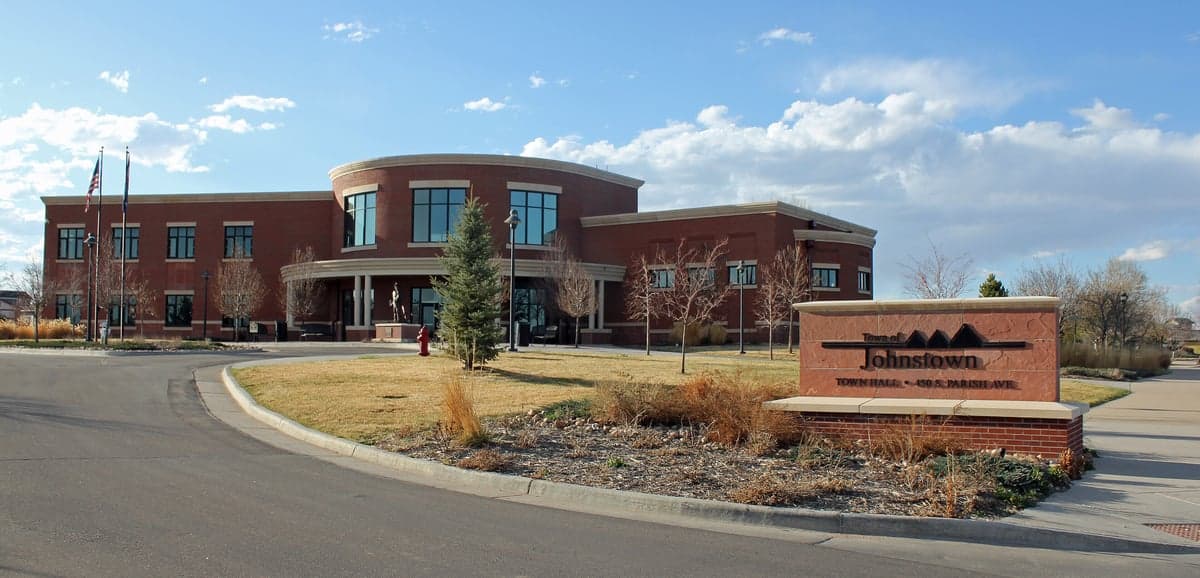
Photo: Wikipedia
Strategic Assessment of Johnstown, CO
Meaningful friction. Expect exposure to either population pressure, blast zones, or natural disaster risk. Consider buying a retreat property.
What does the Strategic Assessment tell us?
Our Strategic Assessment grades tactical survivability of an area. Major population centers, military targets, fallout zones, natural disasters, and border exposure all drive risk — lower exposure means a more defensible position in a crisis.
This is heavily inspired by Joel Skousen's Strategic Relocation book. Highly recommended you checkout the book ($)What does this tell us?
Our Strategic Assessment grades tactical survivability of an area. Major population centers, military targets, fallout zones, natural disasters, and border exposure all drive risk — lower exposure means a more defensible position in a crisis.
This is heavily inspired by Joel Skousen's Strategic Relocation book. Highly recommended you checkout the book ($)Strategic Pillars

Key Distances
Regional Safe Places
Below is our recommended "safe zones" in Colorado and the surrounding area based on our strategic heuristics. For most people, it's unrealistic to live in a “safe zone” full-time due to work, family or other personal reasons. They tend to be more rural. However, many of these areas are perfect for second homes and retreat properties that double as a vacation home or even a short-term rental.
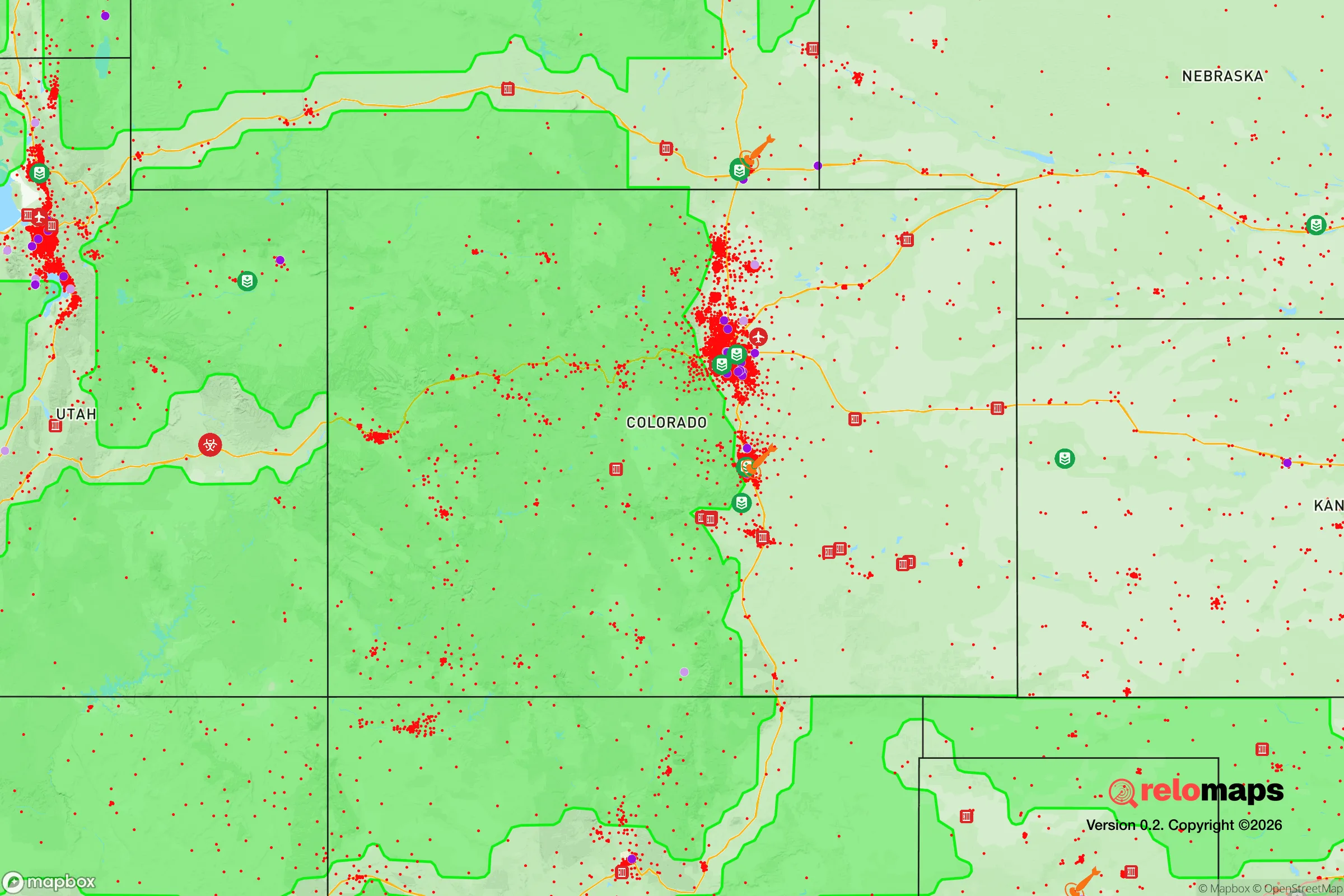
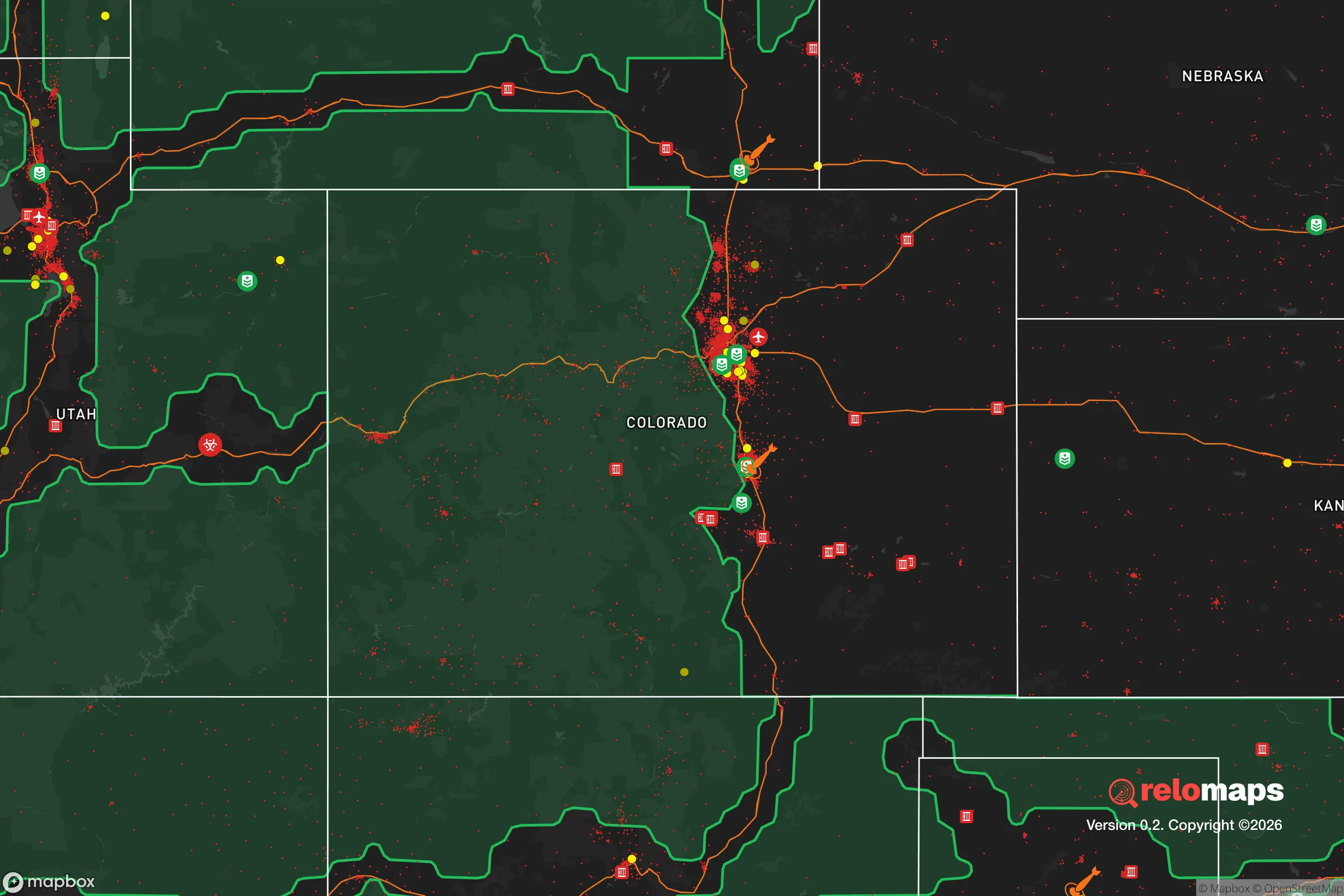


Important Note: For informational purposes only. This does not mean nothing bad ever happens in the green zones. Please use common sense. This is based on public data and modeled with AI. We tried to take a conservative approach but mistakes happen. We update this regularly as new information becomes available.
Solar Generator Recommendations
Backup power matters more here than in safer locations. We've picked three solar generators across budgets and capacity tiers — start with the budget unit if you only need a few essentials, or step up if you want to run a fridge and HVAC for days at a time.

Jackery Portable Power Station Explorer 300
Budget OptionPower on the Go: Weighing only 11 lbs, it's convenient to set up and store with book-sized foldable solar panels

BLUETTI Portable Power Station AC180
Designed for both indoor and outdoor scenarios, AC180 is highly capable as it has a robost capacity and continuous output power.

EF ECOFLOW DELTA Pro Ultra Power Station
Upgraded PickEcoFlow DELTA Pro Ultra is a whole-home energy system designed to grow with your family. Integrated with the Smart Home Panel 2, it scales to meet your evolving energy needs — keeping your home powered, intelligent, and secure through every stage of life.
We earn a commission, at no additional cost to you.
Strategic Assessment Analysis
Johnstown, Colorado, sits in a strategic sweet spot that resilience-minded relocators should take seriously: far enough from Denver’s chaos to avoid the worst of a collapse scenario, yet close enough to access resources if things hold together. This town of roughly 18,000 straddles the Weld-Larimer county line, placing it in a corridor that has historically been a breadbasket, not a bullseye. For someone thinking in terms of decades, not just next year’s election, Johnstown offers a rare combination of agricultural self-sufficiency, low population density, and geographic insulation from the most obvious fallout zones.
Geographic position and natural advantages for long-term stability
Johnstown’s location at the intersection of I-25 and Highway 60 is a double-edged sword, but for the prepared, it leans heavily toward advantage. The town sits on the edge of the Colorado Piedmont, where the High Plains meet the Front Range foothills. This means access to the South Platte River basin for water—a critical asset in a state where water rights are more valuable than gold. The surrounding farmland is some of the most productive in the state, with corn, alfalfa, and cattle operations that could sustain a local population even if supply chains snap. The area’s elevation (roughly 4,800 feet) avoids the brutal winters of the mountains while still offering enough altitude to deter the worst of lowland heatwaves. For a prepper, the natural advantages are clear: ample groundwater, fertile soil, and a climate that supports year-round food production with proper planning.
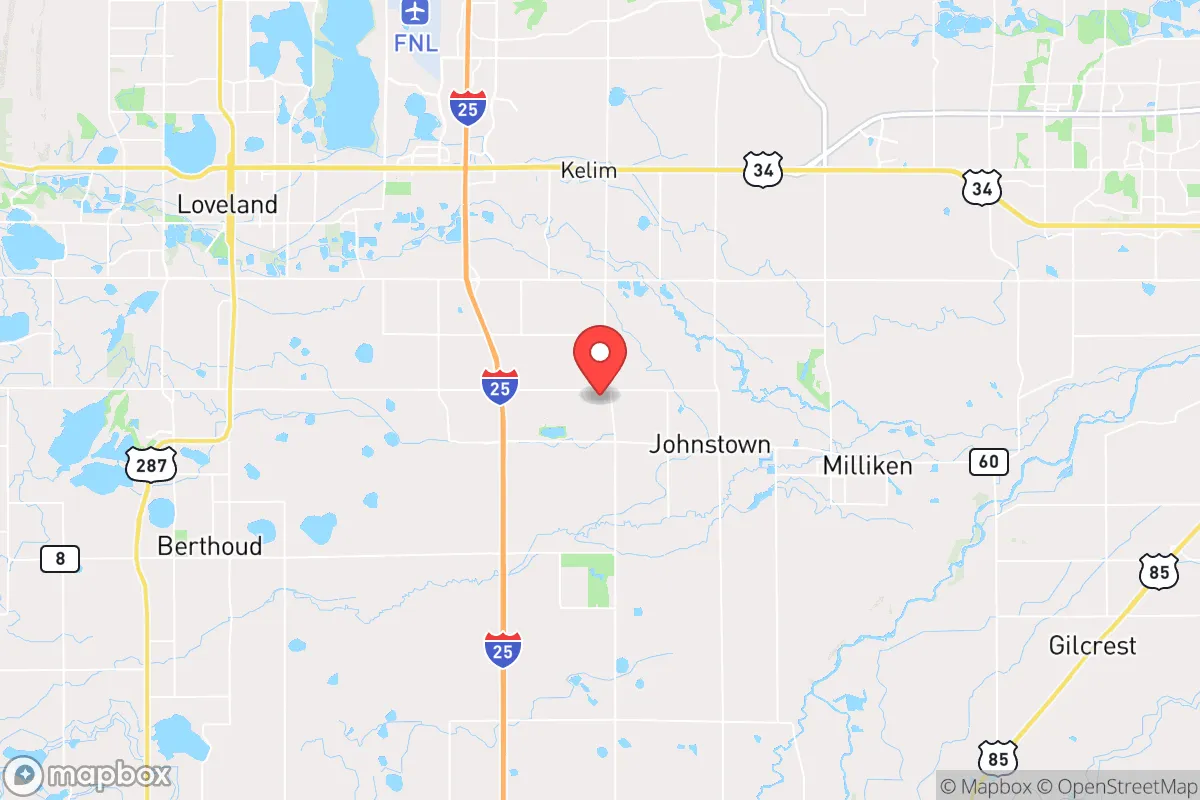
The town’s position also means it’s not a primary target. Johnstown is 45 miles north of Denver, 30 miles east of Fort Collins, and 20 miles south of Greeley. None of these are within the immediate blast radius of a major event, but they’re close enough to become refugee corridors if things go sideways. The key is that Johnstown itself is not a population center—it’s a bedroom community with a rural core. That low profile is a resilience asset. In a crisis, the town’s grid and roads won’t be the first to clog, and its agricultural base means local food production isn’t a fantasy.
Risks, exposures, and proximity to fallout-relevant landmarks
No location is perfect, and Johnstown has exposures that a serious relocator must weigh. The most obvious risk is proximity to I-25, a major north-south artery that would become a choke point in any evacuation scenario. If Denver or Colorado Springs experiences a mass casualty event—whether from civil unrest, a grid-down situation, or a coordinated attack—I-25 will become a parking lot of desperate people. Johnstown sits just off that highway, meaning the town could see a surge of refugees within hours. The local police force is small (around 30 officers), and the Weld County Sheriff’s office would be stretched thin. Defensibility here is not about walls; it’s about rural distance and community cohesion.
Another exposure is the proximity to the Rocky Mountain Arsenal National Wildlife Refuge, about 40 miles south. That site was a chemical weapons manufacturing facility during the Cold War, and while it’s been cleaned up, the legacy of contamination is a reminder that the Front Range has industrial skeletons. More immediately, Johnstown is within 50 miles of the Platte River Power Authority’s Rawhide Energy Station, a coal-and-natural-gas plant that could be a target for sabotage or a source of hazardous material release. The town also sits near the Union Pacific rail line that runs through Weld County, carrying everything from crude oil to anhydrous ammonia. A derailment or attack on that line could create a localized disaster zone. For the prepper, these are not deal-breakers, but they are reasons to have a bug-out plan that heads east, not west or south.
Practical resilience for a relocator: food, water, energy, and defensibility
For a single individual or family looking to hunker down, Johnstown offers a practical foundation. Water is the first concern, and the town’s municipal supply comes from the South Platte River and local groundwater wells. In a grid-down scenario, those wells would still function if you have a hand pump or generator. The water table here is shallow enough (50-100 feet) that a private well is a realistic investment for a rural property. The town’s agricultural zoning also means that raising livestock or growing a serious garden is not just possible but common. Many homes in the outskirts sit on 1-5 acres, which is enough for a family to produce a significant portion of their own calories.
Energy resilience is mixed. Johnstown is served by Platte River Power Authority, which has a mix of coal, natural gas, and renewables. In a long-term grid failure, solar panels with battery storage are viable here—the area gets over 300 sunny days per year. Natural gas is widely available, and propane tanks are common for rural homes. For defensibility, the town’s layout is a plus: the core is compact, with a few main roads that can be monitored, while the surrounding farmland provides a buffer. The local culture leans heavily toward self-reliance, with a strong agricultural community that would likely organize quickly in a crisis. The Weld County government is conservative and pro-Second Amendment, which means local law enforcement is not going to confiscate firearms or impose draconian restrictions in a disaster. That’s a significant factor for anyone concerned about civil unrest.
Food storage is another practical consideration. Johnstown has a small grocery scene (a King Soopers and a Safeway), but the real advantage is the direct access to local farms and ranches. The town hosts a weekly farmers’ market in season, and there are multiple u-pick operations within a 10-minute drive. For long-term storage, the dry climate means grains and dehydrated foods keep well without humidity issues. The biggest gap is medical infrastructure: the nearest hospital with a trauma center is in Loveland (15 miles north) or Greeley (20 miles east). In a widespread crisis, those facilities would be overwhelmed. A relocator should plan for at least a basic trauma kit and a stock of prescription medications for 90 days.
The overall strategic picture for a conservative relocator
Johnstown is not a fortress, but it’s a solid base camp for someone who wants to be prepared without living in a bunker. The town’s biggest strength is its agricultural foundation and low target profile. It’s not a major transportation hub, not a government center, and not a high-value industrial target. The risks—I-25 refugees, rail line hazards, and proximity to Denver’s potential collapse—are manageable with a plan. For a conservative relocator who values community, self-sufficiency, and distance from the chaos of the Front Range cities, Johnstown offers a realistic middle ground. It’s not the remote wilderness of the San Juans, but it’s also not the suburban sprawl of Aurora. It’s a place where you can dig in, grow food, and know your neighbors—and in a world that’s increasingly unstable, that counts for a lot.

* Values derived from national, state, county, city and local statistics and may differ in a specific area. Last updated: 2026-05-01T03:13:30.000Z
Narrative content on this page is AI-generated and may contain mistakes. Verify any details that matter before acting on them.
ReloMaps may earn a commission from affiliate links at no extra cost to you.

