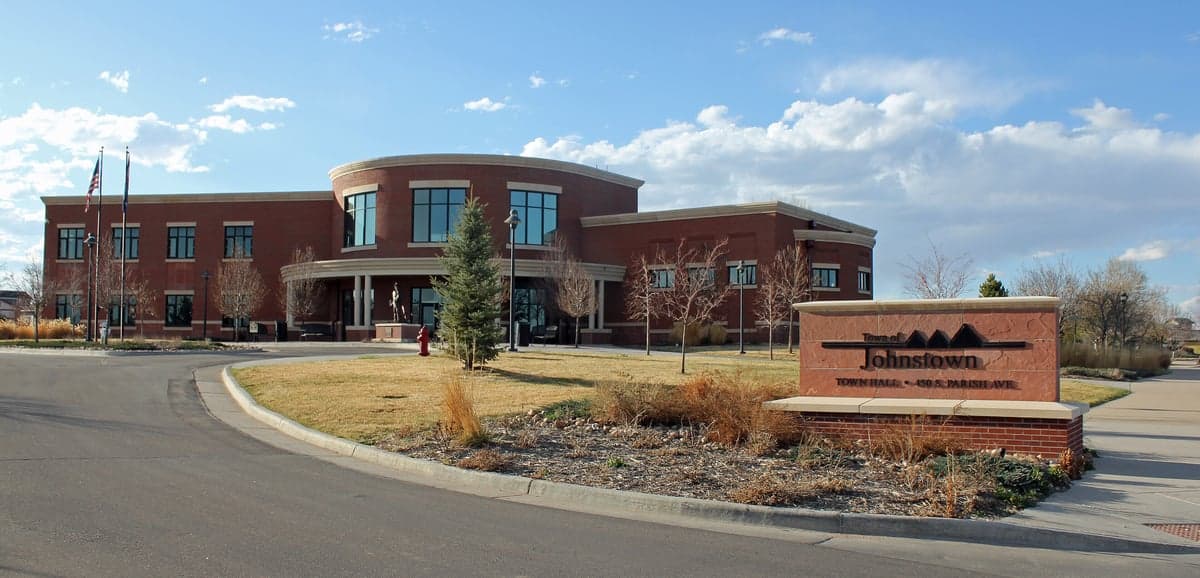
Photo: Wikipedia
Political ClimatePolitical Climate in Johnstown, CO
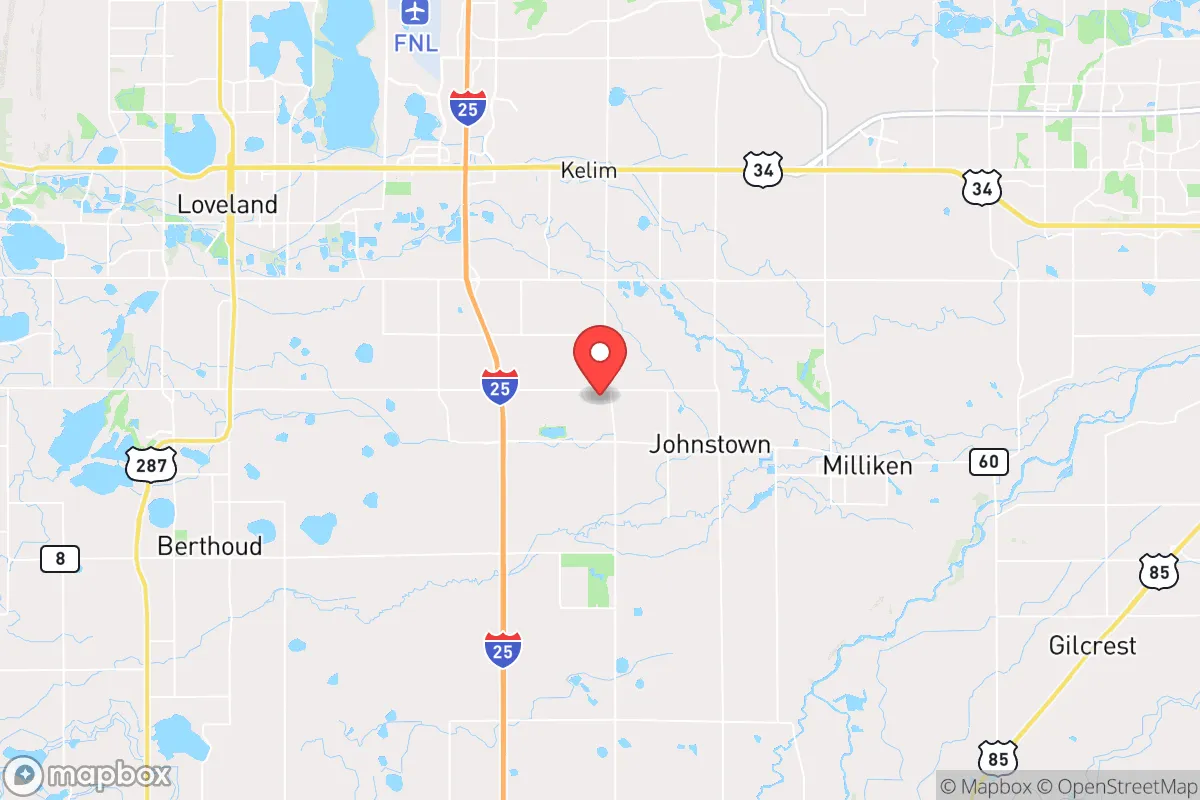
District shown is the primary district for this city’s centroid. Cities may span multiple districts.
Local Political AnalysisPolitical Analysis of Johnstown, CO
Johnstown, Colorado, sits right on the political fence, with a Cook PVI of EVEN, but if you’ve lived here as long as I have, you know that “even” is a recent development. For decades, this was a rock-solid conservative farming and ranching community where folks minded their own business and expected the same from their government. The shift started around 2010 when the Front Range sprawl began creeping north from Denver, bringing in folks who wanted the wide-open spaces but also wanted to bring their big-city politics with them. Today, you’ll see a real tug-of-war at the local level, with the old guard fighting to keep taxes low and personal freedoms intact, while a growing progressive faction pushes for more regulations, higher density housing, and what they call “sustainability” — which often translates to government telling you what you can do with your own property.
How it compares
Drive ten minutes south to Greeley, and you’re in a county that voted +15 Republican in 2024 — a place where the Second Amendment is still a given and property rights are sacred. Head west to Loveland, and you’ll find a similar story, though it’s starting to feel the same pressure from the Denver metro area. But go east to Milliken or Mead, and you’re back in solidly red territory, where the county commissioners still believe the best government is the one that stays out of your garage and your backyard. Johnstown is the battleground. The town council meetings have gotten heated over things like short-term rental restrictions and water-use mandates — issues that would have been laughed off the agenda twenty years ago. The contrast is stark: the old-timers remember when the biggest political fight was over the school board budget, not over whether you can park your boat in your driveway.
What this means for residents
For those of us who value personal liberty, the trend is concerning. The push for “complete streets” and “climate action plans” sounds nice in a press release, but in practice it means more red tape for small businesses and homeowners. I’ve watched friends get hit with new fees just to build a shed on their own land, and the zoning board is getting more aggressive about what you can and can’t do with your acreage. The school board is another flashpoint — there’s a real effort to bring in progressive curriculum that focuses on social issues rather than the basics, and parents who speak up are often labeled as troublemakers. If you’re the kind of person who believes your home is your castle and your vote is your voice, you’ll want to pay close attention to local elections. The county commission and town council races are where the rubber meets the road, and they’re getting tighter every cycle.
One thing that still sets Johnstown apart is the strong sense of community among conservatives who refuse to roll over. The local gun club still hosts regular safety courses, the 4-H program is thriving, and there’s a network of folks who quietly support each other when the government oversteps. The long-term outlook? If the current growth pattern holds, Johnstown could tip blue within a decade, especially as more remote workers from Denver and Boulder move in. But for now, it’s a place where you can still have a real conversation with your neighbor about the importance of limited government — just don’t be surprised if the guy next door moved here last year and thinks the county should be doing more. Keep your head up, get involved in the local GOP or a property rights group, and don’t let the newcomers tell you how to live your life. That’s the Johnstown way.

State Political ClimatePolitical Climate in Colorado
State Political AnalysisPolitical Environment in the State
Colorado has shifted from a classic purple swing state to a solidly blue-leaning state over the past two decades, with Democrats now controlling the governorship, both U.S. Senate seats, and both chambers of the state legislature. The state voted for Hillary Clinton by 5 points in 2016, Joe Biden by 13 points in 2020, and Kamala Harris by roughly 11 points in 2024, reflecting a durable leftward tilt driven largely by explosive growth in the Denver-Boulder-Aurora metro corridor. However, this blue veneer masks a deeply fractured political landscape — the rural eastern plains, Western Slope, and southern mountain counties remain reliably red, while the Front Range cities and resort towns have become Democratic strongholds.
Urban vs. rural divide
The political map of Colorado is essentially a tale of two states. The Denver metro area, including Denver, Aurora, Lakewood, and Boulder, produces roughly 60% of the state's vote and leans heavily Democratic — Boulder County alone gave Biden 78% of the vote in 2020. The I-25 corridor from Fort Collins down through Colorado Springs is more mixed: Fort Collins and Loveland have trended blue in recent cycles, while Colorado Springs remains a conservative anchor, though even El Paso County has shifted from +18 R in 2012 to about +9 R in 2024. The rural areas tell a different story: Weld County (Greeley) voted +27 R in 2024, Elbert County +44 R, and Lincoln County on the eastern plains +52 R. The Western Slope counties like Mesa County (Grand Junction) and Montrose County are solidly red, but even there, the resort towns of Aspen, Vail, and Telluride are deep blue enclaves that skew county totals. The divide isn't just rural vs. urban — it's also about altitude: high-elevation resort communities vote like coastal cities, while the lower-elevation agricultural and energy counties vote like Texas.
Policy environment
Colorado's policy environment has become increasingly progressive, with a tax structure that is moderate by national standards but trending left. The state income tax rate is a flat 4.4% (down from 4.55% in 2024 via a voter-approved reduction), and the state sales tax is 2.9%, though local add-ons can push total rates above 10% in some cities. The Taxpayer's Bill of Rights (TABOR) still limits revenue growth and requires voter approval for tax increases, but Democrats have found workarounds — like retaining revenue above the TABOR cap through voter-approved "de-Brucing" measures. Property taxes are relatively low, but recent legislation (SB24-233) increased the assessment rate for residential property, a move many conservatives see as a backdoor tax hike. On education, Colorado has adopted the controversial READ Act and expanded full-day kindergarten, but school choice remains robust with charter schools and open enrollment. Healthcare policy is dominated by the state-run Connect for Health Colorado exchange and a 2022 law capping insulin copays at $50. Election laws have tightened in a way that concerns conservatives: Colorado now has universal mail-in voting, automatic voter registration, and same-day registration — which critics argue erodes ballot security. The state also passed the Colorado Privacy Act in 2021, giving residents control over personal data, but it's paired with strict renewable energy mandates (100% carbon-free electricity by 2040) that drive up energy costs.
Trajectory & freedom
On the freedom index, Colorado is clearly moving in a less free direction, particularly on gun rights, parental rights, and energy policy. The state passed HB24-1292 in 2024, which bans so-called "assault weapons" — a move that directly challenges the Second Amendment and has sparked lawsuits from gun rights groups. In 2023, the legislature passed SB23-170, which eliminated the requirement for a permit to carry a concealed handgun (constitutional carry), but that was paired with a "red flag" law (HB19-1177) that allows courts to temporarily seize firearms from individuals deemed a risk — a law conservatives view as ripe for abuse. On parental rights, Colorado passed HB24-1036, which prohibits school boards from requiring parental notification when a student changes their gender identity or pronouns — a major flashpoint for conservative families. Medical autonomy took a hit with the passage of Proposition 122 in 2022, which legalized psilocybin therapy but also created a regulatory framework that critics say opens the door to broader drug decriminalization. Property rights are under pressure from the 2023 Land Use Bill (SB23-213), which preempts local zoning to force higher-density housing near transit corridors — a move that conservatives argue tramples local control and property values. On the plus side, Colorado voters rejected a progressive income tax increase in 2024 and approved a property tax relief measure, showing some resistance to the leftward march.
Civil unrest & political movements
Colorado has seen its share of political flashpoints. The 2020 George Floyd protests in Denver turned violent, with property damage and clashes between demonstrators and police, leading to a $14 million settlement for injured officers. The state's sanctuary policies are a major concern: Colorado has a 2019 law (HB19-1124) that limits cooperation between local law enforcement and federal immigration authorities, and Denver has been a "welcoming city" since 2017. In 2023, the arrival of thousands of migrants bused from Texas overwhelmed Denver's shelter system, sparking a political crisis and straining city budgets. On the right, the Colorado Republican Party has been fractured between establishment and populist factions, with the 2024 state convention devolving into chaos over delegate disputes. The Weld County secession movement — the 2013 "51st state" proposal — has faded but still simmers among rural conservatives who feel ignored by Denver. Election integrity remains a hot-button issue: Colorado's universal mail-in system was challenged in court after the 2020 election, but no widespread fraud was proven. The Colorado Election Security Act of 2024 (SB24-210) added new signature verification requirements, but critics say it doesn't go far enough to restore trust. Visible flashpoints include the annual Western Conservative Summit in Denver and the Colorado Freedom Rally at the state capitol, where both sides regularly clash over abortion, gun rights, and transgender policies.
Projection
Over the next 5-10 years, Colorado is likely to continue its leftward drift, but at a slower pace than the last decade. The state is adding about 100,000 new residents annually, with the majority settling in the Denver metro and Front Range — and these newcomers tend to be younger, more educated, and more liberal than the existing population. However, there are countercurrents: the post-COVID remote work boom has brought conservative-leaning migrants from California and Texas to rural and exurban areas like Woodland Park and Pueblo West, potentially shifting some legislative districts. The state's housing crisis — median home prices above $600,000 — is pushing some families to cheaper, redder areas like the Eastern Plains or the Western Slope, which could slow the blue wave. But the structural advantage for Democrats is hard to overcome: the state's urban centers are growing faster than rural areas, and the state legislature is likely to remain under Democratic control for the foreseeable future. Expect more gun control measures, tighter environmental regulations, and continued expansion of social welfare programs. The wild card is the 2026 gubernatorial race — if a moderate Republican can win, it might slow the progressive agenda, but that's a long shot given current trends.
For a conservative considering relocation, the bottom line is this: Colorado offers stunning natural beauty, a strong economy, and a relatively low tax burden compared to coastal states, but the political and cultural environment is increasingly hostile to traditional values. If you're moving here, you'll want to settle in a conservative stronghold like Colorado Springs, Grand Junction, or Weld County to avoid the worst of the progressive overreach. Be prepared for a state government that is actively expanding its reach into your personal life — from what you can own (guns) to what your children are taught in school (gender ideology) to how you can use your property (land use mandates). The trade-off is access to world-class outdoor recreation and a booming job market, but the price of admission is constant vigilance at the ballot box and in local school board meetings. Colorado is still free enough to fight for, but it's no longer the libertarian-leaning state it was 20 years ago.
* Values derived from national, state, county, city and local statistics and may differ in a specific area. Last updated: 2026-05-01T03:13:30.000Z
Narrative content on this page is AI-generated and may contain mistakes. Verify any details that matter before acting on them.
ReloMaps may earn a commission from affiliate links at no extra cost to you.

