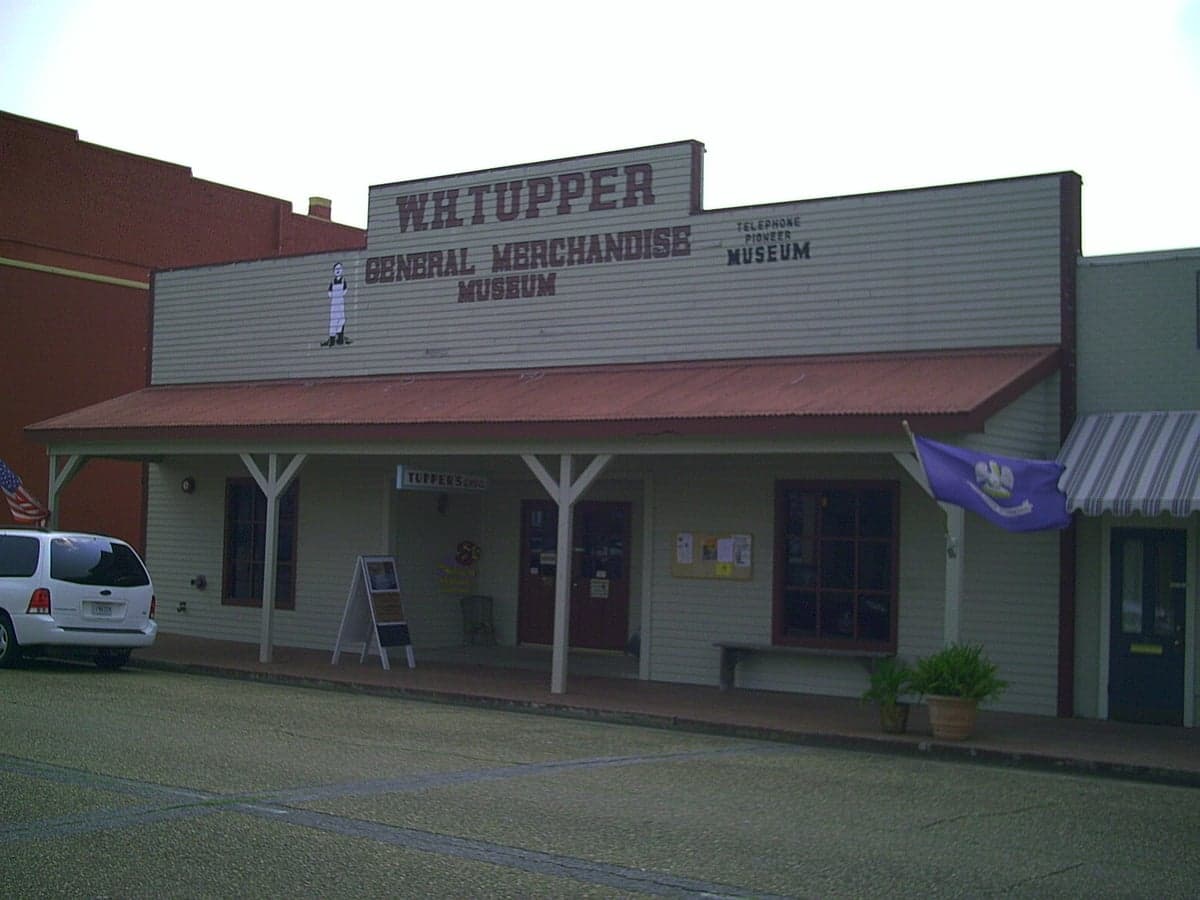
Photo: Wikipedia
Political ClimatePolitical Climate in Jennings, LA
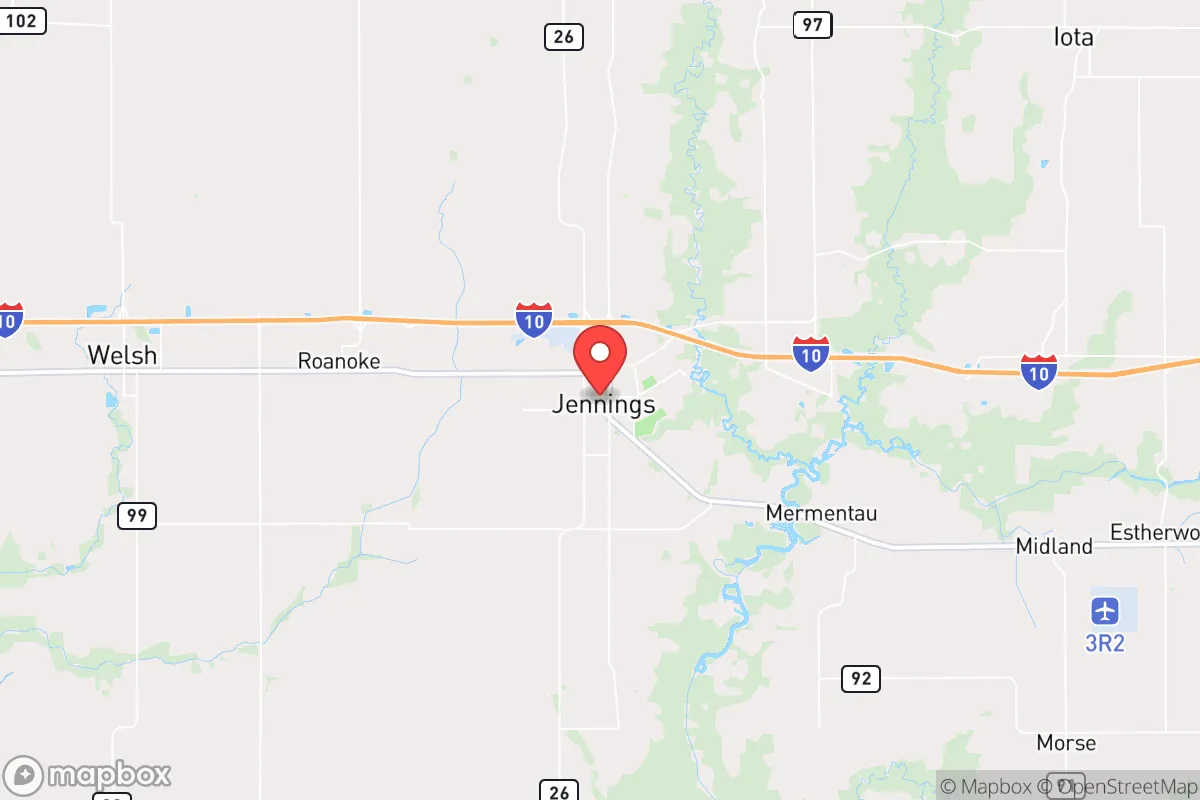
District shown is the primary district for this city’s centroid. Cities may span multiple districts.
Local Political AnalysisPolitical Analysis of Jennings, LA
Jennings, Louisiana, sits deep in the heart of Acadiana, and politically, it’s about as solidly conservative as you’ll find anywhere in the state. The Cook PVI of R+22 tells you the math, but the feel on the ground is even more pronounced. This isn’t a place that’s trending blue or even purple; it’s a community where the traditional values of personal responsibility, limited government, and individual liberty are still the baseline. You don’t see the same kind of political hand-wringing you get in Lafayette or Baton Rouge—folks here are generally content with a government that stays out of their business, their churches, and their gun safes.
How it compares
Drive 30 minutes east to Lafayette, and you’ll feel the shift. Lafayette has a younger, more transient population tied to the oil and healthcare industries, and it’s seen a noticeable creep of progressive politics—especially in city council races and school board decisions. Jennings, by contrast, feels like a time capsule of what Louisiana used to be. The surrounding towns like Lake Arthur and Welsh are cut from the same cloth, but Jennings is the hub. Compared to New Orleans or even Alexandria, the political temperature here is noticeably cooler. There’s no serious push for the kind of social engineering you see in bigger cities—no talk of defunding police, no aggressive zoning changes to force “density,” and no real appetite for the kind of woke curriculum debates that have roiled other districts. The local elections are still decided on roads, drainage, and keeping taxes low, not on national culture war issues. That’s a big part of why people move here from places like California or Illinois—they’re tired of the overreach.
What this means for residents
For the people who live here, the political climate translates directly into a lighter touch from the government. You don’t feel like you’re being watched or managed. The sheriff’s office is visible but not intrusive, and the local ordinances are minimal. Want to build a shed on your property without a permit? In most of Jeff Davis Parish, that’s still your call. Want to carry a firearm for protection? That’s a given. The school board isn’t pushing controversial sex-ed materials or hiding curriculum from parents—they’re still focused on the basics. That said, there’s a quiet concern among long-time residents that the same progressive wave that has washed over Lafayette and Baton Rouge is slowly creeping down the I-10 corridor. You see it in the occasional zoning fight or in the push from some local officials to accept more state and federal grant money—which always comes with strings attached. The worry is that one day, Jennings will wake up and find its local autonomy has been traded away for a few dollars in grant funding, and the personal freedoms that make this place special will be chipped away.
One thing that sets Jennings apart culturally is its deep-rooted Cajun and Creole heritage, which has always had a libertarian streak. The attitude here is “live and let live,” but with a strong moral compass. There’s no appetite for the kind of heavy-handed government that tells you how to run your business or what to teach your kids. The local festivals, the hunting camps, the family gatherings—they all reinforce a sense of community that doesn’t need a government program to sustain it. If you’re looking for a place where you can still breathe free and raise a family without the constant hum of political correctness, Jennings is it. But keep an eye on the school board meetings and the parish council votes. The fight to keep this place from sliding into the same progressive morass as the rest of the country is ongoing, and it’s one worth paying attention to.

State Political ClimatePolitical Climate in Louisiana
State Political AnalysisPolitical Environment in the State
Louisiana has long been a reliably red state in federal elections, but its political climate is far more complex than a simple partisan label suggests. The state has voted Republican in every presidential election since 2000, with Donald Trump carrying it by nearly 20 points in 2024. However, down-ballot races remain competitive, and the state’s unique blend of Cajun, Creole, and Southern cultures creates a political landscape where conservative values often clash with a deep-seated suspicion of centralized authority. Over the last two decades, the state has shifted from a Democratic stronghold to a Republican-dominated one, driven by white flight from the Democratic Party and the realignment of rural and suburban voters. Yet, pockets of Democratic strength persist in New Orleans and Baton Rouge, making Louisiana a state where the culture war is fought block by block.
Urban vs. rural divide
The political map of Louisiana is a stark study in contrasts. The state’s two major metros—New Orleans and Baton Rouge—are Democratic strongholds, with Orleans Parish delivering 80% of its vote to Joe Biden in 2020. Baton Rouge’s East Baton Rouge Parish is more purple, but the city itself leans left, driven by its large Black population and university influence. Meanwhile, the rest of the state is overwhelmingly Republican. The Acadiana region, centered on Lafayette, is a conservative bastion, with Lafayette Parish voting +30 for Trump. The Florida Parishes (north of Lake Pontchartrain) and the Ark-La-Tex region around Shreveport are deeply red, with rural parishes like Winn and Jackson routinely delivering 80%+ margins for the GOP. The Northshore suburbs of New Orleans, particularly St. Tammany Parish, are among the most reliably Republican areas in the state, with Mandeville and Covington serving as hubs for conservative families fleeing Orleans Parish. The urban-rural divide is so pronounced that a candidate can win the state by sweeping rural parishes while losing every major city.
Policy environment
Louisiana’s policy environment is a mixed bag for conservatives. On the plus side, the state has no personal income tax on most residents—a major win for freedom—though it does have a high sales tax (averaging 9.5%) and a corporate income tax that is being phased down. The regulatory posture is generally business-friendly, with a right-to-work law and a tort reform package passed in 2020 that capped damages and limited lawsuit abuse. Education policy is a bright spot: Louisiana has a robust school choice program, including the Louisiana Scholarship Program and a thriving charter school sector, especially in New Orleans. However, the state’s healthcare system is a mess—Medicaid expansion under the Affordable Care Act was accepted by then-Governor John Bel Edwards (a Democrat), and the state still struggles with high uninsured rates and poor health outcomes. Election laws are relatively secure: Louisiana requires a photo ID to vote, has no same-day registration, and conducts all-mail elections only in limited circumstances. The state’s constitution also includes a strong property rights provision, though local zoning battles can still be a headache.
Trajectory & freedom
Louisiana is trending in a decidedly more conservative direction on several key freedom metrics. In 2024, the state passed a constitutional carry law (Act 123), allowing permitless concealed carry for anyone 18 or older who can legally possess a firearm—a major expansion of Second Amendment rights. The same year, the legislature passed the “Grooming” ban (Act 456), which prohibits classroom instruction on sexual orientation and gender identity in K-12 public schools, a win for parental rights. On the medical autonomy front, Louisiana banned nearly all abortions in 2022 with a trigger law, and in 2023, it passed a law restricting gender transition procedures for minors. However, the state’s tax burden remains a concern: while there is no income tax, the high sales tax and property taxes (especially in Orleans Parish) can feel oppressive. The state also has a history of crony capitalism and corruption, which limits economic freedom. Overall, Louisiana is becoming freer on cultural and gun rights, but economic freedom is a mixed bag.
Civil unrest & political movements
Louisiana has seen its share of political flashpoints. The Black Lives Matter protests in 2020 were intense in New Orleans and Baton Rouge, with the latter seeing the toppling of a Confederate statue and clashes with police. More recently, the state has become a battleground in the immigration debate. In 2023, Governor Jeff Landry (a Republican) signed a law allowing state law enforcement to arrest and detain illegal immigrants, a direct challenge to federal authority. This has sparked protests from immigrant rights groups, but it’s popular with the state’s conservative base. The Louisiana Republican Party has also been active in election integrity, pushing for stricter voter ID laws and opposing mail-in ballot expansions. There is a small but vocal secessionist movement in the Cajun country of Acadiana, where some talk of forming a separate “Free State of Louisiana,” but it remains fringe. The most visible political movement is the rise of the MAGA-aligned faction within the GOP, which has pushed the party further right on cultural issues.
Projection
Over the next 5-10 years, Louisiana is likely to become even more Republican and more culturally conservative. In-migration is modest, but the people moving in tend to be retirees and remote workers from blue states seeking lower taxes and a slower pace of life—they are often conservative-leaning. The state’s population is aging and slowly declining, which could exacerbate the urban-rural divide as younger, more liberal residents leave for Texas or the East Coast. The Democratic Party’s base is shrinking, confined to New Orleans and Baton Rouge, while the suburbs and rural areas are solidifying their GOP allegiance. Expect more legislation on school choice, gun rights, and parental rights, as well as continued resistance to federal mandates on healthcare and immigration. The biggest wild card is the state’s economy: if oil and gas prices stay high, Louisiana will remain prosperous; if they crash, the state could face a fiscal crisis that forces tax hikes. For a conservative moving in, the next decade looks promising for cultural freedom, but economic stability is less certain.
For a new resident, the bottom line is this: Louisiana offers a deeply conservative cultural environment with strong protections for gun rights, parental control, and religious liberty. The cost of living is low, and the food and music are world-class. But you’ll have to accept high sales taxes, a crumbling infrastructure, and a healthcare system that lags behind the rest of the country. If you value personal freedom over government services, and you don’t mind the humidity, Louisiana is a solid bet. Just avoid Orleans Parish if you want to escape progressive politics—stick to the Northshore or Acadiana for a more traditional way of life.
* Values derived from national, state, county, city and local statistics and may differ in a specific area. Last updated: 2026-05-01T10:58:51.000Z
Narrative content on this page is AI-generated and may contain mistakes. Verify any details that matter before acting on them.
ReloMaps may earn a commission from affiliate links at no extra cost to you.

