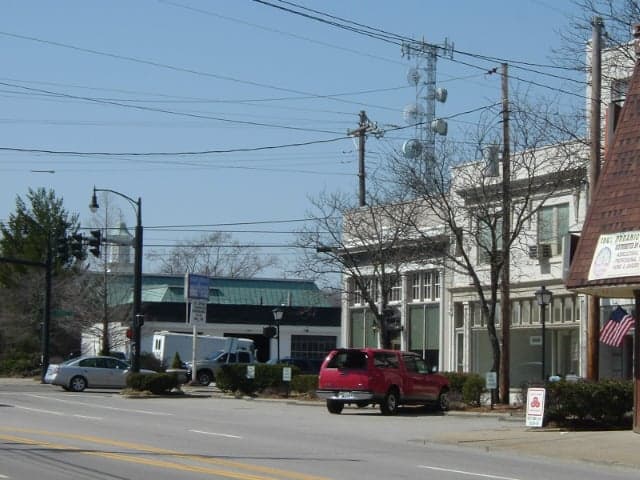
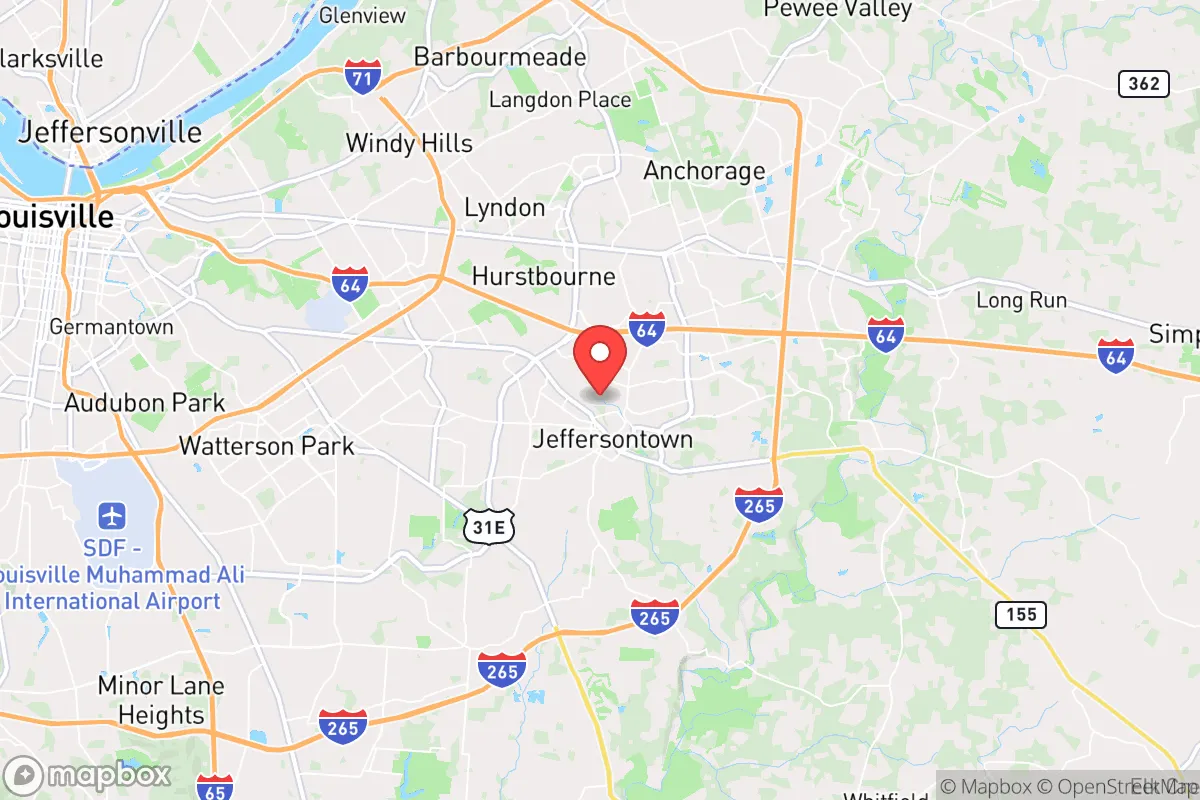
Photo: Wikipedia
Personal Sovereignty in Jeffersontown, KY
Viable for self-reliance. Generally workable, though some barriers may limit total independence.
What does Personal Sovereignty tell us?
Personal Sovereignty measures your capacity for self-reliance and independence with minimal government friction. Higher scores mean fewer barriers between you and the way you want to live... but it assumes you have the space you need and good neighbors.
What does this tell us?
Personal Sovereignty measures your capacity for self-reliance and independence with minimal government friction. Higher scores mean fewer barriers between you and the way you want to live... but it assumes you have the space you need and good neighbors.
State Policy
Energy independence: Importer (60% of energy produced in-state)
Personal Liberty
Homesteading

Personal Liberty Analysis
Jeffersontown, Kentucky, offers a notably high degree of personal sovereignty compared to many suburban enclaves, largely because it sits within a state that has aggressively pushed back against federal overreach and maintains a strong legal framework for individual rights. For the strategic-minded individual or family concerned with preserving autonomy in an era of expanding government control, this Louisville suburb provides a practical balance of access to urban resources and a legal environment that respects personal decision-making. The city’s character is shaped by Kentucky’s constitutional protections and a local culture that values self-reliance, making it a viable option for those who prioritize keeping the state out of their private affairs.
Tax burden and regulatory posture in Jeffersontown
Kentucky’s tax structure is undergoing a deliberate shift toward lower burdens, which directly benefits residents of Jeffersontown. The state’s flat income tax rate has been steadily reduced, reaching 4.5% in 2024 with a statutory path toward elimination, signaling a long-term commitment to reducing government’s take from personal earnings. Property taxes in Jefferson County are moderate, with the county’s rate around 0.86% of assessed value, which is reasonable compared to national averages. Jeffersontown itself does not levy a separate city income tax, though residents pay the county’s occupational tax of 2.2% on wages. On the regulatory front, Kentucky is a right-to-work state and has passed legislation limiting local government’s ability to impose burdensome business mandates, which keeps the entrepreneurial environment relatively free. For the prepper-minded, this means fewer layers of bureaucratic permission required for home-based businesses, side hustles, or property improvements that support self-sufficiency. The state’s overall regulatory climate ranks favorably for those who view government red tape as a threat to personal liberty and economic resilience.
Self-defense and gun law specifics in Jeffersontown
Kentucky is a constitutional carry state, meaning that as of 2019, any law-abiding adult can carry a concealed firearm without a permit, background check, or training requirement from the state. This is a cornerstone of personal sovereignty for those who view the right to self-defense as non-negotiable. Jeffersontown, while a suburban community, is not immune to crime—property crime rates in Jefferson County have been a concern—and the ability to carry without government permission is a significant advantage. The state also has strong Stand Your Ground laws, with no duty to retreat in any place where a person is lawfully present. Castle Doctrine protections extend to occupied vehicles and workplaces, not just homes. For the survivalist mindset, Kentucky’s firearm laws are among the most permissive in the nation, with no state-level magazine capacity restrictions, no assault weapon bans, and a preemption law that prevents local governments like Jeffersontown from enacting their own gun control ordinances. This legal landscape ensures that personal defense decisions remain firmly in the hands of the individual, not the state.
Self-reliance and homesteading viability in Jeffersontown
Jeffersontown’s zoning and lot sizes offer a mixed but workable environment for those seeking a degree of homesteading self-reliance. The city is largely suburban, with typical residential lots ranging from 0.25 to 0.5 acres in established neighborhoods, though some newer developments and rural pockets within the city limits offer parcels of 1 to 5 acres. This is sufficient for substantial vegetable gardens, small orchards, and even limited livestock like chickens or rabbits, provided local ordinances are followed. Jeffersontown’s municipal code allows for backyard chickens with a permit and certain restrictions, but larger livestock like goats or pigs generally require more acreage and are more feasible in the unincorporated areas of Jefferson County or neighboring Oldham County. Off-grid living is legally challenging within city limits due to building codes and utility connection requirements, but Kentucky’s state-level policies are more accommodating than many coastal states. Rainwater collection is legal, and there are no state-level bans on solar panels, though homeowners’ associations in some subdivisions may impose restrictions. For the serious prepper, the best strategy is to target properties just outside Jeffersontown’s urban services boundary, where zoning is looser and the county’s building department is less intrusive.
Personal liberties in Jeffersontown: parental rights, medical autonomy, and property
Kentucky has been a battleground for parental rights, and recent legislation has strengthened parents’ authority over their children’s education and medical decisions. The state passed a Parents’ Bill of Rights in 2022, requiring schools to obtain parental consent before administering surveys or providing instruction on sensitive topics, and it prohibits schools from hiding a child’s medical or mental health information from parents. This is a significant protection for families who view government schools as overstepping their bounds. On medical autonomy, Kentucky has some of the strictest abortion laws in the country, with near-total bans, which aligns with the values of many conservative residents. However, vaccine mandates and emergency health orders remain a concern; the state legislature has moved to limit the governor’s emergency powers, but local health departments still retain some authority. Property rights are strongly protected under Kentucky law, with a robust eminent domain standard that requires a clear public use and just compensation. The state also has a right-to-farm law that shields agricultural operations from nuisance lawsuits, which benefits those pursuing small-scale homesteading. For the individualist, Jeffersontown’s legal climate respects personal choice in family matters and property use, though vigilance is always necessary as local ordinances can shift.
Overall, Jeffersontown represents a solid middle ground for those seeking personal sovereignty in an increasingly centralized world. It lacks the extreme libertarian environment of some rural Western counties, but it offers a practical, legally protected space for self-defense, family autonomy, and economic self-reliance within a reasonable commute to a major city. The combination of constitutional carry, a declining tax burden, and strong parental rights makes it a defensible choice for the strategic relocator who values freedom but needs access to urban infrastructure. Compared to many suburbs in blue states, Jeffersontown’s legal framework gives the individual a much wider berth to live according to their own values without constant government interference.

* Values derived from national, state, county, city and local statistics and may differ in a specific area. Last updated: 2026-04-21T09:09:28.000Z
Narrative content on this page is AI-generated and may contain mistakes. Verify any details that matter before acting on them.
ReloMaps may earn a commission from affiliate links at no extra cost to you.

