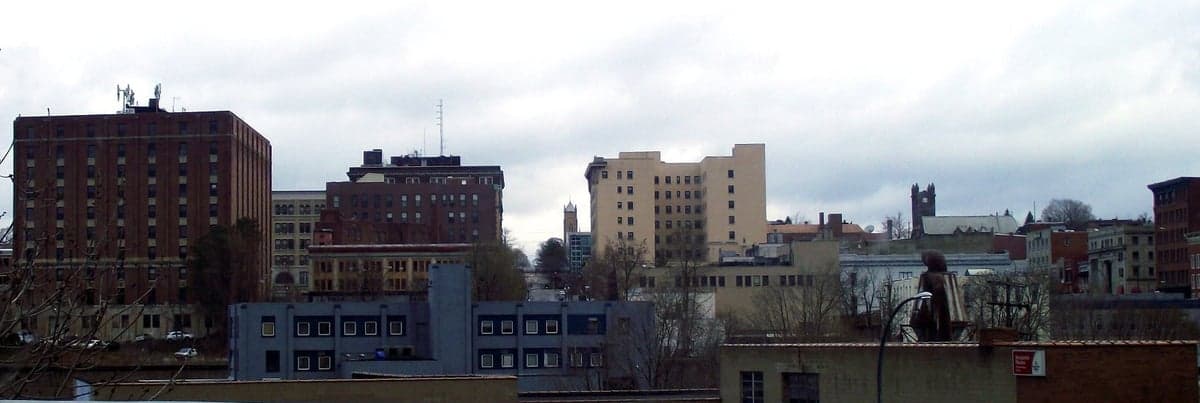
Photo: Wikipedia
Personal Sovereignty in Jamestown, NY
Moderate friction. Expect trade-offs in some aspect of personal liberty and independence.
What does Personal Sovereignty tell us?
Personal Sovereignty measures your capacity for self-reliance and independence with minimal government friction. Higher scores mean fewer barriers between you and the way you want to live... but it assumes you have the space you need and good neighbors.
What does this tell us?
Personal Sovereignty measures your capacity for self-reliance and independence with minimal government friction. Higher scores mean fewer barriers between you and the way you want to live... but it assumes you have the space you need and good neighbors.
State Policy
Energy independence: Importer (12% of energy produced in-state)
Personal Liberty
Homesteading

Personal Liberty Analysis
Jamestown, New York, offers a mixed bag for those prioritizing personal sovereignty, with the state's heavy regulatory hand often clashing with the area's fading industrial self-reliance. While the city itself leans left politically, the surrounding Chautauqua County is more conservative, creating a tension that savvy relocators must navigate. For the survivalist or prepper, the key question is whether the lower cost of living and rural access can outweigh New York's aggressive state-level overreach into gun rights, property use, and medical autonomy. The answer is nuanced: Jamestown provides a relatively affordable base for self-reliance, but only if you're willing to fight for your freedoms against Albany's mandates.
Tax burden and regulatory posture: how New York's policies squeeze personal freedom
New York's tax burden is among the highest in the nation, and Jamestown is not exempt. Property taxes in Chautauqua County average around 2.5% of assessed value, which can eat into any homesteading budget. State income tax rates range from 4% to 10.9%, and sales tax in Jamestown is 8.75% (8% state plus 0.75% county). For a prepper focused on financial independence, this means every dollar earned is heavily taxed before you can invest in supplies, land, or off-grid infrastructure. The regulatory posture is equally stifling: New York's strict building codes, environmental regulations, and permitting processes make even simple projects like adding a rainwater catchment system or installing solar panels a bureaucratic headache. The state's Climate Leadership and Community Protection Act pushes aggressive green energy mandates that can force property owners into costly upgrades, while local zoning in Jamestown often restricts livestock, accessory structures, and even the number of vehicles you can park on your own land. For those seeking to minimize government entanglement, this is a significant downside compared to states like Texas or Wyoming.
Self-defense and gun law specifics: navigating New York's restrictive firearms environment
New York's gun laws are among the most restrictive in the nation, and Jamestown residents must comply with the state's Concealed Carry Improvement Act (CCIA), passed in 2022. This law requires a "proper cause" statement for a concealed carry permit, effectively giving local sheriffs discretion to deny permits. The state also bans "assault weapons" (defined broadly to include many common semi-automatic rifles) and limits magazine capacity to 10 rounds. For the prepper, this means your go-to defensive rifle like an AR-15 is illegal unless you owned it before the ban and registered it with the state. Ammunition purchases require a background check and a state-issued ID, and private sales are heavily restricted. While Chautauqua County's sheriff's office is generally more pro-2A than downstate jurisdictions, you are still subject to Albany's whims. Stand-your-ground laws do not exist in New York; you have a duty to retreat before using deadly force, even in your own home in some interpretations. For those serious about self-defense, this environment is hostile, and many preppers in the area keep a low profile, storing firearms discreetly and avoiding any public discussion of their capabilities.
Self-reliance and homesteading viability: lot sizes, zoning, and off-grid feasibility
Jamestown's surrounding rural areas offer genuine homesteading potential, but city limits impose tight restrictions. Inside the city, typical lot sizes are small—often 0.1 to 0.25 acres—and zoning prohibits chickens, goats, or any livestock beyond common pets. However, just a 10-minute drive into the county, you can find 2- to 10-acre parcels for $10,000 to $30,000 per acre, where agricultural zoning allows gardens, small orchards, and even a few head of cattle or pigs. Off-grid feasibility is limited by New York's strict building codes: you cannot legally live in a tiny home, RV, or shipping container without a permanent foundation, septic system, and approved well. Solar panels are allowed but must be grid-tied and permitted, and rainwater collection is legal only for non-potable uses. The state's Right-to-Farm laws offer some protection from nuisance lawsuits, but local noise ordinances and setback requirements can still hamper operations. For the serious prepper, the best strategy is to buy land in the county, build a conventional home with a hidden bunker or root cellar, and keep a low profile. The harsh winters (average 200 inches of lake-effect snow) also demand robust heating and food storage—wood stoves and propane backups are common, but you'll need to stockpile fuel before winter storms hit.
Personal liberties: parental rights, medical autonomy, speech, and property
New York's progressive policies have eroded several key personal liberties. Parental rights are under direct assault: the state's 2022 "Parental Bill of Rights" was largely symbolic, while actual laws like the Gender Expression Non-Discrimination Act (GENDA) allow schools to hide a child's gender identity from parents. Medical autonomy is similarly constrained—New York has strict vaccine mandates for schoolchildren and healthcare workers, and during the pandemic, it enforced some of the nation's most aggressive lockdowns and business closures. For the prepper who values medical freedom, this means you cannot legally refuse certain vaccines for your children without facing school exclusion, and alternative treatments like ivermectin are heavily discouraged by state medical boards. Free speech is nominally protected, but the state's hate-crime laws and social media regulations create a chilling effect for those expressing conservative views. Property rights are perhaps the most concerning: New York's eminent domain powers are broad, and the state has used them to seize land for renewable energy projects, pipeline easements, and even "blight" removal in Jamestown's struggling downtown. The city's Community Development Block Grant programs often come with strings attached, requiring property owners to accept government oversight in exchange for renovation funds. For those who want to be left alone, this is a constant source of friction.
Overall, Jamestown offers a lower cost of living and access to rural land that can support a self-reliant lifestyle, but it sits within a state that actively works against personal sovereignty. Compared to the American heartland or the Mountain West, New York's tax burden, gun restrictions, and erosion of parental and medical rights make it a challenging environment for the survivalist mindset. The best strategy here is to buy land outside city limits, keep a low profile, and invest in legal workarounds like trusts for firearms and off-grid systems that comply with code. For those willing to fight the bureaucratic battles, Jamestown can be a viable base—but it's not a refuge from government overreach. If true autonomy is your goal, you'd be better served looking at states like Idaho, Montana, or Tennessee, where the legal landscape aligns more closely with prepper values.

* Values derived from national, state, county, city and local statistics and may differ in a specific area. Last updated: 2026-05-01T05:40:29.000Z
Narrative content on this page is AI-generated and may contain mistakes. Verify any details that matter before acting on them.
ReloMaps may earn a commission from affiliate links at no extra cost to you.

