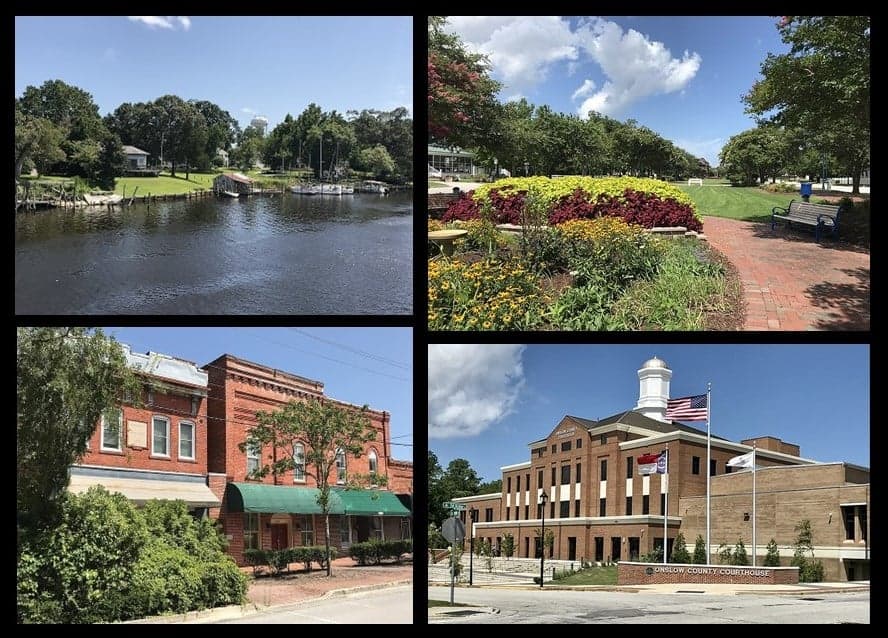
Photo: Wikipedia
Quality of Life in Jacksonville, NC
Above-average quality of iife. The area offers a reasonable cost of living, decent mobility, and a mix of neighborhood amenities.
What does Quality of Life tell us?
Quality of Life blends cost of living, nearby amenities, socioeconomic signals, and neighborhood character. City-level scores represent the whole municipality; individual neighborhoods can differ.
What does this tell us?
Quality of Life blends cost of living, nearby amenities, socioeconomic signals, and neighborhood character. City-level scores represent the whole municipality; individual neighborhoods can differ.
Cost of Living
7% below national average
The Real Cost of Living in Jacksonville, NC for 2026
| Tier | Individual | Family (4) |
|---|---|---|
| Survival | $20k | $38k |
| Comfortable | $37k | $55k |
| Luxury | $92k+ | $143k+ |
| Elite (Top 5%) | $108k+ | $168k+ |
99%
The Area Signal
A metric tracking the socioeconomic signals of the area.
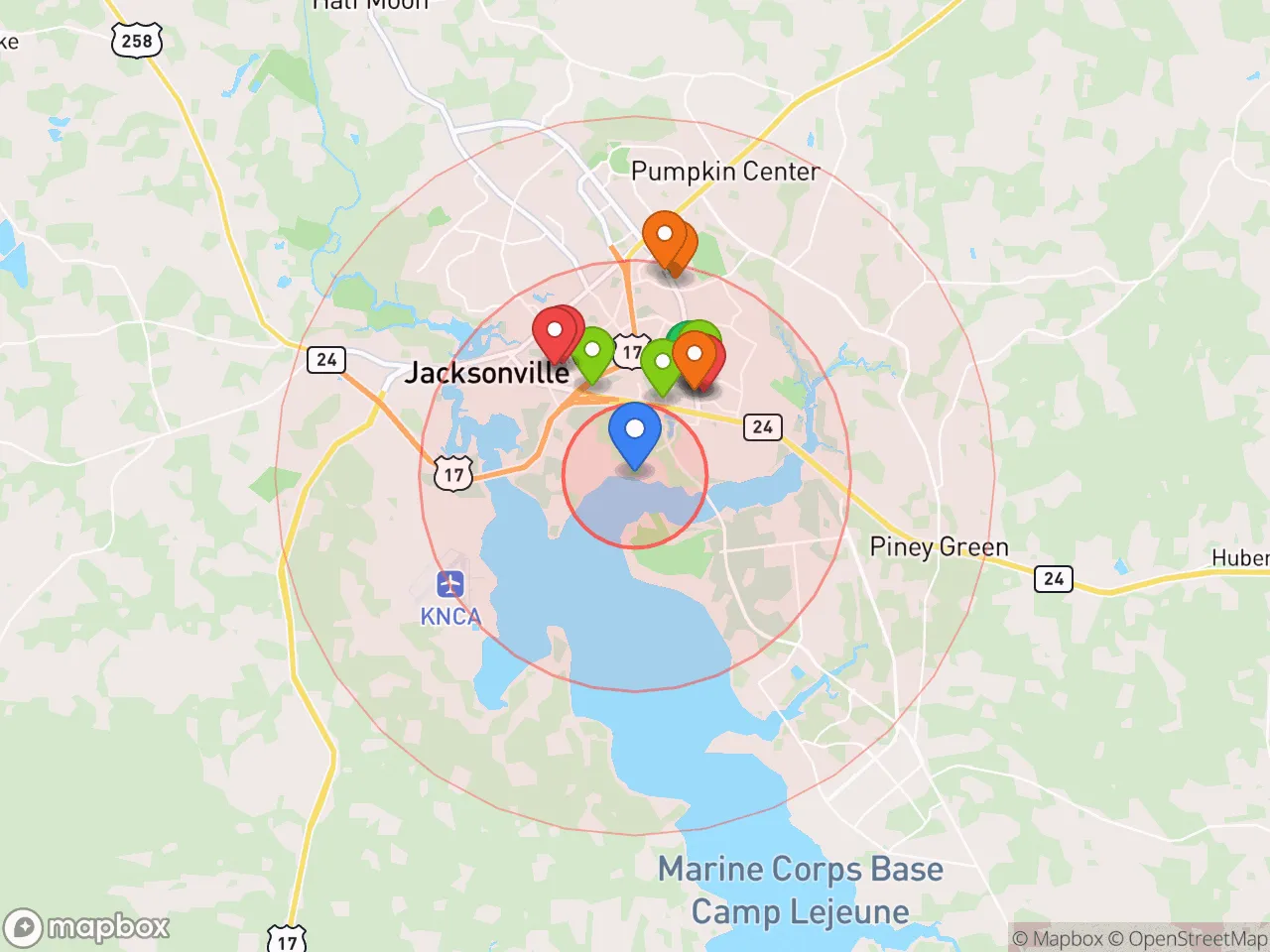
Hobbies
Explore the areaGroceries
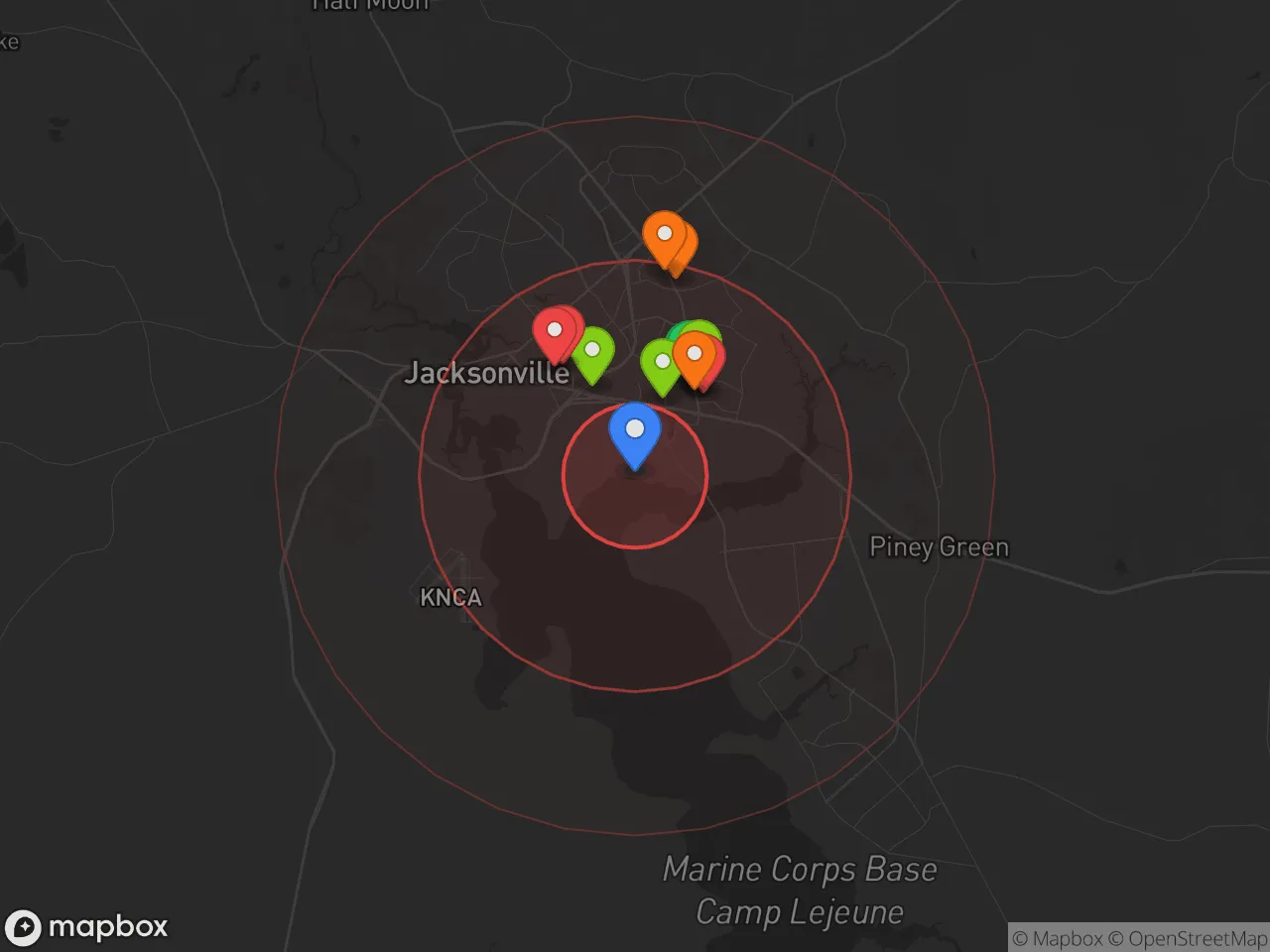
6 within 10 miles
Gas
20 within 10 miles
Hospital
3 within 20 miles
Airport
RDU — Raleigh–Durham International
Post Office
USPS — Jacksonville, NC
Critical Amenities
Quality-of-Life Analysis
Jacksonville, North Carolina, presents a quality of life defined by its dual identity as a military hub and a growing coastal community, with an affluence profile that is modest compared to the state average. The city’s cost of living index of 93 (100 = US average) and median home value of $191,700 attract a predominantly working- and middle-class population, heavily influenced by the presence of Marine Corps Base Camp Lejeune and Marine Corps Air Station New River. This creates a transient, family-oriented demographic where roughly one-third of residents are active-duty or retired military, lending the area a pragmatic, service-focused character rather than a high-income or luxury-driven one.
Cost of living, housing, and affordability compared to nearby areas
Jacksonville’s cost of living sits well below the national average, making it one of the more affordable coastal cities in North Carolina. The median home value of $191,700 is significantly lower than the state median of roughly $290,000 and dramatically undercuts nearby Wilmington’s median of about $330,000. Median rent of $1,268 is also competitive, though it has risen about 18% since 2020 due to increased demand from both military families and civilian workers. The average commute of 14.7 minutes is remarkably short—less than half the national average of 26 minutes—which reduces transportation costs and frees up time for daily life. However, property taxes in Onslow County are moderate (around 0.72% of assessed value), and while no state income tax applies to military retirement pay, civilian residents pay North Carolina’s flat 4.75% income tax. Compared to nearby Havelock or Swansboro, Jacksonville offers more rental inventory and newer subdivisions, but the trade-off is less rural charm and more chain retail.
Schools, amenities, and what daily life feels like
Daily life in Jacksonville revolves around the base schedule, with many businesses and services adjusting hours to accommodate military rotations. Onslow County Schools serve the area, with notable institutions like Jacksonville High School and Northwoods Park Middle School; however, the district’s overall rating on GreatSchools is 5/10, reflecting challenges with funding and teacher retention tied to the transient student population. Private options include St. Anne Catholic School and Grace Christian Academy. Amenities are practical rather than cultural: the city boasts the Jacksonville Mall, a 24-screen cinema, and numerous chain restaurants along Western Boulevard. Outdoor recreation is a key draw, with Huffman Park and the New River offering kayaking, fishing, and walking trails. The nearby Lejeune Memorial Gardens provides a quiet space for reflection. For healthcare, Naval Medical Center Camp Lejeune serves active-duty families, while Onslow Memorial Hospital handles civilian needs. The arts scene is limited, but the city hosts the annual Jacksonville Festival and a weekly farmers market from April to October. The overall rhythm is slower than Wilmington or Raleigh, with a strong sense of community among military families but less nightlife or cultural diversity.
Jacksonville is best suited for military personnel, veterans, and their families who value affordability, short commutes, and a supportive network of base-related services. Civilians working in logistics, healthcare, or retail will also find reasonable housing costs and a stable job market tied to the base’s economic engine. Those seeking vibrant arts, high-end dining, or top-tier public schools may find the area lacking. However, for anyone prioritizing low housing costs, a 15-minute commute, and a community that understands the rhythms of military life, Jacksonville offers a practical, grounded quality of life that is hard to match elsewhere on the North Carolina coast.

Crime in Jacksonville, NC
Crime rates similar to the national median for U.S. locations.
Violent CrimeViolent Crime Analysis
Property CrimeProperty Crime Analysis
Crime Analysis
Jacksonville, North Carolina, reports a violent crime rate of 227.7 per 100,000 residents and a property crime rate of 1,723.7 per 100,000, figures that place it below the national average for violent offenses but above the national average for property crime. The city's overall safety picture is shaped by its dual identity as a military town—home to Marine Corps Base Camp Lejeune—and a growing civilian population, which creates distinct crime patterns compared to other North Carolina cities of similar size. While violent crime is not rampant, property crime remains a persistent concern that residents and newcomers should factor into their relocation decision.
Crime in context
Jacksonville's violent crime rate of 227.7 per 100,000 is significantly lower than the national average of roughly 380 per 100,000 and well below the North Carolina state average of approximately 350 per 100,000. However, its property crime rate of 1,723.7 per 100,000 exceeds the national average of about 1,950 per 100,000 and is notably higher than the state average of roughly 1,500 per 100,000. This places Jacksonville in a category where residents face a lower risk of violent victimization but a higher likelihood of experiencing theft, burglary, or vehicle break-ins. The presence of Camp Lejeune contributes to a younger, transient population, which can correlate with higher property crime rates in military-adjacent communities across the country.
What residents experience
For daily life in Jacksonville, the most common safety concerns revolve around property crime rather than personal violence. Residents report that vehicle break-ins and package theft are the most frequent offenses, particularly in neighborhoods near the base and along major commercial corridors like Western Boulevard. Violent incidents, when they occur, are often concentrated in specific areas and frequently involve individuals who know each other, rather than random attacks on the public. The Onslow County Sheriff's Office and Jacksonville Police Department maintain a visible presence, and community policing initiatives have been strengthened in recent years. However, the broader judicial environment in Onslow County is a point of contention. Critics argue that progressive-leaning district attorneys and judges in some North Carolina jurisdictions have adopted lenient sentencing policies and pretrial release practices that prioritize offender rehabilitation over public safety. While Onslow County itself has traditionally taken a tougher stance, the influence of state-level judicial trends—including bail reform and reduced prosecution for certain property offenses—has been cited by local law enforcement as a factor that can lead to repeat offenders cycling back onto the streets more quickly, undermining deterrence and victim confidence in the justice system.
Neighborhood-level variation is significant in Jacksonville. Areas closer to Camp Lejeune's main gates, such as the Piney Green and Tarawa Terrace neighborhoods, tend to see higher rates of property crime due to higher population density and transient rental housing. In contrast, established residential areas like the Country Club Estates and the more rural outskirts of the city report lower crime rates and stronger neighborhood watch participation. Prospective residents should examine specific street-level data and consider that property crime risk can vary by a factor of two or more between adjacent neighborhoods, making local knowledge essential for an accurate safety assessment.
* Values derived from national, state, county, city and local statistics and may differ in a specific area. Last updated: 2026-05-03T20:24:53.000Z
Narrative content on this page is AI-generated and may contain mistakes. Verify any details that matter before acting on them.
ReloMaps may earn a commission from affiliate links at no extra cost to you.

