Photo: Wikipedia
Strategic Assessment of Iowa
Workable tactical position. Some exposure to population density or targets, but generally defensible in a crisis.
What does the Strategic Assessment tell us?
Our Strategic Assessment grades tactical survivability of an area. Major population centers, military targets, fallout zones, natural disasters, and border exposure all drive risk — lower exposure means a more defensible position in a crisis.
This is heavily inspired by Joel Skousen's Strategic Relocation book. Highly recommended you checkout the book ($)What does this tell us?
Our Strategic Assessment grades tactical survivability of an area. Major population centers, military targets, fallout zones, natural disasters, and border exposure all drive risk — lower exposure means a more defensible position in a crisis.
This is heavily inspired by Joel Skousen's Strategic Relocation book. Highly recommended you checkout the book ($)Regional Safe Places
Below is our recommended "safe zones" in Iowa and the surrounding area based on our strategic heuristics. For most people, it's unrealistic to live in a “safe zone” full-time due to work, family or other personal reasons. They tend to be more rural. However, many of these areas are perfect for second homes and retreat properties that double as a vacation home or even a short-term rental.
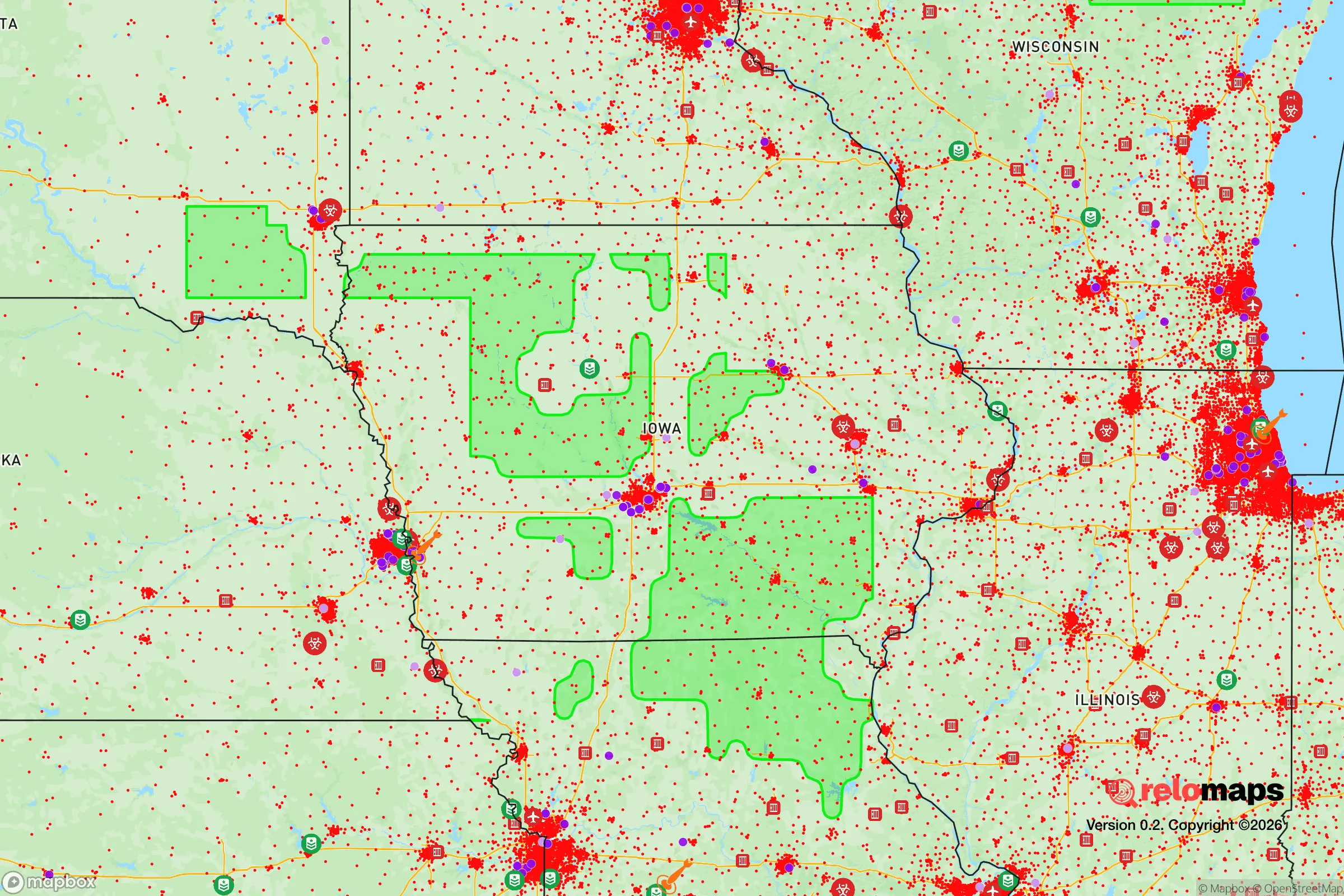
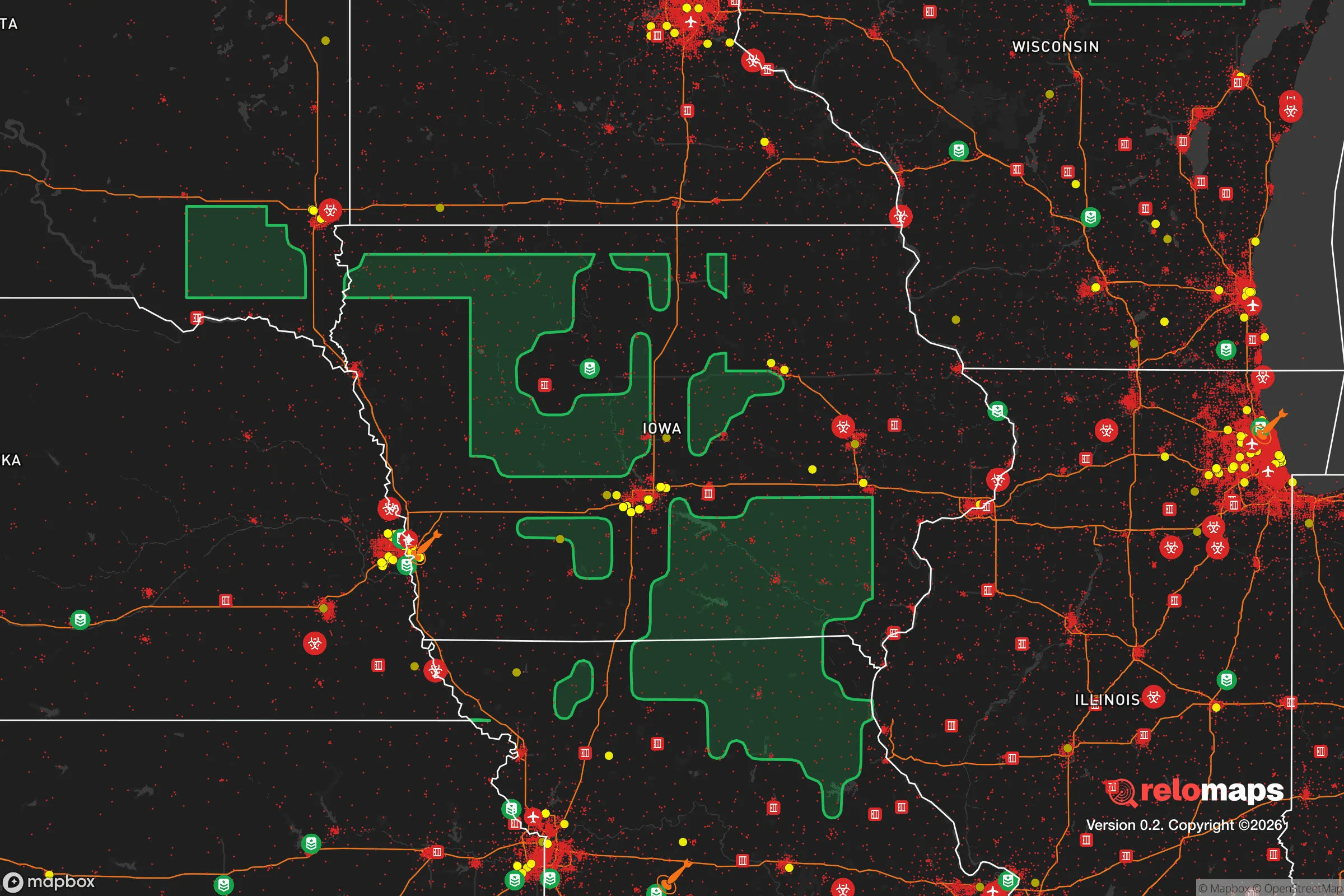


Important Note: For informational purposes only. This does not mean nothing bad ever happens in the green zones. Please use common sense. This is based on public data and modeled with AI. We tried to take a conservative approach but mistakes happen. We update this regularly as new information becomes available.
Solar Generator Recommendations
Backup power matters more here than in safer locations. We've picked three solar generators across budgets and capacity tiers — start with the budget unit if you only need a few essentials, or step up if you want to run a fridge and HVAC for days at a time.

Jackery Portable Power Station Explorer 300
Budget OptionPower on the Go: Weighing only 11 lbs, it's convenient to set up and store with book-sized foldable solar panels

BLUETTI Portable Power Station AC180
Designed for both indoor and outdoor scenarios, AC180 is highly capable as it has a robost capacity and continuous output power.

EF ECOFLOW DELTA Pro Ultra Power Station
Upgraded PickEcoFlow DELTA Pro Ultra is a whole-home energy system designed to grow with your family. Integrated with the Smart Home Panel 2, it scales to meet your evolving energy needs — keeping your home powered, intelligent, and secure through every stage of life.
We earn a commission, at no additional cost to you.
Strategic Assessment Analysis
Iowa offers a strategic relocation option for those prioritizing resilience, offering a blend of geographic isolation from coastal threats, a robust agricultural base, and a political climate that leans conservative—factors that matter when assessing long-term stability. The state’s central position in the Corn Belt, far from the seismic and hurricane-prone coasts, provides a natural buffer against many large-scale disasters that plague other regions. For a relocator with a prepper mindset, Iowa’s low population density outside its few urban centers, combined with its status as a national food producer, makes it a defensible and self-sufficient choice in an increasingly uncertain world.
Geographic position and natural advantages for long-term stability
Iowa sits in the heart of the American Midwest, roughly equidistant from the Atlantic and Pacific, and over 1,000 miles from the Gulf Coast—a significant advantage when considering hurricane storm surge or sea-level rise. The state’s terrain is predominantly flat to gently rolling plains, with the Missouri River forming its western border and the Mississippi River its eastern edge, providing natural water sources and potential defensive lines. Key cities like Des Moines (the capital, population ~215,000) and Cedar Rapids (~135,000) are inland enough to avoid direct fallout from coastal nuclear targets, though they are not immune to secondary effects. The Loess Hills in western Iowa offer some topographical variation for concealment and microclimate advantages, while the Driftless Area in the northeast—around Decorah and Dubuque—features rugged bluffs and valleys that could serve as natural redoubts. Winters are harsh, with average January lows near 10°F, which acts as a deterrent for unprepared populations and reduces the viability of many biological threats that thrive in warmer climates. The state’s agricultural dominance—producing 20% of the nation’s corn and 15% of its soybeans—means that even in a collapse scenario, local food supply chains remain intact, a critical advantage over regions dependent on long-haul trucking.
Risks, exposures, and proximity to fallout-relevant landmarks
No location is without risk, and Iowa has its share of vulnerabilities that a strategic relocator must weigh. The state is home to the Duane Arnold Energy Center near Palo (just northwest of Cedar Rapids), a decommissioned nuclear plant that still stores spent fuel on-site—a potential contamination source if targeted or compromised. More concerning is the proximity to Offutt Air Force Base in Nebraska (just 130 miles from western Iowa), a major USSTRATCOM command hub that would be a high-priority target in a nuclear exchange. Similarly, the Rock Island Arsenal in Illinois, across the Mississippi from eastern Iowa, is a military manufacturing and logistics center that could draw secondary strikes. The Mississippi River itself, while a water asset, also serves as a barge corridor for industrial goods, including chemicals and fuels, making river towns like Davenport and Bettendorf potential choke points for disruption. Tornadoes are a recurring natural hazard—Iowa averages 50 tornadoes annually, with the 2020 derecho causing $11 billion in damage across the state—so underground shelter is non-negotiable for any serious prepper. Urban centers like Des Moines and Cedar Rapids would face civil unrest risks if supply chains falter, but the state’s overall low crime rate (violent crime at 2.8 per 1,000 residents, well below the national average) suggests a more orderly population under stress.
Practical resilience for a relocator: food, water, energy, and defensibility
For a family or individual looking to establish a resilient homestead, Iowa offers practical advantages that are hard to beat. Water access is abundant: the state sits atop the Jordan Aquifer, one of the largest freshwater sources in the Midwest, and surface water from the Missouri and Mississippi rivers is plentiful, though treatment is necessary. Energy infrastructure is solid, with Iowa generating over 60% of its electricity from wind and coal, plus a growing solar sector—meaning grid dependence can be mitigated with off-grid wind or solar setups, especially in the windy western counties. Food production is the crown jewel: beyond commodity crops, Iowa has a strong network of local farmers’ markets, livestock operations (pork, beef, poultry), and hunting opportunities for deer, turkey, and small game. A relocator with 5-10 acres in a county like Guthrie or Winneshiek can achieve near-total food self-sufficiency within a few seasons. Defensibility is enhanced by the state’s rural character—many counties have fewer than 20 people per square mile—and the prevalence of gravel roads and tree lines that provide natural cover. The conservative cultural fabric (Iowa voted +9 for Trump in 2020) means a higher likelihood of like-minded neighbors who value self-reliance, firearms ownership (no permit required for carry since 2021), and community mutual aid. The main drawback is the lack of natural barriers like mountains or swamps, but the vast agricultural flatlands offer clear sightlines for perimeter security, and the harsh winters discourage casual trespassers.
The overall strategic picture for Iowa is one of a stable, resource-rich redoubt that balances risk and reward. It lacks the dramatic defensibility of mountainous terrain but compensates with food abundance, water security, and a population that is generally self-sufficient and politically aligned with conservative values. The state’s central location means it’s within a day’s drive of major population centers like Chicago, Minneapolis, and Kansas City—useful for supply runs or intelligence gathering, but also a vector for refugees in a crisis. For the serious prepper, the sweet spot is likely the northeastern Driftless Area around Decorah or the south-central counties near the Missouri border, where population density is lowest and natural features offer some concealment. Iowa is not a fortress, but it is a breadbasket—and in a world where food and water are the ultimate currencies, that makes it a strategic asset worth serious consideration.

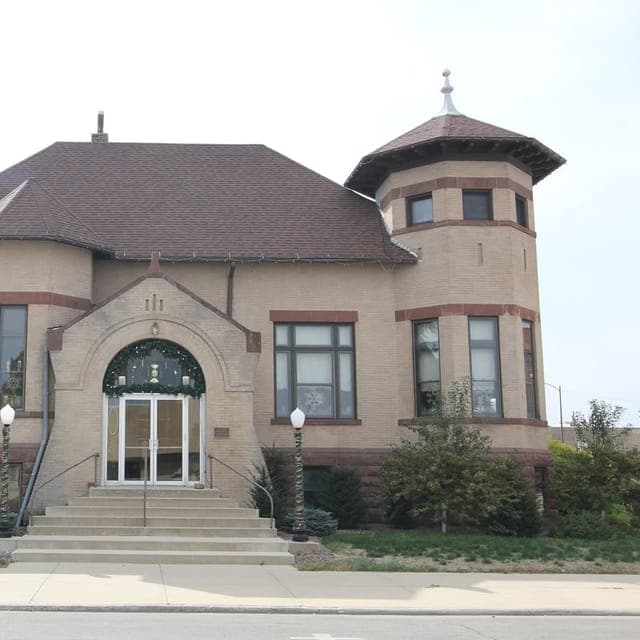
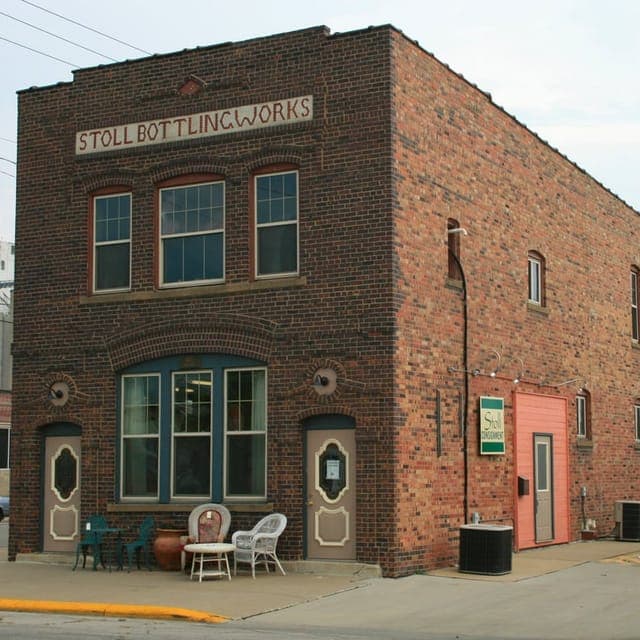
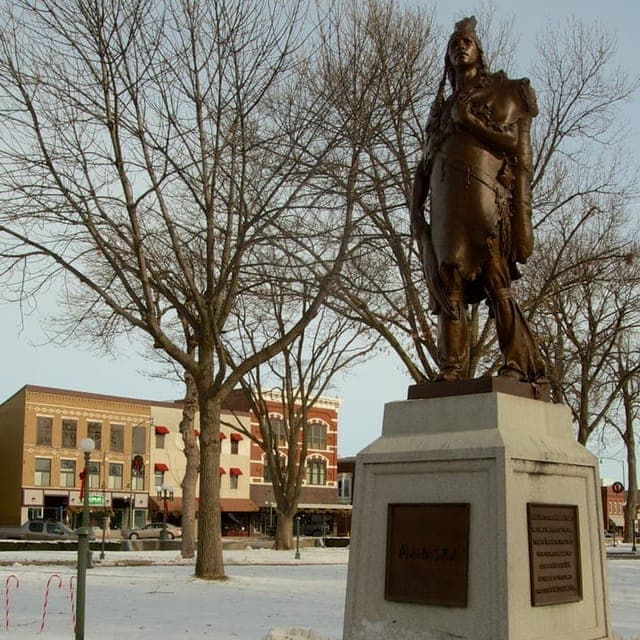
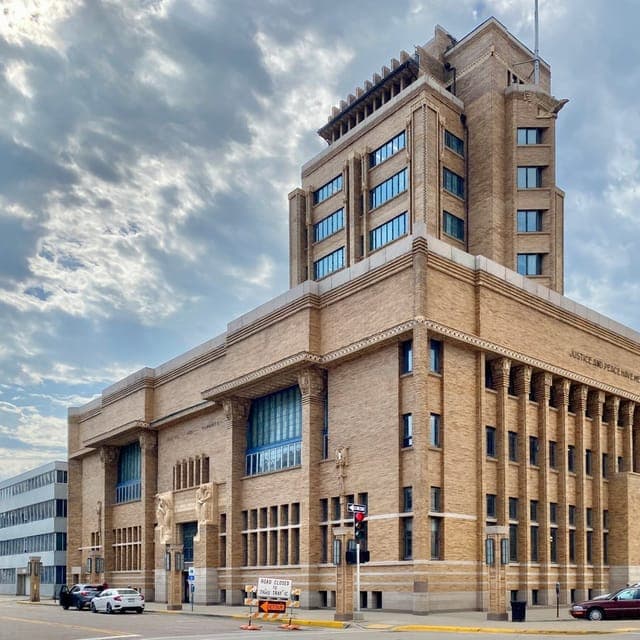
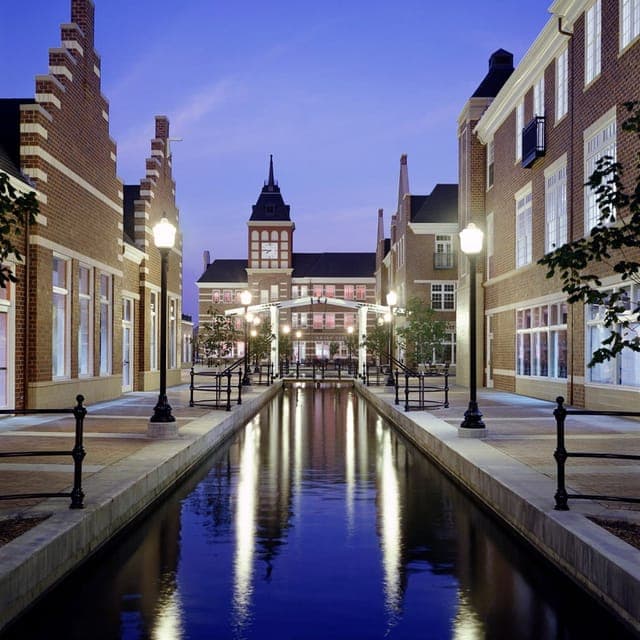
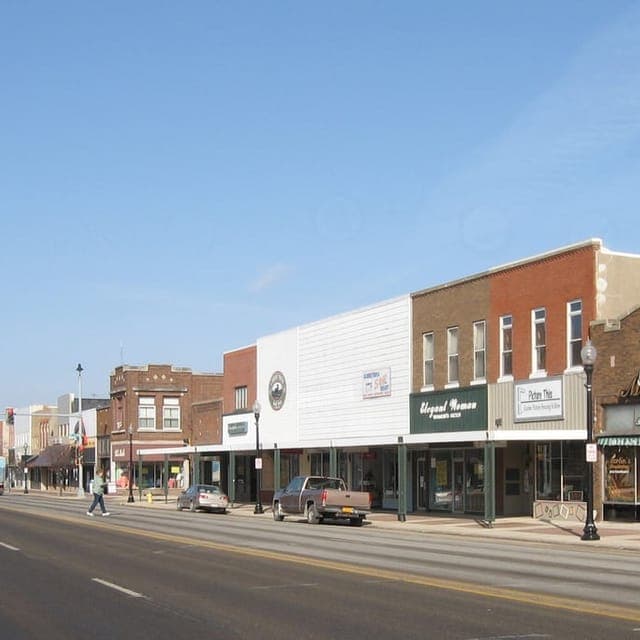
Top 10 Cities by Strategic Assessment in Iowa
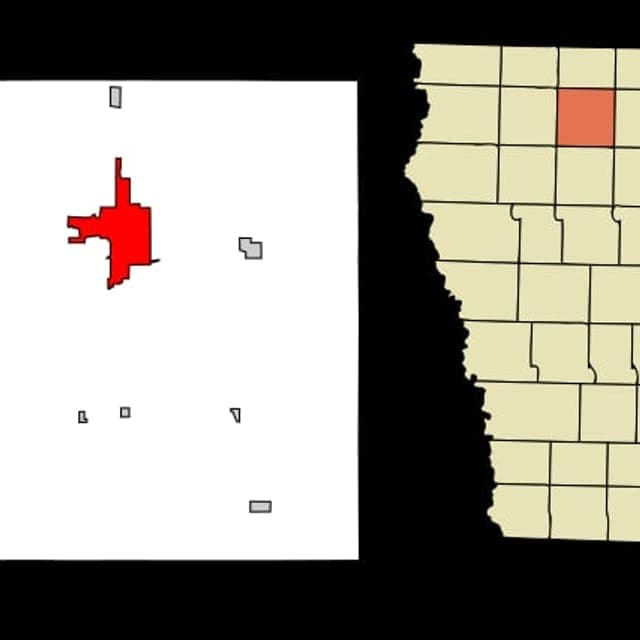
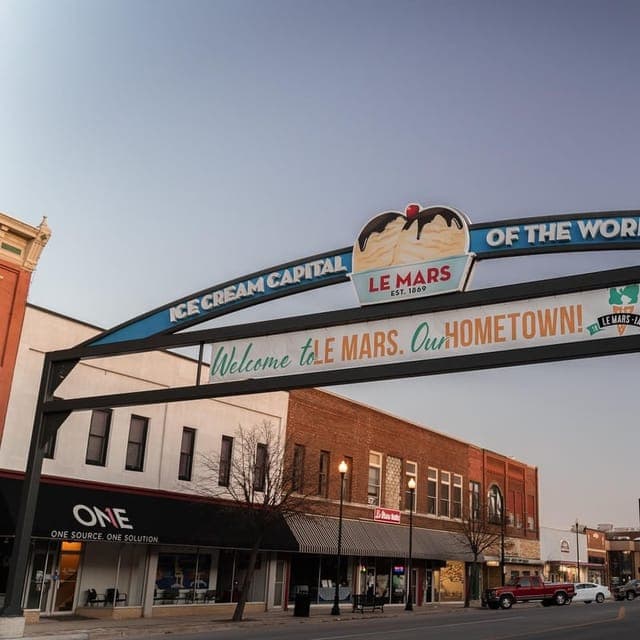
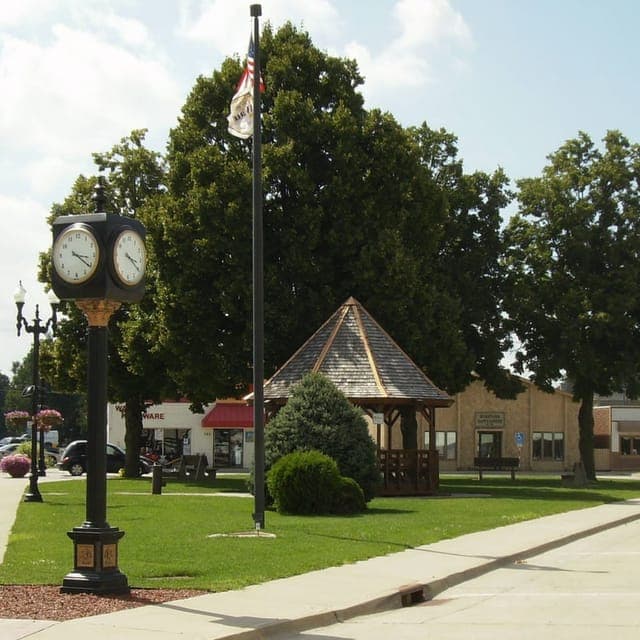
* Values derived from national, state, county, city and local statistics and may differ in a specific area. Last updated: 2026-04-18T22:25:01.000Z
Narrative content on this page is AI-generated and may contain mistakes. Verify any details that matter before acting on them.
ReloMaps may earn a commission from affiliate links at no extra cost to you.

