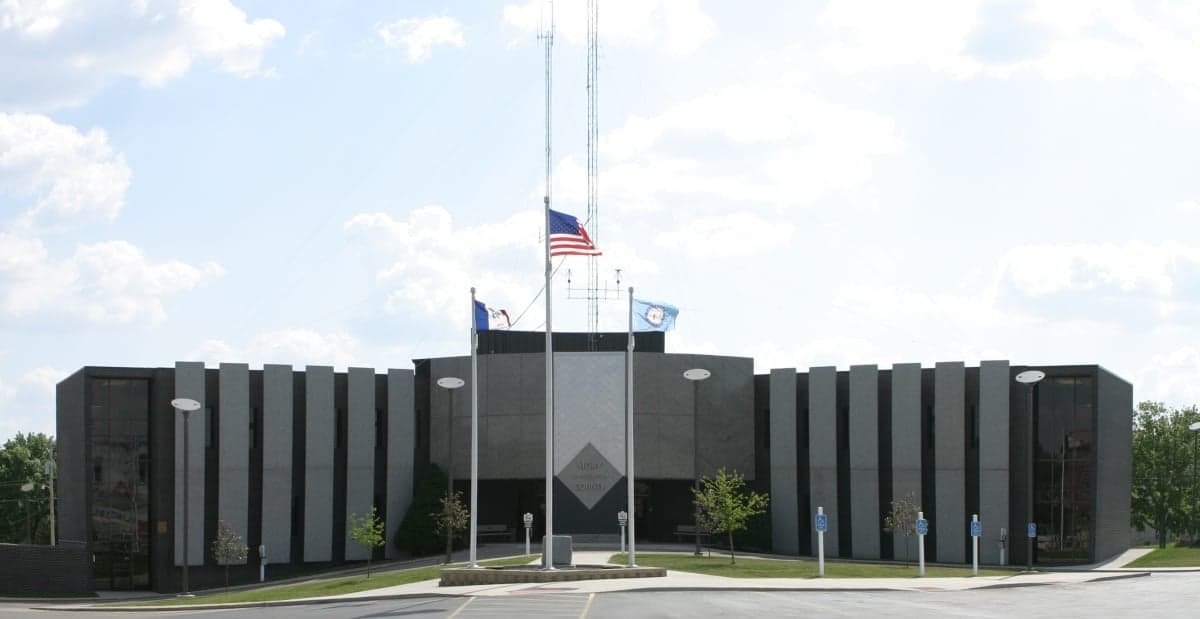
Photo: Wikipedia
Personal Sovereignty in Story County
Viable for self-reliance. Generally workable, though some barriers may limit total independence.
What does Personal Sovereignty tell us?
Personal Sovereignty measures your capacity for self-reliance and independence with minimal government friction. Higher scores mean fewer barriers between you and the way you want to live... but it assumes you have the space you need and good neighbors.
What does this tell us?
Personal Sovereignty measures your capacity for self-reliance and independence with minimal government friction. Higher scores mean fewer barriers between you and the way you want to live... but it assumes you have the space you need and good neighbors.
State Policy
Energy independence: Importer (50% of energy produced in-state)
Personal Liberty
Homesteading

Personal Liberty Analysis
Story County, Iowa, offers a mixed but generally favorable environment for personal sovereignty, particularly when compared to the tightening regulatory grip of coastal states and even some of Iowa’s own urban centers. The county’s political landscape is a tale of two worlds: the city of Ames, home to Iowa State University, leans left, while the surrounding rural towns and unincorporated areas hold a deeply conservative, self-reliant ethos. For a prepper or survivalist-minded individual, the key is knowing where to plant your flag—and that means looking closely at the specific towns and townships where local governance still respects individual autonomy.
Tax burden and regulatory posture: How Story County compares to Iowa’s urban cores
Iowa’s state-level tax environment is a net positive for personal sovereignty. The state has a flat income tax rate of 3.8% (as of 2025, with further reductions scheduled), and property taxes in Story County are moderate—around 1.5% of assessed value on average. That’s higher than in deeply rural counties like Adair or Ringgold, but significantly lower than in Polk County (Des Moines) or Johnson County (Iowa City). The real advantage lies in the regulatory posture of smaller towns. In Nevada (the county seat), Gilbert, and Story City, zoning codes are minimal, and building permits are straightforward. By contrast, Ames has a more complex municipal code, with stricter setback requirements and a longer permitting process for outbuildings, workshops, or alternative structures. For someone wanting to build a detached garage, a root cellar, or a small workshop without endless red tape, the rural townships—like Franklin Township or Milford Township—are far more accommodating. The county’s overall regulatory posture is best described as “hands-off unless you’re in the city limits,” which is a strong point for sovereignty-minded relocators.
Self-defense and gun law specifics: What the Second Sanctuary movement means for Story County
Iowa is a constitutional carry state, and Story County has fully embraced that framework. No permit is needed to carry a concealed firearm for anyone 21 or older, and the county sheriff’s office issues permits to acquire (for handguns) with minimal friction. The county board of supervisors passed a Second Amendment Sanctuary resolution in 2020, signaling that local law enforcement will not enforce any future federal gun bans or confiscation orders. This is not just symbolic—it means that in towns like Huxley and Slater, you can expect a gun-friendly culture at local gun shops, ranges, and even at the county fair. The Story County Sheriff’s Office is known for a pro-2A stance, and the local Izaak Walton League chapter in Ames runs a well-maintained shooting range. The only caveat is that Ames itself has a more restrictive city ordinance regarding discharging firearms within city limits, so rural property is strongly recommended for anyone wanting to practice on their own land. For the prepper, the legal landscape here is solid: you can own, carry, and store firearms without bureaucratic harassment, and the county government has publicly committed to resisting federal overreach on this issue.
Self-reliance and homesteading viability: Lot sizes, zoning, and off-grid feasibility across Story County
Homesteading viability in Story County varies dramatically by location. In the unincorporated areas and small towns, the soil is rich (Iowa’s famous black dirt), and water tables are generally high enough for shallow wells. Zearing and Colo, both in the eastern part of the county, offer affordable 1- to 5-acre parcels that are zoned for agricultural use, meaning you can keep chickens, goats, or even a small herd of cattle without special permits. Off-grid feasibility is moderate: solar panels are legal everywhere, but net metering rules from Alliant Energy (the dominant utility) are not as favorable as in some western states. Rainwater collection is unrestricted in unincorporated areas, but Ames has a stormwater ordinance that can complicate large-scale cistern systems. Composting toilets are legal in rural zones but require a septic system permit from the county environmental health office. The biggest hurdle is the lack of a strong off-grid community infrastructure—there are no “prepper co-ops” or survivalist networks in the county, so you’ll be building your self-reliance largely on your own. That said, the low land prices (under $10,000 per acre for raw land in many townships) make it feasible to buy a parcel and develop it gradually. For a family wanting to raise food, store water, and generate power, the rural parts of Story County—especially around Cambridge and Maxwell—offer a realistic path to self-sufficiency without the zoning battles you’d face in more populated areas.
Personal liberties: Parental rights, medical autonomy, speech, and property protections
On the broader spectrum of personal liberties, Story County is a study in contrasts. Parental rights are strong at the state level—Iowa has a Parents’ Bill of Rights that gives parents explicit authority over their children’s education, medical decisions, and religious upbringing. The local school districts in Nevada, Gilbert, and Story City are generally responsive to parental concerns, though the Ames Community School District has faced friction over curriculum transparency and library materials. Medical autonomy is a mixed bag: Iowa has no state-level vaccine mandate for adults, and the county’s hospitals (Mary Greeley in Ames and Story County Medical Center in Nevada) do not enforce any COVID-era mandates as of 2026. However, the state’s medical freedom laws are weaker than in, say, Montana or Idaho—there is no explicit protection for refusing medical treatment based on religious or philosophical beliefs. Speech and assembly rights are robust; the county has seen peaceful protests on both sides of political issues without heavy-handed law enforcement response. Property rights are the strongest pillar: Iowa’s eminent domain laws are relatively restrictive, and Story County’s planning and zoning department is known for a “presumption of approval” for rural landowners. The county does not have a blanket ban on short-term rentals, tiny homes, or accessory dwelling units in unincorporated areas, which gives property owners significant flexibility. For the conservative-leaning individual worried about government overreach, the property and parental rights landscape here is a clear positive, while medical autonomy remains an area to watch.
Overall, Story County offers a level of personal sovereignty that is above average for the Midwest but not at the top tier. It beats the heavily regulated urban counties of the East and West Coasts hands down, and it outperforms Iowa’s own blue islands like Johnson County. But it falls short of the true “free county” standards found in parts of the Mountain West or the rural Deep South, where off-grid living is more culturally embedded and medical freedom laws are stronger. For the prepper or survivalist who wants a solid legal foundation for self-defense, property rights, and homesteading—without having to move to a remote, low-amenity area—Story County’s rural townships and small towns like Huxley, Zearing, and Colo represent a pragmatic middle ground. The key is to avoid the Ames city limits and instead focus on the unincorporated areas where local governance still respects the individual’s right to live as they see fit.

* Values derived from national, state, county, city and local statistics and may differ in a specific area. Last updated: 2026-05-20T11:39:32.000Z
Narrative content on this page is AI-generated and may contain mistakes. Verify any details that matter before acting on them.
ReloMaps may earn a commission from affiliate links at no extra cost to you.

