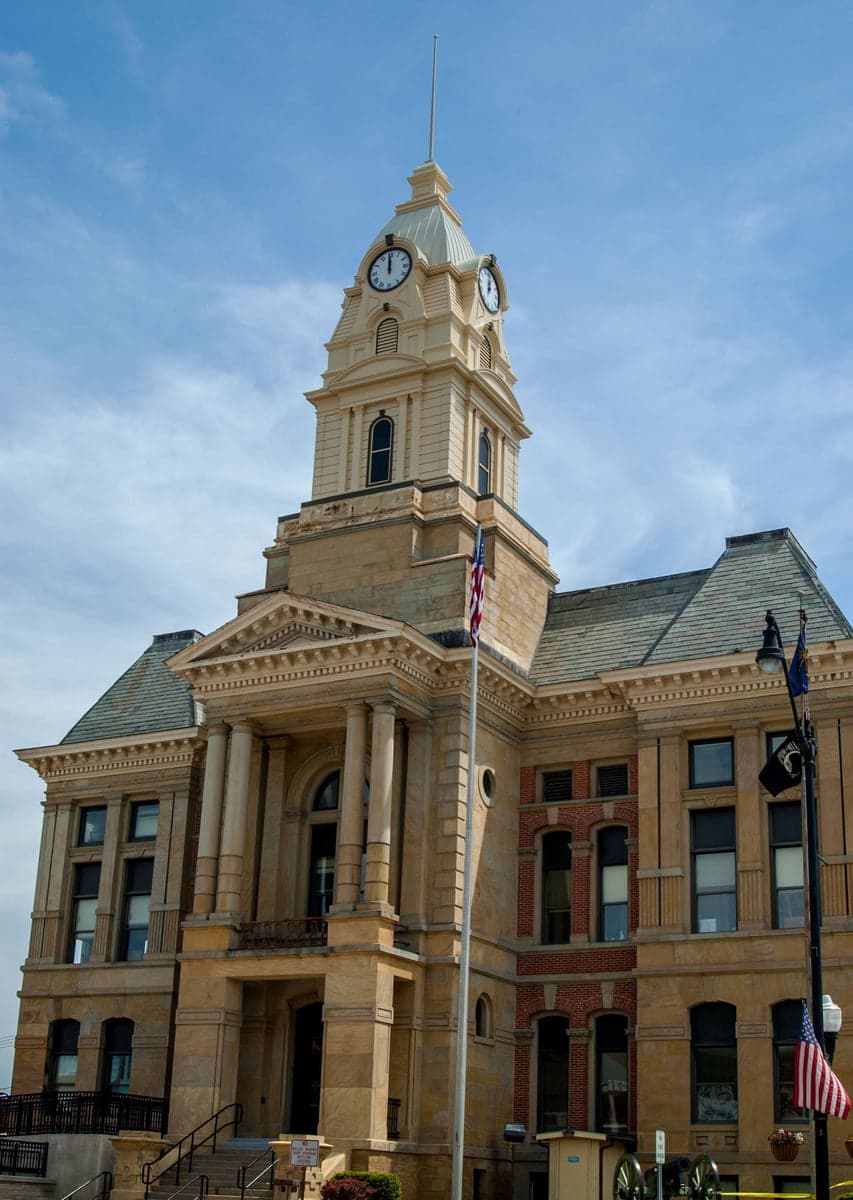
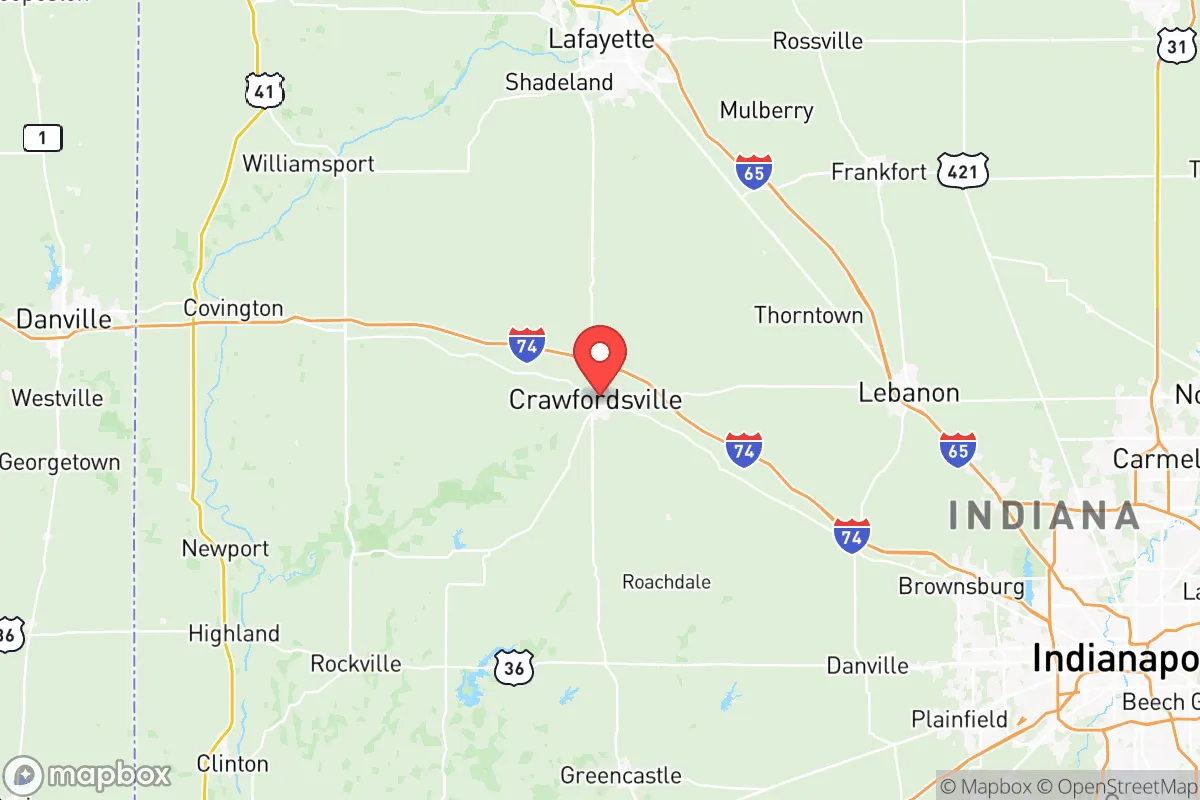
Photo: Wikipedia
Personal Sovereignty in Montgomery County
Viable for self-reliance. Generally workable, though some barriers may limit total independence.
What does Personal Sovereignty tell us?
Personal Sovereignty measures your capacity for self-reliance and independence with minimal government friction. Higher scores mean fewer barriers between you and the way you want to live... but it assumes you have the space you need and good neighbors.
What does this tell us?
Personal Sovereignty measures your capacity for self-reliance and independence with minimal government friction. Higher scores mean fewer barriers between you and the way you want to live... but it assumes you have the space you need and good neighbors.
State Policy
Energy independence: Importer (35% of energy produced in-state)
Personal Liberty
Homesteading

Personal Liberty Analysis
Montgomery County, Indiana offers a notably high degree of personal sovereignty, grounded in Indiana’s strong preemption laws, low tax burden, and a cultural ethos of self-reliance that is more pronounced than in many Midwestern counties of similar size. Residents in towns like Crawfordsville, Ladoga, and New Market generally experience minimal government interference in daily life, with local ordinances tending to favor individual choice over collective mandates. The county’s regulatory posture is light-touch, particularly when compared to urbanized areas like Indianapolis or Bloomington, making it a practical destination for those prioritizing autonomy in their relocation decisions.
Tax burden and regulatory posture in Montgomery County
Indiana’s state-level tax structure is among the most favorable in the nation for personal sovereignty, and Montgomery County aligns closely with that framework. The state’s flat income tax rate of 3.05% (as of 2025) and a capped property tax rate—typically 1% of assessed value for homesteads—keep the annual cost of government low. Montgomery County’s combined property tax rate averages around 1.2%, slightly above the state cap due to local levies, but still well below the national average of 1.1% for owner-occupied homes. Sales tax is a flat 7% statewide, with no county-level add-ons. Regulatory burden is minimal: there are no county-wide zoning ordinances in unincorporated areas, meaning land use in places like Waveland or Linden is largely unrestricted by local government. Building permits are required only for structural changes, and business licensing is straightforward—a general business license costs $25 and requires no inspections for most home-based enterprises. The county does not impose any local income tax, and the only notable regulatory friction is the state’s requirement for annual vehicle inspections, which are limited to safety checks and cost $15.
Self-defense and gun law specifics in Montgomery County
Indiana is a constitutional carry state, and Montgomery County fully reflects that posture. Since July 2022, no permit is required to carry a handgun openly or concealed for any law-abiding adult 18 or older. The county sheriff’s office in Crawfordsville issues lifetime carry permits for those who choose to obtain one for reciprocity purposes, with a processing time of under 30 days. Stand-your-ground laws apply statewide, with no duty to retreat in any place where a person is lawfully present. Montgomery County has no local firearm ordinances—no magazine capacity limits, no waiting periods, and no registration requirements. The county’s gun culture is robust: the Linden Conservation Club and Crawfordsville Rifle and Pistol Club offer public ranges, and private land shooting is common in rural areas like Darlington and Alamo, provided it is done safely and at least 500 feet from occupied dwellings. The county’s violent crime rate is low—2.1 incidents per 1,000 residents in 2024—so self-defense concerns are minimal, but the legal framework gives residents full latitude to protect themselves without bureaucratic hurdles.
Self-reliance and homesteading viability in Montgomery County
Montgomery County is highly conducive to homesteading and off-grid living, particularly outside the Crawfordsville city limits. In unincorporated areas, there are no county-level restrictions on raising livestock, keeping bees, or constructing accessory structures like barns or greenhouses. Minimum lot sizes for agricultural use are effectively zero—parcels as small as 1 acre are common for hobby farms in New Ross and Waveland. Off-grid feasibility is strong: Indiana law allows private wells and septic systems without county approval beyond standard health department permits (well permit: $150; septic permit: $200). Solar panel installation is unregulated at the county level, though net metering is available through Duke Energy and other utilities, with a cap of 1 MW for residential systems. Rainwater collection is legal and unrestricted. The county’s soil quality is good for small-scale farming, with the Tippecanoe River valley providing fertile loam. Zoning in Crawfordsville itself is more restrictive—livestock is limited to 1 acre or larger lots, and accessory dwellings require a special use permit—but the surrounding townships offer near-total freedom for self-sufficient living. The county’s average land price of $6,500 per acre (2025) makes entry feasible for those seeking a homestead.
Personal liberties in Montgomery County
Personal liberties in Montgomery County are broadly protected by state law, with local government taking a hands-off approach. Parental rights are strong: Indiana’s code explicitly affirms parents’ authority over their children’s education, healthcare, and religious upbringing, and the county’s school board in Crawfordsville has not adopted any controversial curriculum mandates. Medical autonomy is similarly robust—Indiana has no vaccine mandates for adults, and the county’s health department does not enforce any local public health orders beyond state-level recommendations. Speech and assembly are fully protected, with no local ordinances restricting political signage, public gatherings, or expressive conduct. Property rights are reinforced by Indiana’s strong eminent domain protections, which require just compensation and a public hearing for any taking. The county’s planning commission in Crawfordsville has a reputation for approving variance requests quickly—typically within 30 days—for property modifications like fences, sheds, or home businesses. The only notable limitation is the state’s ban on recreational cannabis, which remains in effect, though CBD and hemp products are legal and widely available in local stores.
Overall, Montgomery County ranks among the most sovereignty-friendly areas in Indiana, offering a regulatory environment that is lighter than the state average and far lighter than urbanized counties like Marion or Monroe. The combination of constitutional carry, minimal zoning, low taxes, and strong property rights creates a framework where individuals and families can live with a high degree of autonomy. For those comparing it to other Midwestern options, Montgomery County’s balance of freedom and practicality—especially in towns like Ladoga and Darlington—makes it a strong contender for anyone prioritizing personal sovereignty in their relocation decision.

* Values derived from national, state, county, city and local statistics and may differ in a specific area. Last updated: 2026-08-14T16:38:23.000Z
Narrative content on this page is AI-generated and may contain mistakes. Verify any details that matter before acting on them.
ReloMaps may earn a commission from affiliate links at no extra cost to you.

