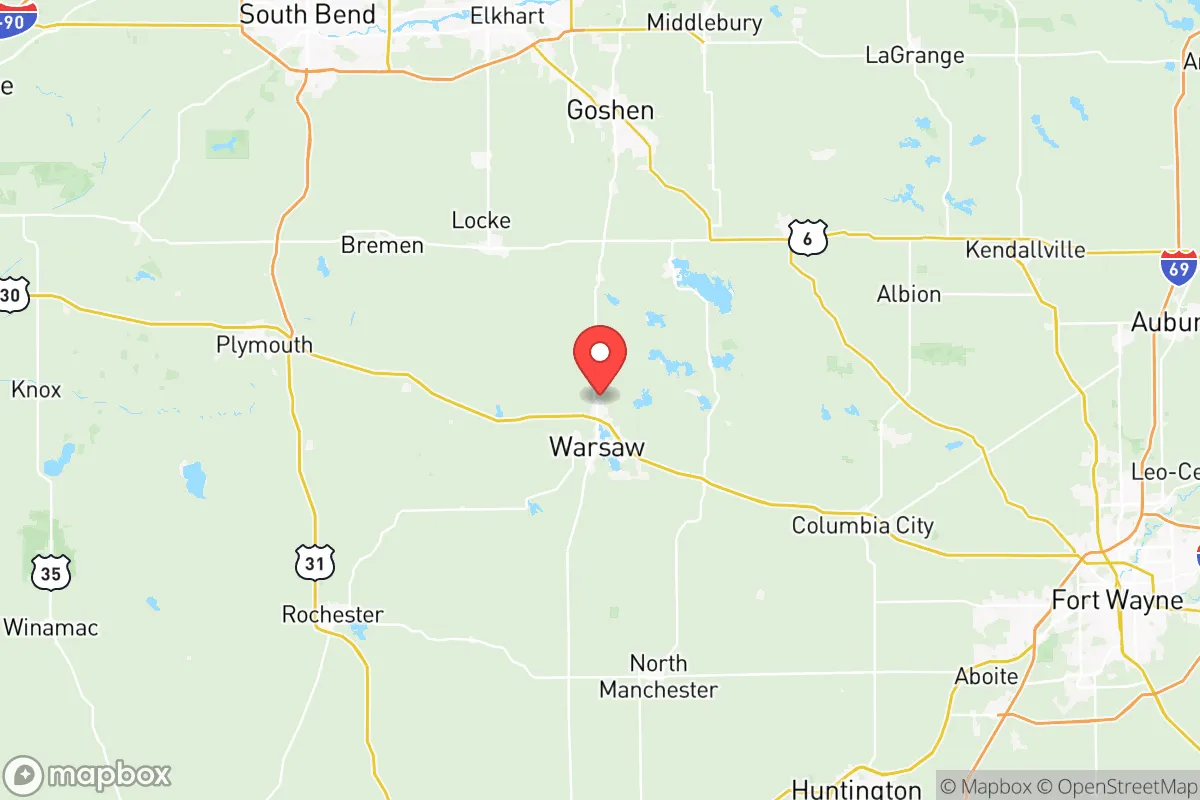
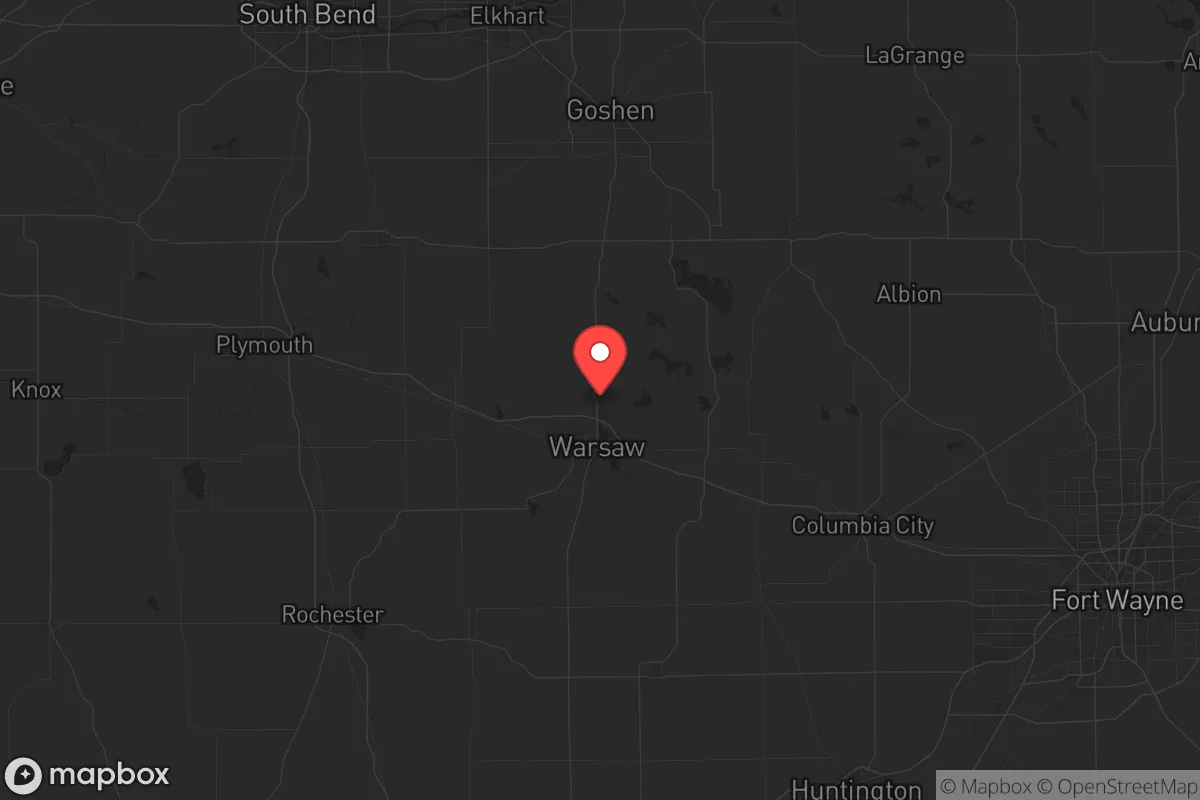
Strategic Assessment of Kosciusko County
Meaningful friction. Expect exposure to either population pressure, blast zones, or natural disaster risk. Consider buying a retreat property.
What does the Strategic Assessment tell us?
Our Strategic Assessment grades tactical survivability of an area. Major population centers, military targets, fallout zones, natural disasters, and border exposure all drive risk — lower exposure means a more defensible position in a crisis.
This is heavily inspired by Joel Skousen's Strategic Relocation book. Highly recommended you checkout the book ($)What does this tell us?
Our Strategic Assessment grades tactical survivability of an area. Major population centers, military targets, fallout zones, natural disasters, and border exposure all drive risk — lower exposure means a more defensible position in a crisis.
This is heavily inspired by Joel Skousen's Strategic Relocation book. Highly recommended you checkout the book ($)Strategic Pillars
Key Distances
Strategic Assessment Analysis
Kosciusko County, Indiana, offers a strategic mix of Midwestern stability and practical self-sufficiency that makes it a serious contender for relocation-minded individuals and families. Anchored by the county seat of Warsaw and the smaller cities of Winona Lake, Syracuse, and Mentone, the area sits roughly 40 miles west of Fort Wayne and about 100 miles north of Indianapolis—close enough for metropolitan access, yet far enough to avoid the congestion and target profile of a major urban center. The county’s resilience story is built on a diversified manufacturing economy, abundant freshwater resources, and a geography that is notably free of the high-risk industrial corridors that dominate other parts of the Midwest.
Geographic position and natural advantages for long-term stability
Kosciusko County’s location in north-central Indiana is a genuine asset for those weighing disaster preparedness. It is not situated near any major military installation, nuclear power plant, or strategic port—the nearest significant defense-related site is Grissom Air Reserve Base, roughly 30 miles to the southwest in Miami County, which is primarily a refueling and training facility rather than a high-value strike target. The county is also well outside the blast-and-fallout zones of any major metropolitan area; Chicago sits over 120 miles to the northwest, and Detroit is more than 180 miles to the northeast. This distance provides a meaningful buffer against the cascading failures—supply chain disruptions, mass evacuation flows, and utility grid strain—that would likely accompany a major event in those cities.
What the county lacks in proximity to urban centers, it makes up for in natural resilience. The region is part of the Northern Indiana Moraine and Lake Plain, characterized by rolling terrain, glacial lakes, and well-drained soils. The Tippecanoe River runs through the county’s western edge, and the area is dotted with over 100 natural lakes, including the large and deep Lake Wawasee and the interconnected chain around Syracuse. This abundance of surface water is a double-edged sword—it provides a reliable freshwater source and supports local agriculture, but it also means low-lying areas near the lakes and rivers are prone to seasonal flooding. For a relocator, the practical takeaway is to choose a homesite on higher ground, away from floodplains, and to recognize that the county’s water wealth is a genuine long-term advantage in any scenario where municipal supplies are compromised.
Risks, exposures, and proximity to fallout-relevant landmarks
Kosciusko County is not without its risk profile, though it is comparatively benign. The most significant man-made exposure is the county’s own industrial base, which is heavily concentrated in Warsaw—known as the “Orthopedic Capital of the World” due to the presence of Zimmer Biomet, DePuy Synthes, and a cluster of medical device manufacturers. These facilities are not high-risk chemical or petrochemical plants, but they do rely on supply chains that could be disrupted in a crisis. The nearest major refinery is in Whiting, Indiana, on the shores of Lake Michigan near Chicago—over 120 miles away—which means the county is well outside any plausible fallout or blast radius from that critical infrastructure. Similarly, the nearest nuclear power plant is the Donald C. Cook facility in Bridgman, Michigan, roughly 90 miles to the northwest; the 50-mile emergency planning zone does not extend into Kosciusko County.
Natural hazards are the more realistic concern. Tornadoes are a genuine threat, as the county sits on the northern fringe of the traditional “Hoosier Alley” tornado corridor. The most notable event in recent memory was the November 2013 tornado outbreak that produced an EF-2 twister near the town of Atwood, causing significant damage. Severe thunderstorms with damaging winds and large hail are common in the spring and summer months, and winter ice storms can knock out power for extended periods. Flash flooding along the Tippecanoe River and its tributaries is a recurring issue, particularly in the low-lying areas around Warsaw and Mentone. None of these risks are disqualifying—they are manageable with standard preparedness measures—but they should inform a relocator’s choice of property and the design of their emergency plan.
Practical resilience for a relocator: food, water, energy, and defensibility
For a family or individual serious about self-sufficiency, Kosciusko County offers a strong practical foundation. The county is a significant agricultural producer, with corn, soybeans, and wheat dominating the landscape, and there is a robust network of local farms, farmers’ markets, and food cooperatives in Warsaw and Winona Lake. The Amish and Mennonite communities in the surrounding counties, particularly to the south and east, provide a ready market for heirloom seeds, livestock, and traditional food preservation knowledge—an underappreciated resource for anyone looking to build long-term food security. The county’s soil is fertile and well-suited to small-scale market gardening, and the growing season, while shorter than in the South, is adequate for most staple crops.
Water is arguably the county’s strongest resilience asset. The glacial lakes and the Tippecanoe River system provide abundant surface water, and the underlying aquifers are generally productive and clean. For a relocator, this means that a private well is a viable and reliable option on most rural properties, and even in the more developed areas around Warsaw and Syracuse, municipal water supplies are drawn from sources that are less vulnerable to contamination than those in industrial regions. Energy resilience is more of a mixed picture. The county is served by the regional grid, which is part of the larger PJM Interconnection, and power outages during severe weather are not uncommon. However, the relatively low population density and the prevalence of rural properties make solar panel installation and battery backup systems practical and cost-effective. Natural gas is widely available in the towns, but rural homes often rely on propane, which requires storage and planning.
Defensibility—in the sense of a location that is secure and sustainable in a prolonged crisis—is a genuine strength of Kosciusko County. The county’s road network is well-maintained and provides multiple egress routes, but it is not a major transit corridor, which means it is unlikely to be overwhelmed by evacuation traffic from a major city. The terrain is gently rolling, with no significant choke points, but the abundance of lakes and rivers creates natural barriers that can be used to control access to property. The local culture is one of self-reliance and neighborly mutual aid, reinforced by a strong network of volunteer fire departments and a well-regarded county emergency management agency. The presence of Goshen Hospital in neighboring Elkhart County and Lutheran Hospital in Fort Wayne, both within a 45-minute drive, provides access to advanced medical care without the vulnerability of being located in a dense urban area.
The overall strategic picture for Kosciusko County is one of quiet, unglamorous resilience. It lacks the dramatic mountain defenses or arid isolation that some relocation guides tout, but it offers something arguably more valuable: a stable, resource-rich, and low-target environment with a functioning local economy and a culture that values preparedness. The county’s manufacturing base, anchored by the orthopedic industry in Warsaw, provides a degree of economic insulation that many rural counties lack, and its water resources are a strategic asset that will only appreciate in value. For a family or individual looking to build a resilient life without going off-grid entirely, Kosciusko County represents a balanced, defensible choice—close enough to civilization to be practical, far enough to be safe, and grounded in a community that understands the value of being ready.

* Values derived from national, state, county, city and local statistics and may differ in a specific area. Last updated: 2026-10-21T00:57:40.000Z
Narrative content on this page is AI-generated and may contain mistakes. Verify any details that matter before acting on them.
ReloMaps may earn a commission from affiliate links at no extra cost to you.

