
Photo: Wikipedia
Quality of Life in Kane County
A livable area that tracks near national norms for affordability, walkability, and neighborhood health.
What does Quality of Life tell us?
Quality of Life measures an area by evaluating factors like cost of living, nearby amenities, country club access, airport proximity, socioeconomic signals and neighborhood character. For large states, this is a general average — quality of life can vary dramatically between metro areas, suburbs, and rural communities within the same state.
What does this tell us?
Quality of Life measures an area by evaluating factors like cost of living, nearby amenities, country club access, airport proximity, socioeconomic signals and neighborhood character. For large states, this is a general average — quality of life can vary dramatically between metro areas, suburbs, and rural communities within the same state.
Cost of Living
15% above national average
116%
The Real Cost of Living in Kane County for 2026
| Tier | Individual | Family (4) |
|---|---|---|
| Survival | $22k | $42k |
| Comfortable | $59k | $87k |
| Luxury | $167k+ | $259k+ |
| Elite (Top 5%) | $197k+ | $305k+ |
Quality-of-Life Analysis
Kane County, Illinois, offers a broad spectrum of quality-of-life options, from the dense, transit-oriented core of its largest city to the quiet, unincorporated farmlands of its western townships. The county draws a diverse mix of residents: young professionals and commuters who prioritize Metra access to Chicago, families seeking established suburban school districts, and long-time locals or hobby farmers looking for acreage and lower property taxes outside municipal limits. With a cost-of-living index of 115 (100 being the U.S. average), the county is more expensive than the national norm but generally more affordable than its immediate neighbor to the east, DuPage County.
Largest town(s) & population centers
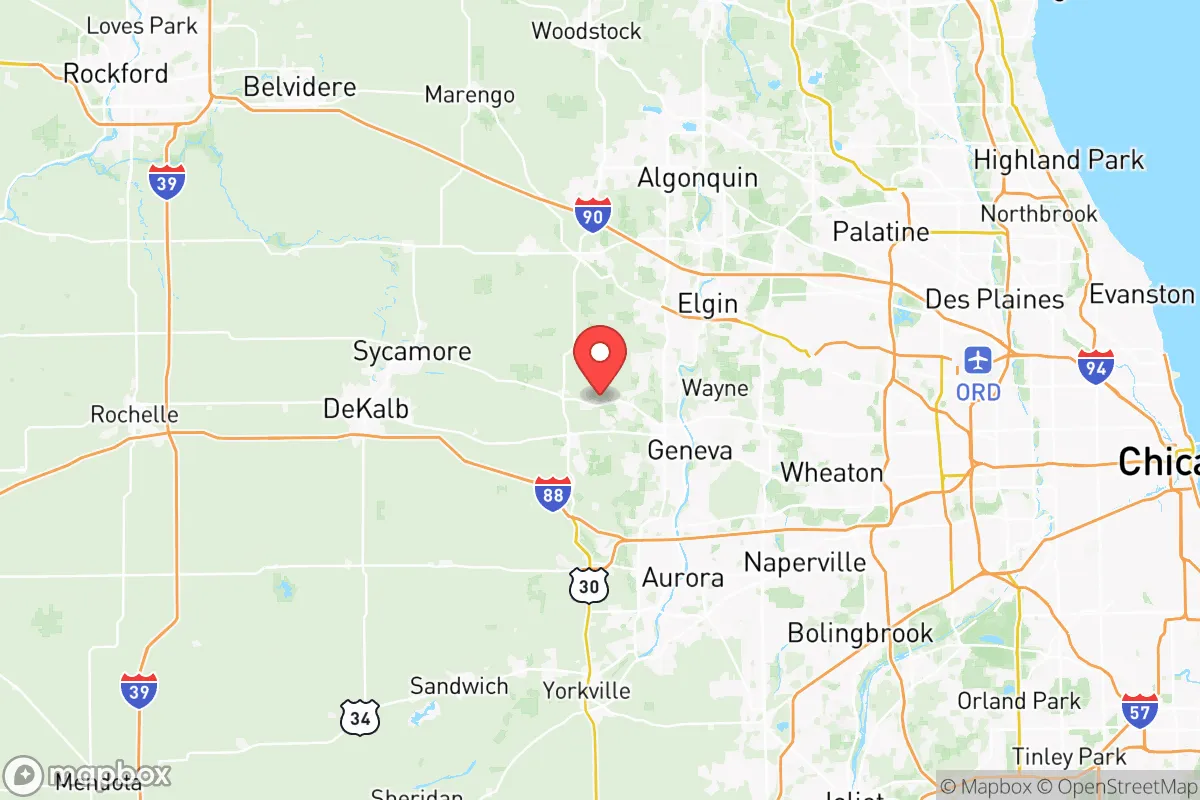
Aurora, straddling the Kane-DuPage border, is the county’s largest city and its primary population anchor, with roughly 180,000 residents. Daily life here is defined by a mix of historic walkable neighborhoods near the Fox River, sprawling suburban subdivisions, and a growing downtown dining and entertainment scene anchored by the Paramount Theatre and RiverEdge Park. The city offers direct Metra Union Pacific West Line service to Chicago, making it a viable commuter hub despite an average county-wide commute of about 28 minutes. Elgin, the second-largest city in Kane, sits to the north and presents a similar blend: a revitalized riverfront, a large Hispanic population, and the Judson University campus. Both cities have their own school districts and park systems, but Aurora’s sheer size means it offers the widest array of retail, healthcare (Rush Copley Medical Center), and employment options within the county.
Smaller towns & rural pockets
Moving west and south from the Fox River corridor, the landscape shifts dramatically. Geneva, St. Charles, and Batavia form the "Tri-Cities," each with a distinct, walkable downtown along the river, highly rated school districts (Geneva CUSD 304, St. Charles CUSD 303), and a more affluent, established suburban feel. Further west, Elburn and Maple Park are smaller villages that still retain a rural character, with grain elevators visible from the Metra station in Elburn. The unincorporated areas of Burlington Township and Hampshire Township are where the county’s agricultural roots are most visible, featuring farmhouses on gravel roads, horse farms, and large-lot residential properties. These pockets offer a slower pace and significantly more land per dollar than the eastern suburbs, though they lack municipal water and sewer services in many cases.
Cost & lifestyle range
The cost of living and available amenities vary sharply across Kane County. At the higher end, St. Charles and Geneva command median home values well above the county’s $303,000 average, often exceeding $400,000 for a single-family home in a desirable school attendance zone. These towns offer boutique shopping, high-end dining, and extensive park districts with river access. At the more affordable end, Aurora’s far west side and parts of Elgin offer entry-level homes and rentals near the county’s median rent of $1,404, though with longer commutes to the train. The most budget-friendly options are found in the rural townships and smaller villages like Hampshire and Pingree Grove, where new construction subdivisions compete with older farmhouses, and where property taxes—while still high by national standards—can be lower than in the established river towns. The lifestyle range is essentially a trade-off: pay a premium for walkable downtowns and top-tier schools in the Tri-Cities, or accept longer drives and fewer immediate amenities for more space and lower housing costs in the western townships.
Kane County is best suited for those who want proximity to Chicago without living in the dense inner-ring suburbs, and who value a clear choice between urban, suburban, and rural living within a single county. Commuters who can tolerate a 30- to 60-minute train ride, families prioritizing school district reputation, and individuals seeking a slower, land-based lifestyle in unincorporated areas will all find a niche here. The county’s strength lies in its internal diversity: a resident can live on a gravel road in Burlington and still be a 20-minute drive from a Metra station or a major hospital in Elgin or Aurora.

Crime in Kane County
WARNING: The crime statistics are unreliable for this jurisdiction. Local authorities have either not reported or under reported their data to the FBI. This could be due to bad intentions, incompetence or technical issues. Regardless, we suggest skepticism.
Higher crime rates than 64% of comparable U.S. locations.
Violent CrimeViolent Crime Analysis
Property CrimeProperty Crime Analysis
Crime Analysis
Kane County, Illinois, presents a mixed safety profile that is heavily influenced by its location within the Chicago metropolitan area. With a violent crime rate of 243.3 per 100,000 residents and a property crime rate of 1,469.3 per 100,000, the county sits below the national average for violent crime but above the national average for property crime. However, these county-wide figures mask significant variation between the urbanized eastern towns and the more rural western communities, making neighborhood-level research essential for anyone considering a move to the area.
Crime in context
Kane County's violent crime rate of 243.3 per 100,000 is notably lower than the national average of approximately 380 per 100,000, but it is higher than the Illinois state average of roughly 280 per 100,000. The property crime rate of 1,469.3 per 100,000 exceeds both the national average (around 1,954 per 100,000) and the Illinois average (approximately 1,200 per 100,000), indicating that theft and burglary are more pressing concerns than violent offenses. These numbers place Kane County in a middle tier among Chicago collar counties, safer than Cook County but generally more crime-prone than McHenry or Kendall counties. The county's proximity to Chicago means it shares some of the regional crime pressures, particularly auto theft and retail theft rings that operate across municipal boundaries.
What residents experience
Daily life in Kane County varies dramatically by municipality. Aurora, the county's largest city, accounts for a disproportionate share of both violent and property crime, with its downtown and near-east side neighborhoods experiencing higher rates of gang-related incidents and theft. Elgin, the second-largest city, also reports elevated crime figures, particularly property crime along its commercial corridors. In contrast, Geneva, St. Charles, and Batavia — the historic Tri-Cities along the Fox River — consistently report crime rates well below the county average, with violent crime in these communities often below 100 per 100,000. South Elgin and Montgomery fall somewhere in the middle, with property crime being the primary concern. Residents in the western townships, such as Hampshire and Burlington, experience the lowest crime rates in the county, often comparable to rural areas in neighboring DeKalb County.
Neighborhood-level variation and justice system concerns
The safety picture within Kane County is not uniform, and the county's justice system introduces additional considerations. The Kane County State's Attorney's Office, while not as progressive as Cook County's, has faced criticism for diversion programs and reduced sentencing for certain property crimes, which some residents argue contributes to repeat offenses. In Aurora and Elgin, specific neighborhoods — such as the near-east side of Aurora and the areas around Elgin's downtown — see crime rates two to three times the county average. Conversely, the far west side of Aurora (near Randall Road) and the northwest side of Elgin (near the Fox River) are significantly safer. The county's judicial district, which includes both liberal-leaning Aurora and conservative-leaning rural towns, produces a mixed approach to prosecution that can frustrate victims in property crime cases. For families and retirees, the safest strategy is to focus on the Tri-Cities or western townships, while being aware that property crime — particularly vehicle break-ins and package theft — can occur even in low-crime areas due to the county's transportation corridors connecting to Chicago.
* Values derived from national, state, county, city and local statistics and may differ in a specific area. Last updated: 2026-08-14T00:42:57.000Z
Narrative content on this page is AI-generated and may contain mistakes. Verify any details that matter before acting on them.
ReloMaps may earn a commission from affiliate links at no extra cost to you.

