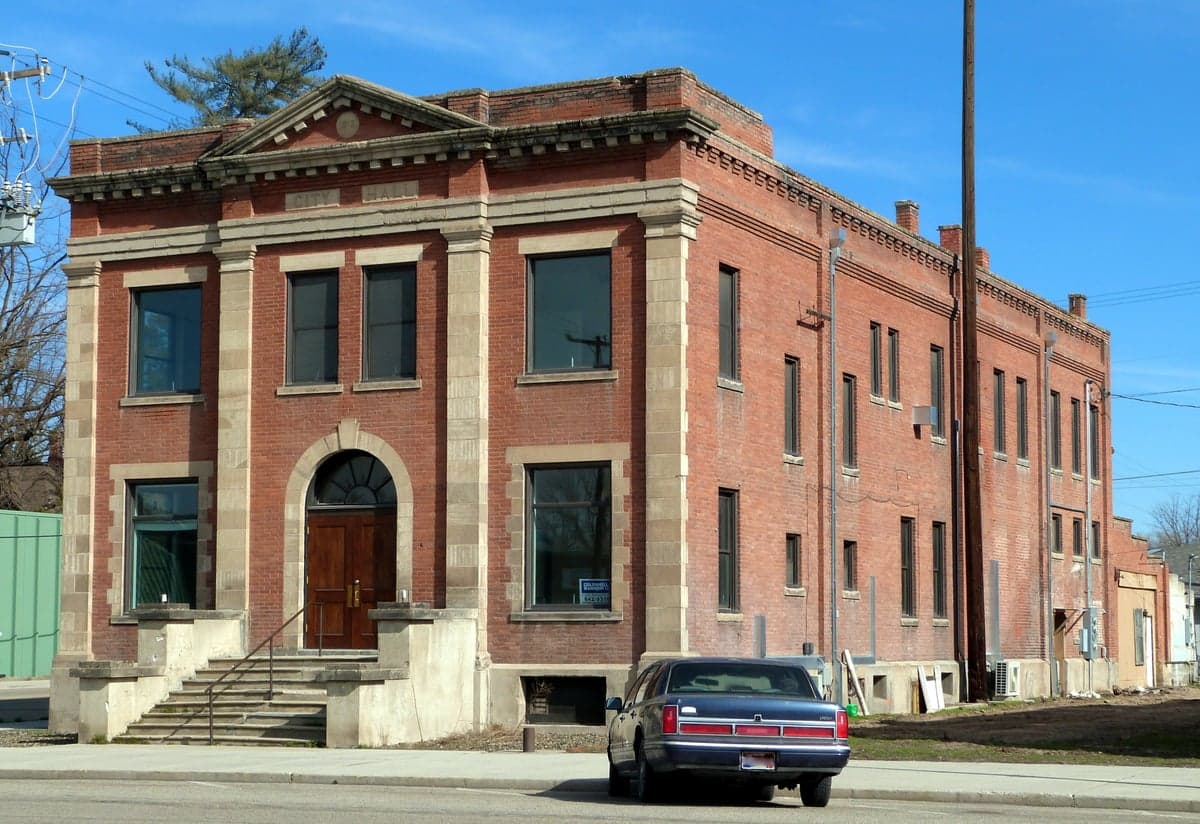
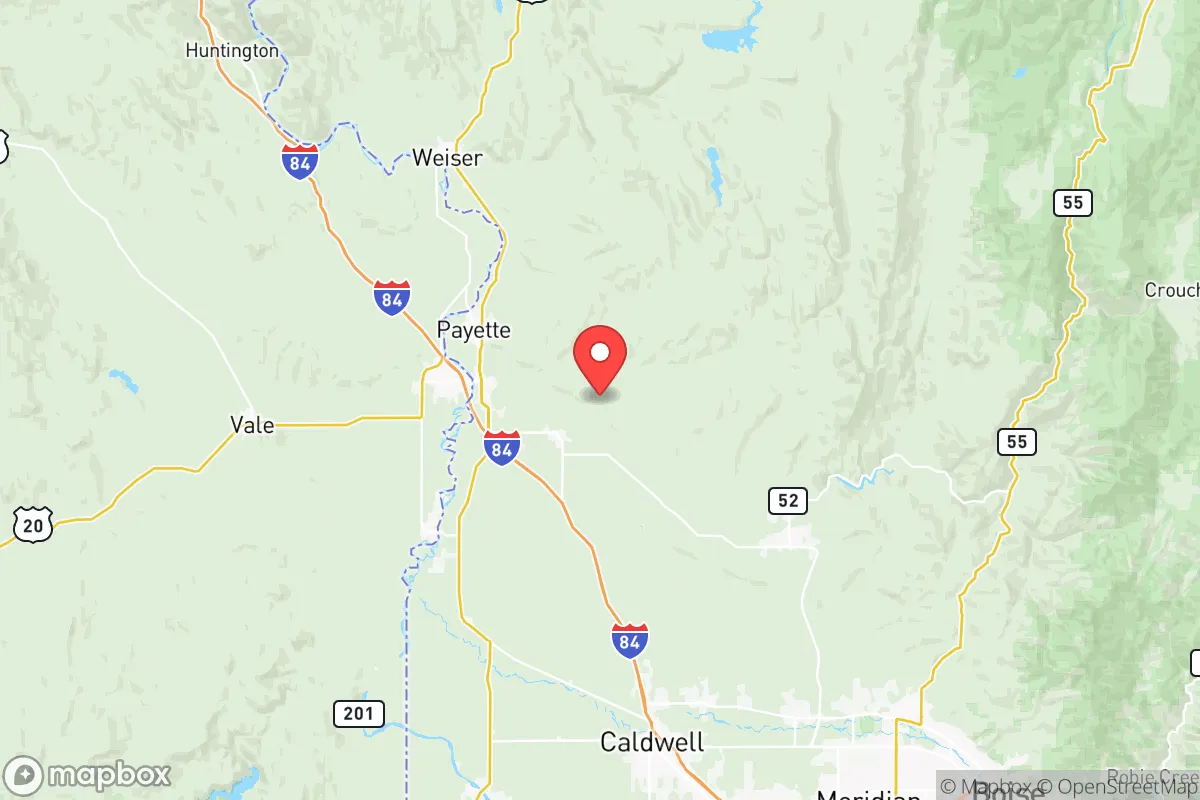
Photo: Wikipedia
Political ClimatePolitical Climate in Payette County
Showing district-level results — no local-only data available.
Local Political AnalysisPolitical Analysis of Payette County
Payette County, Idaho, has long been a rock-solid conservative stronghold, and honestly, it’s one of the last places where you can still feel like common sense hasn’t completely left the building. With a Cook PVI of R+22, it’s significantly redder than the state of Idaho as a whole, which sits at R+18, and that gap tells you a lot about the local mindset. The county has held steady for decades, but like everywhere else, you can see the cracks forming as folks from the coast start trickling in, bringing their big-city ideas with them.
How it compares
When you stack Payette County up against the rest of Idaho, the difference is more than just a number on a chart. The state’s R+18 rating already makes it one of the most Republican places in the country, but Payette County is a whole other level of red. Take the town of New Plymouth, for example—it’s about as conservative as it gets, with church potlucks and pickup trucks being the norm, and you’d be hard-pressed to find a yard sign that isn’t for a Republican candidate. Then you’ve got Fruitland, which leans the same way but has a few more folks who’ve moved in from Boise or out of state, so you’ll see the occasional progressive bumper sticker, though it’s still rare. The county seat, Payette, is the real heart of the area, and while it’s deeply red, there are a couple of precincts near the river that have started to swing a little—nothing alarming yet, but you can feel the shift. Meanwhile, the state as a whole has places like Boise and Moscow that are practically blue islands, dragging the overall PVI down. In Payette County, you don’t have that problem—it’s a unified front, but the worry is that as more people flee the chaos of California and Oregon, they’ll bring their voting habits with them.
What this means for residents
For those of us who’ve been here a while, the political climate means we can still live our lives without the government breathing down our necks over every little thing. You don’t see the kind of overreach here that you hear about in Portland or Seattle—no one’s telling you what you can and can’t do with your property, your kids, or your business. But there’s a growing concern that the same progressive ideology that’s wrecking other states is creeping in through the edges. The local school board, for instance, has stayed focused on teaching kids how to read and do math instead of pushing social agendas, but you’ve got to keep an eye on it because those battles are coming. The county commission is solid, but if the newcomers start voting in their own kind, we could see zoning laws that restrict farming or tax hikes that hit small businesses. It’s not there yet, but the trajectory is something to watch.
On the ground, daily life reflects that conservative backbone. You can still buy a gun without a month-long wait, and the sheriff’s office isn’t interested in enforcing federal overreach on things like land use or water rights. The local economy runs on agriculture—potatoes, onions, sugar beets—and that keeps folks grounded in reality. But the long-term worry is that if the state keeps trending toward the center, Payette County might become a battleground instead of a refuge. For now, it’s a place where you can raise a family without worrying about your kids being indoctrinated, but you’d better stay involved in local elections if you want to keep it that way.

State Political ClimatePolitical Climate in Idaho
State Political AnalysisPolitical Environment in the State
Idaho is one of the most reliably Republican states in the nation, with a Cook PVI of R+18, meaning it votes about 18 points more Republican than the national average in presidential elections. The state’s dominant coalition is a mix of rural conservatives, Mormon cultural conservatives in the southeast, and a growing wave of out-of-state transplants—many from California, Oregon, and Washington—who are fleeing progressive policies in their home states. Over the last 10-20 years, Idaho has shifted even further right, driven by rapid population growth in the Boise metro area and a backlash against perceived federal overreach, though the influx of new residents has also introduced some suburban moderates who occasionally complicate local races.
Urban vs. rural divide
The political map of Idaho is starkly divided between its few urban centers and its vast rural expanse. The Boise metro area, including Boise, Meridian, and Nampa, is the state’s population engine and the only region where Democrats can be competitive. Ada County (Boise) has trended purple in recent cycles—Trump won it by just 3 points in 2020 after winning by 12 in 2016—thanks to an influx of tech workers and younger professionals. However, the surrounding counties like Canyon (Nampa) and Gem remain deep red. The conservative strongholds are the rural north (Coeur d’Alene, Sandpoint) and the southeast (Idaho Falls, Rexburg, Pocatello). Rexburg, home to BYU-Idaho, is one of the most conservative cities in the nation, regularly voting 80%+ Republican. The Panhandle region around Coeur d’Alene has seen a surge of conservative transplants from Washington and California, reinforcing its red lean. The only reliably blue pocket is the university town of Moscow (home to the University of Idaho), which votes Democratic by wide margins but has little statewide influence.
Policy environment
Idaho’s policy environment is aggressively conservative, with a focus on low taxes, limited regulation, and cultural traditionalism. The state has a flat income tax of 5.8% (recently cut from 6%), no corporate income tax on pass-through entities, and property taxes that are among the lowest in the West. There is no state-level rent control, no universal background checks for gun purchases, and no state income tax on Social Security benefits. Education policy is a flashpoint: the state has a robust school choice movement, with a new Education Savings Account (ESA) program passed in 2023 that allows parents to use public funds for private school tuition, homeschooling, or tutoring. The state also banned critical race theory and “divisive concepts” in public schools in 2021. Healthcare is largely market-driven, with no state-run insurance exchange and limited Medicaid expansion (Idaho expanded in 2020 but with work requirements). Election laws are strict: voter ID is required, same-day registration is not allowed, and mail-in voting is restricted to those with a valid excuse. The state also passed a law in 2023 banning ranked-choice voting and requiring hand-counting of ballots in some counties, a response to election integrity concerns.
Trajectory & freedom
Idaho is arguably becoming more free for conservatives, but the trajectory is complicated. On the positive side for liberty-minded residents, the state has expanded gun rights significantly: in 2023, Idaho passed a constitutional carry law (no permit needed to carry a concealed firearm), and in 2024 it enacted a Second Amendment Preservation Act that prohibits state and local law enforcement from enforcing federal gun laws deemed unconstitutional. Parental rights were strengthened with the Parental Rights in Education Act (2023), which requires schools to notify parents of any curriculum involving sexuality or gender identity and prohibits instruction on these topics in K-3. Medical freedom saw a boost with the Medical Freedom Act (2023), which bans vaccine mandates by private employers and government entities. Property rights were reinforced with a 2024 law limiting homeowners’ association authority over solar panels and landscaping. However, there are concerning trends: the state’s rapid growth is driving up housing costs and property taxes, and some libertarians worry about the influence of the Church of Jesus Christ of Latter-day Saints on social policy, particularly around alcohol sales and Sunday business hours. The 2024 legislative session also saw a push to ban TikTok on state devices, which some view as government overreach into personal technology choices.
Civil unrest & political movements
Idaho has a history of fringe political movements, but large-scale civil unrest is rare. The most visible flashpoint in recent years was the 2020 Boise protests over George Floyd’s death, which drew several thousand people and led to clashes with counter-protesters, but the state avoided the widespread destruction seen in Portland or Seattle. The People’s Rights organization, founded by Ammon Bundy (of the 2016 Malheur Refuge occupation), has a significant presence in the rural north, particularly around Emmett and Sandpoint. Bundy’s group has been involved in standoffs with local law enforcement over COVID-19 mandates and property seizures. Immigration politics are heated: the state passed a law in 2024 requiring local law enforcement to cooperate with ICE and banning “sanctuary city” policies, though no Idaho city had declared itself a sanctuary. Election integrity remains a top concern for conservatives, with the state’s Republican Party passing a resolution in 2023 calling for a full audit of the 2020 election (though no evidence of widespread fraud was found). The Idaho Freedom Foundation, a powerful conservative think tank, has been instrumental in pushing school choice and tax cuts, and its influence is felt in every legislative session. A new resident would notice a strong undercurrent of anti-federal sentiment, particularly in rural areas where “We the People” signs and Gadsden flags are common.
Projection
Over the next 5-10 years, Idaho will likely become more Republican at the state level, but the character of that conservatism may shift. The influx of conservative transplants from blue states is reinforcing the rightward tilt, but these newcomers often bring a more libertarian, less socially traditional brand of conservatism that could clash with the established Mormon-dominated GOP. The Boise metro area will continue to grow, potentially flipping Ada County to a swing county or even Democratic in presidential years, but the rural vote will keep the state solidly red. The biggest risk for freedom-minded residents is that rapid growth leads to increased government spending on infrastructure, schools, and law enforcement, which could push up taxes and regulations. The 2024 legislative session saw a proposal to create a state-level property tax cap, which would help, but it failed. Expect continued battles over school funding, water rights (a major issue in the arid south), and land use as development pressures mount. The state’s political trajectory is toward a more assertive, anti-federal posture, with likely more laws nullifying federal mandates on guns, immigration, and environmental regulations.
For a new resident, the bottom line is this: Idaho offers a high degree of personal freedom for conservatives, especially on guns, taxes, and education. You’ll find a state that respects your right to live as you see fit, with minimal government intrusion into your daily life. But the rapid growth is straining infrastructure and driving up costs, especially in the Treasure Valley. If you’re moving here, expect a welcoming but increasingly crowded environment, and be prepared for a political culture that is deeply skeptical of federal authority but also heavily influenced by local religious and libertarian factions. It’s a great place for someone who wants to be left alone, but you’ll need to get involved in local politics to keep it that way.
* Values derived from national, state, county, city and local statistics and may differ in a specific area. Last updated: 2026-05-11T22:11:54.000Z
Narrative content on this page is AI-generated and may contain mistakes. Verify any details that matter before acting on them.
ReloMaps may earn a commission from affiliate links at no extra cost to you.

