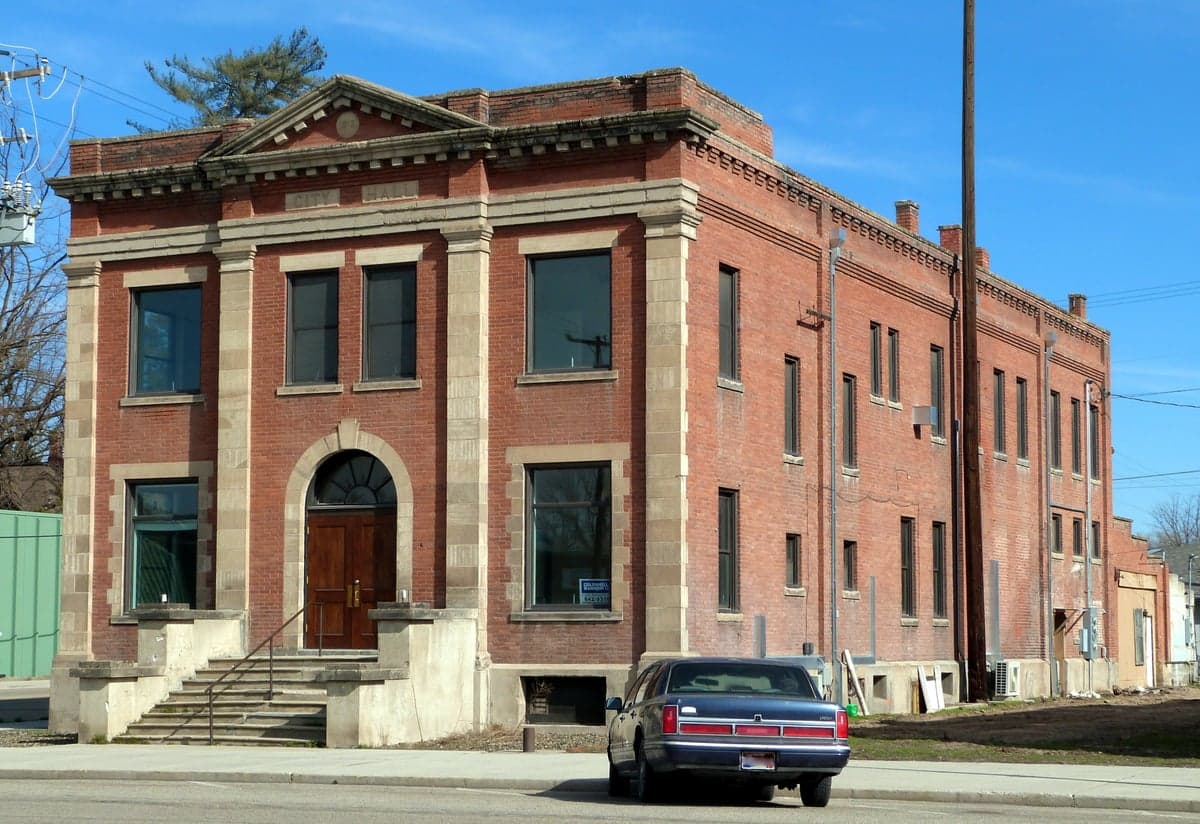
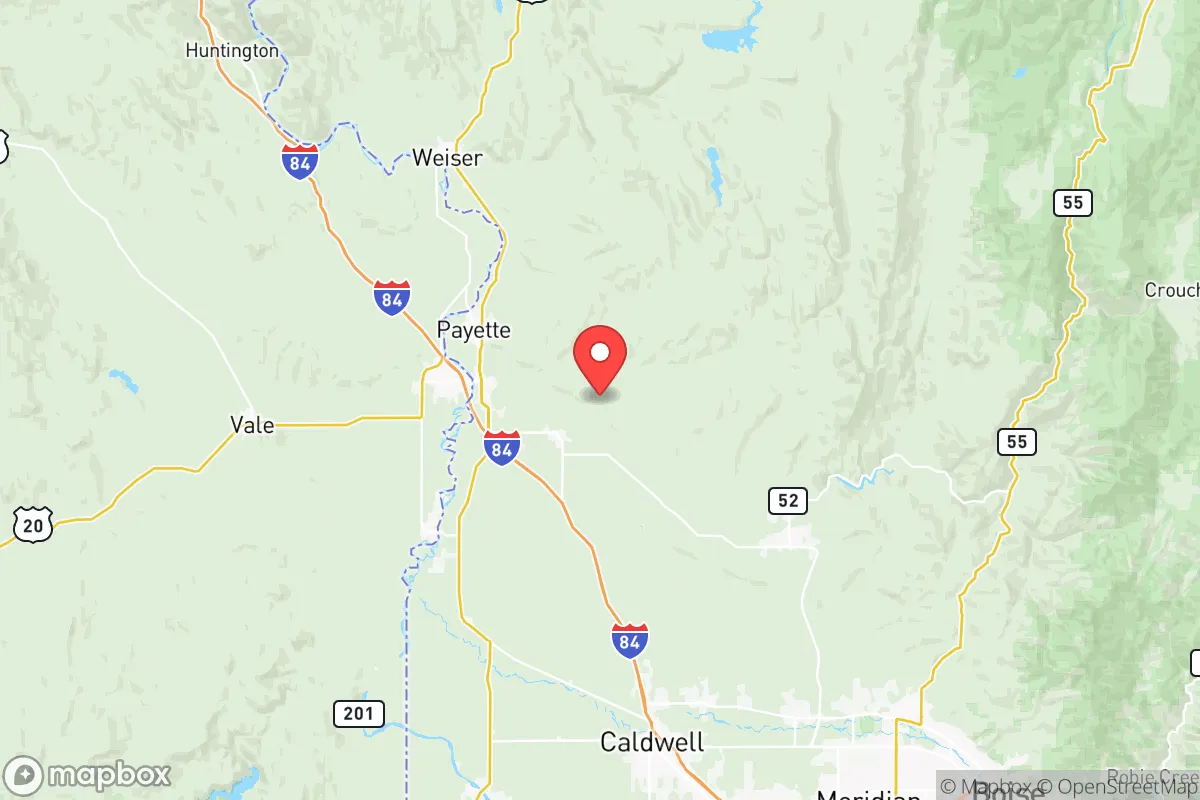
Photo: Wikipedia
Personal Sovereignty in Payette County
Moderate friction. Expect trade-offs in some aspect of personal liberty and independence.
What does Personal Sovereignty tell us?
Personal Sovereignty measures your capacity for self-reliance and independence with minimal government friction. Higher scores mean fewer barriers between you and the way you want to live... but it assumes you have the space you need and good neighbors.
What does this tell us?
Personal Sovereignty measures your capacity for self-reliance and independence with minimal government friction. Higher scores mean fewer barriers between you and the way you want to live... but it assumes you have the space you need and good neighbors.
State Policy
Energy independence: Importer (25% of energy produced in-state)
Personal Liberty
Homesteading

Personal Liberty Analysis
Payette County, Idaho, offers a rare pocket of genuine personal sovereignty in a country where state and federal overreach increasingly encroach on individual rights. Located along the Snake River in southwestern Idaho, this county of roughly 28,000 residents operates under a political culture that prioritizes local control, minimal interference, and a deep-seated distrust of centralized authority. For those seeking to escape the regulatory chokehold of blue states or even increasingly restrictive parts of the West, Payette County presents a landscape where autonomy—from tax policy to self-defense to how you raise your children—remains a lived reality, not just a talking point. The county seat, Payette, and the larger town of Fruitland anchor a region where the Second Amendment is a given, property rights are fiercely defended, and the state’s constitutional framework actively limits government power.
Tax burden and regulatory posture: How Payette County compares to surrounding areas
Idaho’s tax climate is already among the most favorable in the nation for those seeking to keep more of what they earn, and Payette County benefits directly from this state-level posture. There is no state inheritance tax, no estate tax, and no tax on Social Security benefits. The state’s flat income tax rate of 5.8% (as of 2025, with scheduled reductions) is paired with a property tax system that, while not as low as some rural Nevada counties, remains manageable—especially when compared to Oregon or California. In Payette County, the average effective property tax rate hovers around 0.7% of assessed value, significantly lower than the national average. Regulatory posture here is equally lean. The county government does not impose the kind of zoning overlays or building code enforcement that strangle development in places like Boise or Nampa. In unincorporated areas such as New Plymouth and Fruitland, you can build a workshop, park an RV, or keep livestock without navigating a bureaucratic maze. The county’s planning and zoning department is small, and its approach is generally permissive—if you own the land, you largely control what happens on it. This stands in stark contrast to the regulatory creep seen in neighboring Washington County, Oregon, just across the border, where land use laws are far more restrictive.
Self-defense and gun law specifics: What the Second Amendment looks like in practice
Idaho is a constitutional carry state, meaning no permit is required to carry a concealed firearm for anyone legally allowed to possess one. Payette County fully embraces this. The sheriff’s office in Payette is known for its pro-Second Amendment stance, and there is no local ordinance that overrides state preemption—a critical point, as some Idaho cities have attempted to create their own gun restrictions. In practice, this means you can walk into most businesses in Fruitland or New Plymouth with a sidearm without fear of a “no guns” sign having legal force (though private property rights still apply). The county also has a strong culture of defensive firearm ownership. Gun ranges and private shooting pits are common on rural properties, and there is no state-level magazine capacity ban, no “red flag” law, and no waiting period for firearm purchases. For those concerned about government overreach, Idaho’s Second Amendment Preservation Act explicitly prohibits state resources from being used to enforce federal gun laws that violate the state constitution. This is not theoretical—the sheriff in Payette County has publicly stated he will not enforce federal bans or confiscation orders. The practical takeaway: your right to self-defense is not a political debate here; it is a settled fact.
Self-reliance and homesteading viability: Lot sizes, zoning, and off-grid feasibility
Payette County is one of the more accessible places in the Intermountain West for those serious about self-reliance. Agricultural zoning is common outside town limits, and minimum lot sizes in rural areas are typically 1 to 5 acres, with many parcels available in the 10- to 40-acre range. In areas like Washington Springs and the Sand Hollow region, you can find properties with existing wells, septic systems, and irrigation rights. Off-grid living is entirely feasible, though you must comply with state health codes for septic and well water. Solar panels, rainwater catchment, and composting toilets are all legal and commonly used. The county does not require connection to municipal utilities if you can provide your own. Zoning is permissive enough that you can keep chickens, goats, and even a few head of cattle on most rural parcels without special permits. In Fruitland, the city limits are more restrictive, but even there, backyard gardens and small livestock are generally allowed. The key distinction: if you want to live with minimal government oversight, stick to unincorporated Payette County. The county’s comprehensive plan explicitly supports agricultural and rural uses, and there is no push for the kind of “smart growth” or density mandates that plague urbanizing areas. For preppers, this means you can stockpile supplies, build a root cellar, and maintain a generator without drawing unwanted attention or violating local codes.
Personal liberties: Parental rights, medical autonomy, speech, and property
Idaho has been at the forefront of protecting parental rights in education and healthcare. The state’s “Parents’ Bill of Rights” (Idaho Code § 33-5201) gives parents explicit authority over their children’s education, medical decisions, and moral upbringing. In Payette County, this is not just a law on the books—it is reflected in the school boards of Payette and Fruitland, which have resisted federal overreach on curriculum and health mandates. Medical autonomy is similarly robust. Idaho has no state-level vaccine mandate for adults or children, and the state’s public health districts (including Southwest District Health, which covers Payette County) have limited enforcement power. During the COVID-19 era, the county commissioners and sheriff publicly refused to enforce mask mandates or business closures, and that posture has not changed. On speech, Idaho is a strong free-speech state, with no hate speech laws or broad “misinformation” statutes. Property rights are protected by the Idaho Constitution’s takings clause, which requires just compensation for any regulatory taking. In practice, this means the county is unlikely to impose land-use restrictions that significantly devalue your property without paying for it. For those concerned about government surveillance, Payette County has no city-wide camera networks or license plate readers, and the sheriff’s office does not participate in federal “fusion center” intelligence sharing to the extent seen in larger jurisdictions.
Overall, Payette County ranks among the top tier of Idaho counties for personal sovereignty, comparable to Boundary County or Lemhi County in terms of regulatory freedom, but with better access to supplies and healthcare via Ontario, Oregon just across the river. It is not a libertarian utopia—you still pay taxes, need permits for major construction, and must follow state health codes—but it is a place where the default answer from local government is “yes” rather than “maybe” or “no.” For a single individual or family looking to live free from the creeping authoritarianism seen in much of the country, Payette County offers a realistic, grounded option where your rights are not just theoretical but enforceable. The key is to choose your location carefully: New Plymouth and the rural areas east of Payette offer the most freedom, while Fruitland provides a balance of services and autonomy. Either way, you will find a community that values independence over compliance.

* Values derived from national, state, county, city and local statistics and may differ in a specific area. Last updated: 2026-05-11T22:11:54.000Z
Narrative content on this page is AI-generated and may contain mistakes. Verify any details that matter before acting on them.
ReloMaps may earn a commission from affiliate links at no extra cost to you.

