Photo: Wikipedia
Strategic Assessment of Latah County
Strong survivability profile. Good buffer from population centers, with manageable environmental and tactical risks.
What does the Strategic Assessment tell us?
Our Strategic Assessment grades tactical survivability of an area. Major population centers, military targets, fallout zones, natural disasters, and border exposure all drive risk — lower exposure means a more defensible position in a crisis.
This is heavily inspired by Joel Skousen's Strategic Relocation book. Highly recommended you checkout the book ($)What does this tell us?
Our Strategic Assessment grades tactical survivability of an area. Major population centers, military targets, fallout zones, natural disasters, and border exposure all drive risk — lower exposure means a more defensible position in a crisis.
This is heavily inspired by Joel Skousen's Strategic Relocation book. Highly recommended you checkout the book ($)Strategic Pillars

Key Distances
Strategic Assessment Analysis
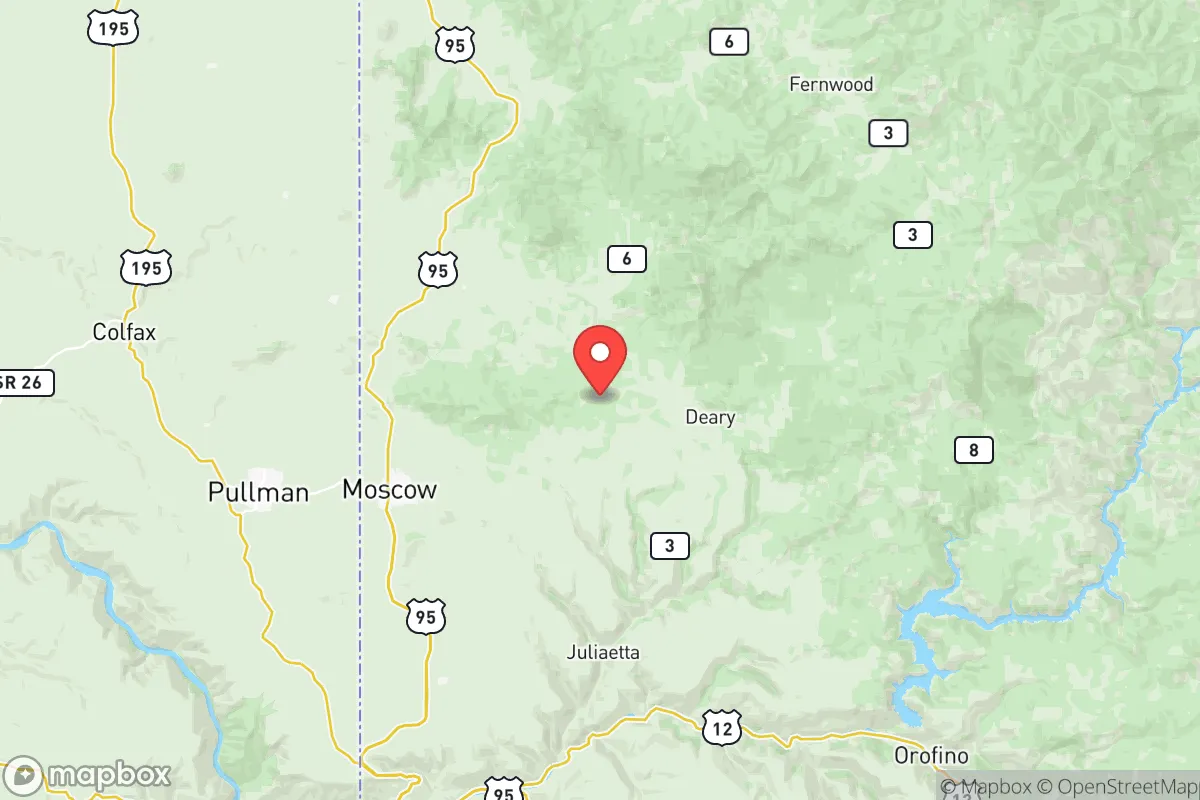
Latah County offers a compelling strategic profile for relocators prioritizing disaster readiness and self-sufficiency, combining the resilience of a rural, resource-rich environment with the practical advantages of being near a small but functional urban center. Anchored by the city of Moscow, the county sits in the Palouse region of northern Idaho, a landscape of rolling wheat fields and forested hills that provides natural isolation from major metropolitan targets. The county’s location—roughly 80 miles south of Spokane, Washington, and 300 miles north of Boise—places it outside the immediate fallout zones of major cities, military installations, or industrial corridors, while still offering access to regional supply chains and healthcare. For a conservative-leaning audience focused on long-term stability, Latah County’s combination of low population density, abundant natural resources, and distance from high-value targets makes it a strong candidate for a strategic relocation.
Geographic position and natural advantages for long-term stability
Latah County’s geography is its primary strategic asset. The county sits in the Palouse, a region defined by deep, fertile soils and a temperate climate that supports year-round agriculture. The area receives an average of 20–25 inches of precipitation annually, enough to sustain dryland farming without reliance on irrigation, which is a critical advantage in a grid-down scenario. The county’s elevation ranges from 2,500 to 4,000 feet, with the Moscow Mountains and the St. Joe National Forest providing rugged terrain that limits easy access from major highways. The county seat, Moscow, is the only incorporated city of significant size, with a population of around 26,000, while smaller towns like Troy, Potlatch, and Deary offer even lower density. This distribution means that a relocator can choose a property with substantial buffer from neighbors, while still being within a 20-minute drive of Moscow’s hospitals, grocery stores, and hardware suppliers. The county is also bordered by the Clearwater River to the south and the Palouse River to the north, providing natural water sources and defensible boundaries. For a reader thinking about self-sufficiency, the combination of arable land, reliable rainfall, and low population density creates a foundation that few other regions in the inland Northwest can match.
Risks, exposures, and proximity to fallout-relevant landmarks
While Latah County is far from the highest-risk zones, it is not immune to man-made and natural threats. The most significant man-made risk comes from the Hanford Site, a decommissioned nuclear production facility located roughly 120 miles west in Washington state. Hanford contains the largest volume of radioactive waste in the Western Hemisphere, and a major accident or attack could produce a plume that, depending on wind patterns, might affect eastern Washington and northern Idaho. However, Latah County’s position east of the Cascade Range and the prevailing westerly winds mean that a Hanford release would likely be carried northeast toward Spokane and the Idaho Panhandle, not directly over Moscow. Still, a relocator should monitor Hanford’s status and have a plan for sheltering in place if winds shift. Another risk is the proximity to Spokane, a city of 230,000 with a major Air Force base (Fairchild AFB) and a regional transportation hub. While Spokane is not a primary nuclear target, it could be a secondary target in a conflict, and fallout from a strike there could drift into Latah County. The county also sits near the Interstate 90 corridor, a major east-west route that could become a chokepoint for evacuation or supply movement during a crisis. Natural risks are lower: the region has minimal earthquake activity, no active volcanoes, and a low risk of wildfires compared to central Idaho, though the dry summer months can produce grass fires in the Palouse. Flooding is limited to low-lying areas near the Palouse River, and severe winter storms are manageable with proper preparation. Overall, the risk profile is moderate, with the main exposures being distant nuclear sites and the potential for secondary fallout from Spokane.
Practical resilience for a relocator: food, water, energy, and defensibility
For a relocator serious about self-sufficiency, Latah County offers strong practical advantages. Food production is the standout: the Palouse is one of the most productive wheat-growing regions in the United States, and the county also supports lentils, barley, and canola. A 5–10 acre property can easily sustain a family with a garden, small orchard, and a few livestock. The University of Idaho in Moscow runs an extension program that provides free workshops on soil management, food preservation, and animal husbandry—a resource that adds real value for newcomers. Water availability is excellent: the county’s aquifers are shallow and reliable, and most rural properties have private wells with yields of 10–30 gallons per minute. Surface water from the Palouse River and its tributaries is accessible, though treatment would be needed. Energy resilience is mixed: the grid is stable, but rural areas can experience outages during winter storms. Solar potential is moderate—the region gets about 200 sunny days per year, less than the Southwest but enough for a well-sized off-grid system with battery storage. Wood heating is common, and the surrounding national forests provide ample firewood. Defensibility is a key advantage: the county’s rolling hills and forested draws create natural chokepoints, and the low population density means that a well-chosen property can be difficult to approach without detection. Moscow is a liberal-leaning college town, but the surrounding rural areas lean conservative, and the county’s gun culture is strong—Idaho has no permit requirement for concealed carry, and most rural residents own firearms. For a relocator, this means a community that is both self-reliant and likely to organize mutual aid in a crisis. The main practical limitation is healthcare: Moscow has a small hospital (Gritman Medical Center) with basic emergency services, but serious trauma or chronic care requires a 90-minute drive to Spokane. A relocator with medical needs should plan for this gap.
The overall strategic picture for Latah County is one of strong but not absolute resilience. It is not a remote bunker location—it is a working agricultural region with a functional small city, which means it offers both isolation and access. The county’s distance from major targets, its abundant natural resources, and its self-sufficient population make it a solid choice for a relocator who wants to be prepared without living off-grid in a wilderness. The main trade-offs are the moderate risk from distant nuclear sites (Hanford and Spokane) and the limited local healthcare. For a conservative-leaning family or individual who values community, land, and preparedness, Latah County represents a balanced option: not the most extreme in terms of isolation, but one of the most practical for long-term sustainable living. The key is to choose a property with good water, defensible terrain, and a buffer from Moscow’s urban fringe—and to stay informed about Hanford’s status. With those precautions, the county offers a strategic foundation that can weather most disruptions.

* Values derived from national, state, county, city and local statistics and may differ in a specific area. Last updated: 2026-08-25T13:55:50.000Z
Narrative content on this page is AI-generated and may contain mistakes. Verify any details that matter before acting on them.
ReloMaps may earn a commission from affiliate links at no extra cost to you.

