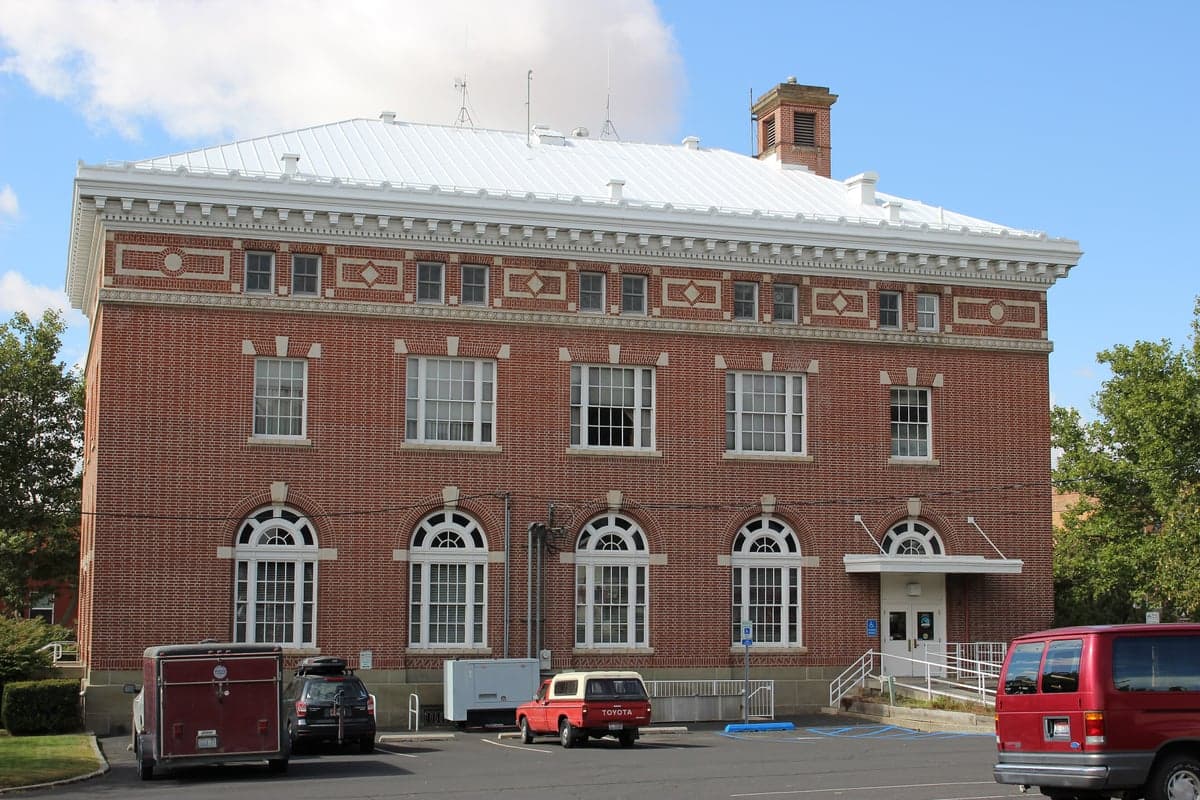
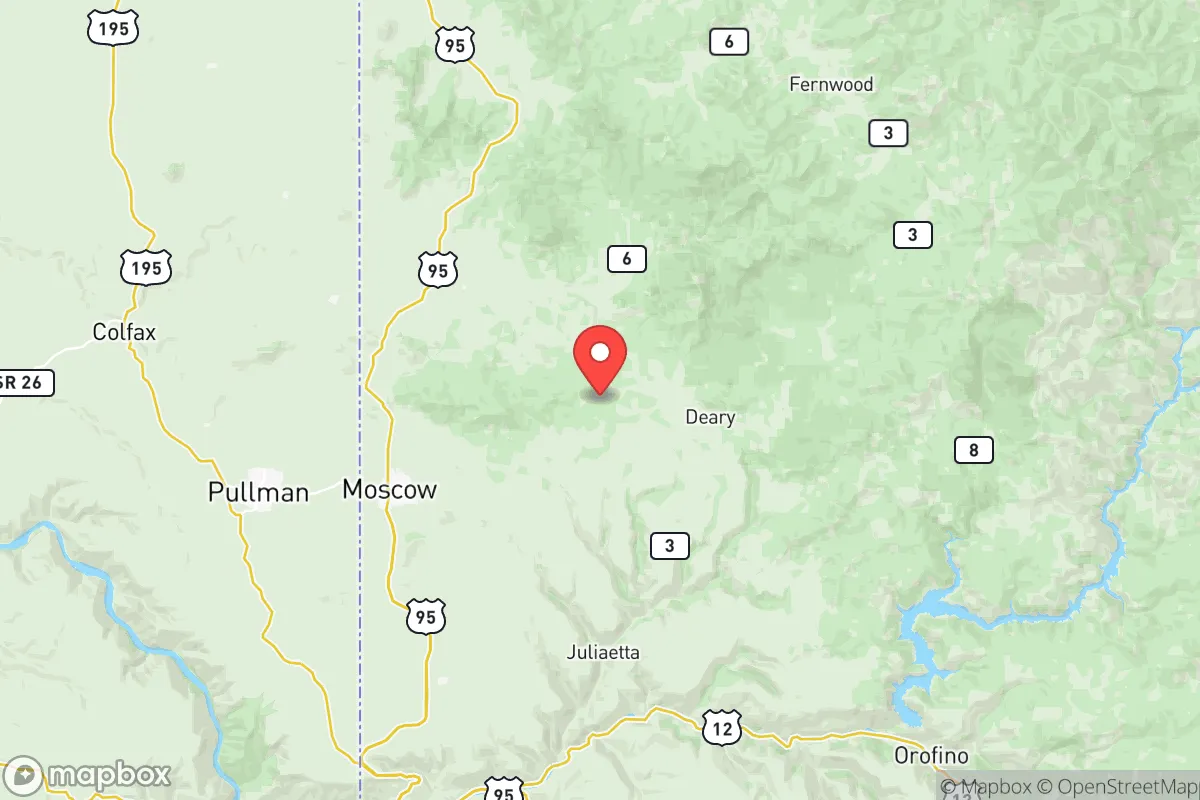
Photo: Wikipedia
Demographics of Latah County
Affluence Level in Latah County
A middle-class area roughly in line with national averages across income, home values, education, and employment.
People of Latah County
Latah County, Idaho, is home to roughly 40,315 residents, a population that is predominantly white (85.6%) and well-educated, with nearly 45% holding a college degree. The county’s character is shaped by its dual identity: the university town of Moscow anchors a progressive, academic core, while the surrounding small towns and rural areas retain a distinctly conservative, agricultural heritage. This blend of a land-grant university community and a working landscape of wheat fields and timber creates a population that is both politically diverse and culturally rooted in the region’s pioneer and logging past.
Settlement & growth (pre-1960)
The original inhabitants of what is now Latah County were the Nez Perce (Niimíipuu) people, who for centuries used the Palouse region as seasonal hunting and gathering grounds. The Nez Perce were forcibly removed to reservations in the 1850s and 1860s, with the 1863 treaty drastically reducing their land base. The first permanent American settlers arrived in the 1870s, drawn by the Homestead Act and the promise of fertile, rolling hills ideal for dryland wheat farming. These early pioneers were overwhelmingly of Northern European stock—English, Scots-Irish, and German—who came from the Midwest and the Pacific Northwest.
The arrival of the transcontinental railroad’s Northern Pacific line in the 1880s triggered the county’s first major growth spurt. The town of Moscow was platted in 1871 and became the county seat and commercial hub. The establishment of the University of Idaho in Moscow in 1889 fundamentally altered the county’s trajectory, drawing faculty, students, and support staff from across the country. Simultaneously, the timber industry boomed in the county’s northern reaches, leading to the founding of mill towns like Potlatch (1905), a company town built by the Potlatch Lumber Company, and Bovill and Deary, which served the logging camps and railroad lines. These towns attracted a wave of Scandinavian immigrants—Swedes, Norwegians, and Finns—who worked the forests and mills, as well as a smaller number of Italian and Slavic laborers.
By 1910, Latah County’s population had reached over 18,000, a figure that would remain relatively stable for decades. The agricultural towns of Troy, Genesee, and Juliaetta grew as service centers for the surrounding wheat and pea farms. The Dust Bowl and Great Depression of the 1930s brought a modest influx of displaced farmers from the Great Plains, but the county’s population growth remained slow through the 1950s, as the timber industry mechanized and farm consolidation reduced the number of rural families. The county’s population in 1960 stood at 21,170, still predominantly white and native-born, with a strong rural and small-town identity.
Modern era (post-1965)
The 1965 Hart-Cellar Act had a minimal direct impact on Latah County’s demographics. The county’s foreign-born population today is just 2.6%, far below the national average. The most significant demographic shift since the 1960s has been the growth of the University of Idaho, which now enrolls over 11,000 students. This has steadily increased the county’s college-educated share (now 44.9%) and brought a more transient, younger population to Moscow. The university has also been the primary driver of the county’s modest racial and ethnic diversification. The Asian (East/Southeast Asian) population, at 1.7%, is largely composed of international students and faculty, many of whom are Chinese, Korean, or Vietnamese, and they concentrate almost entirely in Moscow. The Indian (subcontinent) population, at 0.4%, follows a similar pattern, tied to the university’s graduate programs and tech-related fields.
The Hispanic population, now 5.1%, has grown more organically, driven by labor demand in agriculture and the timber industry. Many Hispanic residents work in the potato and pea processing plants in Moscow and Potlatch, or in the region’s dairy operations. This community is more dispersed across the county than the university-linked Asian population, with growing numbers in Troy and Genesee. The Black population remains very small at 1.0%, concentrated among university faculty and staff in Moscow. Domestic migration has been modest; the county has not experienced the explosive growth seen in Idaho’s Treasure Valley (Boise area). Instead, Latah has seen a slow, steady trickle of retirees and remote workers drawn by the lower cost of living and outdoor recreation, settling in Moscow and the smaller towns like Deary and Bovill.
The future
Latah County’s population is projected to grow slowly, likely reaching 45,000-48,000 by 2040. The county will become slightly more diverse, but will remain overwhelmingly white. The Hispanic share is expected to rise to 7-8%, driven by natural increase and continued labor migration. The Asian and Indian populations will fluctuate with university enrollment trends, but are unlikely to exceed 3% combined. The most significant demographic change will be the aging of the population, as the large cohort of baby boomers in the rural towns retires, while Moscow continues to attract younger residents. The cultural divide between the university community and the rural towns may widen, as Moscow becomes more secular and progressive, while towns like Potlatch and Troy remain more conservative and church-oriented. New residential development is concentrated in Moscow and along the Highway 8 corridor toward Pullman, Washington, with some infill in the smaller towns.
For someone moving to Latah County today, the area offers a choice between two distinct lifestyles: the college-town energy and amenities of Moscow, or the quieter, more traditional pace of the surrounding farm and timber communities. The county’s population is stable, educated, and rooted in its history, but it is not a place of rapid change or high diversity. It is a place where the legacy of Scandinavian loggers, Midwestern wheat farmers, and university academics continues to shape the character of the people who call it home.

* Values derived from national, state, county, city and local statistics and may differ in a specific area. Last updated: 2026-08-25T13:55:50.000Z
Narrative content on this page is AI-generated and may contain mistakes. Verify any details that matter before acting on them.
ReloMaps may earn a commission from affiliate links at no extra cost to you.

