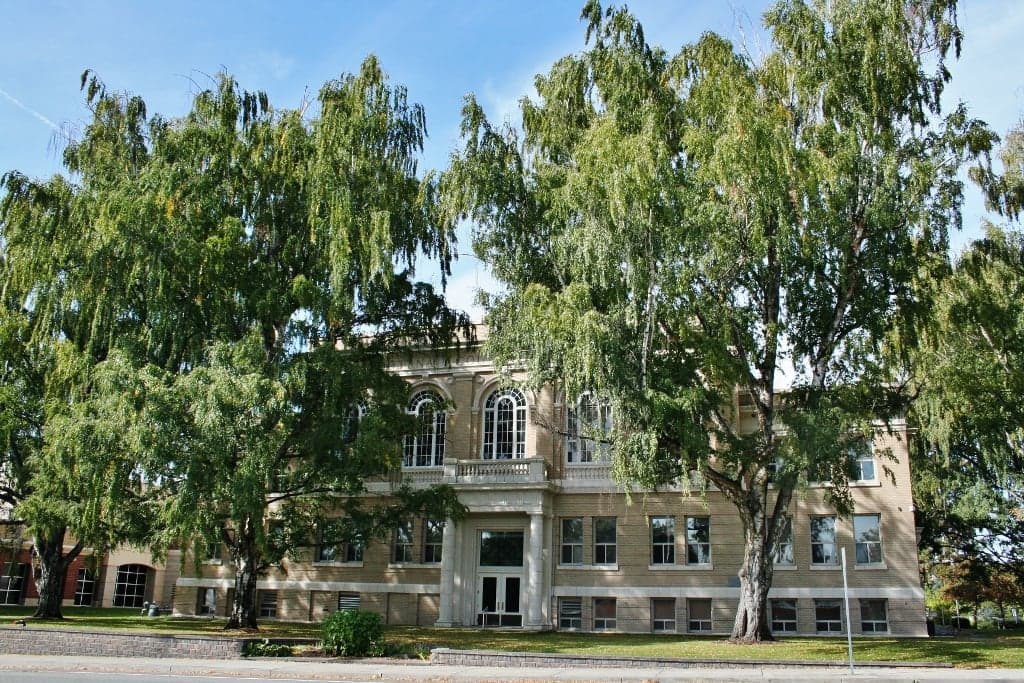
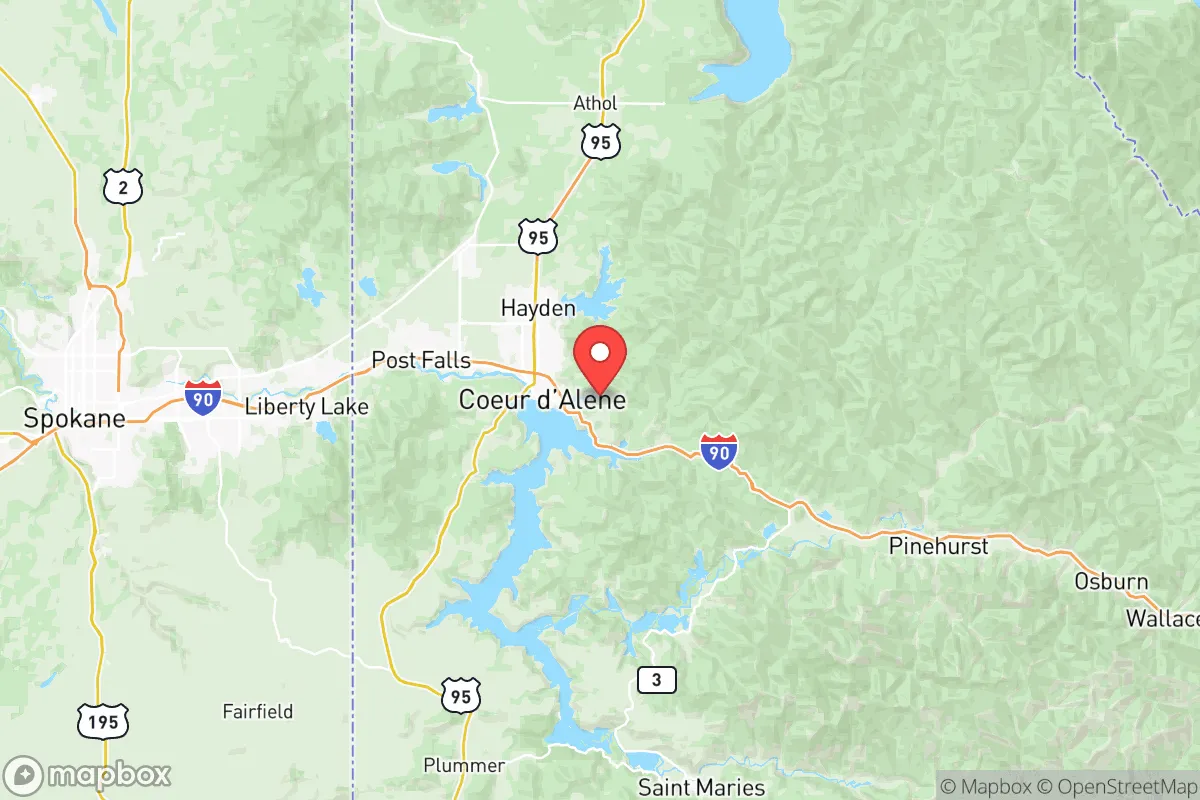
Photo: Wikipedia
Political ClimatePolitical Climate in Kootenai County
Showing district-level results — no local-only data available.
State Political ClimatePolitical Climate in Idaho
State Political AnalysisPolitical Environment in the State
Idaho is one of the most reliably Republican states in the nation, with a Cook PVI of R+18, meaning it votes about 18 points more Republican than the national average in presidential elections. Over the last 20 years, the state has shifted from a more libertarian-leaning, live-and-let-live conservatism toward a more culturally assertive, Trump-aligned Republican dominance, driven by explosive growth in the Boise metro and an influx of conservative migrants from California, Washington, and Oregon. The Democratic Party has virtually no statewide elected officials, and the state legislature is a supermajority of Republicans who have increasingly focused on parental rights, gun rights, and limiting government overreach in education and health.
Urban vs. rural divide
The political map of Idaho is starkly divided between a handful of growing urban islands and a vast, deeply red rural expanse. Ada County (Boise) and Canyon County (Nampa, Caldwell) together hold over 40% of the state’s population and are the primary battlegrounds. Boise itself has trended slightly more moderate—it voted for Joe Biden in 2020 by a narrow margin—but the surrounding suburbs like Meridian, Eagle, and Star remain solidly Republican. The real engine of the state’s conservative majority is the rural interior: Idaho County, Lemhi County, and Boundary County routinely vote 80%+ Republican. The Panhandle region, anchored by Coeur d’Alene, has seen an influx of conservative refugees from Washington and California, pushing what was once a swing area firmly into the red column. The only reliably blue pockets are the university towns of Moscow (University of Idaho) and Pocatello (Idaho State University), plus a small slice of Boise’s urban core. If you’re looking for a place where your conservative values are the norm, anywhere outside of downtown Boise or Moscow will feel like home.
Policy environment
Idaho’s policy environment is a model of limited government, especially compared to its West Coast neighbors. The state has a flat income tax of 5.8% (recently cut from 6% in 2023), no estate tax, and a relatively low property tax burden thanks to a homeowner’s exemption that shields up to $125,000 of assessed value. The legislature has aggressively pursued school choice: in 2023, it passed a $50 million Empowering Parents grant program that gives families up to $3,000 per child for private school tuition, tutoring, or homeschool materials. On healthcare, Idaho is one of the few states that has not expanded Medicaid under the Affordable Care Act (though voters passed a ballot initiative in 2018 that forced a partial expansion). The state has also enacted some of the nation’s strongest election integrity laws, including a voter ID requirement and a ban on ballot drop boxes in most counties. For a conservative family, the policy environment here is a breath of fresh air—low taxes, school choice, and a government that mostly stays out of your business.
Trajectory & freedom
Idaho is on a trajectory of expanding personal freedom, particularly in the areas of gun rights, parental rights, and medical autonomy. In 2023, the legislature passed HB 124, which prohibits any state or local enforcement of federal gun laws that infringe on the Second Amendment—a direct response to federal overreach. The same year saw the passage of the Parental Rights in Education Act, which requires schools to notify parents of any curriculum involving sexuality or gender identity and gives parents the right to opt their children out. On medical freedom, Idaho passed SB 1138 in 2023, which bans any government mandate for vaccines or medical procedures, including COVID-19 shots, and prohibits discrimination based on vaccination status. The state has also moved to protect property rights, with a 2022 law limiting the use of eminent domain for private economic development. However, there are warning signs: the rapid population growth is straining infrastructure and driving up housing costs, which could eventually lead to calls for more government intervention. For now, though, Idaho is one of the few states where freedom is actually expanding, not contracting.
Civil unrest & political movements
Idaho has a history of anti-government and militia movements, particularly in the Panhandle and central Idaho. The Ruby Ridge standoff in 1992 happened just over the border in northern Idaho, and the area still has a strong strain of libertarian and constitutionalist sentiment. In recent years, the most visible political flashpoints have been around school board meetings and library content. In 2022 and 2023, conservative parents organized to challenge sexually explicit books in school libraries, leading to several high-profile removals in districts like West Ada (Meridian) and Bonner County (Sandpoint). Immigration politics are less heated than in border states, but there is a growing concern about the influx of migrants through the southern border and their potential relocation to Idaho via federal programs. The state has no sanctuary cities, and Ada County Sheriff’s Office has a strong partnership with ICE. Election integrity protests have been minimal, as most Idahoans trust their voting system. The overall vibe is one of quiet, determined resistance to federal overreach, not chaotic street protests. You won’t see many protests in the streets, but you will see a lot of “Don’t Tread on Me” flags flying from pickup trucks.
Projection
Over the next 5-10 years, Idaho will likely become more conservative, not less, despite the influx of new residents. The reason is simple: the people moving here are overwhelmingly fleeing progressive policies in California, Oregon, and Washington. They are not bringing their old politics with them—they are coming specifically because Idaho is conservative. The Boise metro will continue to grow, but the political center of gravity will shift toward the more rural and exurban areas like Kuna, Middleton, and Star, where new subdivisions are filling up with families who want lower taxes and more freedom. The state legislature will likely push for further tax cuts, expanded school choice, and stronger protections for gun rights and parental authority. The biggest risk is that rapid growth could overwhelm local governments, leading to zoning fights and infrastructure debates that might tempt some Republicans to embrace more government control. But the cultural and political momentum is clearly toward more liberty, not less. If you move here now, you can expect to find a state that in a decade will be even more aligned with conservative values than it is today.
Bottom line for a new resident: Idaho is a safe bet for anyone who values personal freedom, low taxes, and a government that respects parental rights and the Second Amendment. The political climate is overwhelmingly conservative, and the trajectory is toward even more liberty. The only real downsides are the rising cost of housing in the Boise area and the occasional culture war flare-up in school board meetings. If you’re looking for a place where your values are the norm and the government stays out of your life, Idaho is one of the best options in the country right now.

* Values derived from national, state, county, city and local statistics and may differ in a specific area. Last updated: 2026-05-28T00:23:13.000Z
Narrative content on this page is AI-generated and may contain mistakes. Verify any details that matter before acting on them.
ReloMaps may earn a commission from affiliate links at no extra cost to you.

