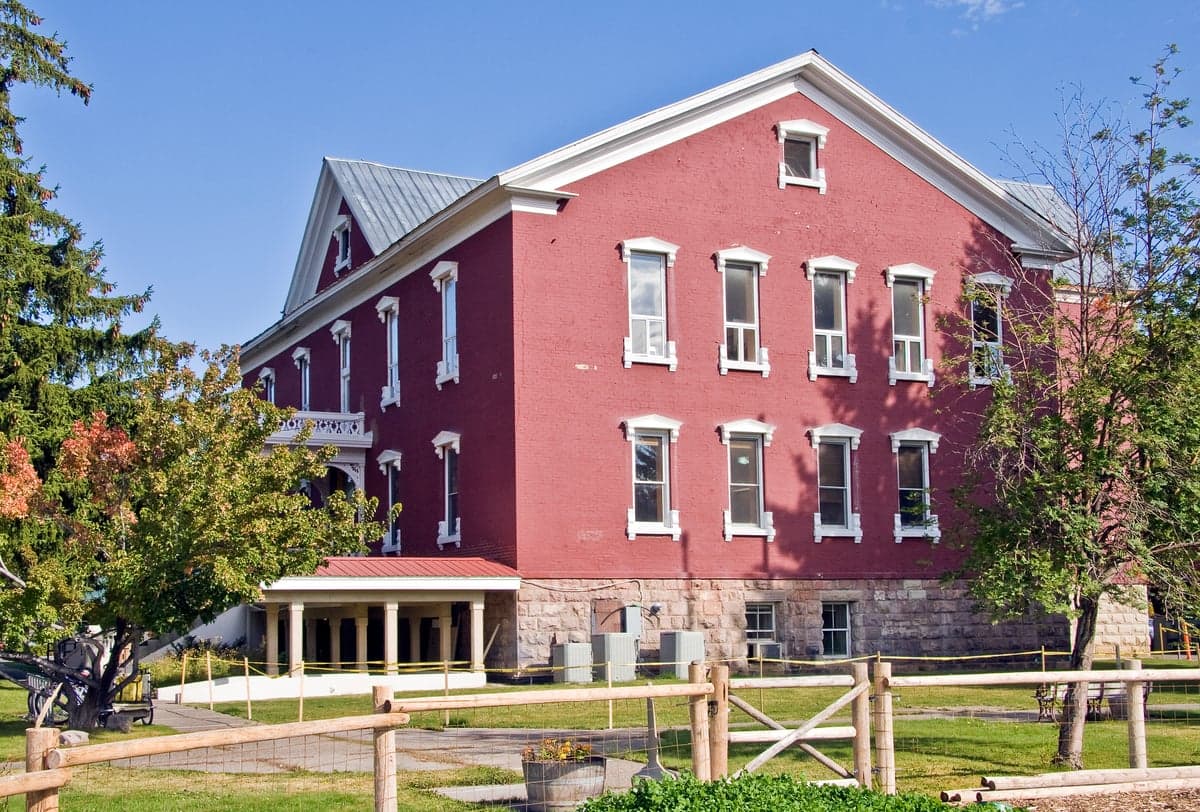
Photo: Wikipedia
Demographics of Blaine County
Affluence Level in Blaine County
An upper-middle-class area. Household wealth, education levels, and homeownership run ahead of national benchmarks.
People of Blaine County
Blaine County, Idaho, is home to 24,579 residents, a population that is 72.7% white, 21.2% Hispanic, and 9.5% foreign-born, with a notably high 45.5% holding a college degree. The county’s character is defined by the sharp contrast between the resort-driven economy of the Sun Valley area and the working-class agricultural and service communities that support it. This is a place where a liberal-leaning, wealthy, and transient second-home owner population coexists with a more conservative, established, and increasingly Hispanic year-round workforce, creating a unique demographic and cultural tension.
Settlement & growth (pre-1960)
Long before European settlement, the area now known as Blaine County was the seasonal hunting and gathering ground of the Northern Shoshone and Bannock peoples, who followed game and harvested roots like camas in the Wood River Valley. The first significant American presence came with the discovery of gold and silver in the 1870s and 1880s, which triggered a classic mining rush. Prospectors, many of them Cornish, Irish, and German immigrants, flooded into the rugged mountains, founding the towns of Ketchum and Hailey as supply hubs. The boom was intense but short-lived; by the early 1900s, most mines had played out, and the population plummeted.
The county’s modern identity began to take shape in the 1930s, when Averell Harriman, the Union Pacific Railroad chairman, developed the Sun Valley ski resort, the first destination winter sports resort in the United States. This transformed the area from a fading mining district into a playground for the wealthy and famous. The resort drew a new wave of in-migrants: ski instructors, hotel workers, and service staff, many from the Northeast and Europe. The county’s population remained small and overwhelmingly white through the 1950s, with the economy split between ranching in the Bellevue and Carey areas and the nascent tourism industry in the north.
Modern era (post-1965)
The post-1965 era, driven by the Hart-Cellar Act, did not dramatically alter Blaine County’s ethnic composition through direct immigration from new source countries. Instead, the most significant demographic shift came from domestic migration and the growth of the Hispanic population. The 1970s and 1980s saw a steady influx of Mexican and Central American immigrants, drawn by year-round jobs in the service sector—hotel housekeeping, restaurant kitchens, landscaping, and construction—that the expanding Sun Valley and Ketchum resort economy created. These workers settled primarily in Hailey and Bellevue, where housing was more affordable, forming the core of the county’s now 21.2% Hispanic population.
Simultaneously, a wave of affluent domestic migrants—often from California, New York, and other coastal states—began buying second homes and relocating to the area, drawn by the skiing, fly-fishing, and mountain lifestyle. This group, overwhelmingly white and highly educated, concentrated in Sun Valley and Ketchum, driving up real estate prices and reshaping the local economy. The county’s college-educated share, now 45.5%, is a direct reflection of this in-migration. The East/Southeast Asian population remains very small at 0.5%, and the Black population is negligible at 0.4%, with no significant Indian subcontinent community. The foreign-born share of 9.5% is almost entirely accounted for by the Hispanic population, many of whom are naturalized citizens or permanent residents.
Suburbanization has been limited by the narrow valley geography and strict land-use regulations. Instead of sprawling subdivisions, growth has concentrated in the existing towns, with Hailey emerging as the commercial and residential center for the workforce, while Ketchum and Sun Valley remain the high-end resort and retirement hubs. The county’s political character reflects this divide: the resort towns lean Democratic, while the agricultural and more rural areas lean Republican, creating a competitive swing county in state elections.
The future
Blaine County is not homogenizing; it is tribalizing into distinct economic and cultural enclaves. The Hispanic community in Hailey and Bellevue is growing, both through continued immigration and natural increase, and is becoming more established, with second-generation residents entering the professional class. However, the high cost of housing is pushing some working-class families, including Hispanic residents, to seek more affordable areas in neighboring counties like Gooding or Lincoln.
The affluent, white, and highly educated population in Ketchum and Sun Valley is also growing, driven by remote work and the continued appeal of the resort lifestyle. This group is aging, with a significant retiree component, and is likely to continue driving demand for high-end services and healthcare. The county’s overall population growth is slow but steady, constrained by geography and housing costs. The next 10-20 years will likely see a continuation of these trends: a bifurcated community where the resort economy and the service economy remain interdependent but socially separate, with the Hispanic share of the population slowly increasing and the white share slowly declining.
For someone moving in now, Blaine County offers a high quality of life for those who can afford it, but the experience will differ sharply depending on whether you are buying a home in Sun Valley or renting in Bellevue. The county is becoming a place of distinct, parallel communities rather than a single melting pot, and new residents should be prepared for a social landscape defined by economic class and geography as much as by shared identity.

* Values derived from national, state, county, city and local statistics and may differ in a specific area. Last updated: 2026-05-27T19:05:07.000Z
Narrative content on this page is AI-generated and may contain mistakes. Verify any details that matter before acting on them.
ReloMaps may earn a commission from affiliate links at no extra cost to you.

