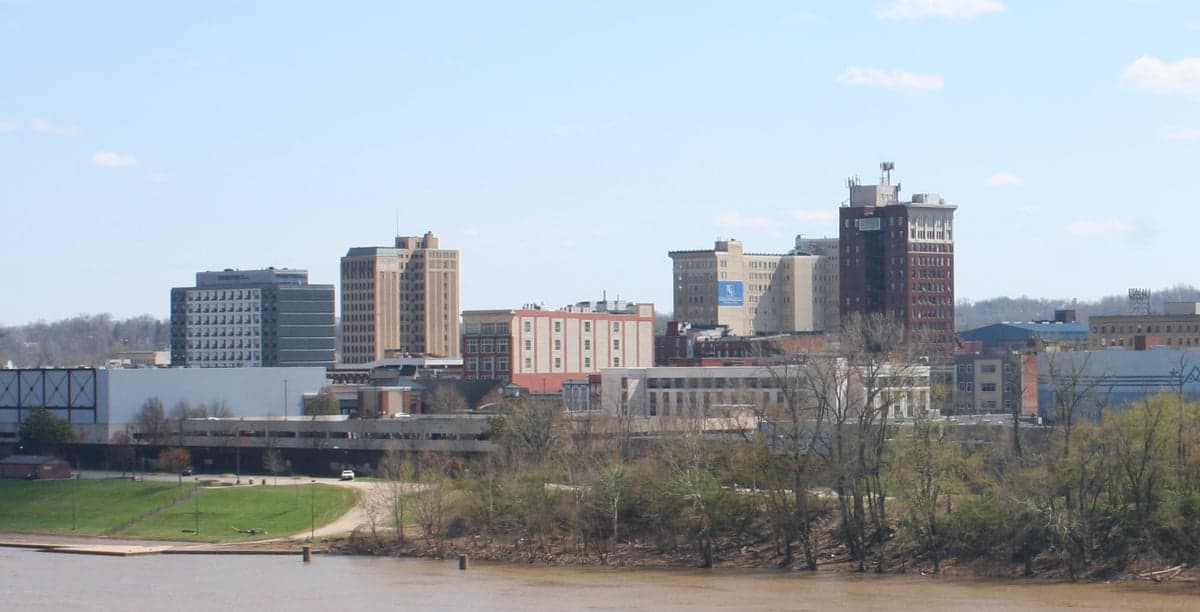
Photo: Wikipedia
Political ClimatePolitical Climate in Huntington, WV
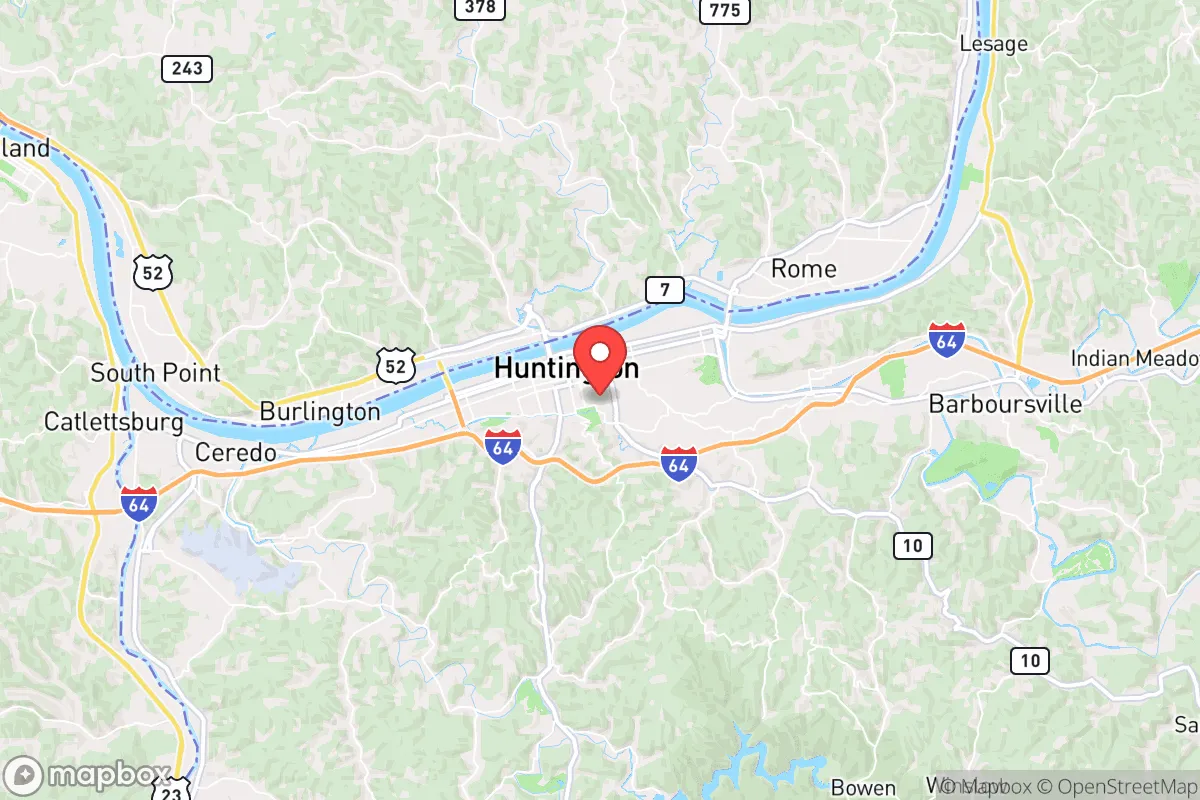
District shown is the primary district for this city’s centroid. Cities may span multiple districts.
Local Political AnalysisPolitical Analysis of Huntington, WV
Huntington, West Virginia, sits deep in solidly red territory, with a Cook PVI of R+22, meaning the district votes about 22 points more Republican than the national average. That’s not just a number—it reflects a community that has long valued personal responsibility, local control, and a healthy skepticism of government overreach. While the city itself has historically leaned more moderate than the surrounding rural areas, the overall trajectory has been a steady shift rightward over the past decade, especially as national Democrats have moved further left on issues like energy, gun rights, and federal spending. You can feel it in the conversations at local diners and at the county commission meetings—people here remember when Huntington was a union stronghold, but those days are fading fast.
How it compares
Drive 50 miles north to Charleston, and you’ll find a slightly more mixed political scene, thanks to state government jobs and a larger university presence, but even there the legislature is overwhelmingly Republican. The real contrast is with places like Morgantown, home to West Virginia University, which has a younger, more transient population and leans noticeably left—think bike lanes, organic co-ops, and city council debates over sanctuary city policies. Down in Huntington, you don’t see that. The surrounding towns—Barboursville, Milton, and Kenova—are even more conservative, with strong Second Amendment traditions and a deep distrust of federal mandates. Huntington itself has a small but vocal progressive element, mostly tied to Marshall University, but it hasn’t gained real traction in local elections. The city council and mayor’s office have remained firmly in the hands of moderates and conservatives who prioritize keeping taxes low and police funded.
What this means for residents
For folks living here, the political climate translates into a few concrete realities. You’re not going to see the kind of zoning overreach or business-killing regulations that plague cities like Portland or even Richmond. Property taxes are low, and the county sheriff’s office isn’t shy about enforcing the law—no defund-the-police nonsense here. On the flip side, the area’s heavy reliance on federal funding for healthcare and infrastructure creates a weird tension: people hate Washington telling them what to do, but they also depend on those checks. That’s the rub. The biggest concern I hear from neighbors is the slow creep of progressive ideology into the schools and local nonprofits. There’s been pushback against DEI initiatives at Marshall, and the school board has had some heated meetings over curriculum transparency. So far, common sense has held the line, but you have to stay vigilant.
One thing that sets Huntington apart culturally is its blue-collar grit mixed with a genuine Appalachian hospitality. You won’t find the aggressive political signage or lawn battles you see in swing states—people here tend to keep their politics private unless they know you well. But when the conversation turns to things like vaccine mandates or federal land grabs, the mood gets serious fast. Looking ahead, the biggest threat to the area’s conservative character is probably population decline and the influx of remote workers from blue states. If that trend accelerates, you could see a slow shift in local elections. For now, though, Huntington remains a place where the government stays out of your business, and that’s exactly how most folks want it.

State Political ClimatePolitical Climate in West Virginia
State Political AnalysisPolitical Environment in the State
West Virginia has long been one of the most reliably Republican states in the nation, with a partisan lean of roughly +39 points for the GOP in the 2024 presidential election. The state’s political identity has shifted dramatically over the past two decades, moving from a competitive, union-heavy Democratic stronghold in the 1990s to a deep-red bastion today. This transformation is driven largely by cultural and economic realignment, with coal country and rural communities abandoning the national Democratic Party over energy policy, gun rights, and social issues. The dominant coalition is now a mix of rural conservatives, evangelical Christians, and working-class voters who prioritize economic populism and limited government, though the state’s small urban centers like Morgantown and Charleston still lean left.
Urban vs. rural divide
The political map of West Virginia is starkly divided between its few urban islands and the vast rural expanse. The state’s largest city, Charleston, and its surrounding Kanawha County vote reliably Democratic, with Biden winning the county by about 10 points in 2020. Morgantown, home to West Virginia University, is another blue dot, driven by a younger, more educated population and a significant student vote. However, these two cities are surrounded by a sea of deep-red counties. Mingo County, Logan County, and McDowell County in the southern coalfields routinely deliver 80%+ margins for Republicans. The Eastern Panhandle, including Berkeley County and Jefferson County, has seen explosive growth from Washington, D.C., exurbs, but these newcomers are largely conservative-leaning, reinforcing the GOP hold. The divide isn’t just about population density—it’s cultural. Rural voters see the state’s economy as tied to extraction industries and personal liberty, while urbanites in Charleston and Morgantown prioritize education and healthcare access.
Policy environment
West Virginia’s policy environment is aggressively conservative, with a focus on low taxes, deregulation, and cultural traditionalism. The state has no personal income tax on Social Security benefits and a flat 4.12% income tax rate, with a goal of eliminating it entirely by 2026 under Governor Jim Justice’s tax reform plan. Property taxes are among the lowest in the nation, capped by the state constitution. The regulatory posture is business-friendly, especially for energy and manufacturing, with the state offering significant tax credits for new investments. Education policy has been a flashpoint: the state passed a universal school choice law in 2021, allowing public funds to follow students to private or homeschool options, and it has one of the strongest parental rights laws in the country, requiring schools to notify parents of any changes to a child’s health or emotional well-being. Healthcare is a mixed bag—Medicaid expansion under the ACA was accepted, but the state has resisted Obamacare mandates and maintains a strong pro-life stance, with a near-total abortion ban in effect since 2022. Election laws are strict: voter ID is required, early voting is limited to 10 days, and absentee voting requires an excuse. The state has no ballot harvesting or same-day registration, which conservatives view as protecting election integrity.
Trajectory & freedom
West Virginia is trending toward greater personal freedom in several key areas, though not without controversy. The most significant recent expansion of liberty came with the 2021 passage of Constitutional Carry, allowing any law-abiding adult to carry a concealed firearm without a permit. This was followed by the Second Amendment Preservation Act, which prohibits state cooperation with federal gun laws deemed unconstitutional. On parental rights, the state passed the Parental Bill of Rights in 2023, requiring schools to obtain parental consent before administering surveys or providing instruction on sexuality or gender identity. Medical freedom has been a mixed bag: the state banned vaccine mandates for public employees and students, but it also maintains strict vaccine requirements for school entry. Property rights are strong, with no statewide zoning mandates and a robust right-to-farm law protecting agricultural operations from nuisance lawsuits. However, the state’s heavy reliance on federal funding (about 40% of the state budget) creates a tension between local control and federal strings. The trajectory is clearly toward more individual autonomy, but the state’s economic dependence on Washington could limit future moves.
Civil unrest & political movements
West Virginia has a history of labor activism, but modern political movements are dominated by conservative grassroots organizations. The West Virginia Citizens Defense League is a powerful gun rights group that successfully pushed Constitutional Carry. The Family Policy Council drives the parental rights and school choice agenda. On the left, the West Virginia Working Families Party has a small but vocal presence in Charleston and Morgantown, organizing around healthcare and union issues. The 2018 teachers’ strike was a major flashpoint, shutting down schools statewide for nine days and forcing a 5% pay raise—a rare victory for organized labor in a right-to-work state. Immigration politics are muted, as West Virginia has one of the smallest foreign-born populations in the country, but the state passed a law requiring local law enforcement to cooperate with ICE. There have been no significant sanctuary city movements. Election integrity controversies have been minimal, though the state’s Republican secretary of state has aggressively purged voter rolls and defended the voter ID law. A new resident would notice a general lack of visible political conflict—most people agree on the basics of limited government and cultural conservatism, making it a relatively peaceful place politically.
Projection
Over the next 5-10 years, West Virginia is likely to become even more conservative, driven by two demographic trends. First, the state’s population is aging and shrinking, with young people leaving for jobs in cities like Charlotte or Columbus. This exodus reduces the liberal-leaning youth vote. Second, in-migration from the Eastern Panhandle, particularly from Maryland and Virginia, is bringing more conservative-leaning families seeking lower taxes and less regulation. The state’s Republican supermajority in the legislature is expected to push for a complete elimination of the income tax, further reducing the size of government. However, the state’s heavy reliance on federal coal subsidies and Medicaid funding creates a vulnerability—if federal policy shifts left, West Virginia could face budget crises that force tax increases or service cuts. The cultural trajectory is clear: expect more school choice expansion, further gun rights protections, and continued resistance to federal mandates. A new resident moving in now should expect a state that values personal liberty, low taxes, and traditional values, but one that is economically fragile and demographically challenged.
For a conservative-leaning individual or family considering relocation, West Virginia offers a rare combination of low taxes, strong gun rights, parental control over education, and a culture that respects personal freedom. The trade-offs are real: limited job opportunities outside of energy and healthcare, a shrinking population, and a heavy reliance on federal dollars. But if you value a state where your voice matters in local politics, where your children’s education is under your control, and where the government generally stays out of your life, West Virginia is one of the few places left that delivers on those promises. Just be prepared for the winters and the winding roads—and know that your neighbors will likely share your values.
* Values derived from national, state, county, city and local statistics and may differ in a specific area. Last updated: 2026-05-01T19:31:08.000Z
Narrative content on this page is AI-generated and may contain mistakes. Verify any details that matter before acting on them.
ReloMaps may earn a commission from affiliate links at no extra cost to you.

