Photo: Wikipedia
Demographics of Horace, ND
Affluence Level in Horace, ND
An upper-middle-class area. Household wealth, education levels, and homeownership run ahead of national benchmarks.
People of Horace, ND
The people of Horace, North Dakota, today number roughly 3,964, forming a rapidly growing, predominantly white, family-oriented community with a distinctly suburban character. The city is notably homogeneous — 87.1% white and 1.4% foreign-born — yet it is also one of the most educated small towns in the state, with 43.5% of adults holding a college degree. Horace’s identity is shaped by its role as a bedroom community for nearby Fargo, attracting young families and professionals seeking newer housing, lower taxes, and a small-town feel within commuting distance of a major metro area.
How the city was settled and grew
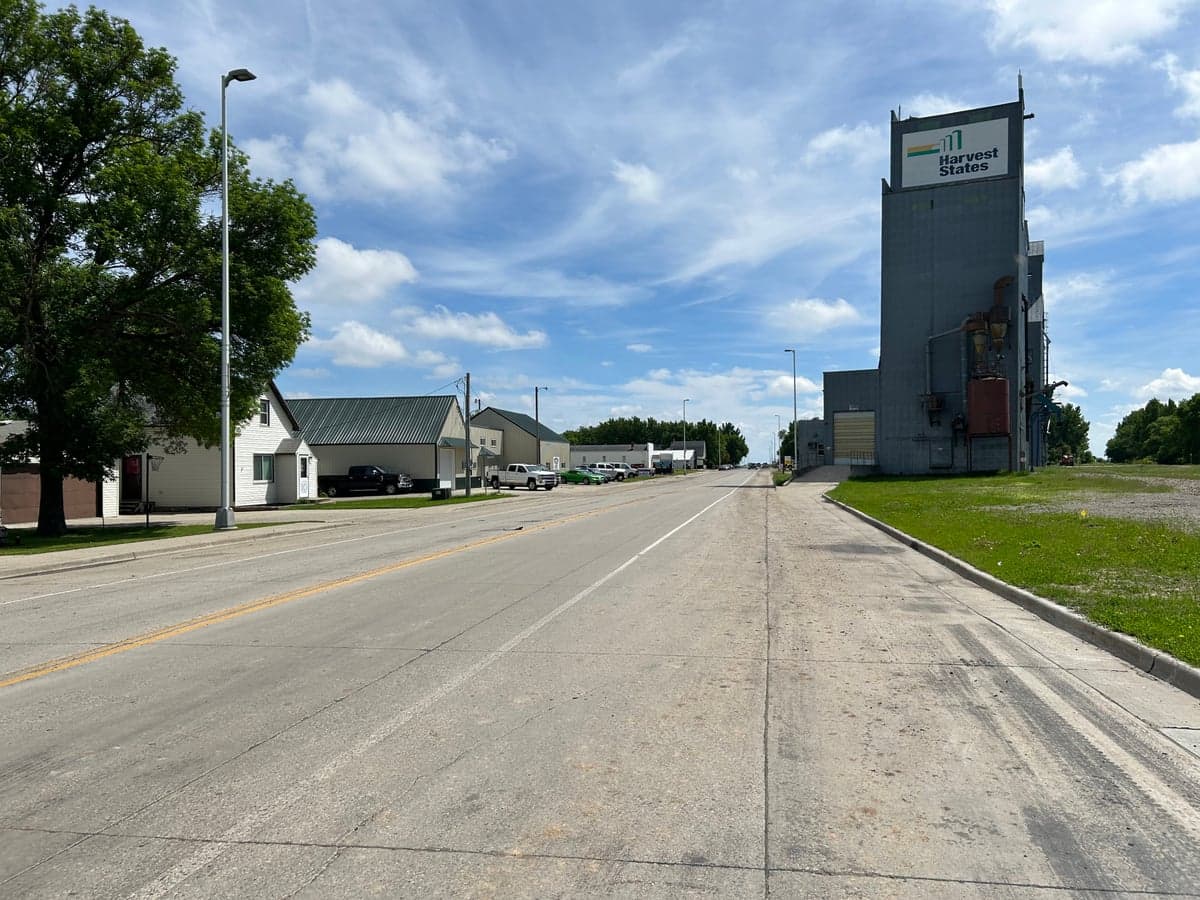
Horace was founded in the late 19th century as a railroad stop along the Northern Pacific line, drawing its first permanent settlers — predominantly Norwegian and German immigrants — who took up farming in the surrounding Red River Valley. These early families built homes in what is now the Historic Downtown Horace district, a compact grid of streets near the railroad tracks that still contains a handful of original wood-frame houses and the old grain elevator. The city remained a tiny agricultural hamlet for decades, with a population that barely cracked 200 by 1950. The original ethnic character — heavily Scandinavian and German Lutheran — persisted through the mid-20th century, with descendants of these founding families still concentrated in the South Horace area, where several century farms remain in operation.
Modern era (post-1965)
Horace’s modern population boom began in the 1990s and accelerated sharply after 2000, driven entirely by domestic in-migration from within the Fargo-Moorhead metropolitan area. The city’s growth is a textbook case of suburban sprawl: families and young professionals left Fargo proper for larger, newer homes on larger lots, drawn by lower property taxes and the newly built Horace Elementary School (opened 200竹). The Prairiewood subdivision, platted in the late 1990s, absorbed the first wave of these transplants — mostly white, college-educated couples in their 30s and 40s. The Sheyenne Crossing development, built in the 2010s, attracted a slightly more diverse mix, including a small number of Hispanic families (now 7.7% of the city’s population) who work in Fargo’s construction and service industries. The Horizon Estates neighborhood, completed in 2020, is the most recent addition, drawing families with school-age children and a handful of remote workers. Notably, the city has seen virtually no East/Southeast Asian or Indian subcontinent immigration (0.0% for both groups), and its Black population remains small at 2.2%. The foreign-born share of 1.4% is far below the national average, reflecting Horace’s status as a destination for domestic, not international, migration.
The future
Horace’s population trajectory points toward continued, but likely moderating, growth as developable land within the city limits becomes scarcer. The city’s 2023 comprehensive plan anticipates adding roughly 1,000 new housing units by 2035, mostly in the North Horace district, where large tracts of former farmland are being annexed and rezoned for single-family homes. Demographically, the city is expected to remain overwhelmingly white and native-born, with the Hispanic share possibly rising to 10-12% as service-sector workers from Fargo seek more affordable housing. The college-educated share is likely to increase further as remote work and Fargo’s growing tech and healthcare sectors draw more professionals to Horace’s newer subdivisions. There is no evidence of tribalization into distinct ethnic enclaves — Horace’s small minority populations are dispersed across neighborhoods, not concentrated. The city is homogenizing in the sense that its newer residents share similar socioeconomic profiles (middle-to-upper-middle-class, married, with children), while the small original farming population continues to age in place in South Horace.
For someone moving in now, Horace is becoming a classic outer-ring suburb: safe, well-educated, and politically conservative, but increasingly expensive and less rural than it was a generation ago. The city offers a predictable, family-oriented environment with strong schools and low crime, but little ethnic or cultural diversity. New arrivals will find a community that is still being built — literally, with new subdivisions rising each year — and where the dominant identity is less about shared history than about shared lifestyle and aspirations.

* Values derived from national, state, county, city and local statistics and may differ in a specific area. Last updated: 2026-04-19T05:14:30.000Z
Narrative content on this page is AI-generated and may contain mistakes. Verify any details that matter before acting on them.
ReloMaps may earn a commission from affiliate links at no extra cost to you.

