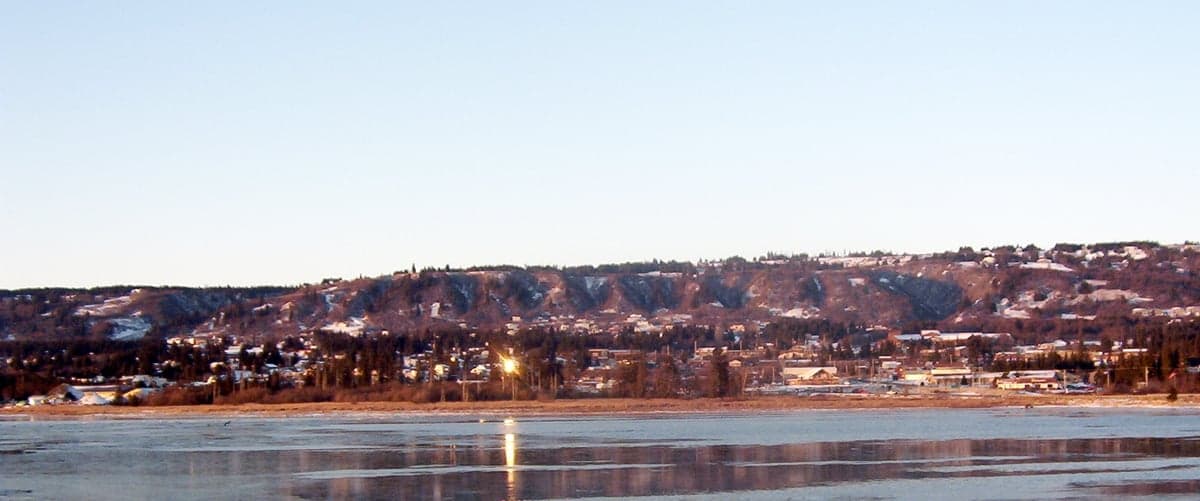
Photo: Wikipedia
Strategic Assessment of Homer, AK
Workable tactical position. Some exposure to population density or targets, but generally defensible in a crisis.
What does the Strategic Assessment tell us?
Our Strategic Assessment grades tactical survivability of an area. Major population centers, military targets, fallout zones, natural disasters, and border exposure all drive risk — lower exposure means a more defensible position in a crisis.
This is heavily inspired by Joel Skousen's Strategic Relocation book. Highly recommended you checkout the book ($)What does this tell us?
Our Strategic Assessment grades tactical survivability of an area. Major population centers, military targets, fallout zones, natural disasters, and border exposure all drive risk — lower exposure means a more defensible position in a crisis.
This is heavily inspired by Joel Skousen's Strategic Relocation book. Highly recommended you checkout the book ($)Strategic Pillars

Key Distances
Regional Safe Places
Below is our recommended "safe zones" in Alaska and the surrounding area based on our strategic heuristics. For most people, it's unrealistic to live in a “safe zone” full-time due to work, family or other personal reasons. They tend to be more rural. However, many of these areas are perfect for second homes and retreat properties that double as a vacation home or even a short-term rental.
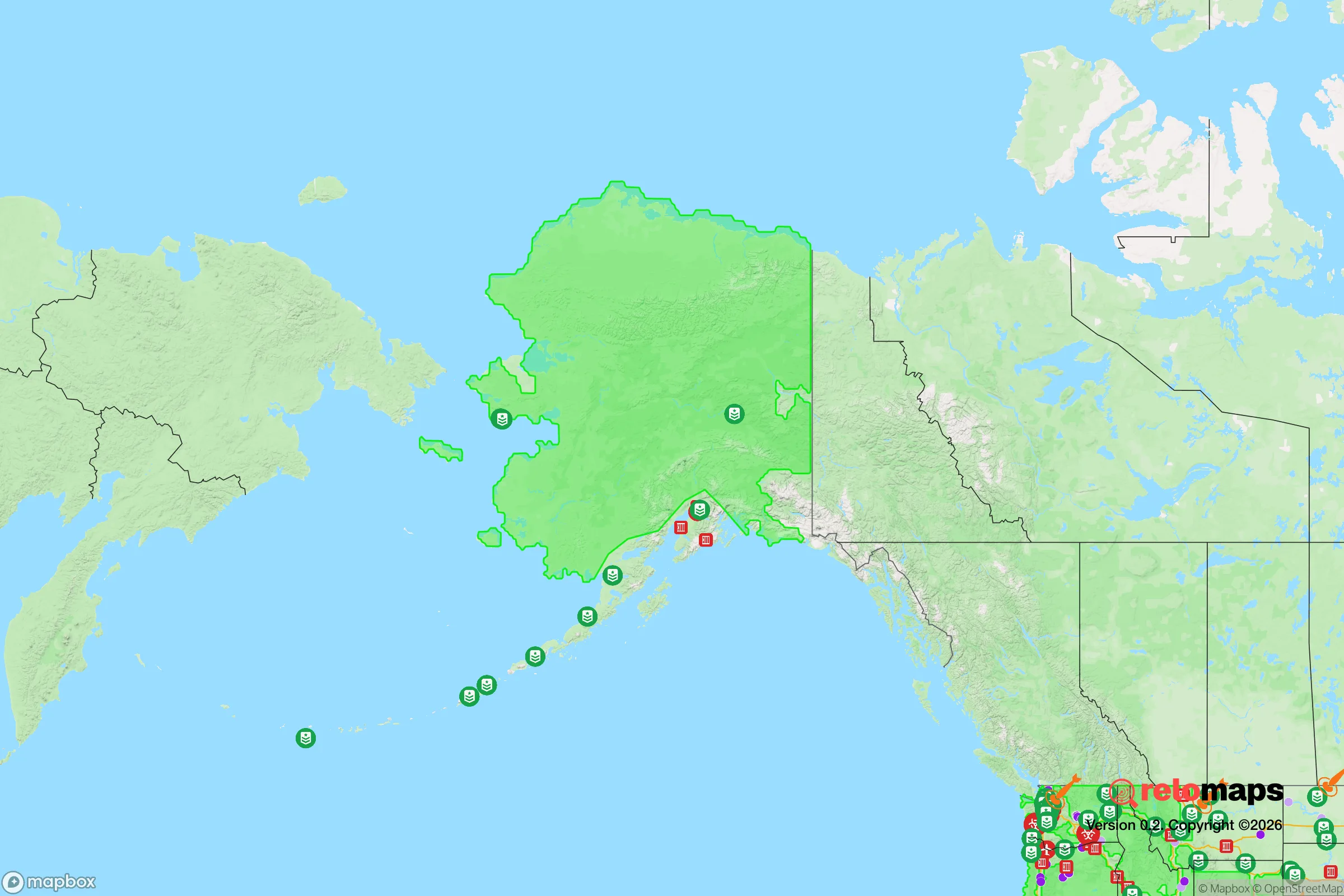
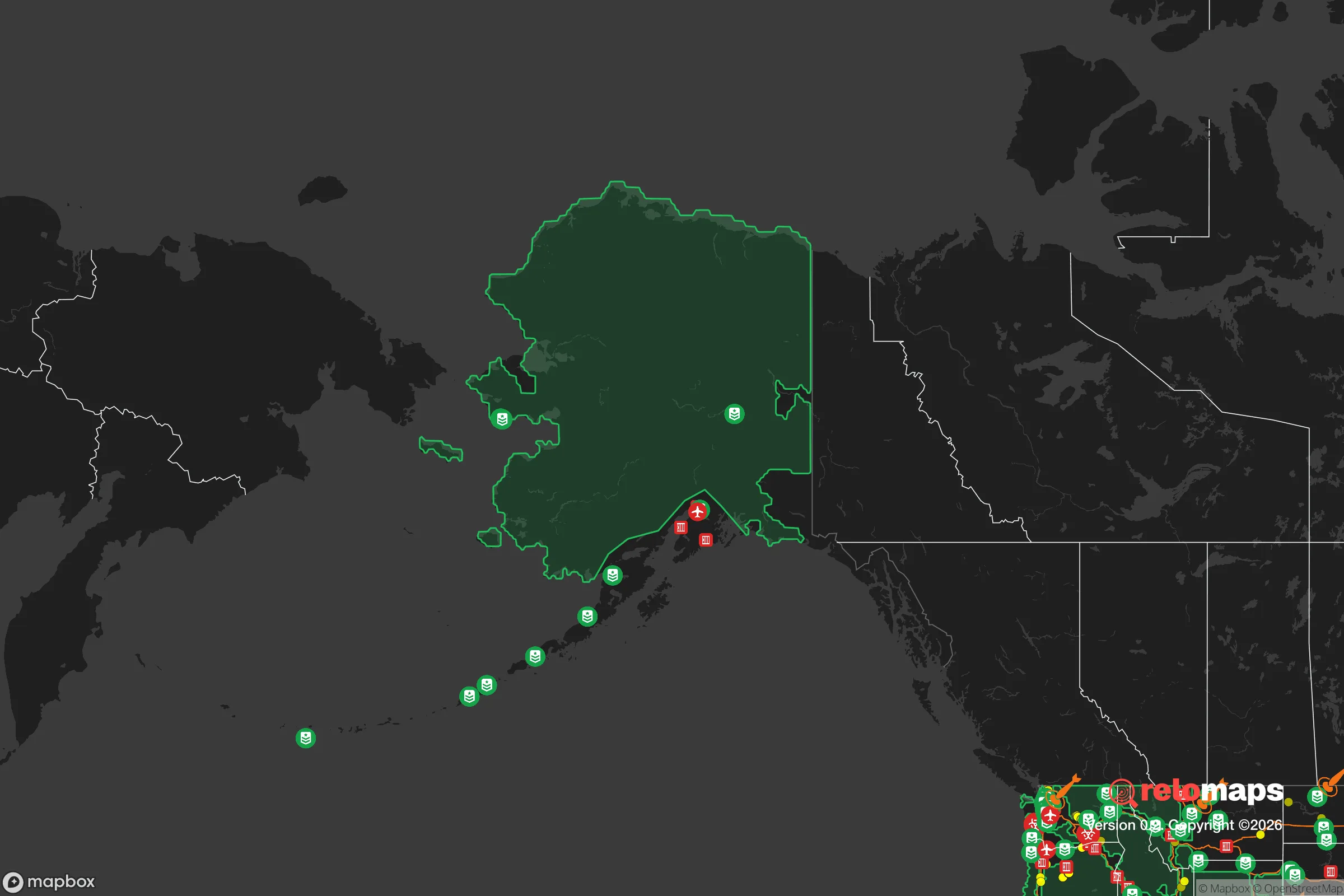


Important Note: For informational purposes only. This does not mean nothing bad ever happens in the green zones. Please use common sense. This is based on public data and modeled with AI. We tried to take a conservative approach but mistakes happen. We update this regularly as new information becomes available.
Solar Generator Recommendations
Backup power matters more here than in safer locations. We've picked three solar generators across budgets and capacity tiers — start with the budget unit if you only need a few essentials, or step up if you want to run a fridge and HVAC for days at a time.

Jackery Portable Power Station Explorer 300
Budget OptionPower on the Go: Weighing only 11 lbs, it's convenient to set up and store with book-sized foldable solar panels

BLUETTI Portable Power Station AC180
Designed for both indoor and outdoor scenarios, AC180 is highly capable as it has a robost capacity and continuous output power.

EF ECOFLOW DELTA Pro Ultra Power Station
Upgraded PickEcoFlow DELTA Pro Ultra is a whole-home energy system designed to grow with your family. Integrated with the Smart Home Panel 2, it scales to meet your evolving energy needs — keeping your home powered, intelligent, and secure through every stage of life.
We earn a commission, at no additional cost to you.
Strategic Assessment Analysis
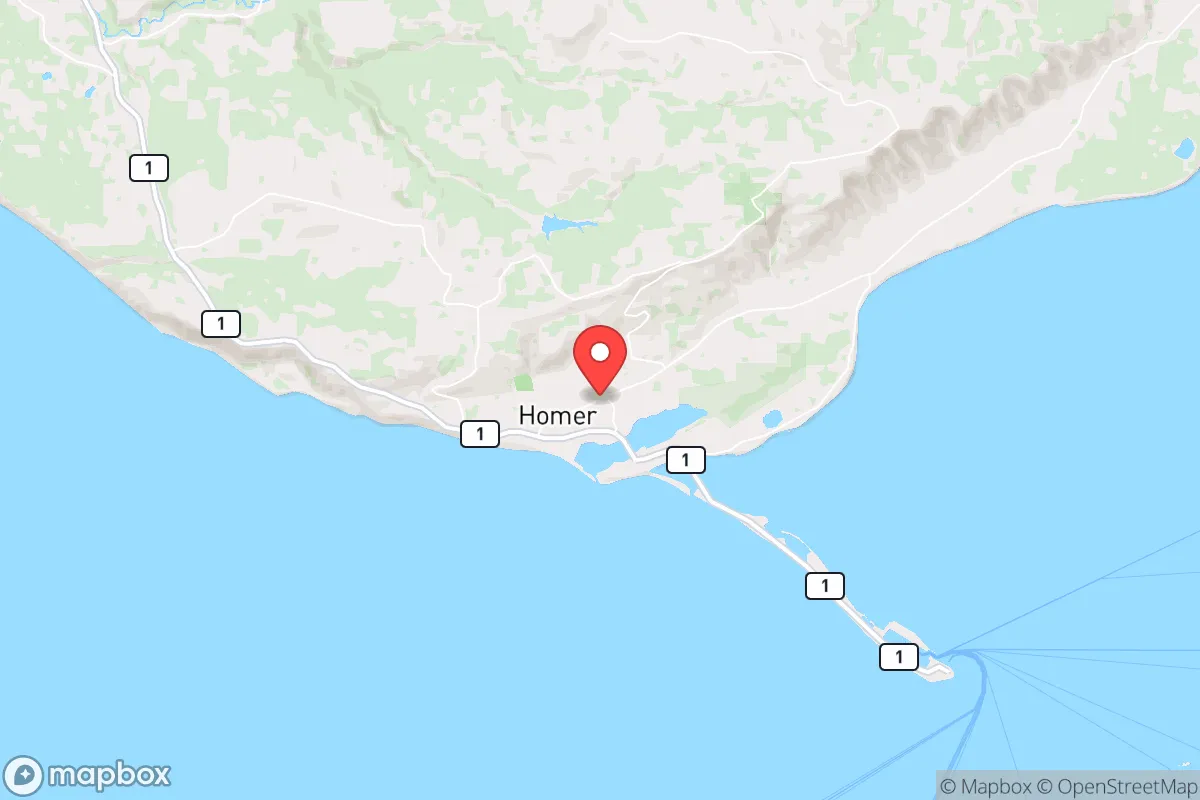
Homer, Alaska, sits at the end of the road system on the Kenai Peninsula, roughly 220 miles south of Anchorage, and its strategic value for a relocator with a prepper mindset is defined by a paradox: extreme isolation combined with a surprisingly robust local economy and infrastructure. For those looking to put serious distance between themselves and the chaos of the Lower 48, Homer offers a genuine off-grid-adjacent lifestyle without requiring total self-sufficiency from day one. The town’s position on Kachemak Bay, with the vast Kenai Mountains at its back and the open waters of Cook Inlet to the front, creates a natural fortress—approachable only by a single two-lane highway or by air and sea. This geographic chokepoint is the single most important factor in any resilience assessment of Homer, as it provides both a buffer against mass migration events and a clear line of sight for monitoring movement into the area.
Geographic position and natural advantages for long-term security
Homer’s location is its primary strategic asset. The town is the southern terminus of the Sterling Highway, which connects to the Seward Highway and then to Anchorage. That single road, the only land route in or out, is a double-edged sword—it’s a vulnerability if compromised, but it’s also a formidable barrier to any large-scale influx of people. In a scenario of widespread civic unrest or a collapse of supply chains, the sheer distance and the limited road capacity mean that Homer would not be a primary destination for fleeing populations. The surrounding terrain—steep mountains, dense spruce forests, and tidal flats—further restricts overland travel. The town itself is built on a glacial moraine, with the Homer Spit jutting five miles into the bay, providing a natural deep-water port that is ice-free year-round. This port is critical: it allows for the receipt of bulk fuel, food, and supplies by barge, even if the highway is blocked. The marine environment also offers a protein-rich food source—salmon, halibut, clams, and crab are abundant in season, and the local fishing fleet is one of the largest in the state. For a relocator, the ability to supplement stored food with wild harvests is a major resilience multiplier.
Risks, exposures, and proximity to fallout-relevant landmarks
The most significant risk to Homer is not a direct nuclear strike—it’s far too small and strategically irrelevant for that—but rather the fallout from events elsewhere. The primary concern is Anchorage, the state’s largest city and a transportation hub with a major international airport and a military presence at Joint Base Elmendorf-Richardson. A major disaster in Anchorage—whether a terrorist attack, a Cascadia subduction zone earthquake, or a pandemic-related collapse—could send a wave of refugees south along the only road. Homer’s population of roughly 5,500 (with the broader Kenai Peninsula Borough at about 60,000) would be overwhelmed by even a fraction of Anchorage’s 290,000 residents. The highway from Anchorage to Homer passes through the Kenai National Wildlife Refuge, a sparsely populated corridor with limited services, which would become a bottleneck. Additionally, the Port of Anchorage is a critical fuel and cargo hub; its disruption would directly impact Homer’s supply chain within weeks. On the positive side, Homer is far from any known nuclear power plants, major military command centers, or large industrial targets. The closest potential fallout source would be a strike on the missile fields of central Montana or the submarine bases in Washington state—both hundreds of miles away, with prevailing winds that would likely carry fallout away from the Kenai Peninsula. The real threat is not a direct hit, but the secondary effects of a national crisis: supply chain collapse, currency devaluation, and the arrival of unprepared refugees.
Practical resilience for a relocator: food, water, energy, and defensibility
For a relocator serious about self-sufficiency, Homer offers a mix of advantages and challenges. Food security is strong: the local growing season is short (roughly 90 frost-free days), but the long summer daylight hours produce impressive yields of cold-hardy crops like potatoes, cabbage, and root vegetables. The real strength is marine protein. A family with a skiff and a few crab pots can put up hundreds of pounds of salmon and halibut in a summer. The local farmers market and the Alaska Grown network provide access to local beef, pork, and eggs, though prices are high. Water is abundant: Homer sits on a large aquifer, and most homes have wells with excellent water quality. Surface water from creeks and lakes is plentiful, though treatment is necessary. Energy is the weak link: Homer is not on the road-connected natural gas grid. Most homes use heating oil, propane, or wood. The local electric utility, Homer Electric Association, relies on natural gas from the Cook Inlet basin, but the grid is vulnerable to earthquakes and winter storms. A serious prepper would need a backup generator, a large wood supply, and a plan for fuel storage. Defensibility is high: the single road in and out, combined with the town’s compact layout on a bluff, makes it relatively easy to monitor and control access. The local population is heavily armed—Alaska has some of the most permissive firearm laws in the nation, and hunting is a way of life. The community is also tight-knit; the “Homer Strong” mentality is real, and neighbors do help neighbors. However, this same insularity can be a barrier for newcomers. Building trust takes time, and a relocator who arrives with a “prepper” attitude and no intention of integrating will find themselves isolated socially, which is a vulnerability in itself.
The overall strategic picture for Homer is one of high potential but significant trade-offs. It is not a bug-out location for a weekend warrior; it is a long-term commitment that requires substantial capital, a willingness to adapt to a harsh climate, and a realistic understanding of the logistical challenges. For a single individual or a family with the resources to buy land, build a well-insulated home with a wood stove, and stockpile a year’s worth of supplies, Homer offers one of the most defensible and resource-rich environments in North America. The isolation that makes it unattractive to the average person is precisely what makes it valuable to the strategic relocator. But the single road is a vulnerability, the energy dependence is real, and the risk of a refugee surge from Anchorage cannot be dismissed. If you are looking for a place where you can ride out a national crisis with a reasonable chance of being left alone, Homer deserves serious consideration. Just don’t expect it to be easy—and don’t expect to be welcomed with open arms until you’ve proven you can pull your weight in a place where winter is the real test of character.

* Values derived from national, state, county, city and local statistics and may differ in a specific area. Last updated: 2026-04-19T19:20:39.000Z
Narrative content on this page is AI-generated and may contain mistakes. Verify any details that matter before acting on them.
ReloMaps may earn a commission from affiliate links at no extra cost to you.

