Photo: Wikipedia
Personal Sovereignty in Homer, AK
Strong independent fundamentals that actively favor personal liberty and low regulation.
What does Personal Sovereignty tell us?
Personal Sovereignty measures your capacity for self-reliance and independence with minimal government friction. Higher scores mean fewer barriers between you and the way you want to live... but it assumes you have the space you need and good neighbors.
What does this tell us?
Personal Sovereignty measures your capacity for self-reliance and independence with minimal government friction. Higher scores mean fewer barriers between you and the way you want to live... but it assumes you have the space you need and good neighbors.
State Policy
Energy independence: Net exporter (350% of energy produced in-state)
Personal Liberty
Homesteading

Personal Liberty Analysis
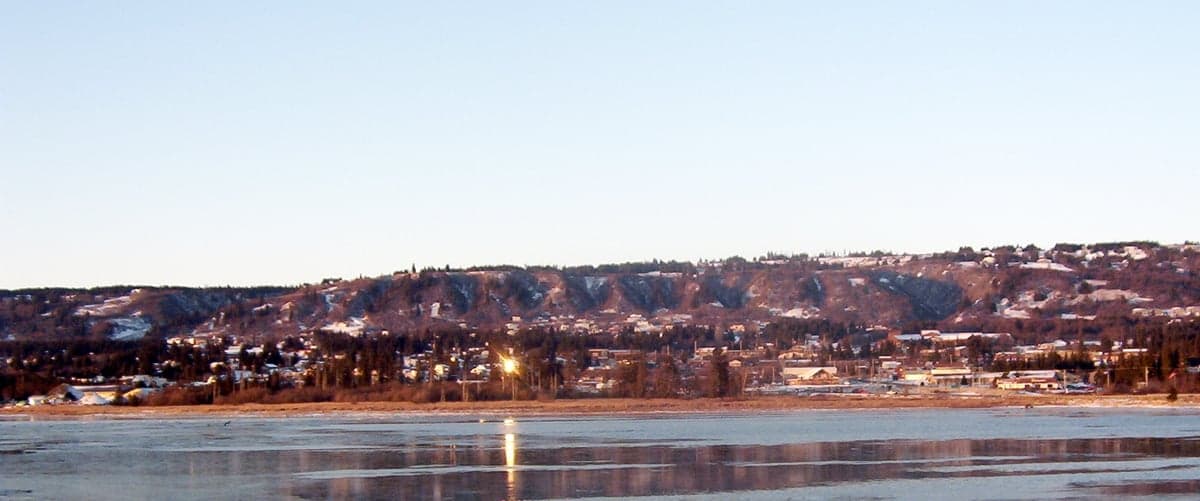
Homer, Alaska offers one of the most robust personal sovereignty environments in the United States, particularly for those who view government overreach as a primary threat to individual freedom. Nestled on the southern tip of the Kenai Peninsula, this community of roughly 6,000 operates under a state constitution that explicitly protects the right to privacy, self-defense, and subsistence living—a legal framework that stands in stark contrast to the regulatory density found in the Lower 48. For the strategic relocator, whether a single individual or a parent, Homer represents a place where the default posture is "leave me alone," and the practical barriers to living on your own terms are remarkably low.
Tax burden and regulatory posture: How Alaska’s fiscal structure preserves your income
Alaska’s tax environment is arguably the most liberty-friendly in the nation, and Homer residents benefit directly. There is no state income tax, no state sales tax, and no state-level property tax. The Kenai Peninsula Borough does levy a property tax—currently around 10.5 mills on assessed value—but the state’s Permanent Fund Dividend (PFD) program, which pays each resident an annual check from oil revenues, effectively offsets a significant portion of that burden for most households. In 2024, the PFD was roughly $1,700 per person, meaning a family of four receives nearly $7,000 annually just for being residents. This fiscal structure means your labor is not taxed before you earn it, and your savings are not eroded by state-level levies. Regulatory posture in Homer is similarly light: the borough has no zoning code outside the city limits, and building permits are minimal for owner-occupied structures. The state’s Occupational Licensing Review Commission has actively reduced licensing barriers, making it easier to start a trade or business without bureaucratic hurdles. For the prepper or survivalist, this means more of your money stays in your pocket and fewer government employees have a say in how you use it.
Self-defense and gun law specifics: Constitutional carry and stand-your-ground in practice
Alaska is one of the most firearm-friendly states in the union, and Homer reflects that culture. The state has constitutional carry for both open and concealed handguns without a permit, no waiting periods, no magazine capacity restrictions, and no firearm registration. The Alaska Constitution’s Article I, Section 19 explicitly states that the right to keep and bear arms “shall not be infringed,” and courts have interpreted this broadly. Stand-your-ground laws are in effect, with no duty to retreat in any place where you have a legal right to be. For parents, this means you can legally train your children in firearm safety and use without state interference. The Kenai Peninsula is also home to a robust gun culture: there are multiple private ranges, and the Homer Rifle Club offers long-range shooting out to 1,000 yards. Bear defense is a practical reality here—brown bears are common on the peninsula—so carrying a large-caliber handgun or rifle is not just a right but a daily necessity for many. The local sheriff’s office and state troopers are generally supportive of the Second Amendment, and there is no local ordinance that restricts firearms beyond state law. For the individual concerned about government overreach, this is a jurisdiction where your ability to defend yourself is not subject to political whims.
Self-reliance and homesteading viability: Lot sizes, zoning, and off-grid feasibility
Homer’s geography and land-use policies make it a prime location for those seeking genuine self-reliance. Outside the city limits, the Kenai Peninsula Borough has no county-wide zoning, meaning you can build a cabin, raise livestock, or set up a greenhouse without needing a variance or conditional use permit. Minimum lot sizes in unincorporated areas are typically 1.25 acres, but many parcels available for purchase are 5 to 40 acres, particularly along the East End Road and the Anchor Point area. Off-grid living is not only legal but common: there is no requirement to connect to municipal water or sewer, and many residents use solar panels, wind turbines, or micro-hydro systems for power. The borough does require a permit for septic systems, but the process is straightforward and does not mandate a licensed contractor for owner-built systems. Rainwater collection is unrestricted, and wells are inexpensive to drill (typically $5,000–$10,000). For the prepper, this means you can secure a property with a year-round creek, install a composting toilet, and generate your own electricity without ever interacting with a building inspector. The local climate—cool summers and mild winters relative to interior Alaska—supports extended growing seasons for cold-hardy crops, and the marine environment provides abundant fish and shellfish. Homer is one of the few places in the U.S. where a determined individual can achieve near-total food and energy independence within a few years of arrival.
Personal liberties: Parental rights, medical autonomy, speech, and property
Alaska’s legal culture strongly favors individual autonomy, and Homer is no exception. Parental rights are explicitly protected under state law: Alaska Statute 14.30.010 gives parents the right to direct their child’s education, including homeschooling without state approval or curriculum mandates. The state’s correspondence school program allows parents to receive funding for educational materials while teaching at home, with minimal oversight. Medical autonomy is similarly robust: Alaska has no state-level vaccine mandates for adults or children, and the state’s Health Insurance Portability and Accountability Act (HIPAA) protections are enforced strictly. The Alaska Supreme Court has repeatedly upheld the right to refuse medical treatment, including for children, as long as the child is not in imminent danger of death. Free speech is protected under the state constitution’s broad privacy clause, and there are no hate speech laws or restrictions on political expression. Property rights are strong: the state’s eminent domain laws require “strict necessity” and full compensation, and the borough has no ability to seize property for economic development. For the individual concerned about government overreach, Homer offers a legal environment where you can raise your children according to your values, make your own medical decisions, speak your mind without fear, and keep what you earn and build.
In the broader context of American sovereignty, Homer ranks among the top-tier locations for those seeking to minimize government intrusion into daily life. The combination of no income tax, constitutional carry, no zoning, off-grid legality, and strong parental rights creates a synergy that is rare even within Alaska. Compared to the Lower 48, where property taxes eat equity, zoning restricts land use, and firearm laws shift with election cycles, Homer offers a stable, predictable environment where personal responsibility is the norm and government is a distant presence. For the strategic relocator—whether a single prepper or a family seeking to opt out of the system—this small town on the edge of the wilderness provides a foundation for genuine sovereignty that is increasingly hard to find elsewhere.

* Values derived from national, state, county, city and local statistics and may differ in a specific area. Last updated: 2026-04-19T19:20:39.000Z
Narrative content on this page is AI-generated and may contain mistakes. Verify any details that matter before acting on them.
ReloMaps may earn a commission from affiliate links at no extra cost to you.

