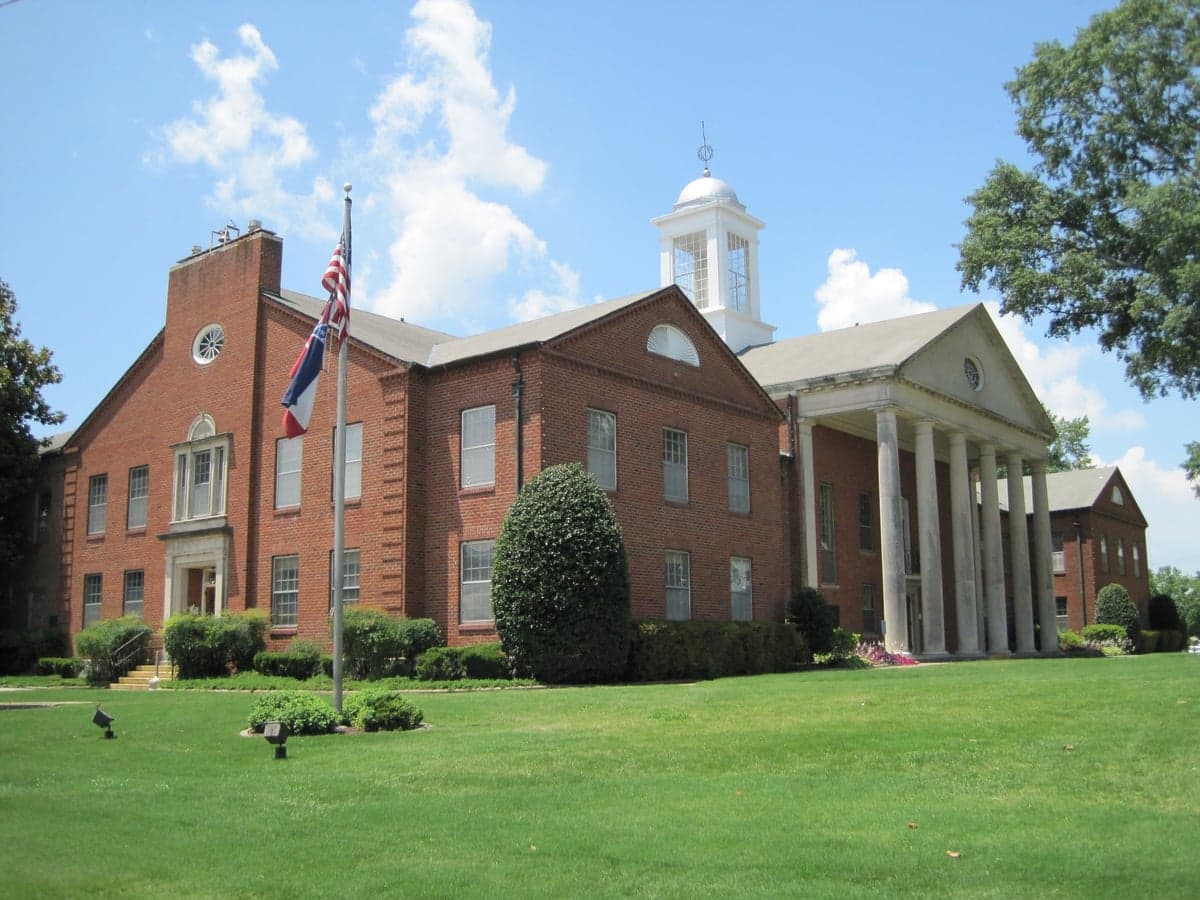
Photo: Wikipedia
Demographics of Hernando, MS
Affluence Level in Hernando, MS
A middle-class area roughly in line with national averages across income, home values, education, and employment.
People of Hernando, MS
The people of Hernando, Mississippi, today number 17,580, forming a predominantly White (74.9%) and politically conservative community with a growing Black (15.0%) and Hispanic (5.8%) presence. The city is characterized by a strong family-oriented identity, a relatively high college education rate of 35.9%, and a low foreign-born share of just 3.7%, reflecting a population rooted in long-term domestic settlement rather than recent international migration. Distinctive markers include a deep attachment to DeSoto County's agricultural and railroad history, a steady influx of families from the Memphis metro area seeking lower taxes and crime rates, and a visible divide between older, established neighborhoods and newer master-planned subdivisions.
How the city was settled and grew
Hernando was founded in 1836 as the seat of DeSoto County, named after Spanish explorer Hernando de Soto. The original population was drawn by fertile Delta farmland and the promise of cotton wealth, with early settlers arriving from the Upper South—primarily Tennessee, Kentucky, and Virginia. These families were largely of English and Scots-Irish descent, and they built the city's historic core around the courthouse square. The first distinct neighborhood to emerge was Old Town Hernando, centered on Commerce Street and Waukegan Road, where antebellum homes and the original commercial district still stand. A second wave arrived after the Civil War, when freedmen established the Blackburn Addition neighborhood east of the railroad tracks, creating a self-sufficient community with its own churches, schools, and businesses. The railroad's arrival in the 1880s spurred a third wave of White yeoman farmers and merchants, who settled in the West End district near the depot. By 1900, Hernando's population was roughly 60% White and 40% Black, a ratio that held steady through the Jim Crow era.
Modern era (post-1965)
The post-1965 period brought two transformative shifts: the suburbanization of DeSoto County and the gradual diversification of Hernando's population. The 1968 construction of Interstate 55 made Hernando a viable bedroom community for Memphis, 20 miles north. Middle-class White families—many from Memphis proper—began moving into new subdivisions like Greenbrook Estates and Hernando Hills, drawn by lower property taxes, better schools, and a perceived safer environment. This wave accelerated after 2000, with the development of Briarwood and Woodbridge, large master-planned communities that attracted both White and Black professionals. The Black population, which had declined to about 12% by 1990 due to out-migration to Memphis, rebounded to 15.0% by 2020 as middle-class Black families followed the same suburbanization pattern. The Hispanic share grew from negligible to 5.8% during the same period, driven by construction and service-sector jobs; these families concentrated in the South Hernando area near Highway 51, where rental housing and mobile home parks offered affordable entry points. The East/Southeast Asian population (1.1%) is small and dispersed, with no single ethnic enclave, while the Indian-subcontinent population is effectively zero. The foreign-born share remains low at 3.7%, confirming that Hernando's growth is overwhelmingly domestic in-migration from within the Mid-South.
The future
Hernando's population is heading toward continued, moderate growth driven by two forces: the ongoing spillover from Memphis and the expansion of DeSoto County's own employment base. The city is not homogenizing into a single demographic bloc; rather, it is tribalizing into distinct enclaves. Old Town remains predominantly White and older, Greenbrook and Briarwood are mixed White and Black middle-class, and South Hernando is becoming a Hispanic-majority corridor. The immigrant communities—Hispanic and East/Southeast Asian—are growing slowly but steadily, with Hispanic families showing signs of assimilation through homeownership in subdivisions like Foxborough. The Black population is likely to rise toward 18-20% over the next decade as more Black professionals choose Hernando over Memphis. The White share will decline proportionally but remain the majority. The next 10-20 years will likely see Hernando become a more diverse, still conservative suburb, with the main tension being between long-time residents who value the small-town feel and newcomers who want more amenities and housing density.
For someone moving in now, Hernando is becoming a solidly middle-class, family-focused suburb with a clear conservative identity and a slowly diversifying population. The city offers a stable, low-crime environment with good schools, but newcomers should expect a community where most social and civic life revolves around church, school sports, and neighborhood associations. The low foreign-born share means little ethnic friction, but also limited cultural diversity beyond the Black-White-Hispanic triad. The bottom line: Hernando is a safe bet for families seeking a traditional Southern suburban lifestyle, with demographic change happening at a pace that is noticeable but not disruptive.

* Values derived from national, state, county, city and local statistics and may differ in a specific area. Last updated: 2026-04-30T15:31:29.000Z
Narrative content on this page is AI-generated and may contain mistakes. Verify any details that matter before acting on them.
ReloMaps may earn a commission from affiliate links at no extra cost to you.

