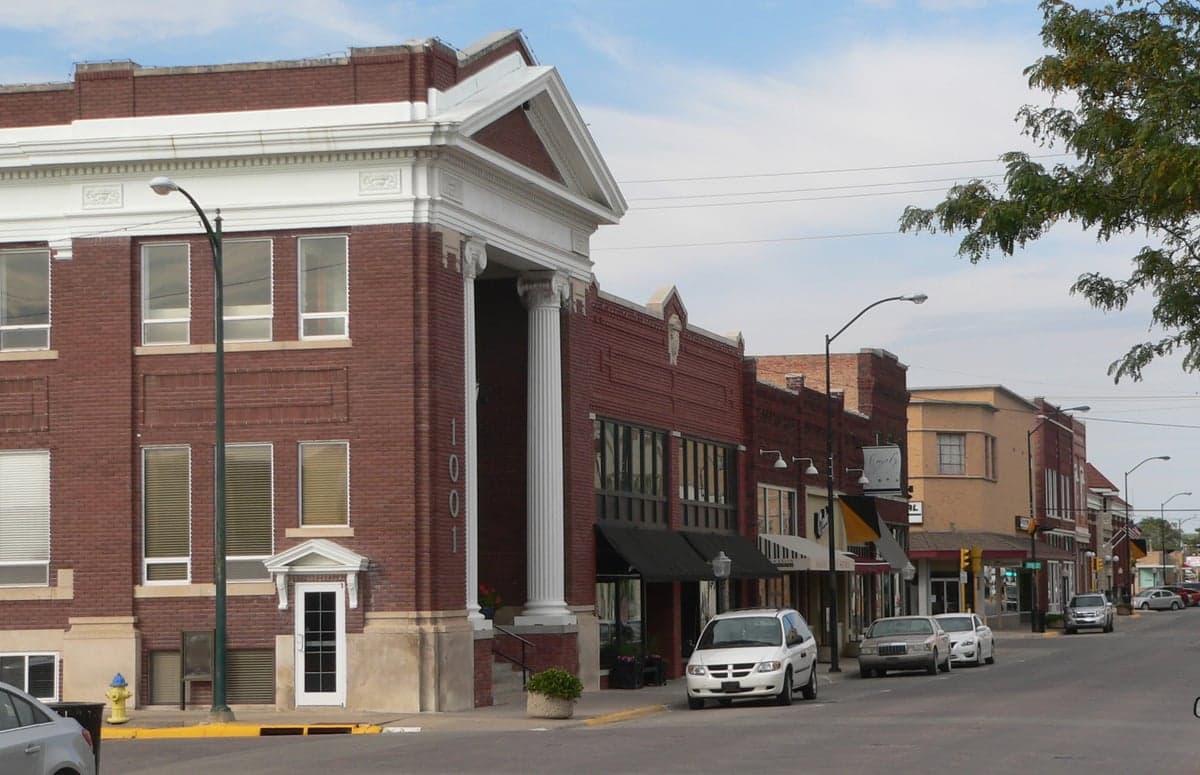
Photo: Wikipedia
Political ClimatePolitical Climate in Hays, KS
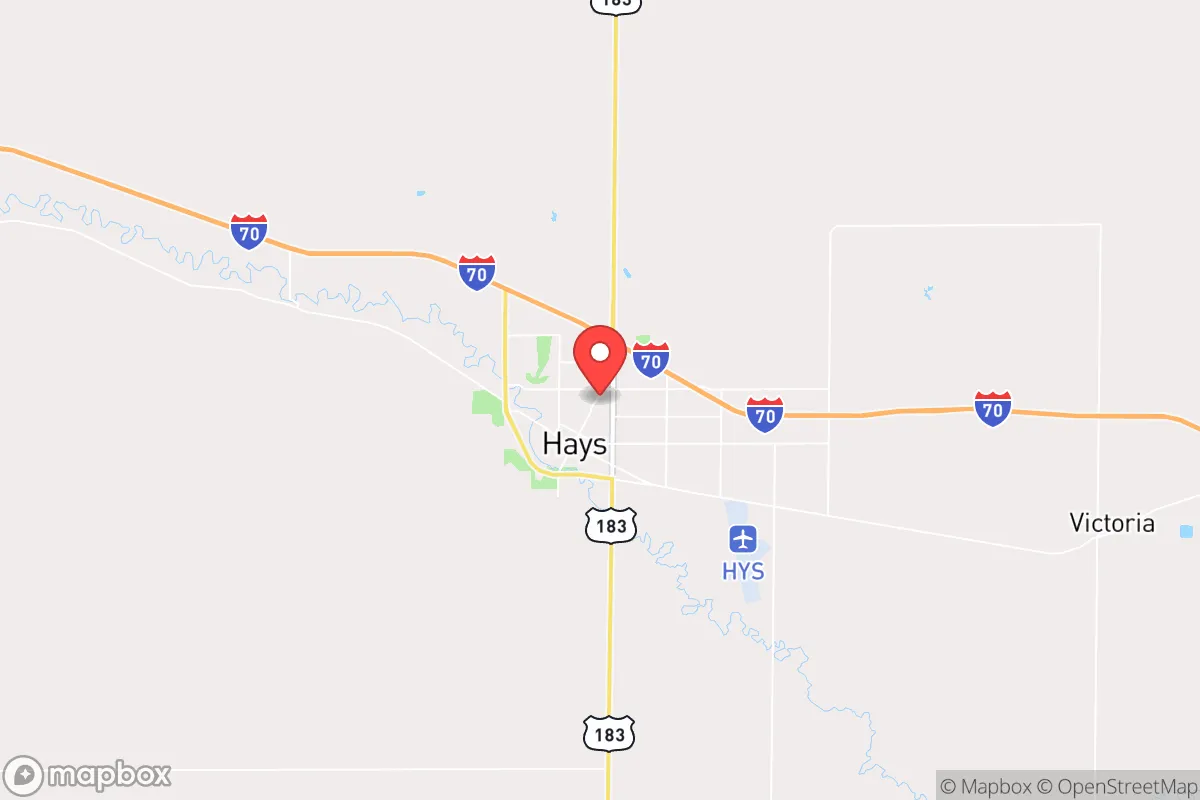
District shown is the primary district for this city’s centroid. Cities may span multiple districts.
Local Political AnalysisPolitical Analysis of Hays, KS
Hays, Kansas, sits solidly in the red, with a Cook PVI of R+16 that reflects a deep-rooted conservative tradition stretching back generations. The city itself, home to Fort Hays State University, has historically leaned more moderate than the surrounding rural farm country, but the overall political trajectory here has been one of steady, quiet resistance to the progressive shifts seen in places like Lawrence or Kansas City. You won’t find many yard signs for left-leaning candidates, and the local conversation tends to center on keeping government small, taxes low, and personal freedoms—like the right to own firearms or run a business without endless red tape—firmly intact.
How it compares
Compared to the bluer college towns in Kansas—Lawrence, Manhattan, or even parts of Topeka—Hays feels like a different world. Drive an hour east to Salina, and you’ll find a more mixed political landscape, but head west toward Colby or Garden City, and the conservative streak gets even deeper. The real contrast is with the state’s urban corridors; in Hays, the idea of government overreach into personal lives—whether through vaccine mandates, zoning overreach, or school curriculum battles—is met with a collective eye roll and a “not here, not now” attitude. The surrounding Ellis County votes reliably Republican, and while the university brings in a handful of progressive faculty and students, they haven’t shifted the local needle much. If anything, the recent national trends have hardened local resolve: folks here see the chaos in bigger cities and double down on the belief that local control and personal responsibility are the only sane path forward.
What this means for residents
For someone moving to Hays, the political climate means a few practical things. First, you can expect lower taxes and fewer regulations than in blue-leaning areas—property taxes are manageable, and the city council tends to side with property rights over heavy-handed planning. Second, the schools here still emphasize traditional values; you won’t see critical race theory or gender ideology pushed in the classroom, and parents have a real say in what their kids learn. Third, the local economy runs on agriculture, healthcare, and small business, not government contracts or tech subsidies, so the political talk stays grounded in real-world concerns like water rights and grain prices. The downside? If you lean left, you’ll feel isolated. There’s no real progressive infrastructure—no activist groups, no alternative media, and the local paper leans conservative. But for those who value freedom from government meddling, it’s a breath of fresh air.
Culturally, Hays stands out for its strong German-Russian heritage, which shows up in the food, the festivals, and the general stubbornness. The local policy distinctions are subtle but telling: the city has resisted adopting strict mask mandates or vaccine passports, and the county commission has pushed back on state-level overreach into local land use. Looking ahead, the long-term trend is a slow, cautious shift as younger residents move to Wichita or Denver for jobs, but the core conservative identity here isn’t going anywhere. If anything, the national push toward progressive policies is likely to make Hays dig in even harder—a place where personal freedom still means something, and the government stays out of your business unless absolutely necessary.

State Political ClimatePolitical Climate in Kansas
State Political AnalysisPolitical Environment in the State
Kansas has long been a reliably conservative state, but the picture is more nuanced than a simple red-state label suggests. The state’s overall partisan lean is solidly Republican, with the GOP holding supermajorities in both legislative chambers and every statewide office, but the margin has narrowed in presidential races — from a 20-point Trump win in 2016 to a 14-point win in 2020. Over the last 10-20 years, the dominant coalition has been a mix of rural conservatives, suburban moderates, and a growing libertarian-leaning wing, though internal GOP battles over tax policy and education funding have created real friction. For a conservative considering relocation, the key question is whether the state’s trajectory is toward more freedom or more government overreach.
Urban vs. rural divide
The political map of Kansas is a textbook study in the urban-rural split. The eastern third of the state, anchored by Kansas City (Wyandotte County) and Lawrence (Douglas County), is the Democratic stronghold — Wyandotte County voted +38 for Biden in 2020, and Douglas County +35. These areas drive the state’s progressive energy, with Lawrence’s university culture and Kansas City’s diverse economy pushing left on social issues and spending. In contrast, the vast rural and exurban expanse — places like Garden City, Dodge City, and Hays — votes heavily Republican, often by 40-50 point margins. The real battleground is the suburban ring around Kansas City, especially Johnson County (Overland Park, Lenexa, Olathe). Johnson County was once reliably red but has shifted: Trump won it by only 2 points in 2020, down from 12 points in 2016. This shift is driven by college-educated professionals moving in from out of state, and it’s the single biggest factor in the state’s gradual leftward drift. Meanwhile, Wichita (Sedgwick County) remains a Republican stronghold but is slowly trending purple, with Trump’s margin shrinking from 18 points to 12 points between 2016 and 2020.
Policy environment
Kansas’s policy environment is a mixed bag for conservatives. On the plus side, the state has a flat income tax rate of 5.7% (down from a top rate of 6.45% in 2022), and the legislature passed a major tax cut package in 2024 that accelerates the phase-down to 5.5% by 2026. Property taxes are relatively low, with a median effective rate of 1.25%, though they vary widely by county. The state is a right-to-work state, has no statewide mask or vaccine mandates, and passed a constitutional amendment in 2022 affirming that there is no right to abortion — a major win for pro-life conservatives. However, the state’s regulatory posture is uneven: occupational licensing requirements are still burdensome for some trades, and the state’s energy policy has been slow to embrace deregulation. On education, Kansas has a robust school choice program — the Tax Credit for Low-Income Students Scholarship Program has expanded, and the 2024 legislature passed a universal education savings account (ESA) bill for special needs students, though a broader ESA bill failed. Election laws are solid: voter ID is required, and the state has a 20-day early voting window. There is no no-excuse absentee voting, but mail ballots are available for those who request them. The state also passed a law in 2023 requiring all ballots to be returned by election day, eliminating the postmark deadline that some states allow.
Trajectory & freedom
On the freedom front, Kansas has been a net positive over the last five years, but there are warning signs. The biggest win for personal liberty was the 2022 passage of the “Second Amendment Preservation Act,” which prohibits state and local law enforcement from enforcing any federal gun laws that infringe on the right to keep and bear arms. This is a strong statement against federal overreach. Additionally, the 2023 “Parental Bill of Rights” law requires schools to notify parents of any changes in a student’s mental, emotional, or physical health, and prohibits schools from hiding information about a child’s gender identity from parents — a direct counter to the progressive “gender-affirming” model. On medical autonomy, Kansas passed a law in 2023 banning gender transition procedures for minors, and the 2024 “Medical Freedom Act” prohibits employers from requiring COVID-19 vaccines as a condition of employment. However, the state’s tax burden remains a concern: while income taxes are falling, sales taxes are high (state rate of 6.5%, with local add-ons pushing it to 8-10% in some cities), and the state’s gas tax is 24 cents per gallon, which is moderate but not low. The biggest threat to freedom is the growing influence of the Kansas City metro’s progressive suburbs, which are pushing for higher local taxes and more zoning restrictions. If Johnson County continues to trend left, it could flip the state legislature’s supermajority within a decade.
Civil unrest & political movements
Kansas has seen relatively little civil unrest compared to coastal states, but there have been flashpoints. In 2020, protests in Kansas City and Lawrence turned violent, with property damage and clashes with police, but they were smaller and shorter-lived than in Portland or Seattle. The most visible political movement on the right is the “Free State” libertarian strain, centered in Wichita and the rural counties, which pushes for lower taxes, gun rights, and limited government. On the left, the “Kansas People’s Action” coalition has organized around Medicaid expansion and rent control, but has little legislative success. Immigration politics are a hot-button issue in western Kansas, where meatpacking plants in Garden City and Dodge City rely heavily on immigrant labor. The state passed a law in 2023 requiring all employers to use E-Verify, and there is ongoing tension between local law enforcement and federal immigration authorities. There is no sanctuary city policy in Kansas — in fact, the state passed a law in 2020 prohibiting sanctuary policies. Election integrity has been a major topic: the 2022 election saw a high-profile controversy in Johnson County over ballot drop boxes, leading to a 2023 law that limits drop boxes to one per county and requires 24/7 video surveillance. No serious secession or nullification rhetoric exists, but the “Second Amendment Preservation Act” is a form of nullification against federal gun laws.
Projection
Over the next 5-10 years, Kansas is likely to become more politically competitive, but not necessarily more liberal. The key demographic shift is the continued in-migration of remote workers and retirees from high-tax states like California and Illinois, who are drawn to Kansas’s lower cost of living and conservative tax policies. However, these newcomers tend to settle in Johnson County and the Kansas City suburbs, which could accelerate the leftward drift there. The rural population is aging and shrinking, which will reduce the GOP’s base unless the party can attract younger families to small towns. The biggest wildcard is the state’s tax policy: if the legislature continues to cut income taxes and property taxes, it could attract more conservative-minded migrants from blue states, offsetting the suburban shift. Conversely, if the state fails to address school funding and infrastructure in rural areas, the exodus will continue. For a conservative moving in now, expect the state to remain Republican-controlled for at least the next decade, but with a narrower margin. The state’s freedom index will likely improve on tax and gun rights, but could slip on education if the ESA movement stalls.
For a new resident, the bottom line is this: Kansas offers a strong conservative foundation — low taxes, gun rights, parental rights, and a pro-life culture — but it’s not immune to the progressive trends sweeping the country. If you’re looking for a state where your vote counts and your values are reflected in policy, Kansas is a solid bet, especially if you avoid the Kansas City metro’s left-leaning suburbs. Stick to the rural counties or the Wichita area, and you’ll find a community that values freedom and self-reliance. Just keep an eye on Johnson County — that’s where the future of Kansas politics will be decided.
* Values derived from national, state, county, city and local statistics and may differ in a specific area. Last updated: 2026-04-30T04:32:43.000Z
Narrative content on this page is AI-generated and may contain mistakes. Verify any details that matter before acting on them.
ReloMaps may earn a commission from affiliate links at no extra cost to you.

