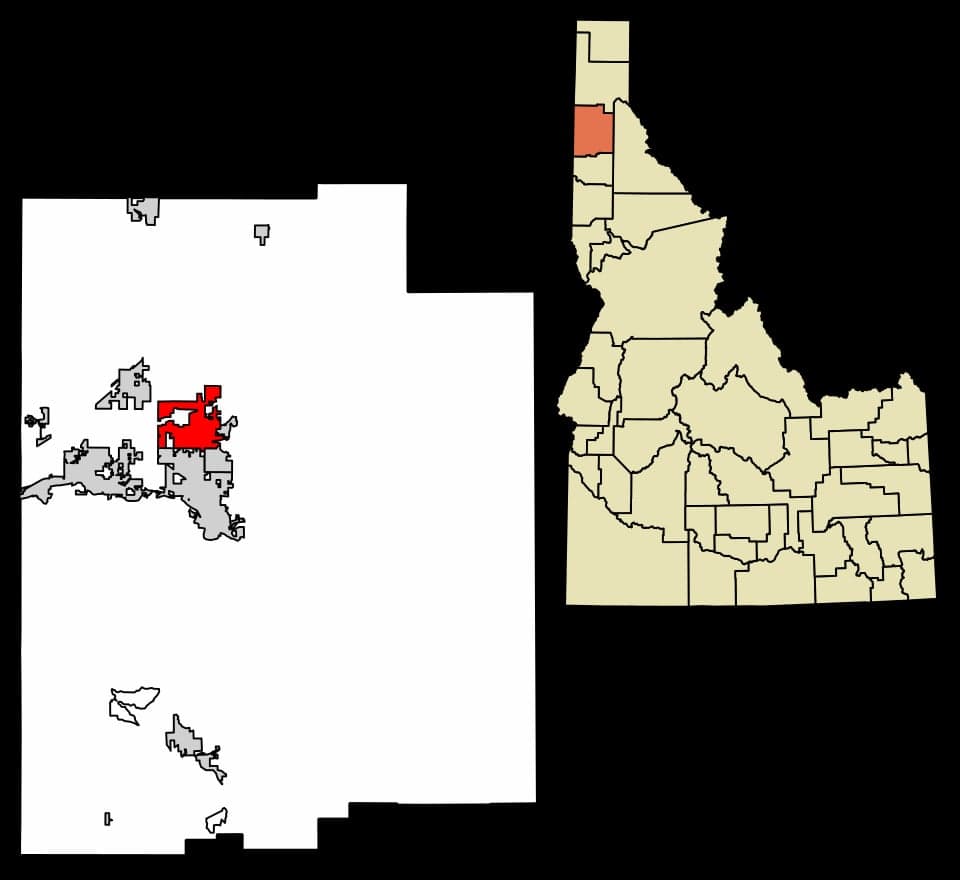
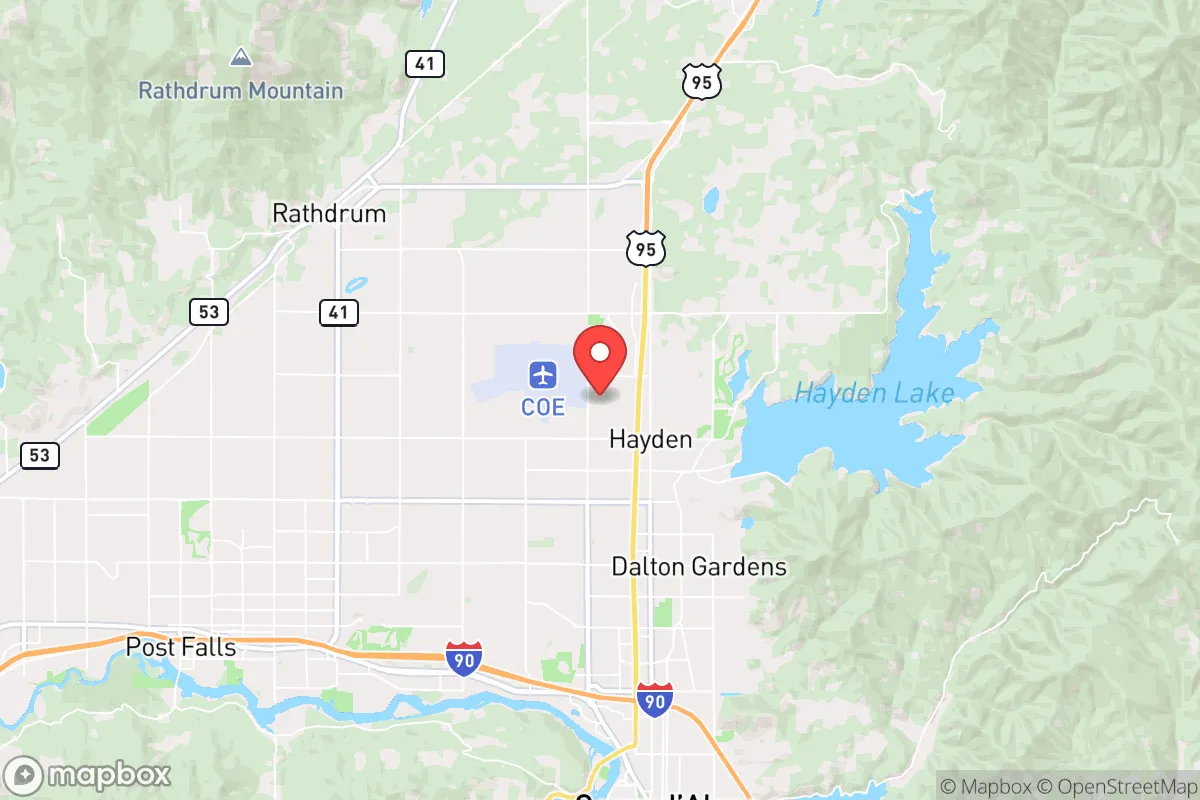
Photo: Wikipedia
Political ClimatePolitical Climate in Hayden, ID
District shown is the primary district for this city’s centroid. Cities may span multiple districts.
Local Political AnalysisPolitical Analysis of Hayden, ID
Hayden, Idaho, has long been a rock-solid conservative stronghold, and honestly, that’s one of the main reasons a lot of us moved here or stayed. The political lean here is deeply Republican, with Kootenai County consistently voting +30 points or more for GOP candidates in recent presidential elections. But I’ve watched things shift over the last decade, and while the core remains red, the edges are getting a little frayed. You’re seeing more folks from California and western Washington trickle in, and with them comes a subtle but real push toward progressive ideas—especially around land use, school policies, and local government overreach. It’s not a blue wave by any stretch, but it’s a noticeable undercurrent that has a lot of us keeping a close eye on city council meetings and school board elections.
How it compares
If you drive ten minutes south to Coeur d’Alene, you’ll find a more mixed bag—still conservative overall, but with a louder progressive minority that’s been gaining traction, especially in the downtown and waterfront areas. Post Falls, just west of Hayden, leans similar to Hayden but feels a bit more working-class and less prone to the kind of ideological drift you see in the tourist-heavy parts of Coeur d’Alene. The real contrast, though, is with places like Sandpoint or Moscow. Sandpoint, about 45 minutes north, has become a real battleground, with a vocal progressive faction that’s been pushing for more government control over development and even some local mask mandates that never would have flown here. Moscow, home to the University of Idaho, is a different world entirely—openly liberal, with policies on housing and public spaces that feel like they belong in Portland. That’s the trajectory we’re trying to avoid in Hayden. The difference is that Hayden’s growth is still largely driven by families and retirees who value low taxes, personal responsibility, and minimal government interference. We’ve got a strong network of local conservative groups and a county commission that’s been pretty good about pushing back against state-level overreach, but it’s a constant fight.
What this means for residents
For the average person living here, the political climate means you can generally live your life without the government breathing down your neck. Property taxes are low, there’s no state income tax, and the local permitting process for things like building a shop or adding a fence is still pretty straightforward—though I’ve heard grumbles that it’s getting more bureaucratic as the city grows. The real concern for me and a lot of my neighbors is the creeping influence of progressive ideology in the schools. We’ve seen some curriculum changes that raise eyebrows, and there’s been a push for more “equity” initiatives that sound an awful lot like government-mandated social engineering. That’s a red flag. If you value your Second Amendment rights, you’re in good shape—Idaho is a constitutional carry state, and local law enforcement is generally supportive. But you have to stay engaged. The people who are quiet tend to get steamrolled by the loud, organized minority that wants to turn this place into another Coeur d’Alene or, God forbid, a Sandpoint.
Culturally, Hayden still feels like a place where you can have a conversation with your neighbor without worrying about politics being shoved down your throat. The local churches are active, the 4-H and FFA programs are strong, and there’s a real sense of community self-reliance. That said, there’s a growing tension between the old-timers and the newcomers who want to “improve” things with more regulations, more bike lanes, and more government-funded programs. The biggest policy distinction you’ll notice is the city’s resistance to adopting the kind of “smart growth” zoning that limits property rights. We still have a lot of flexibility to use our land as we see fit, and that’s worth fighting for. Looking ahead, I’d say the next five to ten years are critical. If we can keep the local elections focused on freedom, low taxes, and limited government, Hayden will stay the kind of place where you can raise a family without feeling like you’re living under a microscope. If we get complacent, we’ll lose what makes this area special.

State Political ClimatePolitical Climate in Idaho
State Political AnalysisPolitical Environment in the State
Idaho has been a reliably red state for decades, but the last ten years have seen it shift from a quiet, libertarian-leaning conservative stronghold into a more assertive, culturally conservative powerhouse. The Republican Party holds a supermajority in the legislature, and the state hasn’t voted for a Democratic presidential candidate since 1964. However, the real story is the internal tension between the old-school, “leave me alone” libertarian strain and a newer, more active conservative movement focused on parental rights, election integrity, and pushing back against federal overreach. The 2024 election saw Trump win Idaho by over 30 points, but the real action is in the primary battles and the growing influence of the Idaho Freedom Caucus.
Urban vs. rural divide
The political map of Idaho is stark. The Treasure Valley, anchored by Boise, Meridian, and Nampa, is the state’s population center and its only real swing region. Boise itself has a noticeable progressive tilt, especially in its core neighborhoods and around the university, but the surrounding suburbs like Meridian and Eagle are solidly conservative. Drive an hour in any direction from Boise, and you hit deep red territory. Coeur d’Alene in the north is a fascinating case—it was once a blue-collar Democratic stronghold, but massive in-migration from California and Washington has turned it into a hotbed of conservative activism, with a strong libertarian streak. The rural counties—like Lemhi, Clark, and Oneida—routinely vote 80-90% Republican. The only reliably blue counties are Blaine (home to Sun Valley) and Teton (adjacent to Jackson Hole, Wyoming), both driven by wealthy, out-of-state transplants and resort economies. The urban-rural divide isn’t just about party ID; it’s about culture. Rural Idahoans view Boise as increasingly out of touch with their values, while Boise residents see rural areas as backward. This tension is the central political dynamic in the state.
Policy environment
Idaho’s policy environment is aggressively conservative, but with a distinct flavor. The state has a flat income tax rate of 5.8% (down from 6% in 2023), no corporate income tax on pass-through entities, and a sales tax of 6% that exempts groceries. Property taxes are relatively low, but they vary wildly by county. The legislature has been on a deregulation tear, eliminating occupational licensing for dozens of professions and passing a “right to try” law for experimental treatments. Education policy is a major battleground. The state passed a universal school choice program in 2023 (HB 93) that provides tax credits for private school tuition and homeschooling expenses, making it one of the most expansive in the nation. However, the public school system is chronically underfunded, ranking near the bottom nationally in per-pupil spending. Election laws are strict: voter ID is required, same-day registration is not allowed, and mail-in voting is restricted to those with a valid excuse. The state also passed a law in 2024 requiring all ballots to be hand-counted in counties with fewer than 10,000 residents, a direct response to election integrity concerns. On healthcare, Idaho has not expanded Medicaid under the Affordable Care Act, though voters passed a ballot initiative to do so in 2018. The legislature has since added work requirements and other restrictions to the program.
Trajectory & freedom
Idaho is arguably becoming more free in several key areas, but the definition of “freedom” is being contested. On gun rights, Idaho is a constitutional carry state with no permit required to carry concealed, and in 2023 it passed a law prohibiting local law enforcement from enforcing federal gun laws that violate the state constitution (HB 124). This is a direct challenge to federal authority. On parental rights, the state passed the “Parents’ Bill of Rights” (HB 93) in 2023, which requires schools to notify parents of any curriculum involving sexuality or gender identity and prohibits schools from withholding information about a child’s mental or physical health. This law has been a flashpoint, with progressive groups suing to block it. On medical autonomy, Idaho has one of the strictest abortion bans in the country, with no exceptions for rape or incest, and a law that allows civil suits against anyone who helps a minor obtain an abortion out of state. Property rights are strong, with no statewide zoning mandates and a “right to farm” law that protects agricultural operations from nuisance lawsuits. However, the state has also seen an increase in government overreach in the name of “public safety,” including a 2024 law that criminalizes sleeping on public property, which has been criticized as targeting the homeless. The trajectory is toward more individual liberty in the traditional conservative sense, but with a heavier hand on social issues and local control.
Civil unrest & political movements
Idaho has a history of anti-government sentiment, but the modern flashpoints are more organized. The most visible movement is the Idaho Freedom Caucus, a group of hardline conservative legislators who have successfully primaried moderate Republicans and pushed the party to the right. They’ve been instrumental in passing the school choice bill, the election integrity laws, and the anti-federal gun law. On the left, the Idaho Women’s March and Reclaim Idaho have been active, but their influence is limited to Boise and a few college towns. Immigration politics are a major issue, especially in the agricultural regions. The state passed a law in 2024 (HB 340) that requires all law enforcement to cooperate with federal immigration authorities and prohibits “sanctuary city” policies. There have been protests in Boise over this law, but they were small and quickly fizzled. The most visible civil unrest in recent years was the 2020 protests in Boise over the death of George Floyd, which turned violent for a few nights and led to a heavy police response. Since then, the political energy has shifted to school board meetings and county commission hearings, where parents and activists clash over library books, curriculum, and transgender policies. A new resident would notice that political signs are everywhere, especially in rural areas, and that conversations about politics are common and often heated. The state has a strong “live and let live” ethos, but that only applies if you’re not trying to change the culture.
Projection
Over the next 5-10 years, Idaho will likely become even more conservative, but the nature of that conservatism will evolve. The massive in-migration from California, Washington, and Oregon is bringing in people who are fleeing progressive policies, and they are overwhelmingly conservative. However, they are also more culturally suburban and less tied to the rural, libertarian traditions of the state. This will likely lead to a consolidation of the Idaho Freedom Caucus’s power, with more focus on school choice, parental rights, and election integrity. The Boise area will continue to grow and become more diverse, but it will also become more politically polarized, with the suburbs becoming even redder and the city core becoming a progressive island. The rural areas will continue to lose population and political influence, but they will remain the ideological heart of the state. The biggest wildcard is the federal government. If a Democratic administration in Washington tries to enforce federal gun laws or environmental regulations, Idaho is likely to push back hard, possibly with nullification-style legislation. The state’s economy is strong, driven by tech, agriculture, and manufacturing, and that will continue to attract new residents. A person moving to Idaho now should expect to find a state that is deeply conservative, increasingly assertive in its independence, and unapologetically traditional. The culture is friendly but insular, and newcomers are expected to adapt, not change things.
For a new resident, the bottom line is this: Idaho offers a high degree of personal freedom in the traditional sense—low taxes, strong gun rights, and minimal government interference in your daily life. But that freedom comes with a clear cultural expectation. If you’re looking for a place where your values are respected and the government stays out of your business, Idaho is a strong choice. Just be prepared for a state that is actively fighting to stay that way, and don’t expect the political climate to soften anytime soon.
* Values derived from national, state, county, city and local statistics and may differ in a specific area. Last updated: 2026-04-21T10:25:52.000Z
Narrative content on this page is AI-generated and may contain mistakes. Verify any details that matter before acting on them.
ReloMaps may earn a commission from affiliate links at no extra cost to you.

