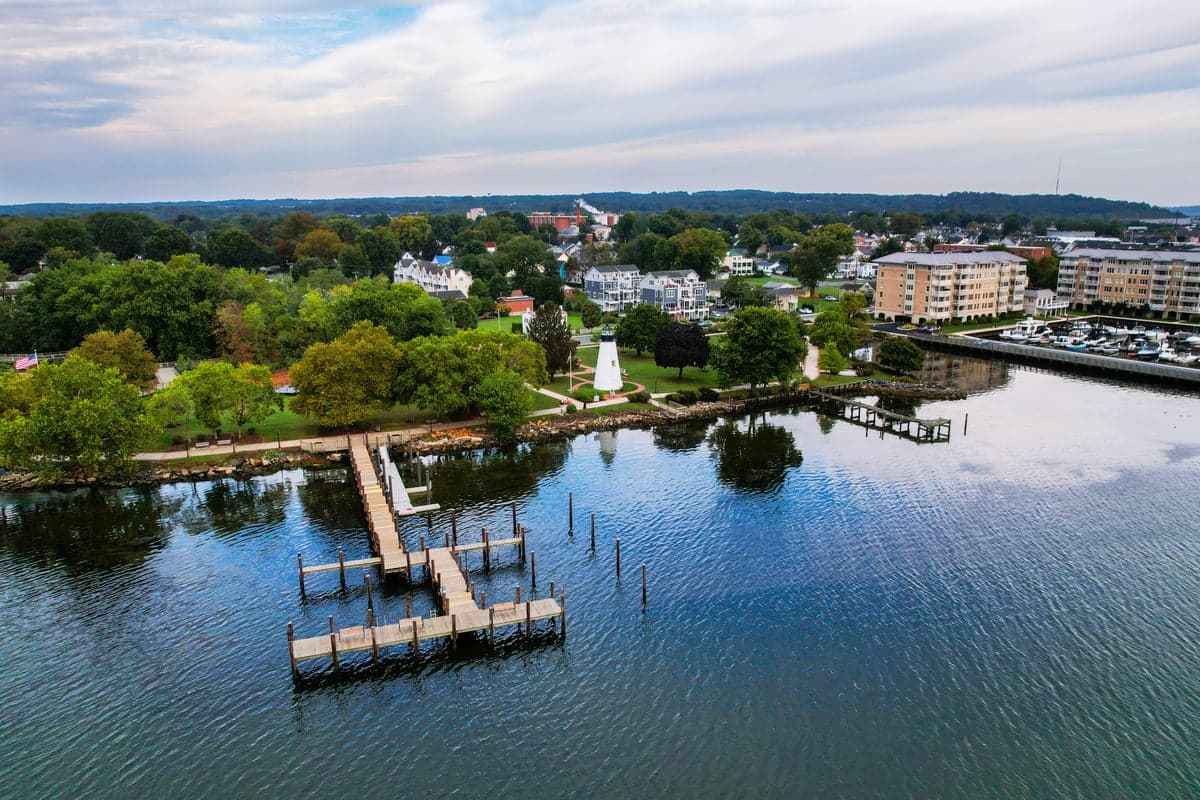
Photo: Wikipedia
Strategic Assessment of Havre De Grace, MD
Multiple tactical vulnerabilities. Population density, target proximity, or disaster risk are likely compounding. A retreat property and exit planning is required.
What does the Strategic Assessment tell us?
Our Strategic Assessment grades tactical survivability of an area. Major population centers, military targets, fallout zones, natural disasters, and border exposure all drive risk — lower exposure means a more defensible position in a crisis.
This is heavily inspired by Joel Skousen's Strategic Relocation book. Highly recommended you checkout the book ($)What does this tell us?
Our Strategic Assessment grades tactical survivability of an area. Major population centers, military targets, fallout zones, natural disasters, and border exposure all drive risk — lower exposure means a more defensible position in a crisis.
This is heavily inspired by Joel Skousen's Strategic Relocation book. Highly recommended you checkout the book ($)Strategic Pillars

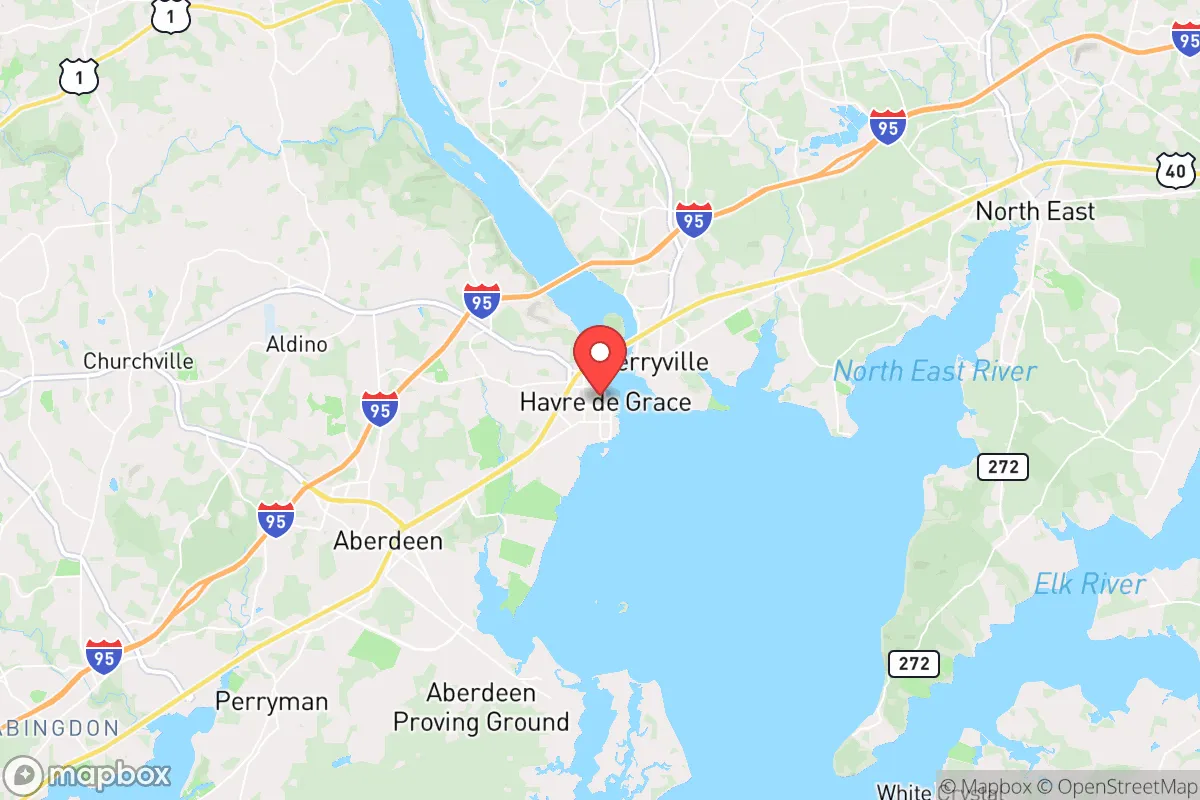
Key Distances
Regional Safe Places
Below is our recommended "safe zones" in Maryland and the surrounding area based on our strategic heuristics. For most people, it's unrealistic to live in a “safe zone” full-time due to work, family or other personal reasons. They tend to be more rural. However, many of these areas are perfect for second homes and retreat properties that double as a vacation home or even a short-term rental.
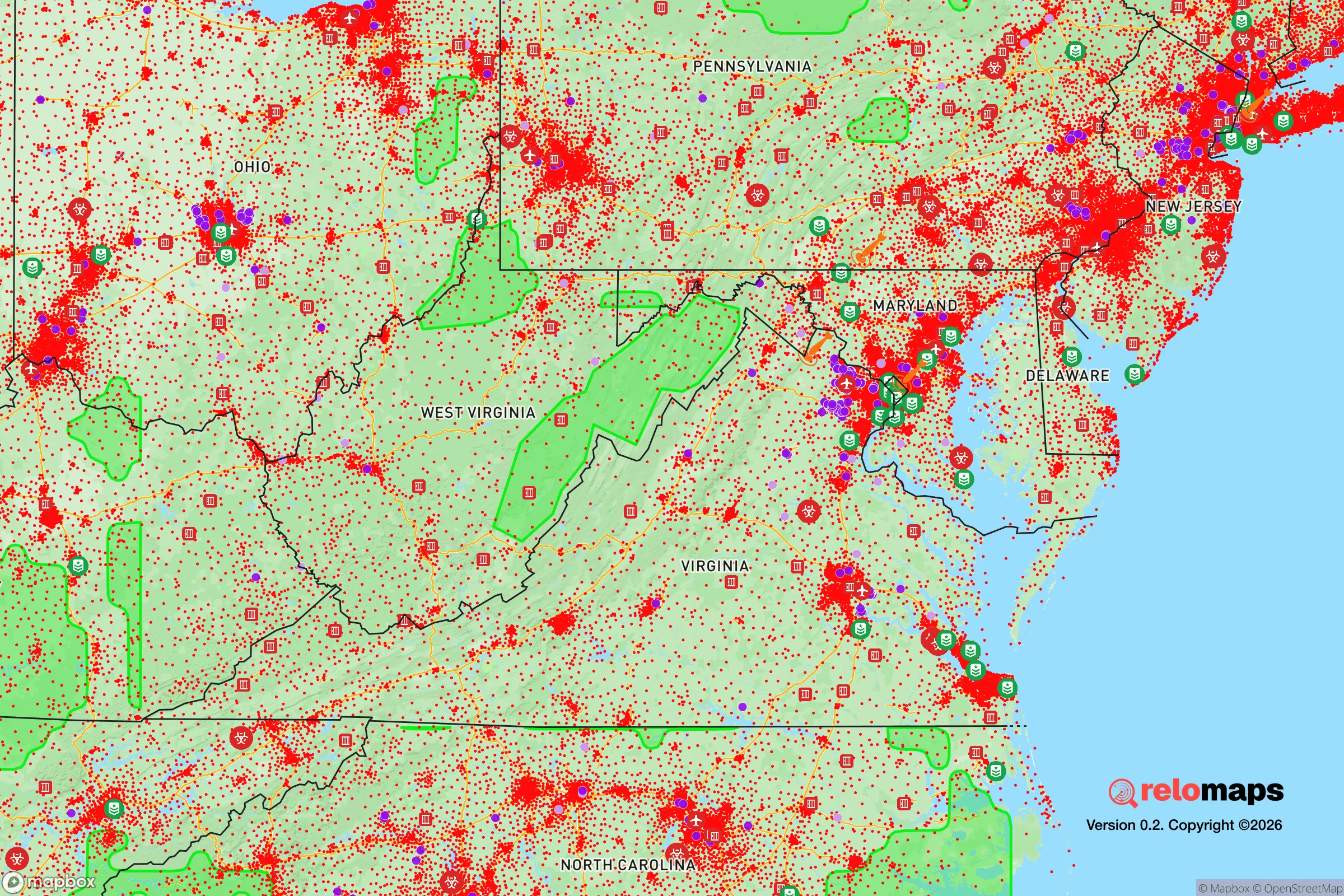
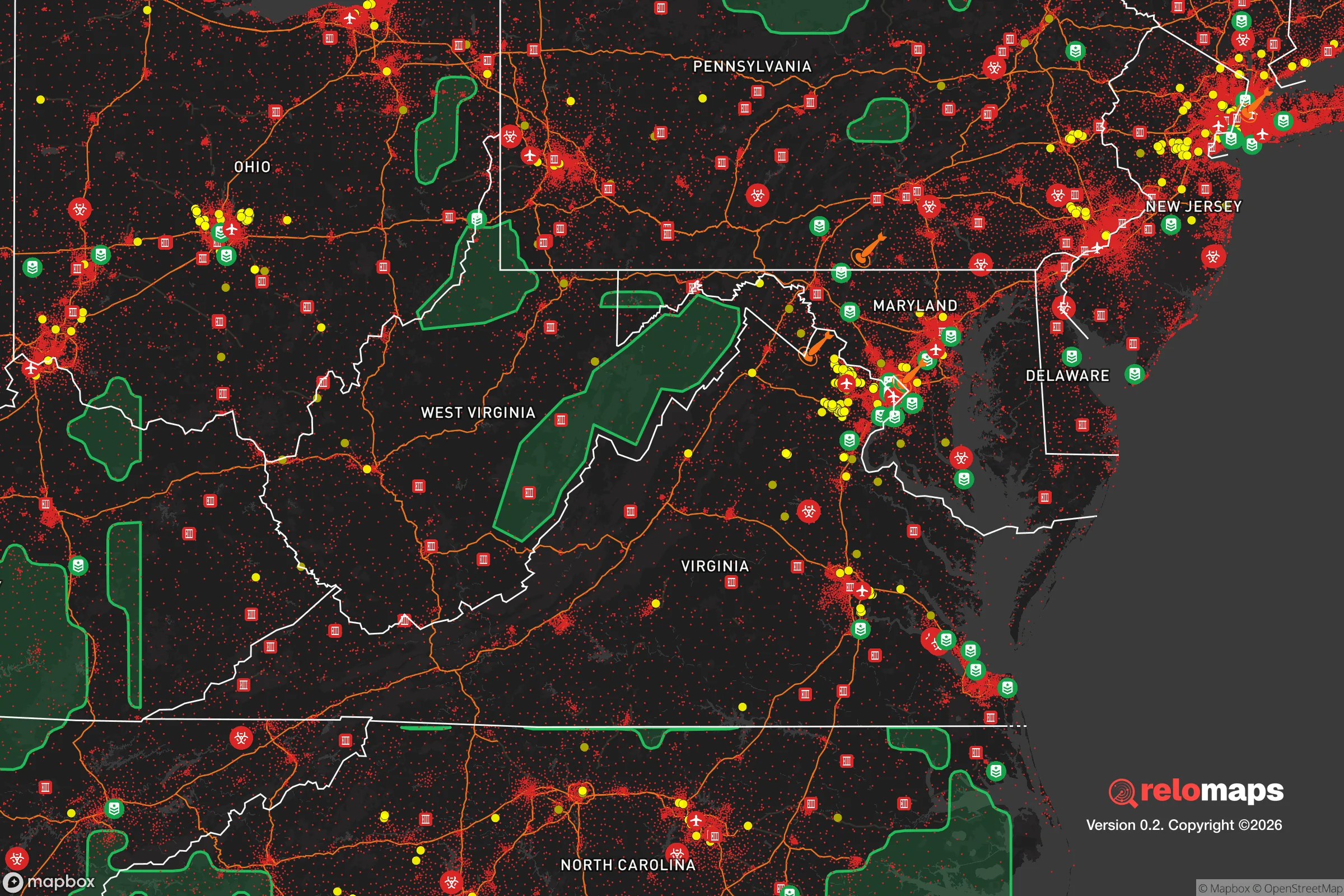


Important Note: For informational purposes only. This does not mean nothing bad ever happens in the green zones. Please use common sense. This is based on public data and modeled with AI. We tried to take a conservative approach but mistakes happen. We update this regularly as new information becomes available.
Solar Generator Recommendations
Backup power matters more here than in safer locations. We've picked three solar generators across budgets and capacity tiers — start with the budget unit if you only need a few essentials, or step up if you want to run a fridge and HVAC for days at a time.

Jackery Portable Power Station Explorer 300
Budget OptionPower on the Go: Weighing only 11 lbs, it's convenient to set up and store with book-sized foldable solar panels

BLUETTI Portable Power Station AC180
Designed for both indoor and outdoor scenarios, AC180 is highly capable as it has a robost capacity and continuous output power.

EF ECOFLOW DELTA Pro Ultra Power Station
Upgraded PickEcoFlow DELTA Pro Ultra is a whole-home energy system designed to grow with your family. Integrated with the Smart Home Panel 2, it scales to meet your evolving energy needs — keeping your home powered, intelligent, and secure through every stage of life.
We earn a commission, at no additional cost to you.
Strategic Assessment Analysis
Havre de Grace, Maryland, sits at a strategic choke point where the Susquehanna River meets the Chesapeake Bay, offering a mix of natural defensibility and troubling proximity to major vulnerabilities. For a relocator thinking in terms of resilience—civic unrest, supply chain collapse, or mass casualty events—this town presents a double-edged sword. Its location on the I-95 corridor and within an hour of Baltimore, Philadelphia, and Washington D.C. means you are close to the blast zones of any major event, but its position on the water and its small-town character give it some genuine survival advantages if you plan ahead. The key question is whether the risks of being near those population centers outweigh the benefits of the natural resources and relative isolation from the worst urban chaos.
Geographic position and natural advantages for long-term survival
Havre de Grace occupies the western shore of the Chesapeake Bay at the mouth of the Susquehanna River, a location that has been a military and trade nexus since the Revolutionary War. For a prepper, the most immediate asset is water—unlimited access to the Susquehanna and the Bay means you have a reliable source for filtration and, with proper treatment, drinking. The surrounding terrain is a mix of low hills, marshlands, and farmland, which provides some natural cover and defensible positions if you know where to look. The town itself is compact, with a population around 13,000, meaning it is small enough that you can know your neighbors and establish a community watch, but large enough to have a police force and basic services. The Susquehanna State Park to the north offers hundreds of acres of forest and trails for foraging, hunting, and bug-out routes, while the Conowingo Dam just upstream is a critical piece of infrastructure—it generates electricity and controls water flow, but it is also a target. The proximity to the I-95 and US-40 corridors is a double-edged sword: they give you quick egress to the west or north, but they also funnel refugees and looters from the cities in a crisis. The Chesapeake Bay Bridge to the south is a natural chokepoint that could be controlled, but it also means anyone fleeing the Eastern Shore will funnel through this area.
Risks, exposures, and proximity to fallout-relevant landmarks
The biggest liability for Havre de Grace is its location within the Washington D.C.-Baltimore-Philadelphia megalopolis. In a mass casualty event—whether a terrorist attack, EMP, or civil unrest—these cities will become dead zones, and the fallout (both literal and figurative) will spread outward. Havre de Grace is roughly 35 miles from Baltimore and 50 miles from D.C., which puts it inside the blast radius of a nuclear detonation at either city, and certainly inside the fallout plume. The Conowingo Dam is a high-value target for sabotage or attack; if it were breached, the resulting flood would devastate the town and the entire lower Susquehanna valley. Additionally, the Peach Bottom Atomic Power Station is just 15 miles upriver in Pennsylvania—a nuclear plant that, if compromised, would render this area uninhabitable for decades. The Aberdeen Proving Ground is directly across the river, a massive U.S. Army installation that tests weapons and munitions; in a crisis, it could become a target or a source of military control, but it also means the area is a potential flashpoint for conflict. The I-95 corridor itself is a risk: in a grid-down scenario, millions of people will try to flee south or north along this route, and Havre de Grace sits right on it. The town’s low elevation (mostly under 50 feet) also makes it vulnerable to storm surge from hurricanes or sea-level rise, though that is a slower-moving threat compared to the immediate ones.
Practical resilience for a relocator: food, water, energy, and defensibility
For a single individual or family willing to put in the work, Havre de Grace offers a decent baseline for self-sufficiency. Water is abundant—the Susquehanna and the Bay are right there, but you need a good filtration system (Berkey or similar) and knowledge of how to treat for saltwater if you are pulling from the Bay. The Chesapeake Bay is a massive food source: fish, crabs, oysters, and waterfowl are plentiful, and the surrounding farmland grows corn, soybeans, and vegetables. There are several farms within a 10-mile radius that sell direct to consumers, and the Havre de Grace Farmers Market runs year-round, giving you a chance to build relationships with local growers before a crisis. Energy is a weak point: the grid is old and vulnerable to storms and cyberattacks, and the Conowingo Dam is the primary local power source. Solar panels are a good investment here—the area gets about 200 sunny days a year, which is average for the Mid-Atlantic—but you will need battery storage because the grid is unreliable. Defensibility is mixed: the town is laid out on a peninsula, which means you can control access points (the two bridges over the Susquehanna and the roads leading out), but it also means you can be trapped if those routes are cut. The Susquehanna State Park provides a natural bug-out location with cover and water, but it is also public land that will attract others. For a relocator, the best strategy is to buy property on the western edge of town or in the rural areas north of US-40, where you have more land, better drainage, and easier escape routes toward Pennsylvania. The local gun culture is strong—Maryland has restrictive laws, but Harford County is more conservative than the state as a whole, and you will find like-minded neighbors who are armed and aware.
The overall strategic picture for Havre de Grace is one of calculated risk. It is not a remote survivalist paradise—you are too close to too many high-value targets and population centers for that. But if you are looking for a place that balances access to natural resources, a small-town community that will band together, and a location that gives you options to bug in or bug out, it is worth a serious look. The key is preparation: have a plan for the first 72 hours when the cities collapse, know your evacuation routes west toward the Appalachians, and build a network of trusted locals before things go sideways. The water and food are here, but the threats are real. If you can handle the proximity to danger and the need for constant vigilance, Havre de Grace can be a viable base for weathering the storm. If you want true isolation, look farther west into Pennsylvania or West Virginia. But if you want a strategic foothold with access to the Bay and a community that understands the stakes, this town deserves a place on your short list.

* Values derived from national, state, county, city and local statistics and may differ in a specific area. Last updated: 2026-04-19T06:59:54.000Z
Narrative content on this page is AI-generated and may contain mistakes. Verify any details that matter before acting on them.
ReloMaps may earn a commission from affiliate links at no extra cost to you.

