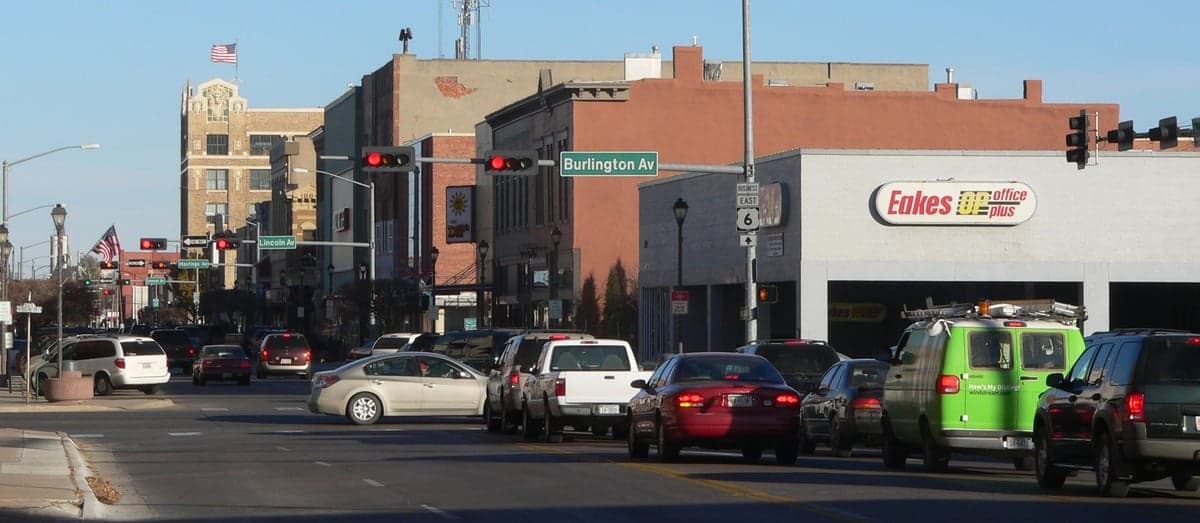
Photo: Wikipedia
Political ClimatePolitical Climate in Hastings, NE
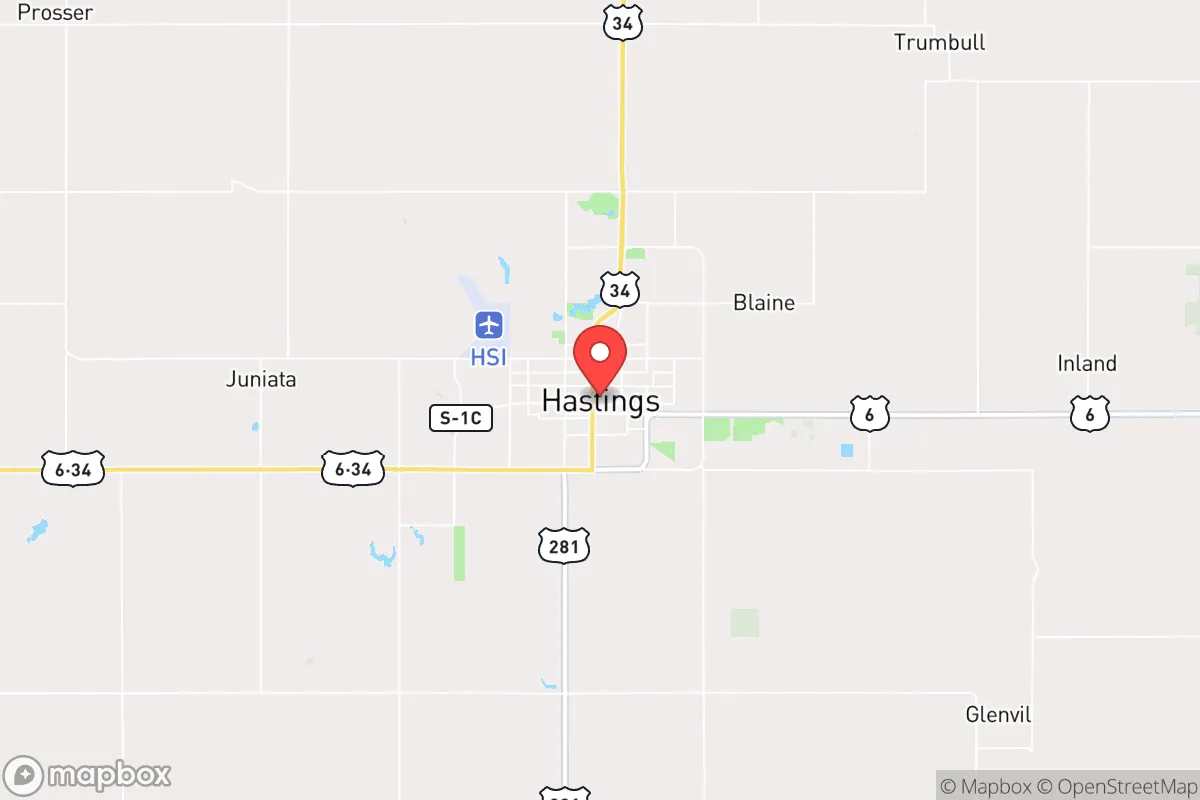
District shown is the primary district for this city’s centroid. Cities may span multiple districts.
Local Political AnalysisPolitical Analysis of Hastings, NE
Hastings, Nebraska, is about as solidly conservative as it gets, with a Cook PVI of R+27 that puts it deep in the red. That number isn't just a statistic—it reflects a community where traditional values, limited government, and personal responsibility are still the default. But like a lot of small towns in the Midwest, you can feel the ground shifting under your feet. The old guard, the folks who remember when Hastings was a railroad and manufacturing hub, still hold the line, but there's a growing unease about outside influences creeping in, especially from Lincoln and Omaha, where progressive policies are becoming the norm.
How it compares
If you drive 30 minutes north to Grand Island, you'll find a similar conservative bent, but it's a little more mixed—more diverse population, more industry, and a slightly younger demographic that's less tied to the old ways. Lincoln, about 90 minutes east, is a whole different animal: a college town with a liberal city council, bike lanes everywhere, and a mayor who talks about "equity" like it's a religion. Hastings, by contrast, still feels like a place where people wave from their pickup trucks and the county commission isn't afraid to tell the state to back off on mandates. The surrounding Adams County is even more conservative than the city itself, which tells you something about the rural-urban divide even within a small town. The real contrast, though, is with Kearney, about 45 minutes west—it's also conservative, but it's growing faster, with more chain stores and a younger workforce, which brings its own set of pressures on local government to modernize. Hastings is holding its ground, but you can see the tension between those who want to keep things as they are and those who think "progress" means adopting the same policies that are ruining bigger cities.
What this means for residents
For the average person living here, the political climate means you can still go to the hardware store and have a conversation about property taxes without someone lecturing you about systemic injustice. The school board is still focused on reading, writing, and arithmetic, not on critical race theory or gender ideology. The city council hasn't gone down the rabbit hole of defunding the police or imposing mask mandates that last longer than a bad cold. But there's a quiet worry that the next election cycle could bring in candidates who see Hastings as a place to "catch up" with the rest of the country. The local paper, the Tribune, still leans conservative, but you'll notice more op-eds lately pushing for "diversity initiatives" and "sustainability goals"—code words for more government control over your life. The real concern is that as the older generation passes on, younger families moving in from Lincoln or Omaha might bring their voting habits with them. For now, though, if you value low taxes, Second Amendment rights, and a school system that doesn't indoctrinate your kids, Hastings is still a safe bet.
One thing that sets Hastings apart culturally is its strong sense of self-reliance. The town has a long history of manufacturing—think BNSF Railway, Tractor Supply Company's distribution center, and a handful of agribusinesses—and that blue-collar work ethic translates into a "leave us alone" attitude toward government. The local chamber of commerce is pro-business, not pro-regulation, and the county commission has a track record of pushing back against state-level overreach on land use and environmental rules. There's also a strong church presence, with dozens of congregations that anchor the community, and that keeps the social fabric intact. The biggest red flag I see is the slow creep of progressive ideology through the school system—nothing overt yet, but you'll hear about "social-emotional learning" and "restorative justice" in board meetings, which are just fancy terms for letting kids off the hook and teaching them to be activists instead of students. If that trend continues, Hastings could start looking more like Lincoln in a decade. But for now, it's still a place where your neighbor will help you fix a fence without asking for a government grant, and that's worth holding onto.

State Political ClimatePolitical Climate in Nebraska
State Political AnalysisPolitical Environment in the State
Nebraska has long been a reliably conservative state, with a strong Republican lean that has only deepened in recent cycles. The state hasn't voted for a Democratic presidential candidate since 1964, and in 2024, Donald Trump carried it by a comfortable 19-point margin. Over the past 10-20 years, the dominant coalition has been a mix of rural conservatives, agricultural interests, and a growing suburban base that has shifted rightward, particularly in the Omaha metro area. However, the state’s unique unicameral legislature and its split electoral vote system (where two of the five electoral votes are awarded by congressional district) create a more nuanced political landscape than the statewide numbers suggest.
Urban vs. rural divide
The political map of Nebraska is a textbook example of the urban-rural split. The two major population centers—Omaha (Douglas County) and Lincoln (Lancaster County)—are the only real blue dots in a sea of red. Omaha’s 2nd Congressional District, which includes the city’s core and some western suburbs, has flipped between parties in recent cycles, voting for Joe Biden in 2020 and then swinging back to Trump in 2024. Lincoln, home to the University of Nebraska, is reliably Democratic but not overwhelmingly so. Drive 20 minutes outside either city, and you’re in deep-red territory. Sarpy County, just south of Omaha, has become a conservative stronghold as families flee the city for newer suburbs like Papillion and La Vista. Meanwhile, the vast rural stretches—places like Scottsbluff in the Panhandle, Grand Island in the central Platte Valley, and Norfolk in the northeast—vote Republican by margins of 70% or more. The divide isn’t just about population density; it’s cultural. Rural Nebraskans see the state’s agricultural heritage and low taxes as non-negotiable, while urbanites in Lincoln and Omaha are more focused on public services and social issues.
Policy environment
Nebraska’s policy environment is a mixed bag for conservatives, but the overall trend is favorable. The state has no personal or corporate income tax on Social Security benefits, and the top individual income tax rate was cut from 6.84% to 5.84% in 2023, with a path to 3.99% by 2027. Property taxes remain a sore spot—they’re high relative to the region, especially in rural areas where agricultural land valuations have soared. The legislature passed LB 243 in 2023 to cap property tax growth, but it’s been a slow fix. On education, Nebraska has a robust school choice movement: LB 753 (the Opportunity Scholarships Act) was signed in 2023, creating tax-credit scholarships for private school tuition, though it faced a referendum challenge. Healthcare is a mixed bag—the state expanded Medicaid under the Affordable Care Act in 2020 via ballot initiative, but has resisted further federal overreach. Election laws are solid: voter ID was passed in 2023 (LB 514), and the state has no-excuse absentee voting, though mail-in ballot drop boxes were restricted in 2024. The unicameral legislature is officially nonpartisan, but in practice, Republicans hold a supermajority, which keeps most progressive legislation at bay.
Trajectory & freedom
Nebraska is moving in the right direction on personal liberty, but there are warning signs. On gun rights, the state is a constitutional carry state since 2023 (LB 77), allowing permitless concealed carry for anyone 21 or older. That’s a win. On parental rights, LB 1084 (the Parents’ Bill of Rights) was passed in 2023, requiring schools to notify parents about curriculum changes and medical services—a direct response to overreach in districts like Omaha Public Schools. Medical freedom took a hit during COVID, with Governor Pete Ricketts imposing some of the strictest lockdowns in the Midwest in 2020, but the backlash was swift. The legislature later passed LB 906 in 2022, banning vaccine passports and employer mandates for state workers. On abortion, Nebraska passed a 12-week ban in 2023 (LB 574), which also banned gender-affirming care for minors—a major win for conservatives. Property rights are generally strong, though the state’s use of eminent domain for the Keystone XL pipeline (which was eventually canceled) left a bad taste. The biggest freedom concern is taxation: while income taxes are dropping, property taxes are still a burden, and the state’s reliance on sales tax (including on groceries) feels regressive.
Civil unrest & political movements
Nebraska is not a hotbed of civil unrest, but there have been flashpoints. The 2020 George Floyd protests in Omaha turned violent, with looting and fires in the downtown area, leading to a heavy National Guard presence. That event galvanized the state’s conservative base, especially in Bellevue and Fremont, where residents felt the city’s leadership was too lenient. Immigration politics are a live wire: Fremont passed a strict anti-sanctuary city ordinance in 2010 (upheld by the courts), and the state has no sanctuary cities. In 2024, the legislature considered LB 1070, a bill to require local law enforcement to cooperate with ICE, though it stalled. Election integrity has been a major issue since 2020, with the Nebraska Republican Party pushing for a ban on ballot drop boxes and stricter signature verification—both of which passed in 2024. There’s also a growing secessionist sentiment in the Panhandle, where residents of Scottsbluff and Chadron have floated the idea of joining Wyoming or forming a separate state, frustrated with being ignored by Lincoln. It’s mostly talk, but it reflects a real cultural divide.
Projection
Over the next 5-10 years, Nebraska is likely to become more conservative, not less. In-migration is modest but tilting red: people are moving from blue states like California and Illinois to places like Papillion and Gretna for lower taxes and safer neighborhoods. The Omaha metro is growing, but the suburbs are expanding faster than the urban core, which will keep the 2nd Congressional District competitive but lean Republican. The rural population is aging and shrinking, but the state’s electoral map is so skewed toward land area that this won’t flip any statewide races. The biggest wildcard is the unicameral legislature: if Democrats ever break the supermajority, they could push through progressive policies like a state-level minimum wage hike or expanded voting access. But for now, the trajectory is clear: lower taxes, stronger parental rights, and a continued resistance to federal overreach. Someone moving in now should expect a state that’s increasingly aligned with conservative values, but with a few stubborn blue pockets in Lincoln and Omaha that will keep things interesting.
For a new resident, the bottom line is this: Nebraska offers a high degree of personal freedom, especially on gun rights, school choice, and parental control. The tax burden is manageable and trending downward, though property taxes will bite if you’re buying land. The political climate is stable and predictable—no surprise ballot initiatives or sudden policy swings. If you’re looking for a place where your values are the norm and the government mostly stays out of your way, Nebraska is a solid bet. Just avoid the urban cores if you want to skip the progressive noise, and keep an eye on property tax reform—it’s the one issue that could sour the deal.
* Values derived from national, state, county, city and local statistics and may differ in a specific area. Last updated: 2026-05-03T20:30:14.000Z
Narrative content on this page is AI-generated and may contain mistakes. Verify any details that matter before acting on them.
ReloMaps may earn a commission from affiliate links at no extra cost to you.

