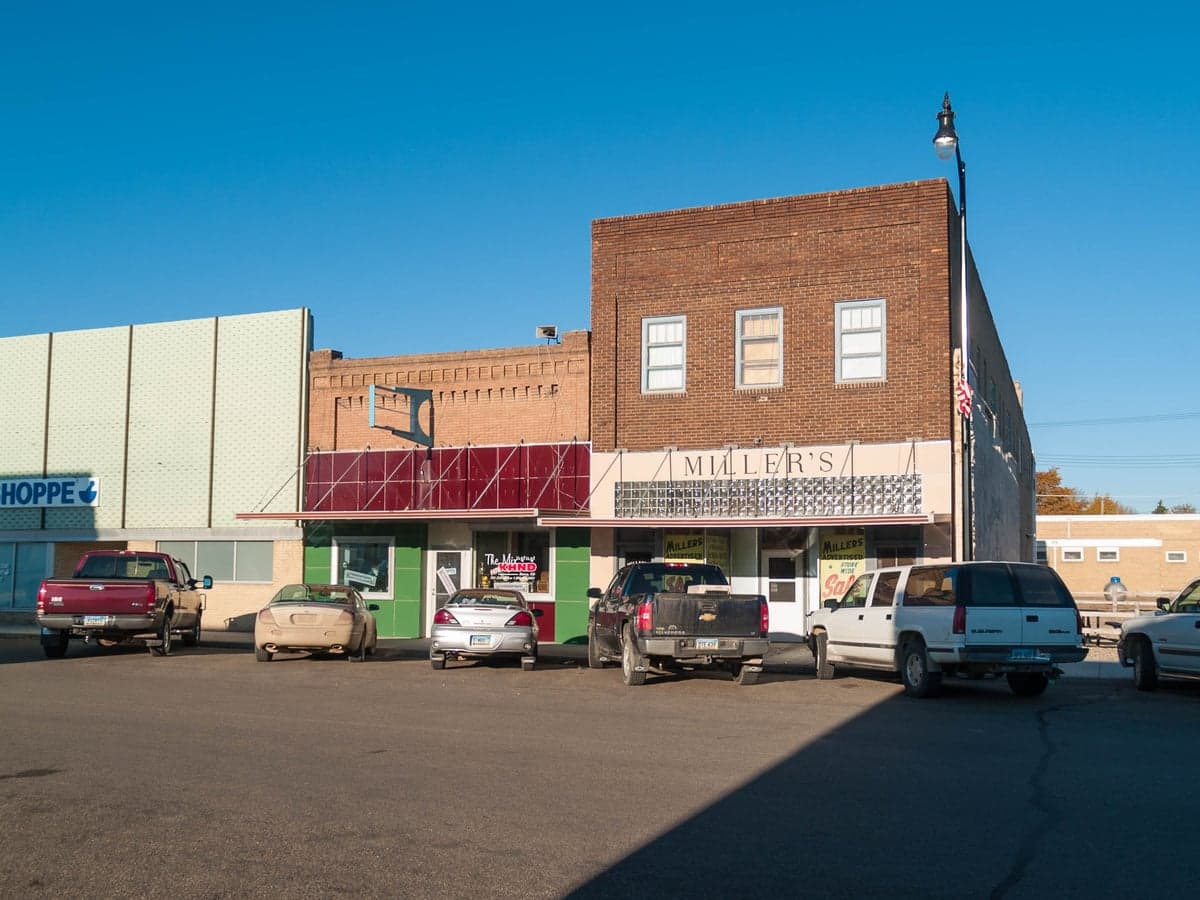
Photo: Wikipedia
Quality of Life in Harvey, ND
Above-average quality of iife. The area offers a reasonable cost of living, decent mobility, and a mix of neighborhood amenities.
What does Quality of Life tell us?
Quality of Life blends cost of living, nearby amenities, socioeconomic signals, and neighborhood character. City-level scores represent the whole municipality; individual neighborhoods can differ.
What does this tell us?
Quality of Life blends cost of living, nearby amenities, socioeconomic signals, and neighborhood character. City-level scores represent the whole municipality; individual neighborhoods can differ.
Cost of Living
51% below national average
The Real Cost of Living in Harvey, ND for 2026
| Tier | Individual | Family (4) |
|---|---|---|
| Survival | $10k | $19k |
| Comfortable | $23k | $34k |
| Luxury | $77k+ | $119k+ |
| Elite (Top 5%) | $131k+ | $203k+ |
126%
The Area Signal
A metric tracking the socioeconomic signals of the area.


Limited data for this area
Limited data for this area
Hobbies
Explore the areaGroceries
4 within 10 miles
Gas
0 within 10 miles
Hospital
1 within 20 miles
Airport
JFK — John F. Kennedy Memorial
Post Office
USPS — Harvey, ND
Critical Amenities
Quality-of-Life Analysis
Harvey, North Dakota, offers a distinctly affordable quality of life that attracts a mix of agricultural workers, energy-sector employees, and families seeking a low-stress, rural environment. With a cost of living index of 49 (well below the U.S. average of 100), the community is notably more affordable than larger regional hubs like Minot or Bismarck, drawing residents who prioritize financial stability and space over urban amenities. The population, roughly 1,700, is predominantly employed in farming, oilfield support, and local healthcare, creating a tight-knit, self-reliant social fabric.
Cost of living and housing affordability compared to nearby cities
Housing in Harvey is exceptionally inexpensive, with a median home value of $118,000 and median rent of just $631 per month. This is roughly half the cost of comparable homes in Minot (where the median exceeds $230,000) and significantly less than in Bismarck. The average commute of 18 minutes is short by national standards, reflecting the town's compact layout and the prevalence of local jobs in agriculture, the Harvey Public School District, and the CHI St. Alexius Health clinic. For renters, the low rent means a single-income household can comfortably afford a two-bedroom apartment, while buyers can often secure a mortgage payment lower than rent in many larger cities. Property taxes in Wells County are moderate, and utility costs are manageable, though winter heating bills can spike due to North Dakota's harsh climate.
Local amenities, schools, and daily life for families
Daily life in Harvey revolves around a handful of essential services and community institutions. The Harvey Public School District serves roughly 400 students from pre-K through 12th grade, with a student-teacher ratio of about 12:1, offering more individualized attention than larger districts. The town has a grocery store (Harvey Super Valu), a hardware store, a public library, and a small hospital with emergency services. For shopping or entertainment beyond basics, residents drive 45 minutes to Minot or 90 minutes to Bismarck. The Harvey Civic Center hosts community events, and the nearby Lake Josephine provides fishing, boating, and camping in summer. Winters are long and cold, with average January highs around 18°F, so indoor activities like high school sports, church gatherings, and the local bowling alley form the social backbone. Internet access is available via cable and fixed wireless, though speeds may lag behind urban areas.
Harvey is best suited for those who value low cost, quiet surroundings, and a strong sense of community over career diversity or nightlife. Retirees on fixed incomes, remote workers with stable internet, and families seeking affordable homeownership will find the town particularly appealing. Young professionals in specialized fields may need to commute to Minot or Bismarck for work, but the short commute and low housing costs make that trade-off manageable. Anyone uncomfortable with extreme winters or limited dining and shopping options should consider a longer visit before relocating.

Crime in Harvey, ND
Lower crime rates than 99% of comparable U.S. locations.
Violent CrimeViolent Crime Analysis
Property CrimeProperty Crime Analysis
Crime Analysis
Harvey, North Dakota, is one of the safest small communities in the state, with a violent crime rate of 0 per 100,000 residents and a property crime rate of 193.9 per 100,000. These figures place Harvey far below both the North Dakota state averages and national benchmarks, making it an exceptionally low-risk environment for families, retirees, and anyone seeking a quiet rural lifestyle. The absence of violent crime and the relatively low property crime rate reflect the community's tight-knit social fabric and the effective presence of local law enforcement.
Crime in context
To understand Harvey's safety profile, it helps to compare its crime rates to broader averages. The national violent crime rate in 2023 was approximately 380 per 100,000, while North Dakota's state rate was around 330 per 100,000. Harvey's 0 violent crimes per 100,000 is a statistical outlier, representing a complete absence of homicide, rape, robbery, and aggravated assault. Property crime in Harvey (193.9 per 100,000) is also dramatically lower than the national average of roughly 1,950 per 100,000 and the North Dakota average of about 1,800 per 100,000. This means a resident of Harvey is roughly 10 times less likely to experience a property crime than the average American. Unlike large metro areas where progressive prosecutorial policies can lead to reduced enforcement and higher recidivism, Harvey's justice system operates within a conservative, rural framework that prioritizes public safety and victim accountability.
What residents experience
Daily life in Harvey is characterized by a strong sense of security. Residents commonly leave doors unlocked, children play outside without constant supervision, and neighborhood watch is informal but effective. The most frequently reported property crimes are minor thefts and occasional vandalism, rather than burglary or motor vehicle theft. The local police department maintains a visible presence and responds quickly to calls. Because Harvey is not near a large metropolitan area, it avoids the spillover crime that often accompanies urban proximity. The community's conservative values and emphasis on personal responsibility contribute to a justice environment where offenders face clear consequences, reinforcing deterrence and protecting victims' rights.
Neighborhood-level variation in Harvey is minimal. The entire city, with a population under 2,000, experiences uniformly low crime rates. The most significant safety consideration is not crime but rather weather-related hazards, such as winter storms and occasional flooding. For those moving from high-crime urban centers, Harvey offers a dramatic and measurable improvement in personal and property safety, supported by a justice system that does not prioritize offender rehabilitation over public protection.
* Values derived from national, state, county, city and local statistics and may differ in a specific area. Last updated: 2026-04-19T08:01:05.000Z
Narrative content on this page is AI-generated and may contain mistakes. Verify any details that matter before acting on them.
ReloMaps may earn a commission from affiliate links at no extra cost to you.

