

Photo by Anthony Chiado on Unsplash
Quality of Life in Harrisonburg, VA
Above-average quality of iife. The area offers a reasonable cost of living, decent mobility, and a mix of neighborhood amenities.
What does Quality of Life tell us?
Quality of Life blends cost of living, nearby amenities, socioeconomic signals, and neighborhood character. City-level scores represent the whole municipality; individual neighborhoods can differ.
What does this tell us?
Quality of Life blends cost of living, nearby amenities, socioeconomic signals, and neighborhood character. City-level scores represent the whole municipality; individual neighborhoods can differ.
Cost of Living
3% below national average
The Real Cost of Living in Harrisonburg, VA for 2026
| Tier | Individual | Family (4) |
|---|---|---|
| Survival | $18k | $34k |
| Comfortable | $54k | $79k |
| Luxury | $107k+ | $167k+ |
| Elite (Top 5%) | $126k+ | $196k+ |
75%
The Area Signal
A metric tracking the socioeconomic signals of the area.
Hobbies
Explore the areaGroceries
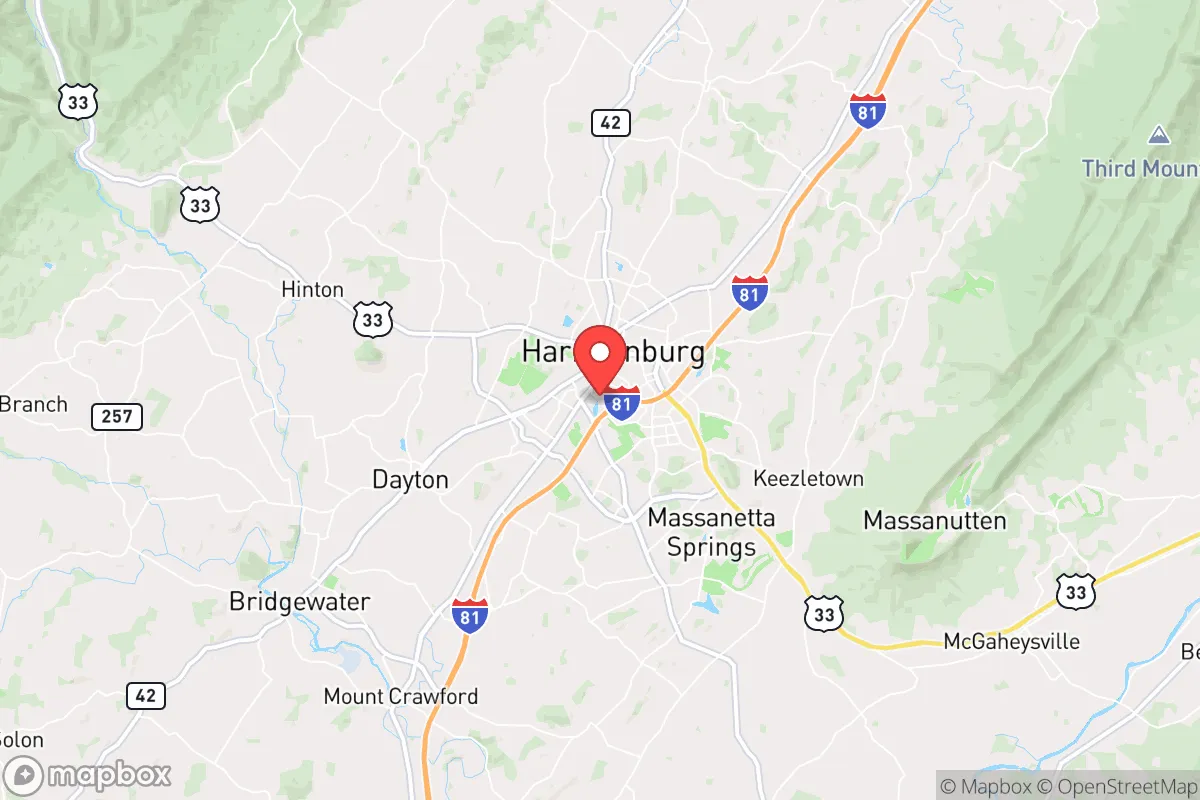
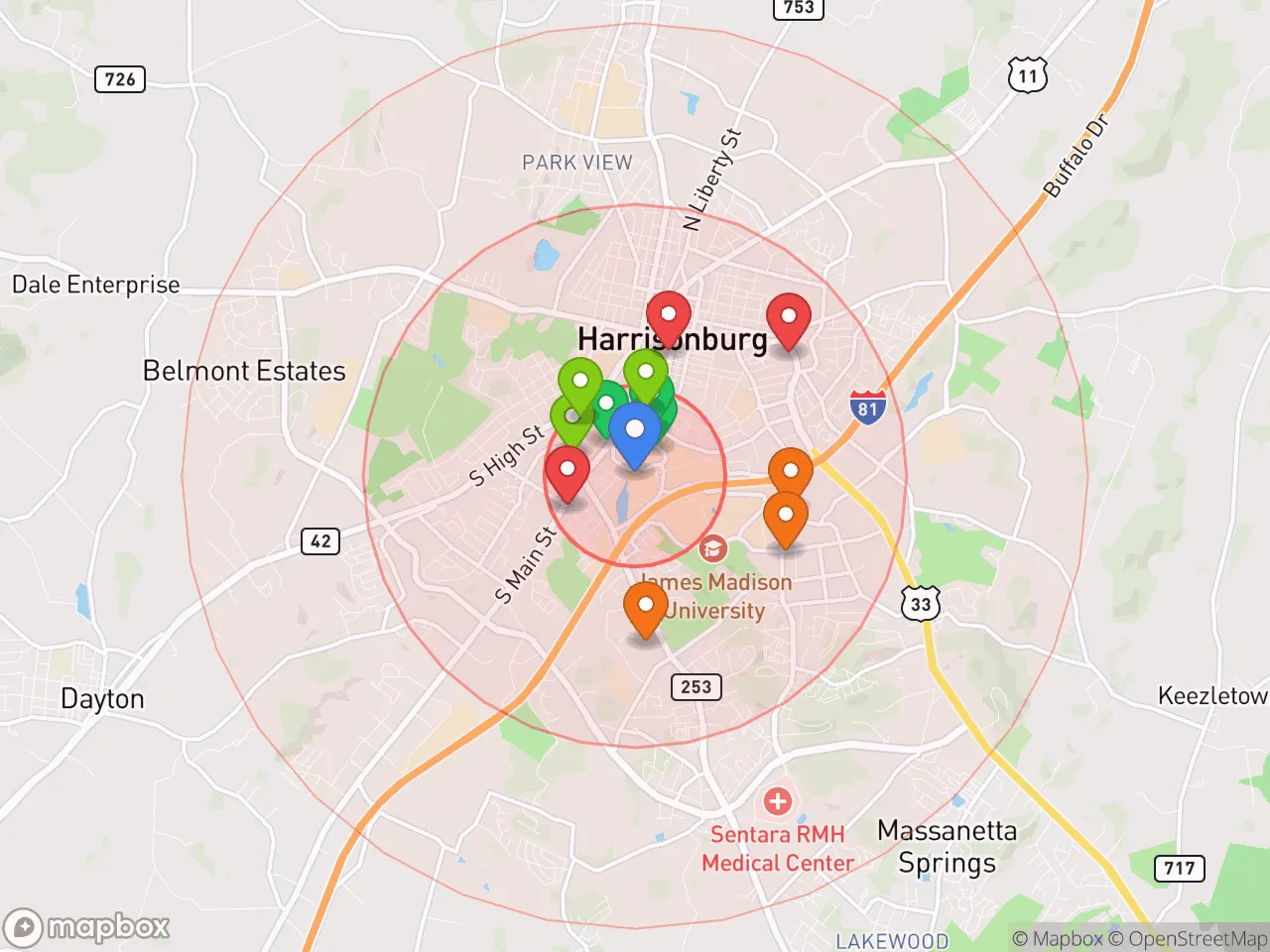
6 within 10 miles
Gas
20 within 10 miles
Hospital
1 within 20 miles
Airport
IAD — Washington Dulles International
Post Office
USPS — Harrisonburg, VA
Critical Amenities
Quality-of-Life Analysis
Harrisonburg, Virginia, offers a quality of life that blends small-town affordability with the cultural and economic energy of a growing college town, attracting a diverse mix of families, young professionals, and retirees. The city's cost of living index sits at 97 (where 100 is the U.S. average), making it notably cheaper than the national norm while still providing access to the amenities of the Shenandoah Valley. This balance draws residents who value a slower pace, outdoor recreation, and a tight-knit community feel, without sacrificing access to urban conveniences like those found in nearby Charlottesville or the Washington, D.C., metro area.
Cost of living, housing affordability, and how it compares to nearby areas
Harrisonburg’s housing market is a primary driver of its affordability, with a median home value of $278,200 and a median rent of $1,120 per month. These figures are significantly lower than in Charlottesville (where the median home value exceeds $400,000) and far below the D.C. suburbs, making the city a practical choice for first-time homebuyers and renters alike. The average commute of just 17 minutes further reduces living costs by cutting transportation expenses and reclaiming time for family or leisure. Compared to the broader Rockingham County area, Harrisonburg’s housing is slightly pricier due to its urban core and proximity to James Madison University, but it remains a bargain relative to the rest of the state. Utility costs and grocery prices also track below national averages, reinforcing the city’s reputation as a wallet-friendly place to settle.
Amenities, schools, and what daily life feels like for families and professionals
Daily life in Harrisonburg revolves around a walkable downtown core, a robust public school system, and year-round access to the Blue Ridge Mountains. The city’s public schools, part of Harrisonburg City Public Schools, consistently rank above state averages in reading and math proficiency, with a strong focus on English-language learner support given the area’s growing immigrant population. For higher education, James Madison University anchors the local economy and culture, offering concerts, Division I athletics, and continuing education opportunities that spill into the wider community. Outdoor enthusiasts can reach Shenandoah National Park and the George Washington National Forest within a 30-minute drive, while downtown’s farmers market, craft breweries, and independent restaurants provide a lively social scene. The average commute of 17 minutes means most errands and work trips are quick, leaving ample time for hiking, biking, or attending community events like the Rocktown Beer & Music Festival. Healthcare access is solid, with Sentara RMH Medical Center providing comprehensive services, and the city’s low crime rate—well below the national average for violent crime—adds to a sense of safety for families.
Harrisonburg is best suited for people who want a balanced, affordable lifestyle with strong community ties and easy access to nature. Families will appreciate the schools and low commute times, while professionals and remote workers benefit from the low cost of living and proximity to larger job markets like Charlottesville (45 minutes) and D.C. (two hours). Retirees on fixed incomes find the housing and healthcare costs manageable, and the city’s walkable downtown reduces car dependency. However, those seeking a fast-paced urban environment or high-end luxury amenities may find Harrisonburg too quiet; its charm lies in its predictability, affordability, and the genuine friendliness of its residents. For anyone prioritizing financial breathing room and a slower rhythm without isolation, Harrisonburg delivers a compelling quality of life.

Crime in Harrisonburg, VA
Lower crime rates than 77% of comparable U.S. locations.
Violent CrimeViolent Crime Analysis
Property CrimeProperty Crime Analysis
Crime Analysis
Harrisonburg, Virginia, presents a mixed safety profile for prospective residents. The city’s violent crime rate of 209.1 incidents per 100,000 residents is notably lower than the national average, but its property crime rate of 1,393.5 per 100,000 exceeds both state and national benchmarks, indicating a higher risk for theft and burglary. This combination means that while violent confrontations are less common, residents face a tangible threat to their personal property and sense of security in daily life.
Crime in context
When compared to Virginia’s statewide violent crime rate of roughly 200 per 100,000, Harrisonburg’s figure is slightly above average, but still well below the national rate of approximately 380 per 100,000. The more pressing concern is property crime: Harrisonburg’s rate is about 40% higher than the Virginia average and significantly exceeds the national property crime rate of roughly 1,950 per 100,000. This disparity is partly attributable to the city’s status as a college town (home to James Madison University) and a regional commercial hub, which concentrates opportunities for theft, vehicle break-ins, and shoplifting. However, it is also important to note that Harrisonburg operates within Virginia’s broader judicial framework. Like many small cities near larger metro areas, it has seen the influence of progressive prosecutorial policies that prioritize diversion and reduced incarceration for property offenses. While intended to reduce recidivism, such approaches can result in offenders facing minimal consequences, potentially emboldening repeat property crime and undermining public confidence in the justice system.
What residents experience
For those living in Harrisonburg, the most common safety concerns are non-violent. Residents frequently report incidents of package theft, bicycle theft, and car break-ins, particularly in neighborhoods near the university and downtown commercial corridors. Violent crime is more sporadic and often concentrated in specific areas, such as late-night incidents near bars or domestic disputes. The city’s police department maintains a visible presence and has community policing initiatives, but the high property crime rate means that many households will experience a theft or burglary over a multi-year period. The progressive judicial philosophy in Rockingham County courts, which often favors treatment and probation over jail time for first-time property offenders, can leave victims feeling that the system does not adequately deter repeat offenses.
Neighborhood-level variation is significant. Areas like the Northeast neighborhood and parts of the Old South High Street corridor report higher crime volumes, while residential zones farther from downtown, such as those near the Harrisonburg-Rockingham line or the newer developments off Port Republic Road, tend to see fewer incidents. Prospective renters and buyers should consult the Harrisonburg Police Department’s online crime map and consider that proximity to student housing or commercial hubs increases exposure to property crime. The city’s overall safety is manageable with standard precautions—locking vehicles, securing packages, and using well-lit parking—but the elevated property crime rate and the lenient local justice approach are genuine drawbacks for those prioritizing security.
* Values derived from national, state, county, city and local statistics and may differ in a specific area. Last updated: 2026-05-01T18:37:16.000Z
Narrative content on this page is AI-generated and may contain mistakes. Verify any details that matter before acting on them.
ReloMaps may earn a commission from affiliate links at no extra cost to you.

