Photo: Wikipedia
Strategic Assessment of Grottoes, VA
Meaningful friction. Expect exposure to either population pressure, blast zones, or natural disaster risk. Consider buying a retreat property.
What does the Strategic Assessment tell us?
Our Strategic Assessment grades tactical survivability of an area. Major population centers, military targets, fallout zones, natural disasters, and border exposure all drive risk — lower exposure means a more defensible position in a crisis.
This is heavily inspired by Joel Skousen's Strategic Relocation book. Highly recommended you checkout the book ($)What does this tell us?
Our Strategic Assessment grades tactical survivability of an area. Major population centers, military targets, fallout zones, natural disasters, and border exposure all drive risk — lower exposure means a more defensible position in a crisis.
This is heavily inspired by Joel Skousen's Strategic Relocation book. Highly recommended you checkout the book ($)Strategic Pillars

Key Distances
Regional Safe Places
Below is our recommended "safe zones" in Virginia and the surrounding area based on our strategic heuristics. For most people, it's unrealistic to live in a “safe zone” full-time due to work, family or other personal reasons. They tend to be more rural. However, many of these areas are perfect for second homes and retreat properties that double as a vacation home or even a short-term rental.
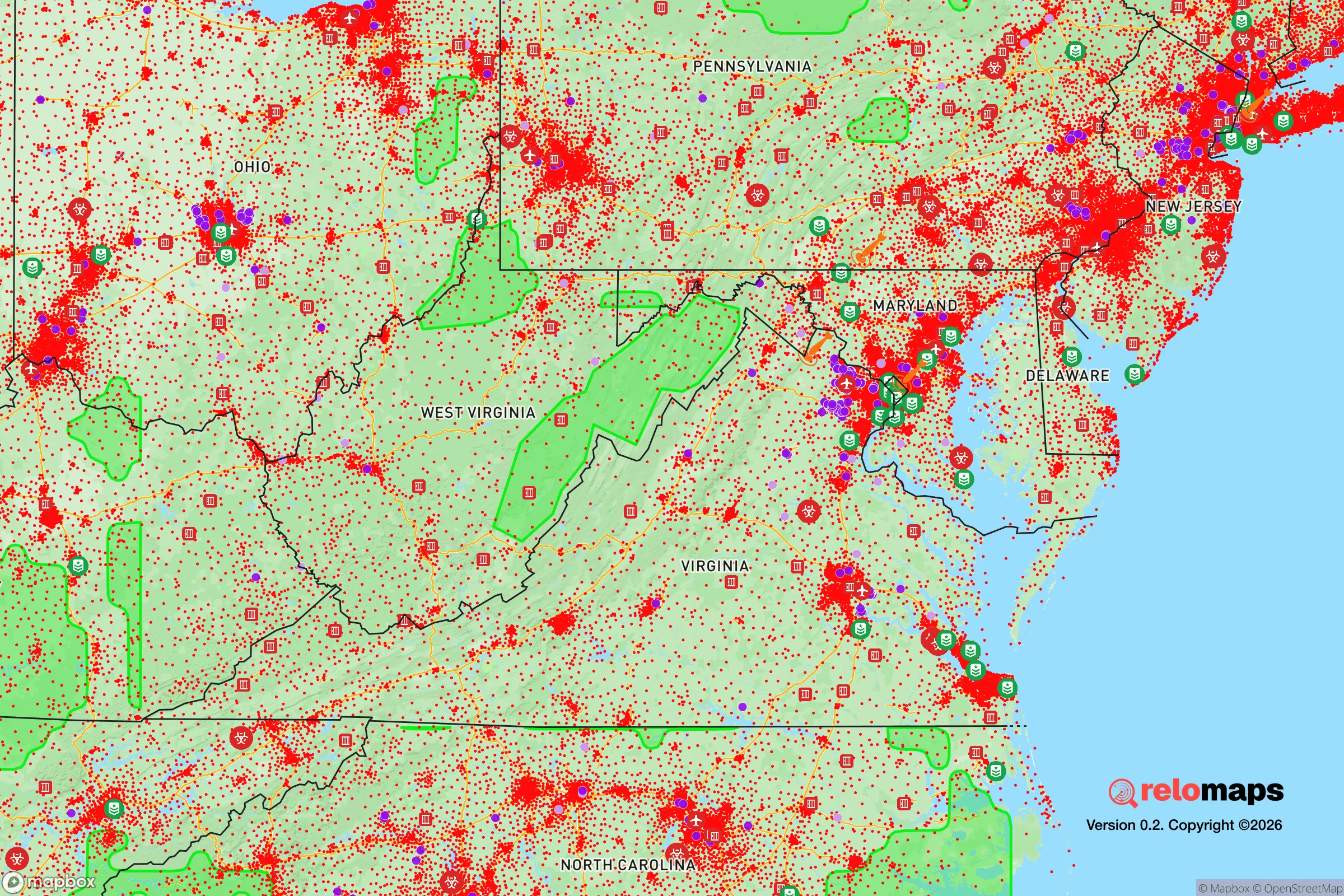
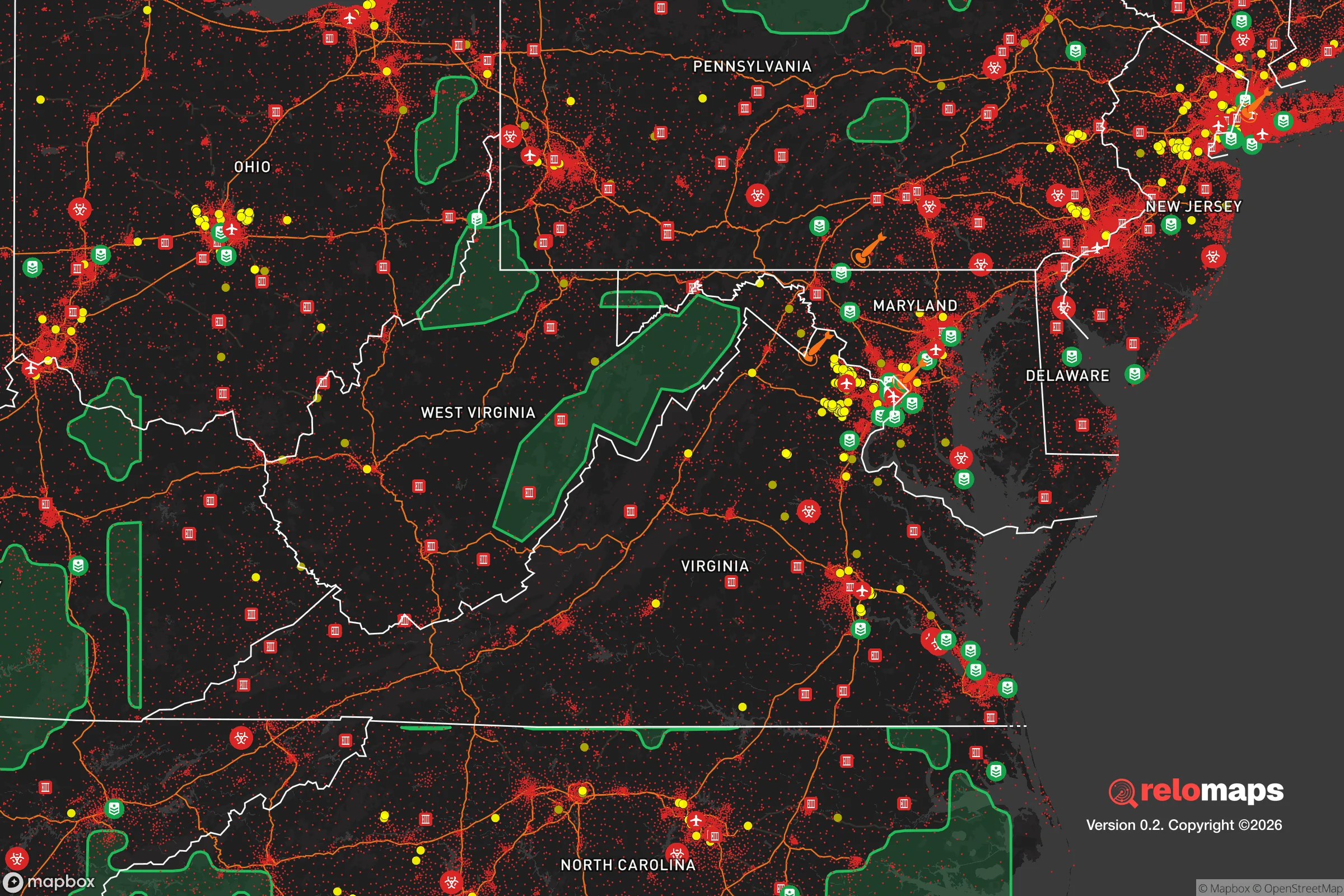


Important Note: For informational purposes only. This does not mean nothing bad ever happens in the green zones. Please use common sense. This is based on public data and modeled with AI. We tried to take a conservative approach but mistakes happen. We update this regularly as new information becomes available.
Solar Generator Recommendations
Backup power matters more here than in safer locations. We've picked three solar generators across budgets and capacity tiers — start with the budget unit if you only need a few essentials, or step up if you want to run a fridge and HVAC for days at a time.

Jackery Portable Power Station Explorer 300
Budget OptionPower on the Go: Weighing only 11 lbs, it's convenient to set up and store with book-sized foldable solar panels

BLUETTI Portable Power Station AC180
Designed for both indoor and outdoor scenarios, AC180 is highly capable as it has a robost capacity and continuous output power.

EF ECOFLOW DELTA Pro Ultra Power Station
Upgraded PickEcoFlow DELTA Pro Ultra is a whole-home energy system designed to grow with your family. Integrated with the Smart Home Panel 2, it scales to meet your evolving energy needs — keeping your home powered, intelligent, and secure through every stage of life.
We earn a commission, at no additional cost to you.
Strategic Assessment Analysis
Grottoes, Virginia, sits in a sweet spot that serious preparedness-minded relocators should take note of: close enough to the Shenandoah Valley’s job centers and amenities, yet far enough from the urban sprawl of the I-81 corridor to offer genuine strategic depth. The town’s resilience profile is anchored by its position in Rockingham County, a jurisdiction that consistently ranks among Virginia’s most productive agricultural counties, and its access to the natural fortress of the Blue Ridge Mountains to the east. For a single individual or family weighing disaster readiness alongside daily livability, Grottoes offers a rare combination of defensible geography, local food security, and a low-key community fabric that doesn’t require sacrificing modern conveniences.
Geographic position and natural advantages for long-term security
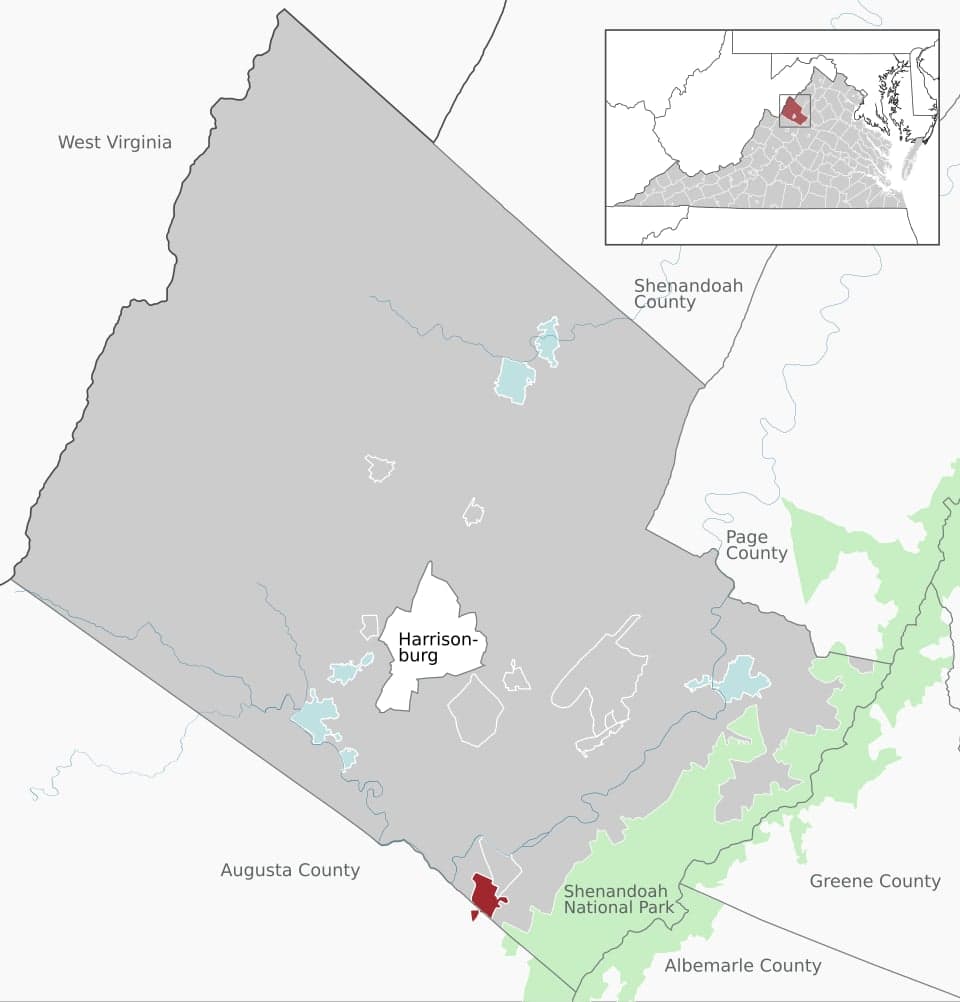
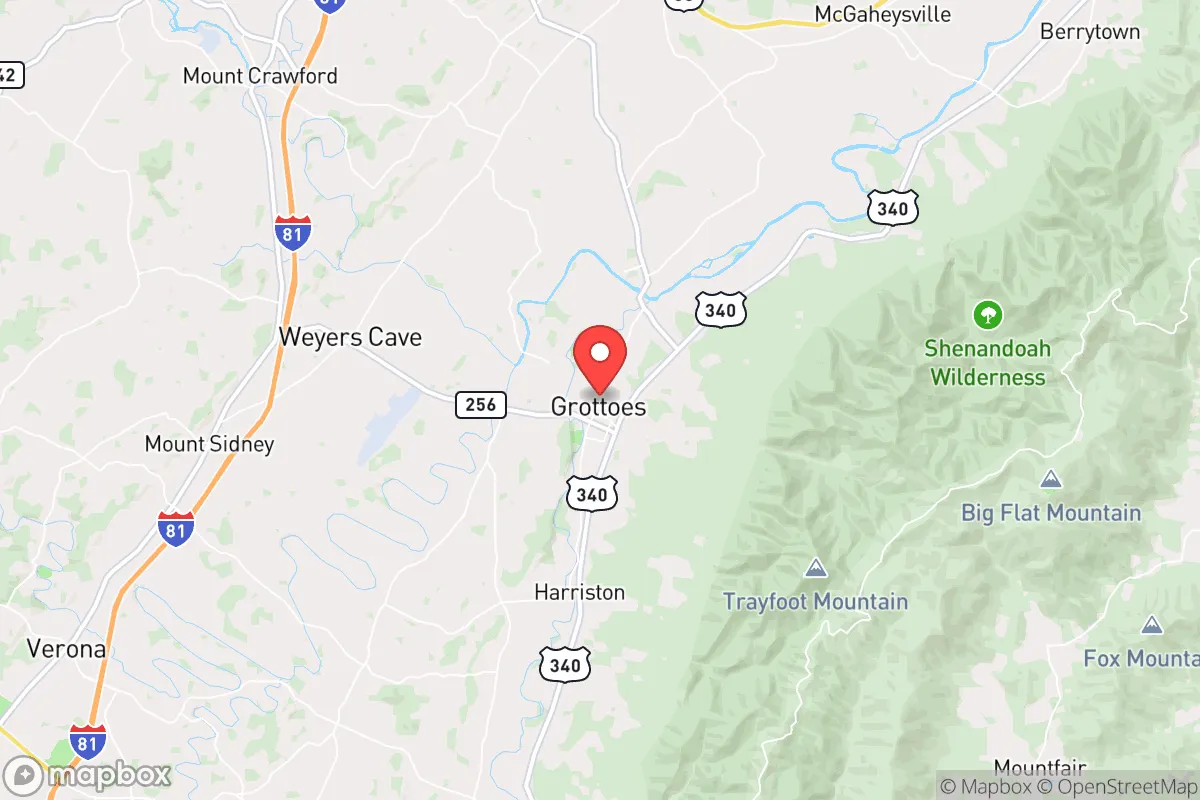
Grottoes is located at the southern tip of Rockingham County, roughly 15 miles southeast of Harrisonburg and about 20 miles northeast of Waynesboro, placing it in a triangle of mid-sized Valley cities that provide hospitals, retail, and employment without the density of a major metro. The town itself sits at the confluence of the South River and the North River, which join to form the South Fork of the Shenandoah River — a double-edged sword for water access, but one that gives the area a reliable hydrological profile. The Blue Ridge Parkway and Shenandoah National Park lie just to the east, offering not only recreational utility but also a natural barrier that complicates any large-scale movement into the region from the Piedmont.
The Valley’s karst topography — limestone bedrock with caves and springs — is a genuine asset for water security. Grand Caverns, located within Grottoes town limits, is a reminder that the area sits atop significant groundwater reserves. For a relocator thinking about well water, this means the potential for reliable, deep aquifers that are less susceptible to surface contamination than many other regions. The surrounding farmland is some of the most productive in the Mid-Atlantic, with Rockingham County ranking first in Virginia for agricultural sales, particularly in poultry and dairy. That is not a trivial detail: it means the local food supply chain is short, dense, and less dependent on long-haul trucking than most of the Eastern Seaboard.
Risk exposure, man-made hazards, and proximity to high-value targets
No honest strategic assessment can ignore the region’s vulnerabilities. The most significant is the proximity to the I-81 corridor, a critical north-south logistics artery that runs roughly 10 miles west of Grottoes. In a major disruption — whether natural or man-made — I-81 would likely be a chokepoint for both civilian evacuation and military or relief convoys, and its proximity means noise and congestion in normal times, and potential target value in abnormal ones. The corridor hosts significant truck traffic carrying everything from food to fuel, and a disruption there would ripple directly into Grottoes’ supply lines.
Further afield, the National Ground Intelligence Center (NGIC) operates in Charlottesville, about 30 miles southeast, and the Rivanna Station military installation nearby hosts multiple Department of Defense agencies. While these are not strategic nuclear targets in the same class as Norfolk or Washington, they are federal facilities that could draw secondary attention in a conflict scenario. The more pressing concern is the broader Washington-Baltimore metroplex, roughly 120 miles northeast. In a worst-case nuclear exchange, fallout plumes from strikes on the capital region would travel with prevailing westerly winds, which actually push away from the Valley — a meaningful advantage. However, a strike on the Norfolk naval base, about 150 miles southeast, could push fallout up the Chesapeake and into the Piedmont, though the Blue Ridge would provide substantial shielding for the Valley floor.
Natural risks are more immediate and more probable. The Shenandoah Valley is in a moderate seismic zone — the 2011 Mineral earthquake, magnitude 5.8, was felt strongly here but caused minimal damage. Flooding is the more realistic threat: the South River has a history of flash flooding, particularly in the low-lying areas near the town’s core. The 1985 Election Day floods, caused by the remnants of Hurricane Juan, devastated parts of the Valley, and Grottoes saw significant inundation. Any relocator should check FEMA flood maps carefully before purchasing property near the rivers. Winter weather is manageable but real — the Valley gets 20-30 inches of snow annually, and ice storms can knock out power for days, particularly in the foothills east of town.
Practical resilience for a relocator: food, water, energy, and defensibility
For the self-sufficiency-minded, Grottoes offers a practical baseline that is hard to beat in the Mid-Atlantic. Water is the first pillar: the town’s municipal supply draws from the South River, but most rural properties in the surrounding county rely on private wells, and the karst aquifer system provides generally good yields. A drilled well in this area typically runs 150-300 feet deep and produces 10-20 gallons per minute — more than adequate for household use and modest irrigation. The caveat is water quality: limestone aquifers are vulnerable to surface contamination from agricultural runoff, so a good filtration system and annual testing are non-negotiable.
Food security is where this region genuinely excels. Rockingham County’s agricultural base means that within a 15-mile radius of Grottoes, a relocator can find dozens of farms selling directly to consumers — poultry, beef, pork, eggs, and produce. The Harrisonburg Farmers Market, operating year-round, is one of the largest in the state. For those serious about self-sufficiency, the growing season runs roughly 170 days, and the Valley’s soil, while rocky in places, is workable for market gardens. The local food infrastructure — processors, feed mills, and equipment dealers — is dense enough that a household could realistically source 50-80% of its calories from within 20 miles, even in a disrupted supply chain scenario.
Energy resilience is more of a mixed bag. The Valley is served by Dominion Energy and Shenandoah Valley Electric Cooperative (SVEC), and grid reliability is average for rural Virginia — expect 1-3 outages per year, mostly weather-related. Solar potential is decent but not exceptional: the region gets about 4.5 peak sun hours per day, comparable to much of the Mid-Atlantic. The bigger advantage is heating: the Valley has abundant hardwood forests, and wood stoves are common, not exotic. A relocator with a woodlot or access to firewood can secure heating independence for a modest upfront investment. Propane is widely available, and most rural homes have tank infrastructure already in place.
Defensibility is the final consideration, and here Grottoes is a mixed picture. The town itself is a compact, walkable grid of roughly 2,700 residents — easy to secure, but also easy to isolate if bridges over the South River are compromised. The surrounding county, however, offers excellent retreat options: the foothills east of town toward the Blue Ridge have limited road access, good sightlines, and natural chokepoints. The broader Valley is a bowl, which is a disadvantage for communications (ham radio repeaters are essential) but an advantage for concealment. For a family, the practical defensibility is less about fighting and more about distance: Grottoes is far enough from major population centers that a panic-driven urban exodus would likely bypass it, and the local community is small enough that social cohesion — the real first line of resilience — is still intact.
The overall strategic picture for Grottoes is one of quiet competence. It lacks the dramatic self-sufficiency of a remote mountain compound, but it also lacks the isolation that makes such compounds impractical for work, school, and healthcare. The town’s real strength is redundancy: multiple water sources, a dense local food network, moderate climate, and a position that is simultaneously off the beaten path and connected to the Valley’s infrastructure. For a relocator who wants to be prepared without being paranoid, Grottoes offers a defensible, sustainable, and genuinely livable base of operations — a place where preparedness is a lifestyle, not a liability.

* Values derived from national, state, county, city and local statistics and may differ in a specific area. Last updated: 2026-09-14T21:49:27.000Z
Narrative content on this page is AI-generated and may contain mistakes. Verify any details that matter before acting on them.
ReloMaps may earn a commission from affiliate links at no extra cost to you.

