Photo: Wikipedia
Demographics of Grottoes, VA
Affluence Level in Grottoes, VA
A middle-class area roughly in line with national averages across income, home values, education, and employment.
People of Grottoes, VA
The people of Grottoes, Virginia, today form a small, predominantly white community of 2,926 residents, characterized by a strong sense of local identity rooted in the town’s industrial and agricultural past. With a population density that feels distinctly rural, the town’s character is shaped by its location in the Shenandoah Valley, where family ties run deep and newcomers are often drawn by the area’s affordability and quiet pace of life. The population is notably less diverse than the national average, with 88.0% identifying as white alone, and a foreign-born share of just 0.9%, reflecting a community that has seen limited international immigration. For families and individuals seeking a stable, close-knit environment, Grottoes offers a demographic profile that has changed slowly over decades.
How the city was settled and grew
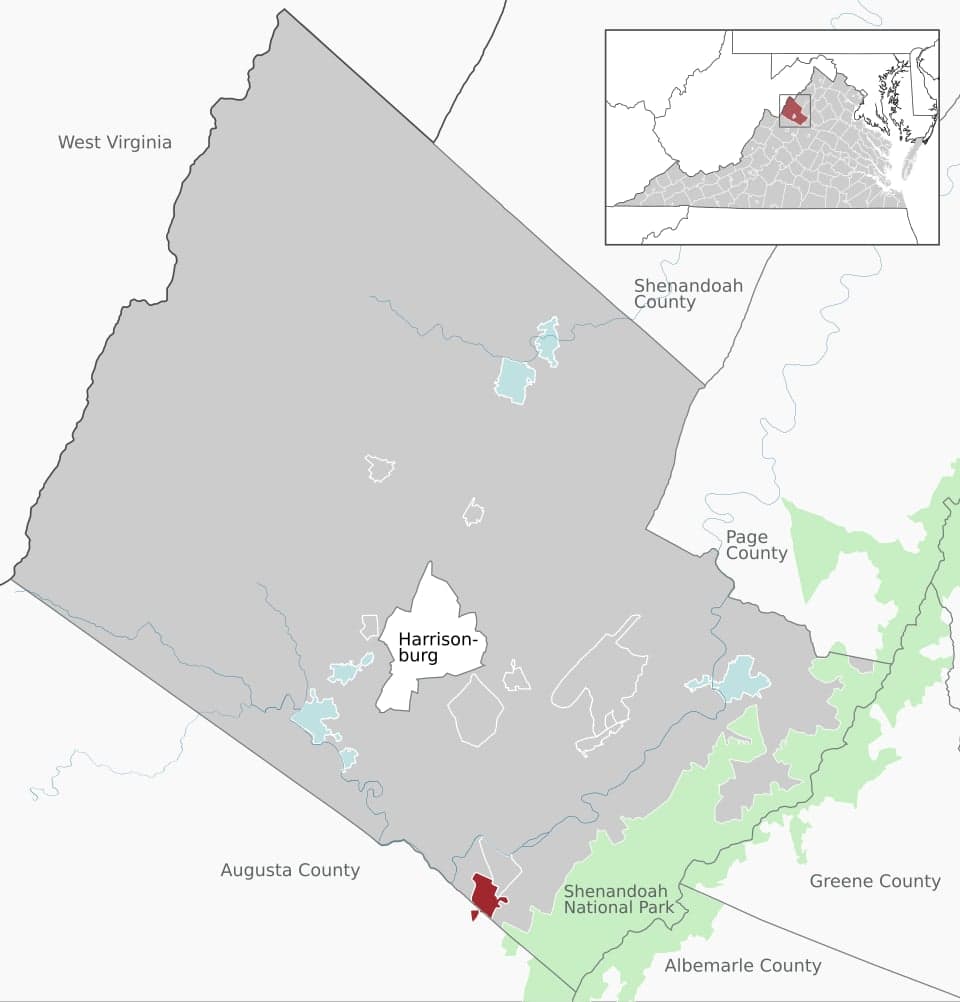
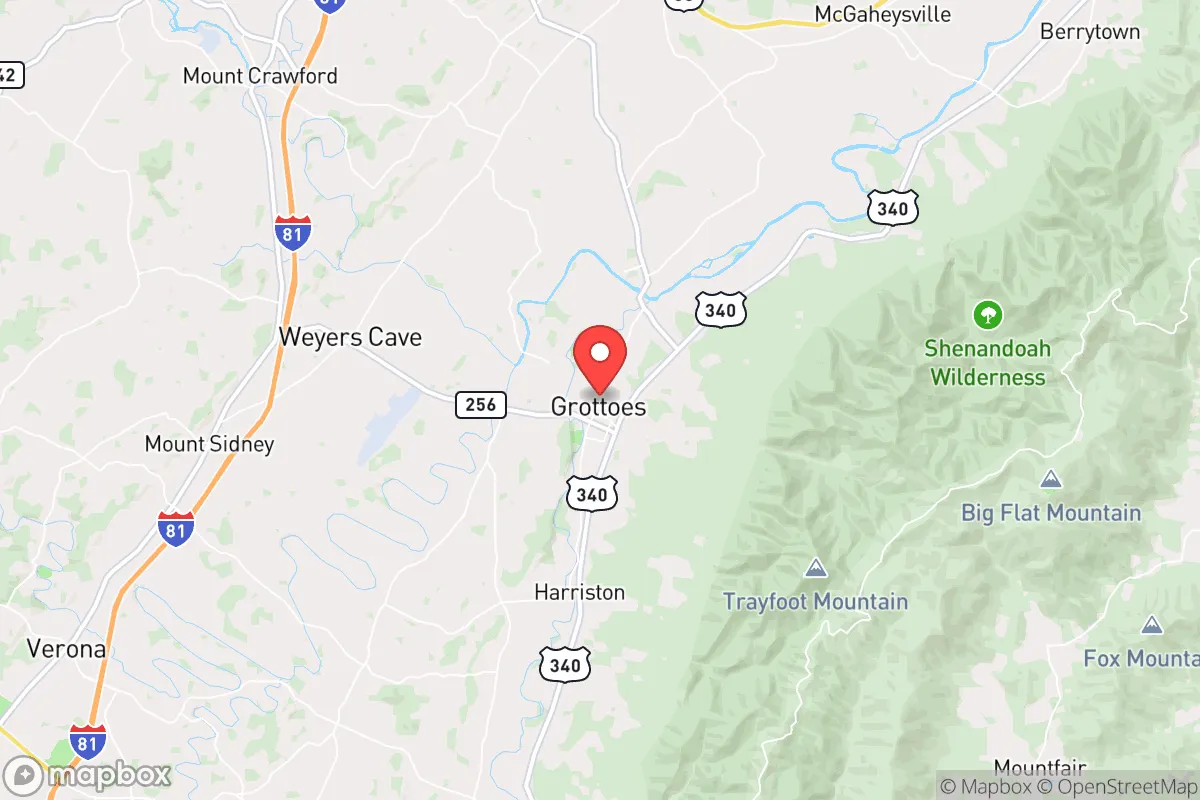
Grottoes was originally settled in the mid-18th century by German and Scots-Irish farmers who were drawn to the fertile limestone soils of the Shenandoah Valley. These early families, such as the Coiner and Shifflett names still common today, established homesteads along the South River and built the first gristmills and churches that anchored the community. The town’s growth accelerated after the arrival of the Chesapeake and Ohio Railway in the 1880s, which connected local farms and quarries to broader markets. The historic Coiner’s Store district, centered near the railroad depot, became the commercial heart where these early settlers’ descendants operated general stores and blacksmith shops. A second wave arrived in the early 1900s, drawn by the limestone quarrying and cement industry, with workers settling in the Mill Creek area along the river, where modest frame houses still line the narrow streets. By 1950, Grottoes had grown to roughly 1,200 residents, almost entirely white and native-born, with a social fabric woven from church suppers, volunteer fire departments, and high school basketball games.
Modern era (post-1965)
Following the 1965 Immigration and Nationality Act, Grottoes experienced virtually none of the demographic diversification seen in larger Virginia cities like Harrisonburg or Charlottesville. The town’s population remained overwhelmingly white through the 1970s and 1980s, with the 1990 census still showing a white share above 97%. The most notable shift came from domestic in-migration, as families from the Washington, D.C., suburbs began seeking lower housing costs and a slower pace of life. These newcomers concentrated in the Green Hills subdivision, built in the 1990s on former farmland east of downtown, and in the South River Estates development along Route 659. Today, the Hispanic population stands at 3.3%, a modest increase driven largely by agricultural labor in nearby apple orchards and poultry farms, with families settling in rental properties along Main Street near the town’s southern edge. The Black population, at 2.6%, includes both long-standing families who trace their roots to post-Reconstruction migration and a small number of professionals employed at the nearby DuPont plant in Waynesboro. East and Southeast Asian residents make up just 0.1% of the population, and the Indian-subcontinent share is effectively zero, reflecting the town’s limited draw for high-skilled immigration.
The future
Grottoes’ population is projected to remain stable or grow slowly, with the 2020 census showing a 4% increase from 2010, driven primarily by continued domestic migration from the D.C. metro area. The town’s age profile is slightly older than the state median, with a median age of 42.3, suggesting that younger families are not arriving in large numbers. The college-educated share, at 23.6%, is below the Virginia average of 39%, indicating that the local economy—dominated by manufacturing, construction, and retail—does not yet attract a highly educated workforce. New housing developments, such as the Rocky Bar Estates subdivision approved in 2023, are targeting single-family homes for commuters willing to drive 30 minutes to jobs in Harrisonburg or Staunton. Diversity is likely to increase only marginally, as the town lacks the rental stock, public transit, and employment base that typically attract immigrant populations. The cultural identity of Grottoes will likely remain rooted in its rural, church-centered traditions, with newcomers gradually assimilating into existing social networks rather than creating distinct new communities.
For someone moving in now, Grottoes offers a stable, predominantly white community where change comes slowly and neighborly familiarity is the norm. The town is becoming slightly more diverse at the margins, but its core demographic character—native-born, family-oriented, and deeply connected to the Shenandoah Valley’s agricultural and industrial heritage—is likely to persist for at least another generation. New residents will find a place where the pace of life is unhurried, the schools are small, and the cost of living remains one of the lowest in the region.

* Values derived from national, state, county, city and local statistics and may differ in a specific area. Last updated: 2026-09-14T21:49:27.000Z
Narrative content on this page is AI-generated and may contain mistakes. Verify any details that matter before acting on them.
ReloMaps may earn a commission from affiliate links at no extra cost to you.

